
You are currently browsing the monthly archive for January 2015.
Some beliefs are so dangerous that it may be ethical to kill people for believing them. – Sam Harris.
This is a dangerous quote from Mr.Harris because it muddles the line between action and intent. How can there be any sort of dialogue when one faction can be singled out for death for nothing that they have done, but their beliefs.
Consider how easy it would be for opponents of US policy to follow this same doctrine – would they too be taking ethical action?
Harris, in this context, is not adding clarity to the complex problem of the interaction of secular and religious ideals.
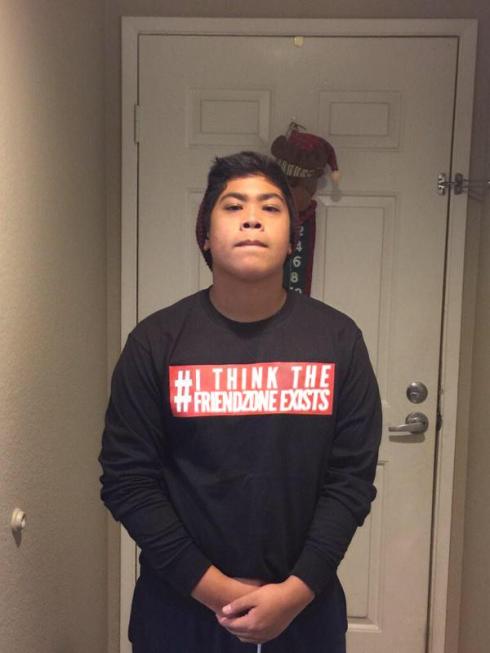
My very first thought was: “What foolishness is this?” Then I saw a blurb about Meninism on the Time website.
The hashtags #Meninist and #Meninism have been around Twitter for more than a year, and the people who use them generally fall in two camps: people who use the term to call out ways they believe they’ve been victimized by feminism, and people who make fun of the first group for not understanding what feminism means in the first place.
Oh wow. First reaction completely on target.
On the upside, the farce known as “meninism” has inspired some great meme T-shirts, so let it be said that the movements is not completely worthless.


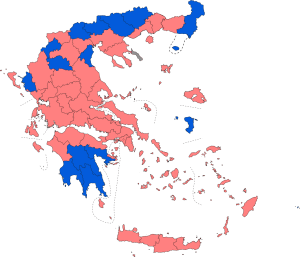 *Update – The election results are in.
There might be hope for the people of Greece in their upcoming elections. Excerpts of an interview of Tariq Ali hosted by Kostas Vlahopoulos and Thomas Giourgas.
“3. What is your view of the current sociopolitical situation in Greece?
Tariq Ali: The situation is polarised. The fascists of Golden Dawn and the Conservative descendants of the wrong side in the Greek Civil war have the support of a sizeable section of the Greek population. This cannot be ignored and we do so at our peril. The emergence and growing support for SYRIZA (and PODEMOS in Spain) is the post positive development in Europe, but in order for it to move another step forward without moving backwards it will have to challenge the Greek oligarchs, confront the ship-owners mafia that owns the media, that pays few taxes, if any, and also to remove the tax free status of the Orthodox Church. Its not that the Church is poor. Its ownership of property makes the institution an oligarch in its own right. In the case of the ship-owners they must be compelled to pay taxes in retrospect so that the country can move forward economically again and start functioning properly. Such a move will annoy the more backward sections of the EU elite but will be popular in Europe as a whole and will lay the basis for a political battle with the Troika by splitting their supporters.
1. For the first time in Greek political history, a radical left party, SYRIZA, is the strong favorite to win the general elections taking place in January the 25th. What kind of reaction do you expect from the neo-liberal Europe and in particular from Germany?
Tariq Ali: If SYRIZA wins it will mark the beginnings of a fightback against austerity and neo-liberalism in Europe. Two concurrent processes will be in motion from the beginning of the victory. There will be a strong attempt by the EU elite led by Germany to try and tame SYRIZA via a combination of threats and concessions. The aim of this operation is simple. To try and split SYRIZA at a very early stage.
Secondly there will be a high level of expectation from SYRIZA’s electorate and beyond. Mass mobilizations will be extremely important to sustain the new government and push it to carry through the first necessary measures. The debt and the readjustment measures must be repudiated immediately before moving on to implement a plan that restores the social gains that have been achieved and are being dismantled by the Troika-led governments. The first three months will be decisive in terms of revealing the contours of the political and economic landscape envisaged by SYRIZA. Neo-liberalism can not be dismantled overnight but the will to do so must be paramount. Bandwagon careerists must not be allowed to sabotage what can and should be done
6. Financial markets are considered to be the omnipotent regulators of politics and democracy itself in some cases. Could it be possible for a left government to clash with market system within the capitalist framework?
Tariq Ali: Yes, that is what is on the agenda today and what the Bolivarian governments in South America have been doing for the last fifteen years with relative success. Market-fundamentalism has led to a sharp decline in democracy (Wolfgang Streek, the German sociologist has explained the process of decline very well in his books and essays) and the Wall Street crash of 2008. What is needed is a combination of regulation, state intervention to take back the public utilities and create and own industries that can help fund the former andsenhanced democracy on every level to ensure popular participation.
This can be our only minimum programme at the present moment.”
One can only hope that the push back against the neo-liberal tide will take root in Greece, blazing the trail for the rest of the EU to follow.
 When one turns to the word “propaganda” images of totalitarian states come to mind – Pravda, The North Korea Times. We envision an army of Winston Smith’s carefully scrubbing the news of improper thoughts and meanings, carefully crafting the government approved message of the day. Of course we don’t have that here in North America, we have freedom of speech, we have a free press, we have liberty! We also have institutionalized self-censorship,demarcated areas of approved debate, and a media establishment that tends to take the government’s word at face value. These factors contribute to a media system that appears to be free and without censure, but in reality, craft obsequious stories that pose no threat to power or the norms of society. Essentially, the (self)censorship we have in the West is on autopilot, it is subtle, unremarkable, but yet *very* effective (for more detail on our system, see my post on Manufacturing Consent).
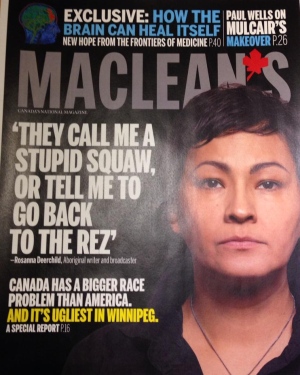
All this being said, sometimes our subtle system of media control goes a little haywire, it loses its subtle sheen, and becomes a little more transparent in how it operates. Stories slip through the net and give the status-quo a good shake. The recent furor caused by Maclean’s naming “Winnipeg: Where Canada’s Racism Problem is at its Worst.” is a prime example of such a happening. The article pokes many holes in white Canada’s notion of a vibrant multicultural society. Some highlights:
“One in three Prairie residents believe that “many racial stereotypes are accurate,” for example, higher than anywhere else in Canada. In Alberta, just 23 per cent do, according to polling by the Canadian Institute for Identities and Migration (CIIM). And 52 per cent of Prairie residents agree that Aboriginals’ economic problems are “mainly their fault.” Nationally, the figure drops to 36 per cent.”
***
“Earlier this fall, Robert Falcon-Ouellette, director of the University of Manitoba’s Aboriginal focus programs, hit the Grant Park Shopping Centre in Winnipeg’s south end to hustle for signatures for his mayoral nomination form. The 37-year-old was a late entrant to the election. He’d cobbled together a campaign staff—idealistic political neophytes he knew from academia and activists he’d met at last year’s Idle No More rallies.
It was an ugly entry into politics. “I know you,” a shopper told Falcon-Ouellette, approaching him shortly after he arrived at the mall. “You’re that guy running for mayor. You’re an Indian,” he said, pointing a finger at Falcon-Ouellette. “I don’t want to shake your hand. You Indians are the problem with the city. You’re all lazy. You’re drunks. The social problems we have in the city are all related to you.”
***
“Tyler Henderson, a 28-year-old Ojibway nursing student at the University of Manitoba, says he feels racism every time he walks out his front door. Henderson says Winnipeg police stopped him 15 times last year. “You fit the description,” police tell him when he asks what he did wrong. Once, police claimed he’d pulled to a stop a few inches beyond the stop line. “It makes me mad,” he says. “But there’s nothing I can do.” Some young indigenous men are stopped twice per month in the inner city, according to University of Manitoba criminologist Elizabeth Comack. “
***
“Don Marks, a Winnipeg writer, recently visited an ER with an indigenous friend. They’d dropped a painting, and the broken glass had cut his friend. “Aw!” a nurse exclaimed in greeting them. “Have we been drinking and fighting again?” The nurse’s assumptions were harmless, says Marks, who edits Grassroots News, an Aboriginal newspaper. “But this was someone responsible for treating Native people in our hospitals. We all know racism exists in our health care system.”
I would go read the entire article at Maclean’s as it touches many important points and different facets of the racist experience going on in Winnipeg. But the lowlights sampled here are enough to show that punches were not pulled in writing this article.
Response from the Mayor of Winnipeg was predictable.
“We have come together to face this head-on as a community,” Bowman added, noting that Winnipeg exists on what is traditional Treaty One territory. We have to shine a light on it. Without the light, we can’t see what we’re fighting. We’re not going to end racism tomorrow, but we’re sure as hell going to try.”
Way to go Mr.Mayor. Ending workplace inefficiency with enhanced system synergies is also on his “to do” list. I find the reactions of Robert-Falcon Ouellette and Rosanna Deerchild to be much more interesting.
Ouellette ran for Mayor in the last Winnipeg Civil election and of course faced racist comments on him an his campaign. He is no stranger to the ugly tide of racism in Winnipeg, but when asked of the Maclean’s article he said this:
“The cover treatment Maclean’s gave the story is sensationalist, he said. The cover features a quote from a Winnipeg resident who says,”They call me a stupid squaw or tell me to go back to the rez.”
“They used the word ‘squaw,’ which is very, you know, derogatory type of comment,” Ouellette said. “But at the same time, I understand they need to be selling magazines and getting people interested to buy the magazine.” Ouellette has experienced racism, including during his campaign, but it’s not something he sees on a daily basis. He said he believes the majority of people in the city aren’t racist, but that there’s always the loudmouth that stands out.”
His restraint and decorum in the face of such ugliness is impeccable. At the same time, troublesome because he’s just being so darn nice about the entire situation. We see the same pattern with Rosanna Deerchild, here is what she says:
“They call me a stupid squaw, or tell me to go back to the rez,” the quote reads. But on Friday, Deerchild recorded a segment for Saturday’s Unreserved, saying she does not want to be racism’s cover girl.
“I am far from the angry Indian complaining about being hard done by,” she says.
“Let me be clear. I love my city, my community, my home: Winnipeg, North End, Canada. But neither will I quantify, qualify or pacify racism in this place, or any place it rears its ugly head.”
I’m scratching my head a little over what she said. I applaud her for being so diplomatic in the face of injustice, but I think that she has every right to be royally pissed off over the state of affairs regarding Winnipeg and racism.
Her choice of words speaks volumes to how the concerns of aboriginal woman have been treated in white Canada in the past. She makes it very clear that she is not an “angry Indian complaining about being hard done by”. Deerchild, even in her respected position in society (broadcaster for the CBC), is keenly aware of the stereotypes and negative tropes arrayed against her. She is aware of what I was alluding to earlier in this post – the system of self censorship/censorship that marginalizes dissident views such as hers, in favour of the comforting white feel-good multicultural narrative that is an acceptable “truth” in Canadian society.
I applaud all those quoted in the articles, they are speaking directly to the problem of racism in our society. The fact that this article is creating so much noise and buzz in Canada is a testament to how adept our media is at maintaining the status-quo most of the time and for generally not allowing articles of this calibre to be published within the mainstream news establishment.
[Source: Macleans.ca]
‘Nuff said.











 bleatmop
 Mystro
 The Arbourist


 Dead Wild Roses
Your opinions…