
You are currently browsing the monthly archive for January 2022.
The struggle against the misogyny that is transgender ideology can be all consuming. Sometimes it is asked, “We know what you’re fighting against, but what are you for?”. This is what we are fighting for. Thank you WDI Scotland for the clear enunciation of the goals and values being fought for.
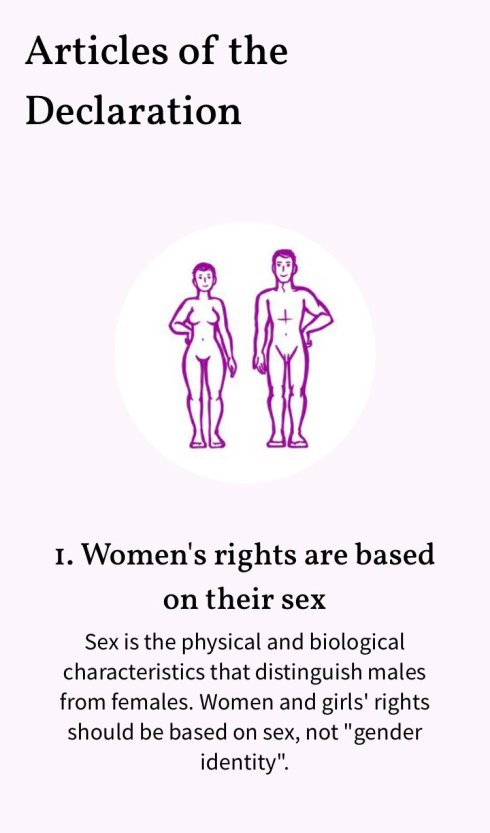
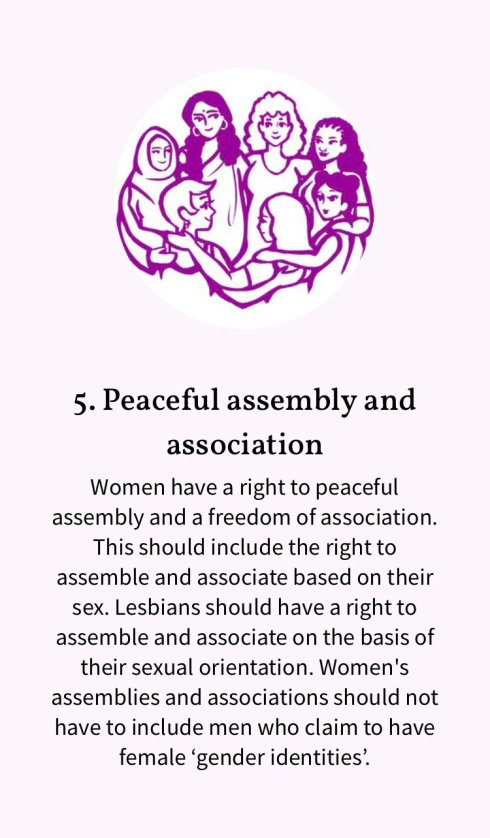
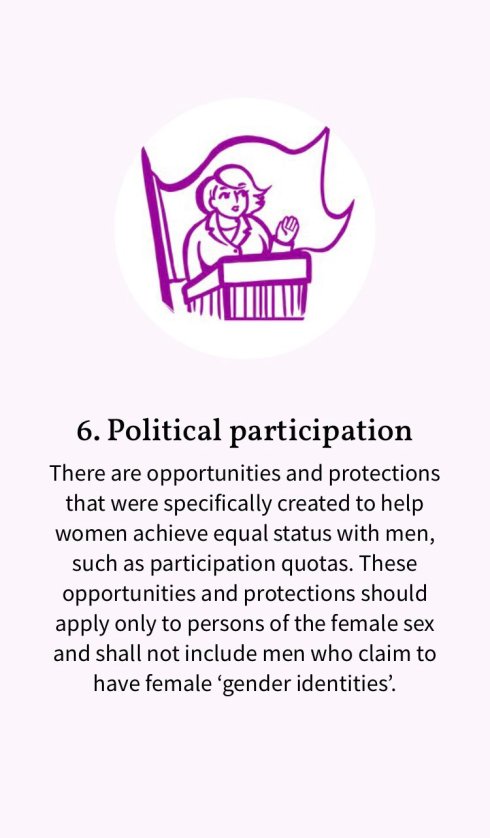
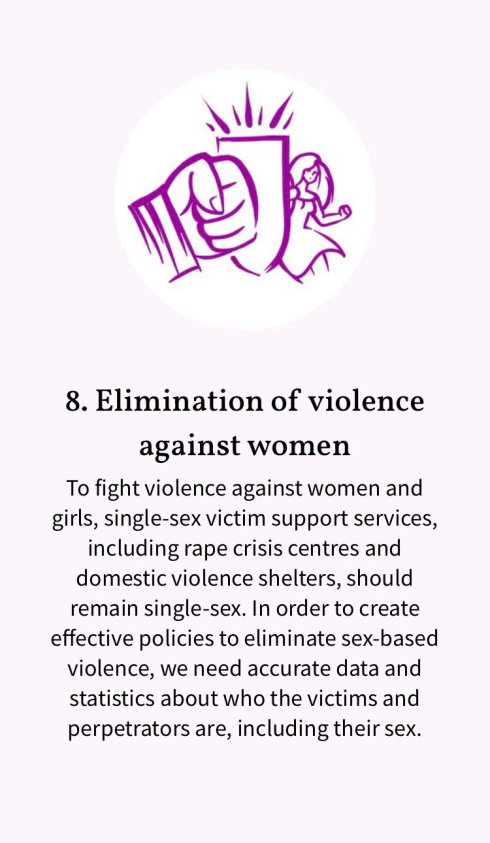
The demands of people for you as a third party to partake in their gender-fantasy is not a reasonable one.
What other adults think and believe in society is not my responsibility. I believe that society should be based on verifiable facts, evinced arguments, and the willingness to be compromise on contentious issues. We’re all not going to get exactly what we want from society, but through negotiation and Reason, a middling solution must be found. The best way to interrogate the issues that we all face in the broader societal context is to have the ability to discuss social issues without fear in a nuanced and usually complex way. No topic should be off limits in a reasonable discussion – yet an entire class of unreasonable arguments seems to be off that table. Those arguments deal with the ideas of personal identity and how the individual and society is supposed to interact.
The problematic identities that are causing friction in society usually involve the nebulous concept of ‘gender’. Gender is the set of socially constructed beliefs and values that are associated with the two sexes of human beings in society. For instance, males are aggressive and good leaders, while females are compassionate and good care-givers are both examples of sex stereotypes (aka gender) that individuals in each sex class are saddled with. Society is constructed around the preservation of these stereotypes and in breaking them there is usually a negative social cost involved.
Feminists, during the second wave, sought to break down these gender stereotypes and move toward an understanding of gender as an often toxic construction of norms and ideas that shouldn’t necessarily be followed. Gender non-conforming behaviour was lauded as the way forward as individuals of both sexes should be able to access and embody the traits and values that were traditionally ‘not allowed’ for them. Women could be aggressive, powerful leaders while men could be caring nurturing and family orientated – and neither would face social censure for acting outside what was considered “normal” for their sex classes.
I consider the refutation of gender norms and gender non-conforming behaviour to be the way forward in society as individuals should be able to embody whatever sex stereotypical sets of behaviours that seem right for them.
All of this is based on the notion that gender is a set of sex stereotypical behaviours that have been arbitrarily (and some times coercively) assigned to the two human sexes.
The Transgender Identity movement we know today takes precisely the opposite view of sex stereotypes and how they should play out in society. Transgender ideology states that the act of performing and identifying with one set of sex stereotypes *makes* you that stereotype AND the physical sex associated with it. So for instance, a man who likes wearing high heels and dresses (both sex stereotypical clothing types) should be regarded as a ‘woman’ (adult human female). Because, in transgender ideology, adopting femininity and feminine affect is what makes women ‘women’.
To reality based feminists and most of the general population this is a preposterous notion. Human beings inhabit a sexual binary. We are either male or female for the most part. What makes a woman or a man is simply being male or female with all the associated physical characteristics. We are defined by the sex class we are born into – the set of stereotypes prescribed for us is based on natal sex. Second Wave feminism correctly identified gender as (usually harmful) sex-stereotypes and specifically rallied against the notion that to be a proper man or a woman one must follow the normative prescriptions of gender identity.
Transgender ideology flips this around and says that people who don’t associate with set of sex stereotypes that are assigned to them must then adopt the stereotypes of the opposite sex and through gender magic the individual ‘transitions’ to actually being the opposite sex. Thus, acting a male acting in a stereotypical female fashion ACTUALLY becomes female.
This is Grade A bonafide horseshit, but it is the tenet that lies at the very heart of transgenderism – by adopting they stereotypes of the opposite sex, you become that sex… Fundamentally, the notion is nonsensical and at odds with the physical reality we all share. But it is also here where the compelled speech becomes and issue for me and the rest of society. You see, correctly observing reality is looked at as harmful and abusive because it does not align with the transgender individuals internalized notion of gender and of which sex they are. The transgender movement argues that subjective feelings of individuals should override the rights of others in correctly identifying the physical reality that is before their very eyes. A male is woman because he has feminine feelings and because he says so, and to contradict his gender delusion is to be bigoted and transphobic.
In polite society, being a bigot or phobic carries serious social consequences which is precisely why the transgender movement subverted these social norms to comport with their inner feelings of gender and the protection thereof. Individuals in society must then carefully consider the social costs to disagreeing with transgender ideology which makes it harder to discuss and grapple with. Sometimes it’s just easier and safer to go along with the gender deluded individual despite the damage being done to free speech and allegiance to material reality in society. It is this chilling paradigm that I rally against.
If we value the liberal foundation that we have based our society on, transgender ideology and those who espouse it should not get a free pass. Transgender ideology must be debated, argued, and its merits and faults examined closely in society. Compelled speech to preserve gender-feelings that do not comport with reality is an unacceptable state of affairs. The current imposition of transgender ideology is a clear and present safeguarding issue to women and children in our society because men who identify as women are gaining access to single sex spaces based on their say-so and that, if we value the safety of children and women, is a problem.
Sicut cervus is a motet for four voices by Giovanni Pierluigi da Palestrina. It sets the beginning of Psalm 42, Psalmus XLI in the Latin version of the Psalterium Romanum rather than the Vulgate Bible. The incipit is “Sicut cervus desiderat ad fontes” (As the deer desires the fountains) followed by a second part (secunda pars) “Sitivit anima mea” (My soul thirsts). It was published in 1604 in Motecta festorum, Liber 2, and has become one of Palestrina’s most popular motets, regarded as a model of Renaissance polyphony, expressing spiritual yearning.
Well if you ever needed to know your level of cosmic importance…
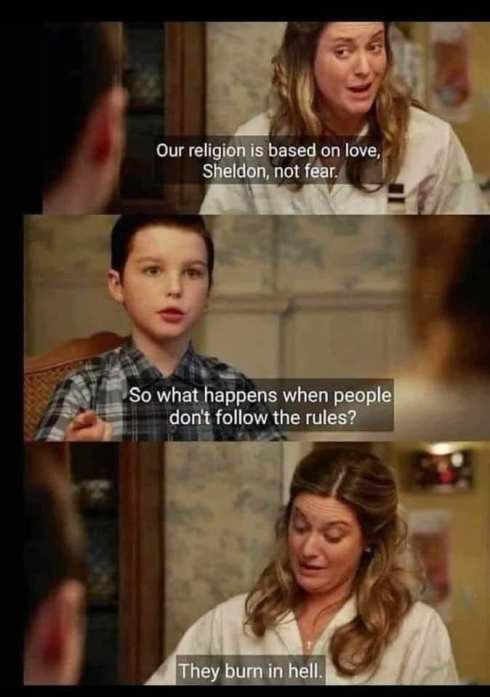
It’s time to organize against the gender religion. I’ve got the book… somewhere. One of the worst feelings in the world is to know you have the book in question, but cannot find it. So here is a quick summary I found on the web.
“According to Alinsky, the organizer, especially a paid organizer from outside, must first overcome suspicion and establish credibility. Next the organizer must begin the task of agitating: rubbing resentments, fanning hostilities, and searching out controversy. This is necessary to get people to participate. An organizer has to attack apathy and disturb the prevailing patterns of complacent community life where people have simply come to accept a bad situation. Alinsky would say, “The first step in community organization is community disorganization.”
Through a process combining hope and resentment, the organizer tries to create a “mass army” that brings in as many recruits as possible from local organizations, churches, services groups, labor unions, corner gangs, and individuals.
Alinsky provides a collection of rules to guide the process. But he emphasizes these rules must be translated into real-life tactics that are fluid and responsive to the situation at hand.
Rule 1: Power is not only what you have, but what an opponent thinks you have. If your organization is small, hide your numbers in the dark and raise a din that will make everyone think you have many more people than you do.
Rule 2: Never go outside the experience of your people.
The result is confusion, fear, and retreat.Rule 3: Whenever possible, go outside the experience of an opponent. Here you want to cause confusion, fear, and retreat.
Rule 4: Make opponents live up to their own book of rules. “You can kill them with this, for they can no more obey their own rules than the Christian church can live up to Christianity.”
Rule 5: Ridicule is man’s most potent weapon. It’s hard to counterattack ridicule, and it infuriates the opposition, which then reacts to your advantage.
Rule 6: A good tactic is one your people enjoy. “If your people aren’t having a ball doing it, there is something very wrong with the tactic.”
Rule 7: A tactic that drags on for too long becomes a drag. Commitment may become ritualistic as people turn to other issues.
Rule 8: Keep the pressure on. Use different tactics and actions and use all events of the period for your purpose. “The major premise for tactics is the development of operations that will maintain a constant pressure upon the opposition. It is this that will cause the opposition to react to your advantage.”
Rule 9: The threat is more terrifying than the thing itself. When Alinsky leaked word that large numbers of poor people were going to tie up the washrooms of O’Hare Airport, Chicago city authorities quickly agreed to act on a longstanding commitment to a ghetto organization. They imagined the mayhem as thousands of passengers poured off airplanes to discover every washroom occupied. Then they imagined the international embarrassment and the damage to the city’s reputation.
Rule 10: The price of a successful attack is a constructive alternative. Avoid being trapped by an opponent or an interviewer who says, “Okay, what would you do?”
Rule 11: Pick the target, freeze it, personalize it, polarize it. Don’t try to attack abstract corporations or bureaucracies. Identify a responsible individual. Ignore attempts to shift or spread the blame.
According to Alinsky, the main job of the organizer is to bait an opponent into reacting. “The enemy properly goaded and guided in his reaction will be your major strength.”











 bleatmop
 Mystro


 Dead Wild Roses
Your opinions…