
You are currently browsing the daily archive for March 20, 2024.
I’m up to Chapter 3 so far and would highly recommend this book to those who want understand the ‘why & how’ of what is happening in our society. Understanding post-modernism is the first step. This is a short summary gleaned from ‘Goodreads’ is a part of what the book is explaining about Postmodern thought.
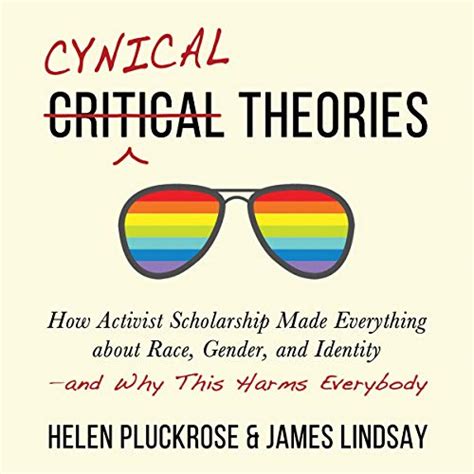
“The online Encyclopedia Britannica defines postmodernism as: “a late 20th-century movement characterized by broad scepticism, subjectivism, or relativism; a general suspicion of reason; and an acute sensitivity to the role of ideology in asserting and maintaining political and economic power.” The authors of this book mentions the two principles and four themes of postmodernism thus:
1. The postmodern knowledge principle: Radical skepticism about whether objective knowledge or truth is obtainable and a commitment to cultural constructivism.
2. The postmodern political principle: A belief that society is formed of systems of power and hierarchies, which decide what can be known and how.
The Four Major Themes
1. The blurring of boundaries
2. The power of language
3. Cultural relativism
4. The loss of the individual and the universalNow, to translate this to words of one syllable.
The first principle means that we can never know the objective truth: indeed, it is doubtful whether it exists at all. The second principle means that what is known as the truth is decided by the power hierarchy inside the system.
Thus, in one fell swoop, postmodernism dethroned science from its pedestal – because if we are not sure whether there is objective truth at all, why spend time looking for it? And in the colonial world, most of the objective knowledge was based upon colonial viewpoints; so a deconstruction of this was essential, especially as Orientalism was holding sway in the West.
(However, this doesn’t negate the power of science – but the fallout of postmodernism has engendered dangerously unscientific attitudes.)
Now let’s move on to the themes.
The blurring of boundaries means categorisations are no longer trusted. Not only the boundaries between objective and subjective and between truth and belief have been blurred, but also those between science and the arts, the natural and the artificial, high and low culture, man and other animals, and man and machine, and between different understandings of sexuality and gender as well as health and sickness. Everything is a spectrum.
The power of language emphasises that it is through language that we define power structures in a society. Under postmodernism, many ideas that had previously been regarded as objectively true came to be seen as mere constructions of language. In postmodern thought, language is believed to have enormous power to control society and how we think and thus is inherently dangerous. It is also seen as an unreliable way of producing and transmitting knowledge. To summarise: we create reality through language.
In a world where there is no objective truth, no boundaries, and where everything is created through how we speak and think, truth and knowledge are different for each and every culture and no one from outside that culture can comprehend it. This is called cultural relativism.
Consequently, to postmodern theorists, the notion of the autonomous individual is largely a myth. The individual, like everything else, is a product of powerful discourses and culturally constructed knowledge. Equally, the concept of the universal—whether a biological universal about human nature; or an ethical universal, such as equal rights, freedoms, and opportunities for all individuals regardless of class, race, gender, or sexuality —is, at best, naive. At worst, it is merely another exercise in power-knowledge, an attempt to enforce dominant discourses on everybody. This leads to the loss of the individual and the universal.
I totally get this. It’s a very nice intellectual exercise: and I must say that in the field of arts, literature and sociology, it has got valid uses. The only place I take the high road while postmodernists take the low road is when it comes to the concept of the individual and the universal, which I do believe are required as valid concepts if we need an equitable world. And also, for all our subjective perceptions, science has discovered many objective truths through its powerful method, which are not dependent upon language and/ or culture.
But now, the authors started talking about Theory (with a capital T: applied postmodernism) and the concept of Social Justice; and I started getting a bit alarmed – because I could now make sense of how I was annoying all those woke people.











 bleatmop
 Mystro
 The Arbourist


 Dead Wild Roses
Your opinions…