
You are currently browsing The Arbourist’s articles.

Andrew Bacevich writes in Tom’s Dispatch about how the Boomer Generation mythos has affected US policy making for much of recent history.
“In Washington, policymakers have shown little inclination to consider the possibility that the United States itself might be guilty of doing evil. In effect, the virtuous intentions implicit in “Never Again” inoculated the United States against the virus to which ordinary nations were susceptible. V-E Day seemingly affirmed that America was anything but ordinary.
Here, then, we arrive at one explanation for the predicament in which the United States now finds itself. In a recent article in the New York Times, journalist Katrin Bennhold wondered how it could be that, when it came to dealing with Covid-19, “the country that defeated fascism in Europe 75 years ago” now finds itself “doing a worse job protecting its citizens than many autocracies and democracies” globally.
Yet it might just be that events that occurred 75 years ago in Europe no longer have much bearing on the present. The country that defeated Hitler’s version of fascism (albeit with considerable help from others) has since allowed its preoccupation with fascists, quasi-fascists, and other ne’er-do-wells to serve as an excuse for letting other things slip, particularly here in the homeland.
The United States is fully capable of protecting its citizens. Yet what the present pandemic drives home is this: doing so, while also creating an environment in which all citizens can flourish, is going to require a radical revision of what we still, however inaccurately, call “national security” priorities. This does not mean turning a blind eye to mass murder. Yet the militarization of U.S. policy that occurred in the wake of V-E Day has for too long distracted attention from more pressing matters, not least among them creating a way of life that is equitable and sustainable. This perversion of priorities must now cease.
So, yes, let’s mark this V-E Day anniversary with all due solemnity. Yet 75 years after the collapse of the Third Reich, the challenge facing the United States is not “Never Again.” It’s “What Now?”
For the moment at least, Tom and I are still around. Yet “our times” — the period that began when World War II ended — have run their course. The “new times” upon which the nation has now embarked will pose their own distinctive challenges, as the Covid-19 pandemic makes unmistakably clear. Addressing those challenges will require leaders able to free themselves from a past that has become increasingly irrelevant.”
Will this latest pandemic foster a new set of priorities across the globe? Many people would like to think so, but I think they underestimate the potency of the current establishment and how entrenched they are in the societal disequilibrium they have created. I most certainly do hope for a new normal, but I’m not optimistic about it actually coming to fruition.
This from the latest issue of Harper’s. I urge my readers to read the entire essay, as it provide a great amount of pertinent history about he American political system and illustrates clearly how the Establishment often acts in concert to dampen the will of the people.
“Further examples from the bitter, costly campaign of 1896 can be piled up almost without limit, but you get the point: we are in the grip of a remarkably similar distemper today. To be clear, I believe that President Trump richly deserves nearly any criticism he gets. He is not really a populist, and I have no intention of building sympathy for him. But the danger of anti-populism is that it goes far beyond objecting to one vile politician. This was demonstrated in March as the anti-populist establishment came together to pummel the campaign of Bernie Sanders. Whatever its target, anti-populism is always a brief for elite and even aristocratic power, an attack on the democratic tradition itself. That is ultimately what’s in the crosshairs when commentators tell us that populism is a “threat to liberal democracy”; when they announce that populism “is almost inherently antidemocratic”; when they declare that “all people of goodwill must come together to defend liberal democracy from the populist threat.”
These are strong, urgent statements, obviously intended to frighten us away from a particular set of views. Millions of foundation dollars have been invested to put scary pronouncements like these before the public. Media outlets have incorporated them into the thought feeds of the world. Just as in 1896, such ideas are everywhere now: your daily newspaper, if your town still has one, almost certainly throws the word “populist” at racist demagogues and pro-labor liberals alike.
Here is David Brooks, making the connection between “populists of left and right” in a New York Times column denouncing Sanders. The Vermont senator, Brooks asserts, embraces
the populist values, which are different [from liberal ones]: rage, bitter and relentless polarization, a demand for ideological purity among your friends and incessant hatred for your supposed foes.
And here is how The Economist made exactly the same point, whining that Americans may soon be forced to choose
between a corrupt, divisive, right-wing populist, who scorns the rule of law and the constitution, and a sanctimonious, divisive, left-wing populist, who blames a cabal of billionaires and businesses for everything that is wrong with the world. All this when the country is as peaceful and prosperous as at any time in its history. It is hard to think of a worse choice.
As it happens, the men of quality did their job, and working Americans will not face the ignoble prospect of voting for a candidate who takes their side against billionaires and businesses. The larger message of anti-populism, regardless of where it comes from on the political spectrum, is always one of complacency. Elites rule us because elites should rule us. They are in charge because they are the best.
And so we come to understand the real task before us today: to rescue from the enormous condescension of the comfortable the one political tradition that has a chance of reversing our decades-long turn to the right.
This essay is excerpted from The People, No: A Brief History of Anti-Populism, which will be published next month by Metropolitan Books. “

Another American Presidential candidate that predates on women. Never fear though, it matters not to most in the US whether predatory males are in power or not.
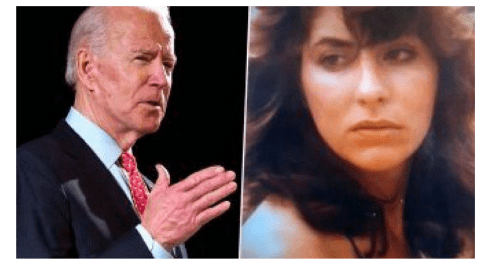
“But it was something she had forgotten — or at least, put out of her mind for years, LaCasse said. After the mid-1990s, she said she and Reade were not in touch, and it was only a few years ago that they reconnected around the time that Reade’s mother died. And according to LaCasse, it was last year when Reade brought up Biden that LaCasse told her that she remembered their conversation about the alleged sexual assault.More recently, after Reade appeared on a podcast and went public with her allegation of sexual assault, LaCasse said she let her ex-neighbor and friend know that she would be willing to publicly say that Reade had confided in her years ago.CNN verified through public records searches, photos and an examination of Reade’s past government identification that LaCasse and Reade were once neighbors.”
I’m not sure why this is even a story. Electing rapists is a thing in the US (please please tell me how patriarchy isn’t a thing) and this ‘stain’ on Biden’s history won’t affect his public persona a whit.
Biden is bulletproof on this issue. He just needs to stand behind the aegis that the current president has erected. The Grab them By the Pussy in Chief has got Biden’s back.
The state of the body politic in the US is revolting – I should not have to be commenting on the normalization of the abuse of women by politically powerful men in 2020, yet here we are.
It fucking sucks.
We need to flatten the wealth curve for our society to continue to move forward and prosper. The out of balance economic shakedown that has been the status quo for so long needs to change. Paul Street writing for Counterpunch lays out the grim details:
“+ 23. Capitalist Inequality Puts Anti-Science Fascist Lunatics in Power. The savage economic inequalities that are written into the inner logic of capitalism put a pandemic-spreading anti-science lunatic, the demented fascistic oligarch named Donald Trump, atop the world’s most powerful nation. In his useful book How Fascism Works, Yale philosophy professor Jason Stanley notes that one of contemporary right-wing nationalist authoritarianism’s key taproots is harsh socioeconomic disparity:
“Ever since Plato and Aristotle wrote on the topic, political theorists have known that democracy cannot flourish on soil poisoned by inequality…the resentments bred by such divisions are tempting targets for demagogues…Dramatic inequality poses a mortal danger to the shared reality required for a healthy liberal democracy…[such] inequality breeds delusions that mask reality, undermining the possibility of joint deliberation to sole society’s divisions (pp.76-77, emphasis added)…Under conditions of stark economic inequality, when the benefits of liberal education, and the exposure to diverse cultures and norms are available only to the wealthy few, liberal tolerance can be smoothly represented as elite privilege. Stark economic inequality creates conditions richly conducive to fascist demagoguery. It is a fantasy to think that liberal democratic norms can flourish under such conditions” (p. 185, emphasis added).
The political culture of pseudo-democratic duplicity and disingenuousness generated by modern capitalist inequality and plutocracy creates space for fascist-style politicians who “appear to be sincere” and “signal authenticity” by “standing for division and conflict without apology. Such a candidate,” Stanley writes, “might openly side with Christians or Muslims and atheists, or native-born [white] Americans over immigrants, or whites over blacks…They might openly and brazenly lie…[and] signal authenticity by openly and explicitly rejecting what are presumed to be sacrosanct political values….Such politicians,” Stanley argues, come off to many jaded voters as “a breath of fresh air in a political culture that seems dominated by real and imagined hypocrisy.” Fascist politicos’ “open rejection of democratic values” is “taken as political bravery, as a signal of authenticity.”
That is no small part of how malevolent far-right politicos – many of them dedicated enemies of science in service to the common good (e.g. the malevolent right-wing narcissist and instinctual fascist Trump and Brazil’s monumentally despicable and ecocidal racist Jair Bolsonaro) – have risen to power at home and abroad. The opening is provided by fake-progressive capitalist neo-“liberals” (in the U.S) and neoliberal social democrats and fake “socialists” (in Europe and elsewhere), whose claims to speak on behalf of the popular majority and democracy are repeatedly discredited by their underlying commitment to dominant capitalist social hierarchies. The demented fascist uber-assholes Trump and Bolsonaro, both of whom have acted to increase COVID-19 deaths in their own nations and thus in the world, are outcomes of capitalism in this and other ways.”











 bleatmop
 Mystro


 Dead Wild Roses
Your opinions…