
You are currently browsing the category archive for the ‘Feminism’ category.
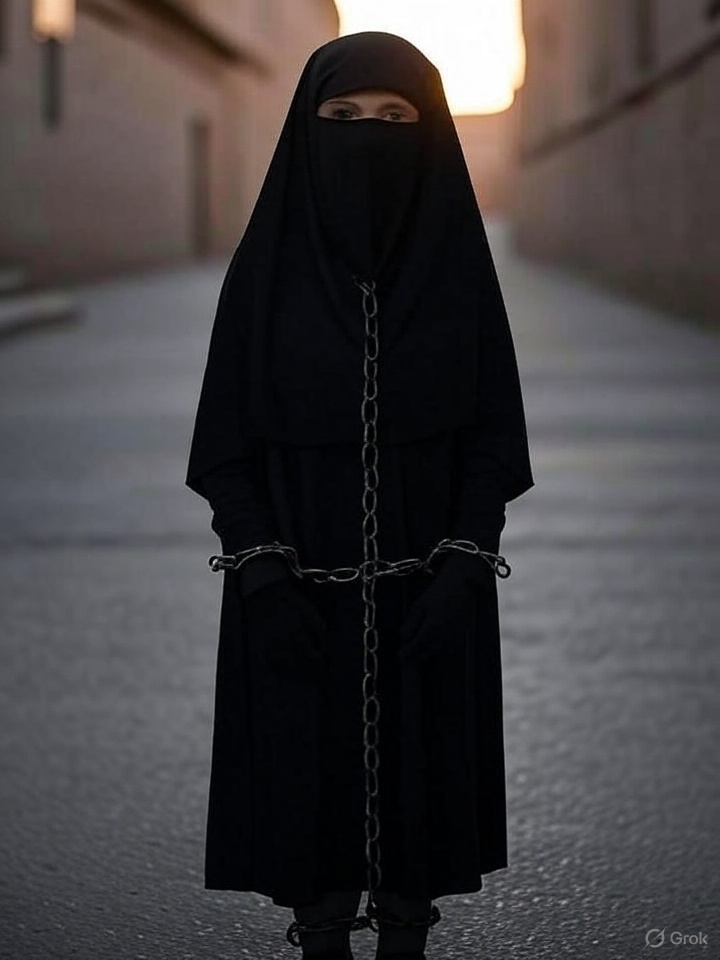
The situation of women in Afghanistan has been a topic of international concern for decades, with significant fluctuations in their rights and freedoms depending on the political climate. Since the Taliban regained control of the country in August 2021, there has been a marked deterioration in the state of women’s rights, boundaries, and freedoms. This essay explores the current state of women in Afghanistan under Taliban rule, examining the historical context, the specific restrictions imposed, and the profound impact these policies have on women’s lives. Through a combination of current stories and scholarly references, this essay aims to provide a comprehensive overview of the challenges faced by Afghan women today.
Historically, women’s rights in Afghanistan have seen periods of progress and regression. During the 1960s and 1970s, Afghan women enjoyed relative freedom, with access to education and employment opportunities. However, the first Taliban regime from 1996 to 2001 imposed severe restrictions, banning women from education and public life. After the Taliban’s ousting in 2001, significant strides were made, with women participating in politics, education, and the workforce. According to a report by the World Bank, female school enrollment increased from 0% under the Taliban to over 3.6 million by 2018 (World Bank, 2020). However, the Taliban’s return in 2021 has reversed much of this progress, reinstating draconian policies that severely limit women’s rights and freedoms.
Under the current Taliban regime, women in Afghanistan face numerous restrictions that curtail their basic rights and freedoms. One of the most significant is the ban on secondary education for girls, which has been in place since September 2021. According to a report by the United Nations, this ban affects over 1 million girls (UN, 2023). Additionally, women are barred from most forms of employment, except in specific sectors like healthcare and primary education. The Taliban have also imposed strict dress codes and restrictions on women’s movement, requiring them to be accompanied by a male guardian in public. These policies are enforced through the Ministry for the Propagation of Virtue and the Prevention of Vice, which has been known to use violence and intimidation to ensure compliance (BBC, 2023).
The restrictions imposed by the Taliban have had a profound impact on the lives of Afghan women, affecting their economic stability, social status, and mental health. Economically, the ban on employment has led to increased poverty, as many women were the primary breadwinners for their families. A study by the International Rescue Committee found that 97% of Afghan households are now living below the poverty line, with women-headed households being particularly vulnerable (IRC, 2023). Socially, the restrictions have isolated women, limiting their ability to participate in community life and access support networks. Psychologically, the constant fear and oppression have led to a rise in mental health issues. According to a report by Médecins Sans Frontières, there has been a significant increase in cases of depression and anxiety among women in Afghanistan since the Taliban takeover (MSF, 2023). Personal stories, such as that of Fatima, a former teacher who now struggles to provide for her family, highlight the human cost of these policies (Al Jazeera, 2023).
The state of women in Afghanistan under the Taliban regime is dire, with severe restrictions on their rights, boundaries, and freedoms. The historical progress made in women’s rights has been largely undone, and the current policies have devastating effects on women’s economic, social, and psychological well-being. The international community has condemned these actions, but more needs to be done to support Afghan women and pressure the Taliban to change their policies. Potential solutions include targeted sanctions, support for underground education initiatives, and amplification of Afghan women’s voices on the global stage. Addressing the situation in Afghanistan is not only a matter of human rights but also a crucial step towards stability and peace in the region.
References
- World Bank. (2020). Afghanistan Development Update. https://www.worldbank.org/en/country/afghanistan/publication/afghanistan-development-update-july-2020
- United Nations. (2023). Situation of Women and Girls in Afghanistan. https://www.un.org/en/situation-in-afghanistan
- BBC. (2023). Taliban Enforce Strict Rules on Women. https://www.bbc.com/news/world-asia-12345678
- International Rescue Committee. (2023). Afghanistan Crisis Report. https://www.rescue.org/report/afghanistan-crisis
- Médecins Sans Frontières. (2023). Mental Health in Afghanistan. https://www.msf.org/afghanistan
- Al Jazeera. (2023). The Plight of Afghan Women Under Taliban Rule. https://www.aljazeera.com/news/2023/1/1/afghan-women-under-taliban-rule
This is Ameneh Bahrami. She was attacked with acid after rejecting a marriage proposal from a classmate.
You never know how brutal and Barbaric Islam is unless you are a Muslim woman.

Ameneh Bahrami, an Iranian woman, became a symbol of resilience after a horrific acid attack in 2004 in Tehran. The attack was perpetrated by Majid Movahedi, a former classmate, who threw acid in her face after she rejected his marriage proposal. This act of violence left Bahrami blind, disfigured, and requiring over a dozen reconstructive surgeries in Spain. The incident gained international attention, highlighting the severe sex-based violence faced by women in Iran, often linked to societal pressures and conservative interpretations of Islamic norms that punish women for asserting autonomy.
The legal and cultural context in Iran further complicated Bahrami’s pursuit of justice. Under Iran’s Islamic penal code, victims of such crimes can seek “qisas” (retribution in kind), and Bahrami initially demanded that Movahedi be blinded with acid, a right upheld by Iranian law. However, in 2011, she forgave him at the last moment, influenced by personal, legal, and societal pressures, including a pardon reportedly from Ayatollah Ali Khamenei. This case underscores the broader issue of acid attacks in Iran, such as the 2014 Isfahan incidents, where women were targeted for not adhering to strict dress codes, often tied to vigilante enforcement of conservative Islamic values.
The story also reflects systemic sex-based violence in Iran, where women face physical, legal, and social oppression. Acid attacks, though not explicitly endorsed by Islamic texts, are frequently associated with patriarchal interpretations of Islamic law and culture that devalue women’s autonomy. Bahrami’s experience, alongside other cases, sparked protests and legal reforms, like the 2019 law increasing penalties for acid attacks, yet the root causes—misogyny and cultural norms—persist, perpetuating such brutality against women.
Males should not be in female changing rooms because these spaces are designed to provide women and girls with privacy, safety, and comfort—needs rooted in biological and social realities. Allowing males, regardless of identity, undermines this by introducing potential risks, from voyeurism to assault, as evidenced by cases like the 2021 Wi Spa incident in Los Angeles, where a registered sex offender exploited lax policies. Women’s boundaries deserve respect, not erosion under the guise of inclusivity, especially when separate facilities can accommodate everyone without compromising female security. Data backs this up: a 2018 UK study found 90% of sexual offenses in changing rooms occurred in mixed-sex spaces. Single-sex areas aren’t about exclusion—they’re about protection.
From Reduxx.info :
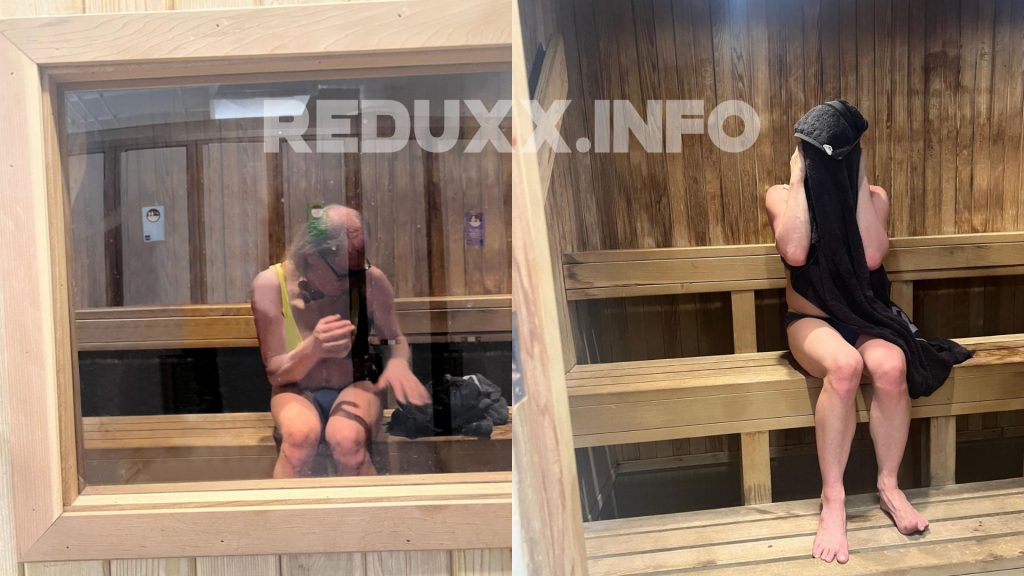
“A Canadian mother has come forward to reveal that she was chastised by staff at her local recreation center after reporting that a balding man wearing “fetish gear” was in the women’s changing room. Despite feeling so frightened that she called the police, the mother was told that the man had a right to self-identify into whatever changing room he felt like.
The incident occurred on February 18, when Keri* and her 14-year-old daughter visited the Bonnie Doon Leisure Centre in Edmonton, Alberta. Their plans to have a fun-filled afternoon at the local pool quickly took a turn for the worse after the two entered the changing area to see an adult man “naked except for fetish gear” standing in the center of the room.
Keri tells Reduxx that the man, who appeared to be in his mid-forties, was wearing a “black penis sling” and an exposed rubber breast form. So shocked by the sight, Keri immediately began to usher her daughter out of the changing area.
“My daughter was behind me… I backed up quickly so she would not keep walking forward and yelled ‘help, there is a man in the change room.’” Keri says she went back to the front desk, where she had just paid for the admission to the pool. After explaining what she had seen in the women’s changing area, a male staff member dismissed her concerns.
“He said something like: ‘yes, this is an inclusive facility, what are you afraid will happen?’ and so I told him I was calling the police. He asked me why I felt the need to call the police, but did not try to stop me.”
While waiting for an officer from Edmonton Police Service to arrive, a female staff member approached Keri to ask her about the situation. Keri recorded the conversation with the staff member, and provided the audio to Reduxx for review.
In the recording, Keri is heard giving a statement to the staff member and explaining precisely what she had experienced.
“I am telling you right now – he is a balding man, in his forties, wearing a penis sling and rubber breasts around his neck… fetish rubber breasts slung around his neck,” Keri is heard telling the staff member. “He is in the women’s washroom. I walked in with my 14-year-old daughter… I am 54, I should not have to put up with it. But she should definitely not be exposed to a man enjoying his fetish in the women’s washroom.”
In response, the staff member explains that “it is the city of Edmonton’s policy that you can use whatever changing room you are most comfortable using.” She goes on to defend the man’s attire, saying “they can wear whatever they are comfortable wearing.”
Let’s not forget the CBC and it’s startling(?) lack of coverage of this.
Bless the Canadian Broadcasting Corporation—our noble guardians of progressive virtue—turning a blind eye to fetish-driven males sashaying into female changing rooms with all the grace of a tax-funded diversity seminar. Why bother reporting on something as trivial as women’s safety when you can churn out another glowing piece on inclusivity, eh? It’s not like the CBC would dare risk its pristine reputation as Canada’s woke megaphone by admitting that some dudes in fishnets might not belong where girls are undressing—nah, that’d clash with the narrative. Besides, who needs pesky facts or viewer trust when you’ve got government cheques and a mandate to keep the maple syrup flowing smoothly over any hint of controversy?
It’s the biggest crime—and cover-up—in British history. And most people, at least until recently, haven’t even heard of it.
Thousands of young girls, mostly children, were systematically groomed and raped by immigrant gangs across the UK over a period of decades. Police turned the girls away. Detectives were discouraged from investigating. Politicians and prosecutors did their best to sweep it under the rug. Journalists skipped the biggest story of their lives. A culture of silence enveloped the United Kingdom. Why?
Today, we talk to two women who spoke out years ago about what was happening while nearly everyone looked the other way: the British feminist and author Julie Bindel, and the author and activist Ayaan Hirsi Ali. Both took tremendous risks in highlighting the story while the legacy press largely looked away. Bindel is the author, most recently, of Feminism for Women and writes a popular Substack column. Hirsi Ali, a Free Press contributor, is the author of numerous books on radical islam, including Prey: Immigration, Islam, and the Erosion of Women’s Rights, which helped bring attention to the grooming gangs scandal in 2021.
Julie and Ayaan explain today what happened, how these rapes and murders were covered up in the name of preserving “social harmony,” how it’s still happening, why Elon Musk is suddenly tweeting furiously about it and how Britain’s ruling class is being forced to reckon with a scandal it had, until recently, successfully ignored.
It’s a story about “tolerance” run amok, and how a civilized country can convince itself to accept the most uncivilized crimes imaginable.
Reprinted from the National Post by Amy Hamm: Ms.Hamm writes a formidable polemic on the current war on women and their rights in Canadian society.
“J.K. Rowling saved western civilization. Yes, one woman alone.
Rowling, billionaire, famous author of Harry Potter, and outspoken critic of gender ideology, is arguably the largest single force behind a recent inflection point in the West’s culture wars.
Our culture has been pushed to the brink of an irreversible takeover by delusional despots of a radicalized and bastardized left and now — mercifully — appears to be trending in the direction of a relative normal. We are not there yet. And while some countries, Canada included, are lagging, there’s no denying that a seismic cultural shift was recently felt across the West. We certainly felt it with president-elect Donald Trump’s win in the U.S., in which the “trans issue” pushed swing voters en masse to the Republican Party. But the “trans issue” was at the forefront of voter’s minds not only because of Trump, but because J.K. Rowling spent several years instigating an international conversation on gender.
Article contentGender, or more specifically, gender ideology — which posits that gender is socially constructed, as if each of us has a unique, personalized “gender identity” existing as a soul-like essence contained within, but apart from, our physical bodies — has become a state religion across western countries over the last decade. So unique and special is one’s inner and metaphysical sense of gender, we are to believe, that there are potentially infinite variations; indeed, the British Broadcasting Corporation once proudly told children that more than 100 of them existed, including “bi-gender” and “queer-gender.” Their “educational” program has since been memory-holed. Good riddance.
Believe whatever you like about your identity. All of us deserve to be treated with dignity regardless of our beliefs. It is when women are told they must obey — both in action and within the privacy of their own minds — that things have gone too far.
The madness of gender ideology cannot be separated from the generalized madness of modern “progressivism,” which is, simply, a nouveau and left-wing identitarianism. It is a politicized and destructive obsession with gender, race, and sundry categories that may form the basis of one’s (often alleged and dubious) oppression. Gender appears to be the primary obsession of this new zealotry, with race coming in a close second. There is nothing this new identitarianism doesn’t touch — it falls like darkness at sunset. By way of example, we are told that climate change is, in fact, a race issue — via claims that it disproportionately affects racial minorities. Athletics, rather than being about, well, athletics, are now the “frontier of people who are trans,” according to astrophysicist and author Neil deGrasse Tyson, who recently stuffed his clown-sized foot so deep into his craw on the issue of natal males competing in female sports that he — a scientist — was handily bested on biology by journalist Piers Morgan.
A belief in gender ideology makes one lose their senses entirely. And that’s the point: adherents are to denounce basic reality to demonstrate their faithfulness. To prove they are not evil heretics. Or else. During the period that most were too terrified of speaking up, gender ideology took over our institutions — cultural, government, and health care — our workplaces, and even our personal lives. Then J.K. Rowling came along and said: “To hell with that.”
Rowling did three things, when it came to gender, and she did them as the first of her (famous, fantastically wealthy) kind: she refused to repeat the institutionalized lies of gender ideology; she used her clout to intervene in the public abuse of un-famous women who did the same; and — crucially — she refused her own cancellation. In fairness, she didn’t just do these things, but she does them daily; on repeat, and to a chorus of her self-identified sworn enemies who can be found stomping, screaming, crying, calling for her assassination, and warming themselves by the pyre of 1,000 Harry Potter paperbacks. These fits are no matter to Rowling, whose sass is unparalleled: “I get the same royalties whether you read them or burn them. Enjoy your marshmallows!” she has quipped at one such book burner.
In a recent X post, Rowling made it clear she will never back down. “If there’s a better hill to die on than the rights and safety of women and children, I’ve never found it,” she wrote.
Detractors claim that Rowling adopted a “pet issue” in gender ideology’s impact on women and children — which couldn’t be further from the truth. The impact is enormous and terrible. Rowling is accused of being obsessed with transgender persons: their lives, their choices, and even their genitals. Such accusations are common refrains of gender activists. It is mere projection. It is a tactic of abusers — to turn their own fears, anger, and ugly emotions onto someone else: to accuse others of what they do best and constantly.
Is it Rowling, they say, who obsesses over what’s between someone’s legs; but it is the gender activists who’ll go on record referring to women by such grotesque names as a “person with a vagina.” That doozy was from Canada’s Supreme Court Justice Sheilah Martin, used in a sexual assault ruling in 2024. Last month, from an American courtroom, a newly-minted epithet: women might be known as “vaginally-presenting people.” Are you offended? Disgusted? Well, that’s only because you are flatly obsessed with genitals! Have you got a fetish or something?
How did we get here? As I mentioned, it appears that, over the last decade, peculiar and irrational ideas began to creep into the everyday thematics of western culture. What you might once have expected to hear while eavesdropping on first-year university students gathered for a heady anarcho-post-modernist-topple-the-patriarchy-anti-capitalist-save-the-planet-eat-the-rich-power-to-the-oppressed club became something you would hear in quotidian conversation.
Suddenly, your peers, friends, and colleagues were began obnoxiously vomiting the language of the indignant and nouveau activism, all doggedly obsessed with intersectionality and hierarchies of oppression. Everyone, it seemed, wanted to be known as a social justice activist. Everything nuanced became black and white. Good and evil. Things we used to say, thoughtlessly, became verboten. The definition of “hate” grew exponentially and by the day. Included in the new definition of “hate” was any rejection — no matter how considerate and moderate — of the mantra: “Trans women are women.”
You can’t say that, we were told, certainly not as a “cis” woman, or — even worse — a white woman, or a “colonizer.” Check that privilege, girl. We started to fret before we even opened our mouths to speak: Is this speech permitted under the new world order? Best to stay quiet, than to risk saying something wrong. Words, we were told, were now literal violence.
We women dared not speak about our experiences without first consulting with a “woman” who was “assigned male at birth” — lest we utter the phrase that would not just offend, but erase the very existence of, a transwoman. There are endless variations of this powerful and annihilating expression, the simplest of them being: He is a male. How ironic, that at the same time as we women lost our sex-based rights, we gained the lethal skill of obliterating others using only our words.
We lost friends and entire social circles, for refusing to bend the knee.
Countries began to enshrine the metaphysical concept of “gender identity” into law. Canada’s Bill C-16, passed in 2017, did just that, adding the concept as a protected class under human rights legislation. It paved the way for self-identification policies that now allow natal males to identify their way into our bathrooms, rape shelters, prisons, sports — or any other space where women and children once had the right to segregation for our own safety or dignity.
Across the West, we all fell into four broad categories regarding the “trans issue”: those unaware; those terrified or otherwise unwilling to speak out; those who’d gleefully punish you if you did; and those who spoke out anyways.
Then came Rowling. It began with a December 2019 tweet: “Dress however you please. Call yourself whatever you like. Sleep with any consenting adult who’ll have you. Live your best life in peace and security. But force women out of their jobs for stating that sex is real? #IStandWithMaya #ThisIsNotADrill.”
The tweet referred to Maya Forstater, a British woman whose online posts about gender ideology cost her a job. Ultimately — and on appeal — she won the case against her employer and was awarded hefty costs for their ugly and wrongful dismissal. The Employment Tribunal ruled that Forstater’s beliefs — centred upon the bald fact that men can never become women — are protected under the country’s 2010 Equality Act. Indeed, Forstater’s “beliefs” in observable and testable reality, often referred to as “gender critical,” were deemed “worthy of respect in a democratic society.”
Rowling used her fame and clout to stand up for an everyday woman. She has done this many times. This story is close to me. Like she did with Forstater, Rowling also stood up for me, by showing public support during my four-year (and counting) legal battle with the B.C. College of Nurses and Midwives. Like Forstater, I have refused to lie and say that males can declare themselves females. (Full disclosure: Rowling recently surprised me by generously gifting a $5,000 Gucci purse for Christmas. I was writing this piece before this happened.)
Politicians or celebrities would be so lucky to be accused of representing the “everyman.” But representing the “everyman” or “everywoman” is generally theoretical; it’s a set of promises, a way of speaking, and one’s broad appeal to the average person. It is hauling “regular Joe” on the stage for a political rally, flaunting his everyday-ness to the crowd, and then never speaking to him again. It does not require meaningful action.
It’s not the same thing as finding the “everywoman,” taking on her struggle, and materially changing her life with your clout and backing. Rowling did this for Forstater. It was unprecedented. The world paid attention because of how unusual it was for a billionaire to go to bat for a stranger facing public cancellation after expressing her political views. On gender, no less.
In 2019, women’s growing opposition to the prevailing gender orthodoxy rarely made the news. Not only were “uppity” women like Forstater being silenced and fired for speaking out, but our stories, too, were kept quiet, our work and actions to raise awareness of gender ideology conveniently looked over by politicians and most media — lending credence to the false narrative that no significant opposition to gender ideology existed at all. Rowling elevated women’s opposition to the mainstream. We were no longer lone bigots with “transphobic” intentions. We were with Rowling, and she was with us. And gender ideology went from being widely perceived as a silly or niche concern to what it really was: a serious attack not just on women and children, but also on our freedoms, our culture, and reality itself.
And then, in June 2020, Rowling penned an essay that sparked a furor that kept us on track to change the very direction of western civilization.
In it, Rowling explained her interest in sex, gender, and trans. She also revealed she has survived sexual assault and domestic abuse. Not a word of it was remotely “transphobic”; the opposite, in fact — Rowling detailed her belief that “the majority of trans-identified people not only pose zero threat to others, but are vulnerable… Trans people need and deserve protection,” she insisted.
“I refuse to bow down to a movement that I believe is doing demonstrable harm in seeking to erode ‘woman’ as a political and biological class and offering cover to predators like few before it. I stand alongside the brave women and men, gay, straight and trans, who’re standing up for freedom of speech and thought, and for the rights and safety of some of the most vulnerable in our society: young gay kids, fragile teenagers, and women who’re reliant on and wish to retain their single sex spaces,” wrote Rowling.
To the gender activists, the thoughtful and not-at-all-hateful essay was taken as heresy on top of apostasy. Rowling was a witch, and she needed to immediately burn atop a pile of her own books. A CNN headline quoted a trans activist calling the essay “devastating” in its “misinformation and transphobia.” The young actors Rowling made famous and wealthy with her Harry Potter movies, including Emma Watson and Daniel Radcliffe — the little brats — went on a tear by publicly denouncing the woman they owe their every success to. Rumours about how “transphobic” a screed Rowling’s essay was were as fantastical as a Hogwarts’ tale. And Rowling received countless threats of violence and death, which continue to this day.
Rowling’s essay was as much an explanation of her involvement in our increasingly venomous culture war as it was a declaration of a counterwar. It fired back at those who would destroy society with their censorship, repressive tolerance, and total disregard for the truth. It wasn’t just about “gender” any longer, it was about halting the accelerating decline of the West. It was a huge middle finger to the barbarians already past our gates.
After Rowling’s essay, when the mob again came to cancel her — with fresh vigour — her refusal to apologize provided a short answer: No. Ever since, the cancellation mob, no matter their target, has seen diminishing returns on their investments of outrage.
Later in June 2020, employees of Rowling’s publisher, Hachette, told the company they would henceforth refuse to work on the production of “The Ickabog,” a children’s story, because of Rowling’s views. Rather than capitulate, Hachette reminded their staff about the raison d’être of the industry they (apparently witlessly) found themselves employed in: “Freedom of speech is the cornerstone of publishing,” the company said in a statement.
Rowling would not be cancelled. She would not apologize. Cancel culture, she decided, was over. To hell with her legacy, invoked by critics wanting to bash the non-existent thing over her head to make her feel shame. It was nothing more than the lukewarm threats of would-be tyrants, whose cultural power was now starting to slip. “You know, what a pompous way to live your life walking around thinking, ‘What will my legacy be?’ Whatever, I’ll be dead,” Rowling said in the first episode of her podcast, The Witch Trials of J.K. Rowling.
Though she clearly doesn’t care — and as the character of her enemies suggests — I am certain that Rowling’s legacy will be just fine.
People who lack vast sums of money (nearly all of us) will say: “If only I had the money and I could finally say what I really mean.” But we are forgetting one thing: there are many persons who have that type of money — f*ck you money, never-work-another-day money, where should I overwinter my yacht money — and nearly all of them fail to wake up every morning and stand up to a mob of self-righteous and deluded gender cultists. One does not need to be a psychic to understand that what is occurring in the minds of the wealthy who do not stand up is the same phenomenon occurring in the minds of the non-wealthy who do not stand up: a lack of courage.
A lack of courage, and, as Rowling posted recently, a desire for social accolades: “…there’s certainly a benefit to simpering that you’re completely fine with it, can’t see what the issue is and calling women who disagree fascists, or we wouldn’t be seeing so many wealthy, famous, protected women throwing vulnerable women under the bus.” It is a widely appealing method to collect praise by proclaiming one’s unremitting loyalty to a dominant ideology, no matter how harmful that ideology is to the fabric of our civilization. Given the opportunity, many willingly demonstrate that they are unimpressive henchmen.
And while those lacking in courage are busy grovelling for dopamine hits by publicly “supporting the current thing,” as the meme goes, Rowling can be found risking her safety and freedom to protect others.’ You cannot cancel Rowling, and she will not permit you to cancel others.
In April 2024, Rowling responded to the Scottish government’s passing of a new “hate speech” law by tempting her arrest and taunting the Scottish police to lock her up. At the end of a long X thread highlighting the crimes, scandals, and abuses of numerous transgender-identified males, Rowling wrote: “Freedom of speech and belief are at an end in Scotland if the accurate description of biological sex is deemed criminal. I’m currently out of the country, but if what I’ve written here qualifies as an offence under the terms of the new act, I look forward to being arrested when I return to the birthplace of the Scottish Enlightenment.”
Gender activists lodged thousands of public complaints in a single day. Rowling was not arrested. Police told the public they would take no action against her. The new law — antithetical to any western democracy — was effectively neutered by one woman’s courage.
That’s Rowling. She possesses a defiance that is both legendary and critical for our times. She did not need to do any of this. It would have been far easier had she not. In fact, in her essay on sex and gender, she admits that being hounded by gender extremists is “endlessly unpleasant.” She’s human, after all. “I’d stepped back from Twitter for many months both before and after tweeting support for Maya, because I knew it was doing nothing good for my mental health,” wrote Rowling.
Her wealth and fame ensure that when she speaks, people listen — but they do nothing to insulate or make her immune from the vicious hatred she gets in return. And yet, she doesn’t let up.
A civilization that institutionalizes and enforces the telling of absurd lies — including the lie that humans can change their sex — is in decline. Likewise, for a civilization that not only does not protect women and children from male violence — but enables and excuses it to occur in the service of upholding the states’ mandated lies. Again, the same can be said of a western culture that normalizes the chemical — followed by surgical — castration of its own children, as we see with the medical scandal that is pediatric “gender affirming care.” The West is very sick right now.
We have been living under forced subservience to the foolish and dangerous notion that nothing is more important than “identity” — including self-declared and patently false ones — and that we must upend our culture, institutions, and even our safety and lives in a demonstration of fealty.
I do not wish to imagine where we would be, in 2024, had Rowling not done what she has done — for women and children, for freedom, and for the West. Do not mistake my praise for celebrity worship, either: this is about character, bravery, and virtue in the context of the power conferred by Rowling’s celebrity and reach. If any single person is to one day receive credit for saving western civilization, it is Rowling.
The fight is not over, but she has shown us the way.”

Do a pulse check with your leftist friends – see if they understand what is going on in terms of women’s right’s and safety vis a vis transgender ideology.
Okay, lady followers. I’m taking a cue from @NancyMace :
. I do not like discussing any of my past on a public forum, but I think it is important for people (men) to understand how prevalent it is that almost all of us have experienced some sort of harm at the hands of men in our lives so that the “be kind” brigade understand – and I am a woman, very happily married to a lovely man for the last 33 years. But, THIS is why we are so adamant about keeping creepy, predatory men out of our spaces.
You don’t have to detail what happened to you, but simply hit the “like” button if you know what we are talking about. Here are (just a few) of mine: Junior High: Was called into the counselor’s office because, as a “high achiever,” I was just not “acting like myself.” When I explained that a boy had been “pushing” me to “do stuff” (I was very inexperienced) the counselor physically pulled me around his desk to “show” me what I “should” do. I freaked out and ran out of his office. He continued to try to pull me out of class, and stalked me for four years afterwards.
In HS, I was a cross country runner and taught high impact aerobics at night to make money for gas and lunch. I ended up with torn cartilage in my rib cage from “overwork”. Manger at my gym (employer) sent me to a physical therapist. The PT proceeded to sexually assault me, all while claiming it was “therapy.” I was 16. I was alone, in a “therapist’s” office. He was well over 6 feet, I was 5 foot, 100 pounds. I have felt guilty my whole life that I didn’t stop it.
I was an adult lawyer working for the legislature. Adult physician, head of a prominent medical school, sitting next to me on a private plane tells me he wished he was my “gynecologist,” so that he could “probe” me. Point of this list, and there are more stories, is that EVERY woman has them. Please stop minimizing our fears about men suddenly invading our safe spaces just because they have decided they “are women”. Our. Fears. Are. Real. #HoldTheLine











 bleatmop
 Mystro
 The Arbourist


 Dead Wild Roses
Your opinions…