
You are currently browsing the category archive for the ‘Gender Issues’ category.
Letter to the PM and Premier Doug Ford on the danger of “gender affirming care”. Share widely. 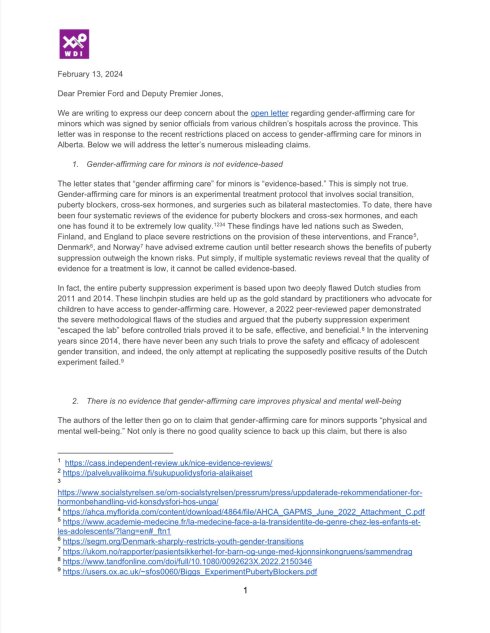

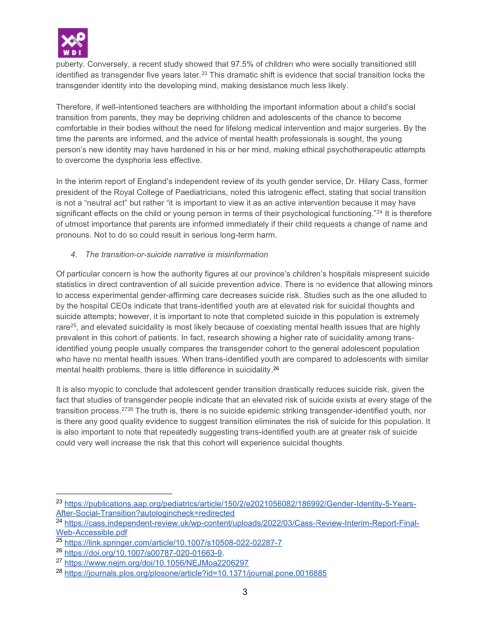

Reproduced in full – Find the original here.
“A common claim by Americans who oppose state restrictions on “gender-affirming care” is that Sweden, Finland, and the U.K. have not done away with hormonal interventions—and therefore that Republican lawmakers who seek such restrictions are going beyond Europe, and presumably against what European health authorities recommend. Jack Turban, a prominent voice in the affirmative-medicine movement and a notorious source of misinformation on this issue, has said that “not a single country” in Europe “has banned gender-affirming care for trans youth.” The claim is true in a narrow and technical sense, but highly misleading.
In the past few years, European health authorities conducted systematic reviews of evidence for the benefits and risks of puberty blockers and cross-sex hormones. The findings from these reviews—that the certainty of benefits is very low—guided the hand of policymakers there to restrict access to hormones. Currently, minors in these countries can access puberty blockers and cross-sex hormones only if they meet strict eligibility requirements as set out in the Dutch protocol and only in the context of a tightly controlled research setting.
As I’ve explained in pastwritings, the research from the Dutch clinics is championed even by American proponents of “affirmative” medicine as the gold standard in pediatric gender medicine. These advocates either don’t know or are deliberately misleading the public about the discrepancy between the Dutch protocol and what is actually happening in American clinics. The American approach effectively puts distressed teenagers in the driver’s seat of making risky and irreversible medical decisions. It assumes that “gender identity” is innate and immutable, that some kids are just born “trans” and can know this from as young as toddlerhood. It also uses the “minority stress” model to explain away co-occurring mental-health problems, which appear in roughly three-quarters of patients presenting at pediatric gender clinics.
In effect, once a child declares that he is trans, the role of doctors is to “affirm” that declaration medically. Parents are to consent to treatments or get out of the way. Mental-health professionals are there only to help the child cope with the stress that comes from being in a minority, since, as Turban puts it, “most of society is awful.”
One source of confusion, therefore, concerns what, exactly, white-gowned activists like Turban mean when they say “gender-affirming care.” As Hilary Cass noted in her report to the U.K.’s National Health Service, the American affirmative model removes the main guardrails put in place by the Dutch protocol, resulting in a lack of medical “safeguarding.” At least in its official policy, Europe is decidedly not practicing what Turban considers “gender-affirming care.”
To be sure, the problems with the American affirmative model should not conceal the fact that the Dutch study itself rests on a very shaky empirical foundation. The study’s flaws were discussed at length in a recent peer-reviewed article, but two in particular should be mentioned before considering the European systematic reviews.
First, the Dutch study’s lead author, Annelou de Vries, has admitted that “resolution of gender dysphoria” was its “main finding.” But this finding was based on a highly questionable use of the Utrecht Gender Dysphoria Scale—a measure originally developed for diagnostic purposes, not to assess treatment outcomes. The scale is sex-specific, which means that biological males and biological females are given different versions of it. Among other differences, the female version includes questions on menstruation while the male version includes questions about erections. In their follow-up assessments, the Dutch team gave boys who had undergone hormonal treatments the girls’ scale and girls who had undergone hormonal treatments the boys’ scale. Thus, biological males were asked whether experiencing menstruation caused them distress. Since even boys who “transition” do not get periods, those who answered the questionnaire reported a low level of distress. In other words, the plummeting scores in gender dysphoria that the Dutch team reported as their “main finding” was not necessarily due to actually resolved dysphoria, but more likely to switching the scales.
Second, replication is a bedrock of scientific analysis, yet the only attempt to date to replicate the Dutch study, conducted in the U.K., failed. Preliminary results from the study, which began in 2010, were reported as very unimpressive, with adolescents after one year of puberty suppression showing an “increase in internalising problems and body dissatisfaction, especially natal girls.” Moreover, the cohort that received puberty blockers showed no statistically significant difference from the cohort that received only psychotherapy. As Michael Biggs has pointed out, the full picture of the study’s findings became public only after a prolonged campaign to force the researchers to publish their findings.
Contrary to what American activists imply, the systematic reviews of evidence in Sweden, Finland, and the U.K. did not find that the Dutch study, on which the Dutch protocol is based, constitutes high-quality evidence. One of the core questions in the systematic review by the U.K.’s National Institute for Health and Care Excellence (NICE) was this: “In children and adolescents with gender dysphoria, what is the clinical effectiveness of treatment with GnRH analogues [puberty blockers] compared with one or a combination of psychological support, social transitioning to the desired gender or no intervention?” Using the Grading of Recommendations, Assessment, Development, and Evaluations (GRADE) system, NICE assessed the Dutch study for seven reported metrics of mental health impact: gender dysphoria, depression, anger, anxiety, body image, global functioning, and psychosocial functioning.
It found that evidence for benefits across all seven measures was of “very low” certainty. NICE’s conclusion about all the studies on puberty blockers, including the Dutch, was unequivocal: “Studies that found differences in outcomes could represent changes that are either of questionable clinical value, or the studies themselves are not reliable and changes could be due to confounding, bias or chance.” NICE conducted a separate systematic review for cross-sex hormones (which the Dutch study did not independently cover) and found that “[a]ll the studies . . . are uncontrolled observational studies, which are subject to bias and confounding and were of very low certainty using modified GRADE. A fundamental limitation of all the uncontrolled studies included in this review is that any changes in scores from baseline to follow-up could be attributed to a regression-to-the mean” (because patients tend to report for care at the peak of their distress).
The systematic reviews by Sweden’s Committee for Medical and Social Evaluation (SBU), meantime, likewise found that the evidence for the mental-health benefits of hormones, including from the Dutch study, was very uncertain, because of the “moderate to high risk of bias” in these studies. The studies exhibit numerous methodological shortcomings, including confounding factors, lack of control groups, and high rates of attrition. “The identified scientific basis regarding hormone treatment of children and adolescents with gender dysphoria,” SBU concludes, “is limited and it is not possible to draw any conclusions with moderate or high reliability. For most outcomes examined in this report, the evidence is insufficient and conclusions cannot be drawn.” SBU also reported “low confidence” in the assessed health risks of hormonal interventions in minors. In essence, Sweden recognizes this as a medical experiment with no high-quality, reliable data on long-term benefits or risks.
The results from the evidence review in Finland are harder to interpret because most of the studies evaluated involved adults, and the review did not rate the quality and reliability of the studies. In other words, the review did not try to assess the degree to which even the positive findings in the Dutch study were causally related to the hormonal treatments. Nevertheless, on the basis of this review, and a study published by Finnish gender clinicians shortly thereafter finding that “medical gender reassignment is not enough to improve functioning and relieve psychiatric comorbidities,” the country’s Council for Choices in Health Care (COHERE) issued new recommendations in 2020. Even for patients whose gender issues appeared first in childhood and intensified in adolescence (a pathway that is required for hormonal eligibility under the Dutch protocol but optional under the American-affirmative one), COHERE recommends that “the first-line treatment for gender dysphoria is psychosocial support and, as necessary, psychotherapy and treatment of possible comorbid psychiatric disorders.” In the same document, COHERE emphasizes that “gender reassignment of minors is an experimental practice.” This includes minors transitioned under the Dutch protocol.
Yes, Sweden, Finland, and the U.K. still allow a tiny subset of minors with gender issues access to puberty blockers and cross-sex hormones. But they are doing so under tight restrictions and against the findings of their own systematic reviews—or, as in the case of Finland, in full recognition that this constitutes medical experimentation on minors.
A good case can be made that Republicans who seek to ban these interventions entirely are being more faithful to the findings of the European evidence reviews. The real debate between red states in the U.S. and European health authorities is not about whether there is good evidence for pediatric gender transition. There isn’t. Rather, the debate is about whether children as young as eight with a strong desire for “gender affirming” drugs have the ability to understand fully and give informed consent to the long-term consequences of these interventions—and even if they can, whether this justifies enlisting them in an uncontrolled medical experiment.”
Eva Kurilova on twitter writes on how harmful gender ideology is for children.
@eva_kurilova
If the option to become a boy had been presented to me as a child, I would have become obsessed with the idea and believed I’d never be happy if I didn’t do it. This would have been encouraged by adults like@JanisIrwin,@JyotiGondek, and@RachelNotley with no concern about whether such a fixation was good for my mental health or my health and happiness in the future.
Such people care only about appearing progressive and compassionate rather than about having difficult conversations and risking unpopularity, which actual compassion often entails. The rhetoric around this issue would probably even lead me to believe that I would end up committing suicide if not allowed to pursue this path. In fact, up until my late 20s I often sometimes wondered if I’d one day wake up suicidal about not transitioning, since the messaging was that that’s what girls and women like me were supposed to do.
Think about how abhorrent it is to put these thoughts into the mind of a child and think about how heartless it is to tell them once they are older and regretful that it was all their choice and therefore all their fault. But, instead, people like those mentioned above and others are raging and even crying about the policies proposed by
@ABDanielleSmith that would ensure such a thing doesn’t happen. It is completely upside down.
This is a mockery of the kind of care and concern society is supposed to show to its children. It’s “give kids what they want or they will kill themselves.” It’s narcissistic abuse and adult temper tantrums rolled into one. It’s something that these so-called adults will be trying to live down and pretend they never did in a few short years when they’ve moved on to the next virtue signal of the day. It’s pathetic and morally bereft.
Catch the article in the National Post.
Last November, the Post ran a column by transwoman Julia Malott who allegedly supports my right to free expression but simultaneously believes that my “persona” has devolved and that I’ve become divisive and resentful. The devolution, she wrote, occurred during my three-year-and-counting legal battle with the British Columbia College of Nurses and Midwives over my political speech on women’s rights and the binary nature of human sex.
The situation in Canada is dire; we are well beyond the point of change making via raising our hands to speak before whimpering politely towards a cacophony of rainbow-adorned tyrants. There are sexual predators that have been transferred from men’s to women’s prisons based on “gender identity” rather than anatomy. The same is true of rape shelters. Those born as males are competing in women’s sports categories. Hundreds of underage Canadian girls are being greenlighted for double mastectomies because they do not wish to be girls. Our health-care system continues to medicalize and transition gender non-conforming youth, despite the fact that other countries have realized this is a medical scandal not based on sound — or even any — evidence.
Canada’s self-identification policies, flowing from gender identity legislation, have enabled 50-year-old transwoman Melody Wiseheart, who began swimming under that name in 2019, to compete against and undress in the same changing room as little girls and teens. And for Kayla Lemieux to wear obscenely large prosthetic breasts with protruding nipples while teaching high school students. Tara Desousa, known pedophile, rapist, and murderer, transitioned while in prison and now resides in a B.C. prison that runs a mother-baby program.
Regulated professionals like me, or Jordan Peterson, are being sanctioned, punished, defamed, and censored for following truth, evidence, and our conscience — whether we are anodyne or not. And our court system, as Peterson has shown, may not afford any remedy. At this juncture, trying not to be “divisive” with our words is no different than waving a white flag. I refuse to equivocate over or sanitize the truth — and the provocation of an extremist minority is, to me, an acceptable side effect of my refusal to do so. They’re mad? So be it. I’m mad too.
Malott wrote that she “was struck by a sense of lost potential” and saw me as someone she could “possibly envisaged as a friend” — if only I hadn’t become so bitter and devolved as a result of my free speech battle. Well, I’m not fighting to make friends or hold ineffectual conversations.
Amy Hamm is a freelance writer and healthcare professional. She is co-founder of the nonpartisan Canadian Women’s Sex-Based Rights (caWsbar).
This is a full repost of Amy Eileen Hamm’s article from the New West Times.
It is important that news like this gets proper exposure and to illustrate how the MSM is not doing its job. Plus it gets it on Facebook around the stupid news censorship in Canada.
By now, every Canadian has heard the news out of Alberta. Although depending where you get your news, you’ve either heard that Alberta Premier Danielle Smith has announced a forthcoming genocide camp for LGBT youth or—for those who’ve not lost their grip on reality—you’ve heard that Smith is taking an evidence-based stance on transgender healthcare for minors, protecting female athletes in sports, and ensuring parents have the right to safeguard the well-being and best interests of their children.
There will be no more puberty blockers or cross sex hormones for children under 16. No gender surgeries—such as double mastectomies or penile inversions—for minors under 18. No more teachers changing under-16 students’ names or pronouns without parental permission. No more leaving parents in the dark about gender-identity school lessons. Parents can continue to opt their children out. For female athletes, they will have sports leagues of their own: no males can identify their way in.

Smith is bringing safety, fairness, parental rights, and reason back to her province. She is bringing Albertans exactly what the majority of Canadians support, as per a recent Angus Reid poll that shows parents expect to be notified if their kids suddenly identify as transgender at school. (What loving parent wouldn’t want to be?) Similarly, a 2021 poll reveals that Canadians want sports segregated by sex, not gender self-identification.
There’s no denying that Smith’s new legislation is reflective of majority Canadian sentiment. So naturally, Canada’s activists and hard left, plus their sycophant Liberal and NDP bootlickers—fringe minority that they are—had a Chernobyl-level nuclear meltdown, with a fallout zone well beyond Alberta’s borders.
Notably, our national broadcaster trotted out vile misogynist Fae Johnstone, slapped an “expert” label on the transgender-identified male, and hit “publish” on another gaslighting piece of state propaganda. They quoted Johnstone on Smith’s new rules: “This is interfering ideologically in the provision of medically necessary healthcare for trans and gender diverse young people.” He also claimed the new legislation “flies in the face of establishing medical best practice.”
All of what Johnstone said is demonstrably—and infuriatingly—false. The only ideology at play is his. Gender “affirming” healthcare for minors is being globally outed as the medical scandal that it is, with numerous Scandinavian and European countries implementing restrictions or bans on the treatment of children. The World Health Organization just released trans care guidelines that do not include standards for youth or minors; they cite a lack of evidence to support childhood transition guidelines.
Persons like Fae Johnstone are desperate to bury the truth. When not lying via our government-funded media platform, Johnstone can be found trolling and threatening women with differing political opinions online. “I actually do want a political environment in which TERFs are so vilified they don’t dare speak their views publicly,” he once wrote. Because if you can’t beat them, shut them down.
And then there’s Canada’s Special Advisor to the Prime Minister on LGBTQ2 issues, Randy Boissonnault, who took the good news from Alberta particularly poorly. In a presser, the man insisted that joining your school’s chess club or debate team is no different than changing your gender and going on Lupron, the puberty-blocking drug used off-label for trans kids and also to castrate sex offenders.
“Nobody calls your parents when you join the debate team. But now, if somebody thinks you’re questioning or queer, they’re gonna tell the teacher and the teacher’s gonna call the parents,” said Boissonnault. “This is our NATO moment as an LGBTQ community. An attack on one of our communities is an attack on us all.” Boissonnault, a gay man, seems blissfully unaware that childhood medical transition is disproportionately inflicted upon gender-confused kids who, if left alone to go through puberty, would simply end up gay. What Canada is doing to “trans” kids, in many cases, is “transing the gay away”; it’s a modern form of conversion therapy. It must stop. We are an international embarrassment on several fronts, most appallingly so for ignoring the global demise of gender ideology and destroying the bodies and minds of untold numbers of vulnerable children.
In response to Premier Smith, legal group Egale Canada has called her proposed legislation “unconstitutional” and claims they will launch a court challenge. It’s possible that the federal government will, too. Minister Boissonnault is promoting a rally to protest Smith’s proposed changes at the Edmonton Legislature this weekend.
Premier Smith is not backing down. Good for her. Canada needs an enormous dose of reality, and our petulant gender activists need their tantrums to go ignored. Let them stamp and shout and lie—the adults in the country are finally having a conversation.
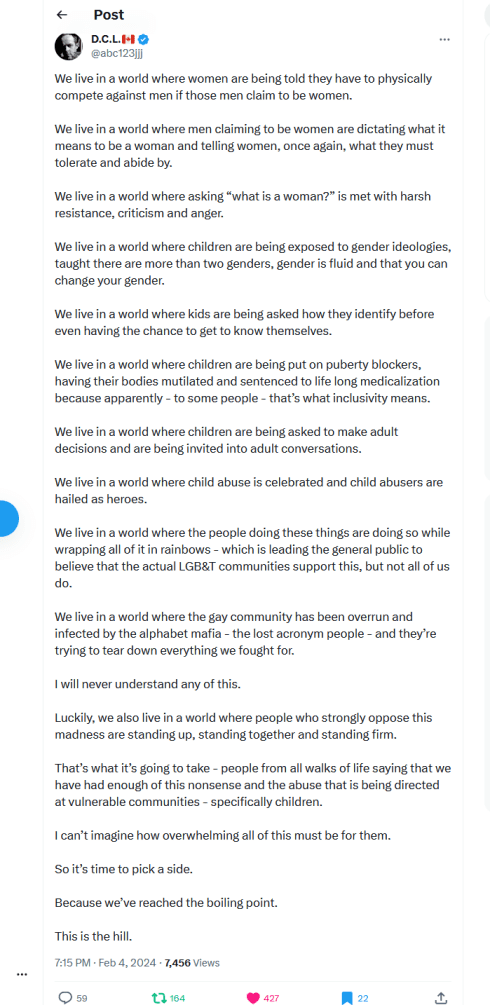











 bleatmop
 Mystro
 The Arbourist


 Dead Wild Roses
Your opinions…