
You are currently browsing the category archive for the ‘Gender Issues’ category.
The British Columbia College of Nurses and Midwives (BCCNM) Discipline Committee’s ruling against Amy Hamm on March 13, 2025, represents a significant setback for women and their freedom of speech in Canada. By disciplining Hamm—a nurse and vocal advocate for sex-based rights—for her gender-critical statements, the decision effectively punishes women who challenge prevailing transgender ideology, particularly when it encroaches on female-only spaces and identities. This ruling not only silences a woman defending biological reality and women’s rights but also signals to others that expressing such views, even off-duty, risks professional ruin, disproportionately chilling female voices in a debate where they have a unique stake.
The 115 page document is a bit of a read, so here are the main points, and a refutation right after.
5-Point Summary of Evidence Supporting the BCCNM Decision
- Discriminatory Statements Linked to Professional Identity: The panel found that Hamm made “discriminatory and derogatory” statements about transgender people across online platforms (e.g., articles, podcasts) between July 2018 and March 2021, while explicitly identifying herself as a nurse or nurse educator. This nexus to her profession was key, as it was seen to undermine the nursing profession’s reputation.
- Violation of Professional Standards: The BCCNM argued that Hamm’s statements breached the College’s Code of Ethics and Professional Standards, which require nurses to provide care without discrimination and uphold public trust. The panel agreed that her public comments contradicted these obligations.
- Intent to Harm Reputation of Transgender Community: The ruling highlighted that Hamm’s statements were designed to “elicit fear, contempt, and outrage” against transgender individuals, particularly by denying their existence (e.g., rejecting gender identity as a concept). This was deemed unprofessional and harmful.
- Specific Instances of Misconduct: The panel pinpointed four instances (Tabs 4, 24, 28, and S3 from the evidence extract) where Hamm’s comments—tied to her nursing identity—were ruled as crossing the line into professional misconduct. These included writings and a podcast appearance explicitly linked to her role as a nurse.
- Public Role and Accountability: By leveraging her professional credentials in public discourse, Hamm was held to a higher standard. The panel concluded that her actions damaged the integrity of the nursing profession, justifying regulatory intervention despite her off-duty status.
Refutation of the Evidence
- Freedom of Expression Overreach: Hamm and her legal team, supported by the Justice Centre for Constitutional Freedoms (JCCF), argued that her statements were protected under the Canadian Charter of Rights and Freedoms (Section 2(b)). The panel’s ruling infringes on her right to express personal views—especially on a contested public issue like gender ideology—without evidence of direct harm to patients or professional practice.
- No Nexus to Professional Conduct: The defense contended that Hamm’s statements lacked a sufficient connection to her nursing duties. Most of her online activity (e.g., Twitter posts) did not explicitly tie her nurse identity to the comments, and the panel itself declined to find misconduct in those cases. Penalizing her for a handful of instances where she mentioned her profession stretches regulatory authority too far.
- Scientific and Reasonable Basis: Hamm’s rejection of gender identity as a “mystical belief” aligns with biological reality (sex as immutable) and is a defensible stance in scientific debate. The panel’s characterization of this as “discriminatory erasure” imposes an ideological litmus test, punishing her for not conforming to transgender advocacy rather than for any professional failing.
- Lack of Demonstrable Harm: There was no evidence presented that Hamm’s statements caused tangible harm to transgender individuals or compromised her nursing practice. The BCCNM’s case relied on hypothetical reputational damage to the profession, which the defense argued is too vague to justify discipline—especially given the public’s varied views on gender issues.
- Regulatory Overreach and Precedent: The ruling sets a dangerous precedent for all regulated professionals, chilling free speech by suggesting that any controversial opinion expressed publicly, if tied to one’s job title, can trigger discipline. Hamm’s advocacy for women’s sex-based rights (e.g., supporting J.K. Rowling) is a legitimate political stance, not a professional lapse, and the BCCNM’s intervention risks turning regulators into arbiters of acceptable thought.
This ruling underscores a tension between professional regulation and personal expression, with particular implications for women like Hamm who advocate for sex-based rights.
The recent ruling against Amy Hamm by the British Columbia College of Nurses and Midwives (BCCNM) is nothing short of a travesty, a glaring assault on free speech and common sense that should leave any reasonable person fuming. Hamm, a nurse and vocal advocate for women’s sex-based rights, was found guilty of “professional misconduct” in March 2025 for stating biological facts and expressing opinions critical of gender identity ideology. Specifically, the disciplinary panel zeroed in on a handful of her online statements—made while identifying as a nurse—deeming them “discriminatory and derogatory” toward transgender individuals. This isn’t just a punishment for Hamm; it’s a warning shot to every professional in Canada: step out of line with the prevailing ideology, and your career could be next. How dare a regulatory body, meant to ensure competence in healthcare, stretch its tentacles into policing personal beliefs expressed off-duty?
What’s particularly infuriating is the absurdity of the tribunal’s reasoning—or lack thereof. One so-called expert reportedly argued that being a woman is a “social identity category rather than a biological reality,” a statement so detached from science it’s laughable if it weren’t so dangerous. Hamm’s crime? Asserting that biological sex is real and matters, especially when it comes to women’s spaces and rights—a position grounded in observable fact, not hate. Yet, the panel chose to side with ideological fantasy over evidence, slapping Hamm with a guilty verdict for daring to speak her mind. This isn’t about protecting anyone; it’s about control, about silencing dissent under the guise of professionalism. The fact that her extensive Twitter posts, where she didn’t explicitly tie her nurse status, were spared only highlights the flimsy, cherry-picked nature of this witch hunt.
The implications of this ruling are chilling, and that’s putting it mildly. If a nurse can be professionally crucified for advocating for women’s rights and biological truth, what hope is there for free discourse in Canada? The BCCNM’s decision doesn’t just harm Hamm—it erodes the freedom of every regulated professional, from doctors to teachers, who now must tiptoe around controversial issues or risk their livelihoods. This is the kind of dystopian overreach that should spark outrage, not apathy. Hamm’s fight isn’t over—she’s hinted at appeals, potentially up to the Supreme Court—and thank goodness, because someone needs to stand up to this madness. We should all be rooting for her, not because we agree with every word she says, but because the principle at stake is too precious to let slip away without a fight.

Activists realize that they cannot argue on the basis of fact, therefore they must always derail the conversation with hyperbole and emotive rhetoric. Let’s see what you can do to nullify their framing and keep the conversation going.
 The phrase “You just don’t want trans people to exist” is often used as a rhetorical jab in debates about transgender issues, implying that opposition to specific policies or ideas equates to denying trans individuals’ right to exist. Here are three counterarguments that challenge this framing without negating the humanity or rights of trans people:
1. **Disagreement Isn’t Denial**: Opposing certain transgender-related policies—like sports participation rules, bathroom access, or medical interventions for minors—doesn’t mean someone wants trans people erased. It’s possible to support trans individuals’ right to exist while questioning specific implementations based on fairness, safety, or biological considerations. For example, some argue that in sports, physical differences tied to biological sex can impact competition, citing cases like Lia Thomas in NCAA swimming, where debates centered on fairness, not existence.
2. **Framing Oversimplifies Complex Issues**: The phrase flattens nuanced discussions into a moral absolute, shutting down debate. Issues like gender dysphoria treatment, especially for kids, involve competing views—some push for affirmation-only approaches, while others advocate caution, pointing to studies like the Cass Review in the UK, which found weak evidence for puberty blockers’ long-term benefits. Disagreeing on medical protocols doesn’t mean rejecting trans people’s existence; it’s about differing on what’s best for well-being.
3. **Intent Matters**: Accusing someone of wanting trans people gone assumes malicious intent that might not be there. Many people, even conservatives or traditionalists, don’t wish harm but hold views rooted in their understanding of biology, culture, or religion. A 2023 Gallup poll showed 69% of Americans believe trans athletes should compete based on birth sex, yet most don’t advocate for banning trans people from society. Conflating policy disagreement with existential denial misrepresents motives.
These counterarguments aim to refocus on substantive issues rather than emotional gotchas, though they don’t dismiss the real fears or experiences of trans individuals in heated debates.
 Oh, bless the hearts of the gender-affirming care activists, still out there waving their rainbow flags like it’s 2015, undeterred by the pesky little detail that the evidence for this stuff is about as solid as a house of cards in a windstorm. You’d think a growing pile of studies—like the Cass Review out of the UK, which basically said, “Uh, guys, we’ve got no clue if this actually works long-term”—might slow them down. But no, they’re still preaching the gospel of hormones and surgeries for kids with the zeal of a late-night infomercial host, insisting it’s all about “saving lives.” Never mind that the data’s a mess—small samples, short follow-ups, and a whole lot of “trust us, it feels right.” It’s activism as performance art, and the show must go on, evidence be damned.
Meanwhile, the science keeps whispering inconvenient truths, like how many kids with gender dysphoria naturally sort themselves out by puberty if you just leave them alone—up to 80% or more, according to some studies. But why let a little thing like biology get in the way of a good narrative? Activists are too busy clutching their pearls over “transphobia” to notice that the American Academy of Pediatrics got caught with its pants down, basing its full-throated endorsement on vibes rather than rigorous trials. The systematic reviews—those boring, gold-standard things—keep coming up empty on proof that this care does more good than harm long-term, yet the megaphones stay on full blast. It’s almost admirable, this dedication to vibes over victory.
So here we are, with clinics still doling out blockers and binders like candy at a parade, while the activists insist anyone questioning the efficacy is just a bigot who hates happiness. Sweden, Finland, and even parts of the UK are pumping the brakes, shifting to therapy-first approaches because the evidence isn’t there—but not our intrepid North American crusaders! They’ve got anecdotes, TikTok testimonials, and a moral superiority complex to keep the train chugging along. Who needs peer-reviewed proof when you’ve got a cause this shiny? It’s not about whether it works—it’s about signaling you’re on the right side of history, even if history ends up laughing at the whole charade. Curtain’s up, folks—don’t expect a plot twist anytime soon.
We really need to get away from using the term “gender” when we mean “sex”. Word confusion is part of the reason why we are in this sad state.
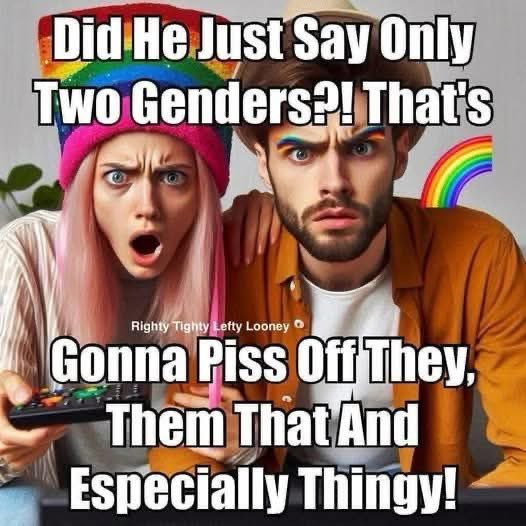
We have been catering to unstable fragile people for far – far – too long. Let’s hope and do what we can to ensure this trend continues.
“Then there was the American author, Hesse Phillips, who apparently uses “she/they” pronouns. “This decision was not taken lightly,” she/they declared in a lengthy statement this week. “I’ve conferred with other queer and trans authors, cis and straight authors, friends and family, and in the end I feel that stepping down from my panel is the only way forward, both for my personal safety and my conscience.”
At one level, it’s hard to take this nonsense seriously. But the reference to “personal safety” implies that the mere presence of gender-critical authors in the same city as adherents of the cult of identity politics puts the latter in danger. It’s a disgraceful slur, as is the suggestion that Joyce and Bindel are calling for the “eradication of an entire class of human beings”. Phillips has also smeared the organisers of the festival, accusing them of prioritising “hate speech over the safety of LGBTQ+ speakers and attendees”. It’s intended, I suspect, as a warning to other festivals of what to expect if they dare to platform heretics.
Pressure has worked far too often. Last year the Hay and Edinburgh book festivals announced they were suspending sponsorship from a company deemed unacceptable by activists against climate change and Israel’s conflict in Gaza. The Cheltenham Literature Festival went so far as to compare a belief in biological sex with racism and homophobia. The bullies appeared to be firmly in charge, as organisers in effect ceded a veto to groups of people who regard themselves as more important than anyone else.
Signs that the mood is changing, swinging against censorship disguised as inclusion, has evidently come as a shock. When gender warriors obsess about threats to their “safety”, they’re actually revealing that they can’t bear to be challenged. They’ve got used to mixing with people who stroke their egos and don’t question the ludicrous claim that their lives are in danger.”











 bleatmop
 Mystro
 The Arbourist


 Dead Wild Roses
Your opinions…