
You are currently browsing the category archive for the ‘International Affairs’ category.
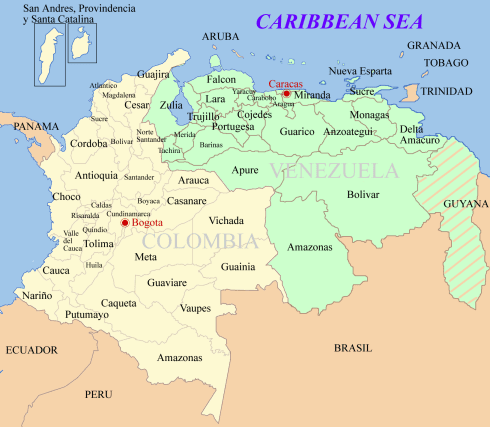
We are not hearing much about Venezuela at the moment, here is a brief snippet of what life is currently like in parts of that country. Many thanks to Minute Physics for posting this news.
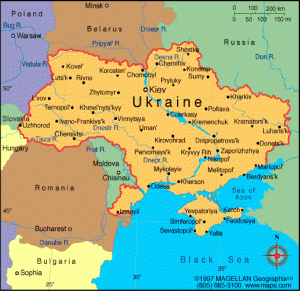 The situation in the Ukraine has me puzzled. The violence and protests leading up to the deposing of the Ukrainian president were not given much coverage in the media that I follow/ or I just plain missed it. Whatever the case may be, I’m getting a couple of nearly diametrically opposed narratives of what is going on in the Ukraine and for my edification and yours we’ll go through them together.
For clarity, and the fact I like using coloured text, the article for Al Jazeera will be in green, and the articles from Counterpunch in the usual brown. Starting with Al Jazeera and the article by Mykola Riabchuk penned as “Ukraine: Russian Propaganda and Three Disaster Scenarios.
Riabchuk’s article has a surface pro-Ukraine slant but I think we can safely say that the slant is also of a pro-Western nature. (I intend to bold parts that are extra interesting/to be used in cross analysis)
“As the Ukrainian presidential election scheduled on May 25 gets closer, Kremlin’s window of opportunity for invading the country and derailing its European course is gradually narrowing. The rhetoric of Russian President Vladimir Putin justifying the Anschluss of Crimea and unscrupulous meddling in Ukraine’s internal affairs has been based on the premises that there is no legitimate government in Kiev, that it is being run by a gang of Nazis and anti-Semites who took power by coup d’etat and terrorised Russians and Russophones all over the country.”
So his this is his view of the pro-Russian narrative. On the other side we have Andre Vltchek with two article featured in Counterpunch: Ukraine, a Fascist Coup (UFC) and Ukraine: Lies and Realities (ULR).
[UFC] “Ukraine is burning, it is going to the dogs; it has been taken over by an illegitimate government engorged with fascists, neo-Nazis and simple pro-Western opportunists, as well as countless EU and US-sponsored members of various NGO’s.
The West has destabilized an entire nation, supporting right-wingers and fascists. Then it began spreading anti-Russian propaganda, even before Crimea had voted to join its historic homeland.
Everything was well planned, with Machiavellian precision. The EU was hoping to get its hands on the abundant natural resources, heavy industry and a well-educated and cheap labor force. In exchange, it was willing to give… nothing. No sane government would be willing to accept such a deal. Therefore, the only way to push through its agenda, the West began supporting violence and terror, as well as the fascist, neo-Nazi groups. A similar approach is being used by the US and EU in Venezuela, Syria and even Thailand.”
We can see here that the two narratives are aware of each others existence and are actively engaged in a contest to be the leading source of truth about what is happening in Ukraine. Riabchuk bluntly asserts with this next paragraph, citing three sources that the Vltchek’s position is false. I’m skeptical of the evidence offered as opinion polls, a newspaper article and a blurb from Transitions Online hardly seems like damning evidence.
“Such a claim, however calumnious and fully disproved on the ground by independent observers, opinion polls and the minorities themselves, can be sold nonetheless to some audiences, at least Russian, willing for various reasons to be fooled.”
Onward to Riabchuk’s Three Scenarios:
“Currently there are three possible scenarios that endanger Ukraine’s sovereignty. First, attempts to appease the separatist may result in a complete collapse of the Ukrainian authority over the eastern regions and the emergence of a puppet pro-Russian state similar to Moldovan Transnistria. It will likewise exist in legal limbo without international recognition.
Second, the eastern region may decide to proclaim itself the “true Ukraine” and, with Russian backing, launch an offensive against the central government in Kiev to re-establish Viktor Yanukovych’s “legitimate” presidency. The scenario is barely new since it was fully employed in 1918 when the Bolsheviks created a puppet “Ukrainian” government in Kharkiv to overthrow the democratic government of the Ukrainian National Republic (1918-1920) in Kiev. The main advantage of the scenario is to disguise a Russian-Ukrainian war as a Ukrainian-Ukrainian war.
The third option the Ukrainian government faces today is to submit to Russian pressure and bullying and accept a broad range of Kremlin-designed constitutional and administrative changes. These would transform Ukraine into a loose confederation of weak states highly vulnerable to Russian subversion, manipulation and sabotage.”
We lose the neat 1 to 1 congruence as the articles diverge in scope, but we can still compare and contrast the outcomes predicted:
[ULR]”Ironically, there is no ‘self-grown dispute’ between two nations. The seeds of mistrust, and possible tragedy, are sown by the outsiders, and nurtured by their malignant propaganda.
As Sergei Kirichuk, leader of progressive movement ‘Borotba’, explained:
“We have extensive invasion of western imperialism here. Imperialists were acting through huge network of NGOs and through the western-oriented politicians integrated into western establishment. Western diplomats declared that they invested more that 5 billions of dollars to ‘development of democracy in Ukraine’. What kind of investment is it? How was this amount spent? We don’t really know, but we can see the wide net of the US agents operating inside many key organizations and movements.
We can see that those ‘western democracies’ had not been concerned at all about growing of the far-right, Nazi movements. They had been ready to use the Nazis as a real armed force in overthrowing of Yanucovich.
President Yanucovich was actually totally pro-western politician, to start with. And his ‘guilt’ consisted only of his attempt to minimize the devastating aftermath that would come after implementation of the free trade zone with EU, on which the West was insisting.”
Western powers using whatever means necessary to promote ‘stability’ in the region. Shades of Iran, Nicuraugwa and Chile anyone? This shouldn’t be news to anyone. Of course this view is not shared by Riabchuk, as he sees the Russian narrative in terms of massive state propaganda leading to this.
“The Russian elite, infected by its own propaganda, becomes increasingly paranoid and determined to fight the invented “fascists” in neighbouring countries as if they are real. This means that whatever Ukraine does or says in this regard, it matters little. The real choice is either to share the fate of the 1956 Hungary and 1968 Czechoslovakia invasions by the Red army or to follow the example of the 1920 Poland and 1940 Finland (when the Russians were contained).
Ukrainians should learn to live for years, perhaps for decades, not only under persistent political and economic pressure but also under blatant propagandistic war, prone at any moment to turn into quite a real military invasion. If it does not happen by May 25, it may well happen eventually, albeit under some different pretexts and slightly modified rhetorical wrapping. No government in Kiev will be recognised by Kremlin as legitimate until and unless it is the Kremlin’s government.”
Contrast with the outcome from Vltcheck’s first article:
[UFC]”There is also one photo of Arseniy Yatsenyuk – the current acting PM of Ukraine – who recently met with President Obama in Washington, and negotiated the possibility of obtaining loans while agreeing to implement brutal anti-social, neoliberal reforms that will affect millions of Ukrainian citizens. This was the very price of the victory of the rightwing and neoliberal politicians that organized and controlled the Euro-Maidan movement.”
And from the second article:
[ULR]”Old women, Communist leaders, and my friend Sergei Kirichuk, as well as people from international solidarity organizations, made fiery speeches. Apparently, the government in Kiev had already begun to cut the few social benefits that were left, including free medical assistance. Several hospitals were poised to close down, soon.
People were ready to fight; to defend themselves against those hated neo-liberal policies, for which (or against which) none of them had been allowed to vote for.
“In Crimea, people voted, overwhelmingly, to return to Russia”, explained a young man, a student, Alexei. “But the West calls it unconstitutional and undemocratic. In Ukraine itself, the democratically elected government has been overthrown and policies that nobody really wants are being pushed down our throats. And… this is called democracy!”
*****
Still with me intrepid readers? I certainly hope so because the dynamics of the Ukraine situation are most intriguing. Are we witnessing a Russian coup, or an American one? Is this a triumph for self-determination or a end run to escape the grip of toxic neo-liberal policies. My readership is wide and diverse and I entreat you to share your knowledge and opinion about this muddled situation with me so we can all better understand exactly what the heck is going on over there.
Ohhh, bonus content! Watch Bill Maher not talk about anything important for 6 minutes. Fascinating(!) where his and his panel’s assumptions lay.
This article from counterpunch nails whats is wrong with how news is reported here in North America and also give a much different picture of what is going on in Venezuela. A big thanks to Mark Weisbrot for getting the down and dirty on events happening in South America.
The Class Conflict in Venezuela
The current protests in Venezuela are reminiscent of another historical moment when street protests were used by right-wing politicians as a tactic to overthrow the elected government. It was December of 2002, and I was struck by the images on U.S. television of what was reported as a “general strike,” with shops closed and streets empty. So I went there to see for myself, and it was one of the most Orwellian experiences of my life.
Only in the richer neighborhoods, in eastern Caracas, was there evidence of a strike, by business owners (not workers). In the western and poorer parts of the city, everything was normal and people were doing their Christmas shopping – images unseen in the U.S. media. I wrote an article about it for the Washington Post, and received hundreds of emails from right-wing Venezuelans horrified that the Post had printed a factual and analytical account that breathed air outside of their bubble. They didn’t have to worry about it happening again.
The spread of cell-phone videos and social media in the past decade has made it more difficult to misrepresent things that can be easily captured on camera. But Venezuela is still grossly distorted in the major media. The New York Times had torun a correction last week for an article that began with a statement about “The only television station that regularly broadcast voices critical of the government …” As it turns out, all of the private TV stations “regularly broadcast voices critical of the government.” And private media has more than 90 percent of the TV-viewing audience in Venezuela. A study by the Carter Center of the presidential election campaign period last April showed a 57 to 34 percent advantage in TV coverage for President Maduro over challenger Henrique Capriles in the April election, but that advantage is greatly reduced or eliminated when audience shares are taken into account. Although there are abuses of power and problems with the rule of law in Venezuela – as there are throughout the hemisphere– it is far from the authoritarian state that most consumers of western media are led to believe. Opposition leaders currently aim to topple the democratically elected government – their stated goal – by portraying it as a repressive dictatorship that is cracking down on peaceful protest. This is a standard “regime change” strategy, which often includes violent demonstrations in order to provoke state violence.
The latest official numbers have eight confirmed deaths of opposition protesters, but no evidence that these were a result of efforts by the government to crush dissent. At least two pro-government people have also been killed, and two people on motorcycles were killed (one beheaded) by wires allegedly set up by protesters. Eleven of the 55 people currently detained for alleged crimes during protests are security officers.
Of course violence from either side is deplorable, and detained protesters – including their leader, Leopoldo López – should be released on bail unless there is legal and justifiable cause for pre-trial detention. But it is difficult to argue from the evidence that the government is trying to suppress peaceful protests.
From 1999-2003, the Venezuelan opposition had a strategy of “military takeover,”according to Teodoro Petkoff (PDF), a leading opposition journalist who edits the daily Tal Cual. This included the military coup of April 2002 and the oil and business owners strike from December 2002 – February 2003, which crippled the economy. Although the opposition eventually opted for an electoral route to power, it was not the kind of process that one sees in most democracies, where opposition parties accept the legitimacy of the elected government and seek to co-operate on at least some common goals.
One of the most important forces that has encouraged this extreme polarization has been the U.S. government. It is true that other left governments that have implemented progressive economic changes have also been politically polarized: Bolivia, Ecuador, and Argentina for example. And there have been violent right-wing destabilization efforts in Bolivia and Ecuador. But Washington has been more committed to “regime change” in Venezuela than anywhere else in South America – not surprisingly, given that it is sitting on the largest oil reserves in the world. And that has always given opposition politicians a strong incentive to not work within the democratic system.
Venezuela is not Ukraine, where opposition leaders could be seen publicly collaborating with U.S. officials in their efforts to topple the government, and pay no obvious price for it. Of course U.S. support has helped Venezuela’s opposition with funding: one can find about $90 million in U.S. funding to Venezuela since 2000, just looking through U.S. government documents available on the web, including $5 million in the current federal budget (PDF). Pressure for opposition unity and tactical and strategic advice also helps: Washington has decades of experience overthrowing governments, and this is a specialized knowledge that you can’t learn in graduate school. Even more important is its enormous influence on international media and therefore public opinion.
When John Kerry reversed his position in April and recognized the Venezuelan election results, that spelled the end of the opposition’s campaign for non-recognition. But the opposition leadership’s closeness to the U.S. government is also a liability in a country that was the first to lead South America’s “second independence” that began with the election of Hugo Chávez in 1998. In a country like Ukraine, political leaders could always point to Russia (and more so now) as a threat to national independence; attempts by Venezuelan opposition leaders to portray Cuba as a threat to Venezuelan sovereignty are laughable. It is only the United States that threatens Venezuela’s independence, as Washington fights to regain control over a region that it has lost.
Eleven years since the oil strike, the political lines that divide Venezuela have not changed all that much. There is the obvious class divide, and there is still a noticeable difference in skin color between opposition (whiter) and pro-government crowds – not surprising in a country and region where income and race are often highly correlated.
In the leadership, one side is part of a regional anti-imperialist alliance; the other has Washington as an ally. And yes, there is a big difference between the two leaderships in their respect for hard-won electoral democracy, as the current struggle illustrates. For Latin America, it is a classic divide between left and right.
Opposition leader Henrique Capriles tried to bridge this divide with a makeover, morphing from his prior right-wing incarnation into “Venezuela’s Lula” in his presidential campaigns, praising Chávez’s social programs and promising to expand them. But he has gone back and forth on respect for elections and democracy, and – outflanked by the extreme right (Leopoldo López and María Corina Machado), last week refused offers of dialogue by the president. At the end of the day, they are all far too rich, elitist, and right wing (think of Mitt Romney and his contempt for the 47 percent) for a country that has repeatedly voted for candidates running on a platform of socialism.
Back in 2003, because it did not control the oil industry, the government had not yet delivered much on its promises. A decade later, poverty and unemployment have been reduced by more than half, extreme poverty by more than 70%, and millions have pensions that they did not have before. Most Venezuelans are not about to throw all this away because they have had a year and a half of high inflation and increasing shortages. In 2012, according to the World Bank, poverty fell by 20 percent– the largest decline in the Americas. The recent problems have not gone on long enough for most people to give up on a government that has raised their living standards more than any other government in decades.
Mark Weisbrot is an economist and co-director of the Center for Economic and Policy Research. He is co-author, with Dean Baker, of Social Security: the Phony Crisis.
This essay originally ran in the Guardian.
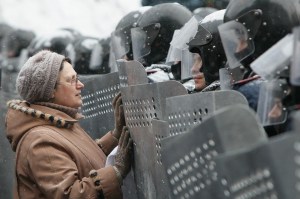 What is so not-awesome about our news media is its propensity to relay to us news and events without the background context necessary have said news event make sense. Go take a look at the CBC’s reporting on what is happening in the Ukraine. I’ll reproduce the headlines here for sake of argument.
- Parliament votes to oust President Viktor Yanukovych
- Security forces now declining to take part in conflict
- Jailed opposition figure Yulia Tymoshenko may be released soon
- President and opposition sign deal meant to end crisis
- President Yanukovych leaves capital for pro-Russian eastern Ukraine
- Yanukoych accuses opposition of conducting a coup
- MPs replace speaker, interior minister
Fascinating stuff. But what does it mean? I mean, who is Yanukovych and what does his party stand for? Heck, what sort of political economic system does the Ukraine possess for starters. You can read all of those articles on Auntie Ceebs and not have even a fog-eyed view of what the hell is actually going on. The reporting we get suffers from what I’ll call the ‘keyhole syndrome’.
 Keyhole Syndrome is when people watching the news are presented with a important event but not the details surrounding said event that would allow them to make a decision, critical or otherwise about said event. Wow there is a coup attempt in Ukraine – how about that. How do we get from the Orange revolution to here? Do you even remember the orange revolution?
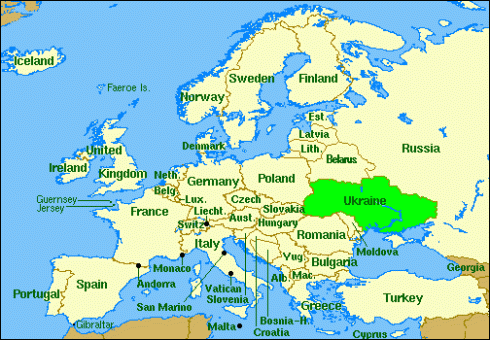
What is needed, honest readers is context, and I strive to provide a slightly larger keyhole looking into the events happening in the Ukraine. Read more in the full report at the Council for Foreign Relations website.
Economic Structure and Policies
Ukraine has a classic rentier curse. Oligarchs and politicians, often one and the same, extract rents from the transit of energy and other scams. Some prices are market based and others controlled, creating huge opportunities for arbitrage. Various licenses and concessions depend on political favor, facilitating corrupt lobbying, and oligarchs have manipulated the political process to ensure a supply of subsidized gas, coal, and electricity. Bursts of market reform in 1994–95 and 2000–2001 were only the minimum necessary to prevent international lenders from withdrawing completely. After 2004, the Orange Revolution’s leaders enacted populist measures rather than tackling systemic problems.
Notwithstanding relatively liberal privatization laws, the process came to benefit oligarchs. Most big enterprises were sold by closed discount cash sales. Today, without an effective legal system, all property remains insecure. Violent corporate raiding is widespread; oligarchs use mafia muscle to take over each other’s firms and scare away most foreign investors. The black economy accounts for 40 to 50 percent of official GDP. Ukraine has received support from international financial institutions, but these funds have been small relative to Ukraine’s GDP. The country’s failure to enact reforms has repeatedly marred its relationship with the International Monetary Fund.
Civil Society and Media
Ukraine’s civil society, though stronger than other aspects of democratic governance, remains weak. After the Orange Revolution, cohesion and engagement quickly disintegrated as people grew disillusioned by elites’ broken promises. Today, only 5 percent of Ukrainians belong to nongovernmental organizations (NGOs). The current Yanukovych government has curtailed freedom of assembly and used the security and tax services to harass activists. Despite this (or perhaps because of it), however, NGO activities are rising. Some elites, exasperated by the divided political opposition, are organizing civil society groups instead of pursuing political power.
Ukraine’s media have generally functioned as an instrument of power rather than an independent force. Many media companies have long been left in private hands under “reliable” oligarchic control, fostering self-censorship. The Orange Revolution allowed a window of media freedom, but today many journalists face bullying and bribery. By contrast, the internet remains lively and free, with growing social media and anticorruption sites.
Legal System and Rule of Law
The law in Ukraine is deliberately capricious and its application arbitrary. Because the population must constantly break the law, authorities can decide whom to prosecute, and they wield this authority to consolidate power. Punishment is used to disable anyone who challenges the system; forgiveness is used as patronage. Most judges are holdovers from the Communist era and continue to respond to instructions from officials. Conviction rates top 99 percent.
Reforms passed in 2010 have increased executive control over the judiciary. Yanukovych created two new courts to bypass relatively independent ones and he purged the Supreme Court and Constitutional Court. Other executive bodies gained control over judicial appointments. The ease with which authorities launched political prosecutions in 2011 and 2012—most prominently against Tymoshenko—showed the new system’s weakness. Today, politicians routinely take bribes from oligarchs or are oligarchs themselves. Members of parliament are immune from prosecution, making public office a gravy train. A place on an electoral list is estimated to cost $5 million in bribes to party leaders.
Government Structure and Division of Power
Ukraine has made almost every mistake imaginable in its institutional design. In the 1990s, it built ministries that recreated bad habits of the Soviet command economy. Prosecutors, tax police, and the former KGB were given too much power. Kuchma also expanded presidential authority but used it to act as the oligarchs’ patron. The constitutional changes to weaken the presidency agreed to during the Orange Revolution were therefore not necessarily bad ideas. However, they were hastily drafted and poorly implemented, allowing oligarchs to build an alternative power center in parliament. Nonetheless, the reversal of these changes in 2010 was unwise. It restored the status quo ante, rather than keeping the best of the reforms, and its aim was not rebalancing the system but entrenching Yanukovych’s administration.
Oh. So the Ukraine, despite its residual media memory as a ‘democracy’ is actually a oligarchy that thrives on looting the country of its wealth and maintaining its power through any means necessary.
A brief aside:this is the kind of system we inhabit here in North America. When you finally come to this conclusion (or not, please continue to consume the bread and circuses arranged for your leisure) the decisions our respective governments make become much more understandable and do have a rational, just not the type this is going to benefit *you*.
Ah, so now we can begin to understand what is going on in the Ukraine and start asking more reasonable questions to further our analysis of what is transpiring over there.
In honour(?) of the Olympic Spirit(TM), my current crochet project is a pair of Salute to Putin gloves. I’ll be able to finish them when the rainbow yarn I ordered arrives.

And, below the fold, a Fiona photobomb because I know you want more Fiona.
Read the rest of this entry »
***TW – Extreme Incompetence ***
The Canadian Air Transport Security Authority are on eternally vigilant for dread items such as this:

or this:

Obviously items depicted above are a clear and present danger to yourself, your fellow passengers, the airplane, and Western Civilization(!). Trying to get either types of these items past airport security gets you this:

YOU SHALL NOT PASS !!!
Recently though, at the Edmonton International Airport someone decided to bring another item in carry on luggage. It looked like this:
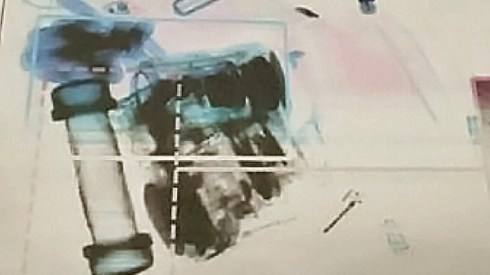
This is the security photo from the Edmonton Airport. Observe cylindrical object on left.
Let’s get another view of said item.
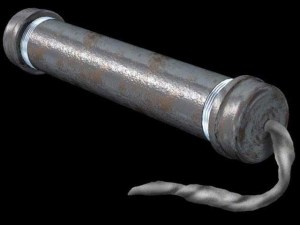
Hmmm. Smells like a pipe bomb to me.
Our intrepid CATSA security screeners responded like this:

CATSA AGENT – Lol Whut? It’s only a pipe bomb. Carry on with your flight sir, oh AND DID YOU WANT YOUR PIPE BOMB BACK?
Thankfully, the passenger in question, did not want his pipe bomb back and insisted, to the properly mollified airport screeners, that the pipe bomb should remain in the hands of airport security. Our watchful guardians then sat on the pipe bomb for four days before they notified the police (RCMP).
This story broke and everyone who has heard it since has been like this:
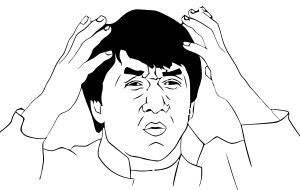
WHAT THE F*CK?
I have nothing really more to say on the subject as my mind is blown. If you’d like the full story, please see these three CBC articles linked below detailing how a dude brought a pipe bomb to the Edmonton Airport, got caught in airport security, had security GIVE THE PIPE BOMB BACK, and then have him insist they take it, and then board his flight despite having brought a bomb in his carry-on luggage.
I heard he had a great vacation.

Harper turns kitten eating grin to 11.
The European Union/Canadian Free Trade agreement was unexpectedly foisted onto the Canadian public – like driving over a deep pothole at night, the consequences of this agreement require the public to pull over and carefully examine the damage done to our society and economy. Strangely enough, our benevolent leadership has arranged for little to no public consultation and thus no debate as to what the consequences are for Canadian society. We just have to trust our leaders when they say that this is a “good thing” for Canada. In light of such trenchant analysis this Canadian commentator has a few niggling doubts when it comes to the heralded panacea of Free Trade Goodness for ALL!!!11!!
The timing of this “historic accord’ threatens to ruin my suspension of disbelief with regards to the upcoming Canadian federal election cycle. Our Conservative government appears to be busting out the sugar plums and candy-canes early to get a head-start on the official bamboozling of the electorate process.
This list from the CBC is exactly what I mean:
1. Cheaper goods –
When CETA comes into force, Canadians will pay less for items including food, wines and spirits, and even high-end European cars — if retailers and European manufacturers pass on the savings from the elimination of tariffs.
2. More Canadian beef, pork and bison –
CETA will significantly raise the quotas for Canadian beef, pork and bison, giving producers much greater duty-free access to the EU market. The potential increase in annual sales is estimated at $1 billion.
3. More European cheese –
EU cheesemakers will be allowed to sell Canada 29,000 tonnes of cheese, up from the current 13,000 tonnes.
4. Intellectual property rights and drugs –
Intellectual property rights and patent protection was a key area of concern for the Europeans during negotiations, particularly in the area of pharmaceuticals.
5. Provincial and municipal contracts –
Wynne also said she supports the deal because it gives its manufacturers and service providers more access to European markets.
Cheap wine! More Cheese! Consumers will be dancing in the streets, look how amazingly great this deal is… just like NAFTA!!
“Structures of governance have tended to coalesce around economic power. The process continues. In the London Financial Times, James Morgan describes the “de facto world government” that is taking shape in the “new imperial age”: the I.M.F., World Bank, Group of 7 industrialized nations, General Agreement on Tariffs and Trade (GATT) and other institutions designed to serve the interests of transnational corporations, banks and investment firms.
One valuable feature of these institutions is their immunity from popular influence. Elite hostility to democracy is deep-rooted, understandably, but there has been a spectrum of opinion. At the “progressive” end, Walter Lippmann argued that “the public must be put in its place,” so that the “responsible men” may rule without interference from “ignorant and meddlesome outsiders” whose “function” is to be only “interested spectators of action,” periodically selecting members of the leadership class in elections, then returning to their private concerns. The statist reactionaries called “conservatives” typically take a harsher line, rejecting even the spectator role. Hence the appeal to the Reaganites of clandestine operations, censorship and other measures to insure that a powerful and interventionist state will not be troubled by the rabble. The “new imperial age” marks a shift toward the reactionary end of the antidemocratic spectrum.
It is within this framework that the North American Free Trade Agreement (NAFTA) and GATT should be understood.’
But, but… what about the cheap cheese? NAFTA ,described in terms closer to reality, was a Free Investors Agreement. It opened the doors for business to compete helter-skelter everywhere and with everyone on the North American continent. NAFTA green lighted the noble quest for the profit and as Chomsky notes indiscreetly kicks the working class in the teeth:
“Particular cases fill out the picture. G.M. is planning to close almost two dozen plants in the United States and Canada, but it has become the largest private employer in Mexico. It has also opened a $690 million assembly plant in eastern Germany, where employees are willing to “work longer hours than their pampered colleagues in western Germany,” at 40 percent of the wage and with few benefits, as the Financial Times cheerily explains. Capital can readily move; people cannot, or are not permitted to by those who selectively applaud Adam Smith’s doctrines, which crucially include “free circulation of labor.” The return of much of Eastern Europe to its traditional service role offers new opportunities for corporations to reduce costs, thanks to “rising unemployment and pauperisation of large sections of the industrial working class” in the East as capitalist reforms proceed, according to the Financial Times.”
The damage wrought by NAFTA to the manufacturing sector American economy is still being felt today as speculative bubbles deliver hammer blow after hammer blow to the dessicated middle class and ever growing contingent of working poor. The happy-clappy propaganda of NAFTA bringing consumer paradise to the people brings small comfort to the poor and soon to be poor people of the United States.
The run up to the EU/Canada FTA has the same eerie feeling that was present when NAFTA was being touted as good for everyone, lifting all boats and other assorted nonsense. The surprise, the promise of cheese, the timing in the electoral cycle all point toward yet another free investor agreement. Investor agreements, will not benefit the great majority people in Europe and Canada, but rather, will enhance the bottom line of a select few.
Three cheers for the eminent pauperisation of even more people? I think not.











 bleatmop
 Mystro
 The Arbourist


 Dead Wild Roses
Your opinions…