
You are currently browsing the category archive for the ‘Social Science’ category.
Arendt exposed ideological conformity, Gramsci revealed cultural capture, and now George Orwell’s Politics and the English Language (1946) unveils critical social constructivism’s (CSC) subtlest weapon: the corruption of language. Orwell warned that vague, euphemistic language obscures reality, trapping thought in a labyrinth of abstraction. CSC wields this tactic to redefine terms, enforce orthodoxy, and render dissent unthinkable. As we turn next to Mill’s defense of liberty, Orwell’s insights equip us to resist CSC’s assault on meaning.
Orwell argued that sloppy language fosters sloppy thought, and vice versa, creating a cycle in which “language becomes ugly and inaccurate because our thoughts are foolish” (Orwell, 1946). CSC exploits this feedback loop by emptying words like harm, justice, and truth of any stable, shared meaning. Disagreement becomes “harm,” objectivity becomes “whiteness,” merit becomes “systemic bias.” The appeal lies in the promise of inclusivity, yet clarity is sacrificed for ideological control. In 2024, university style guides—such as Stanford’s—discouraged terms like “mother” and “father” in favor of “birthing parent” and “non-birthing parent,” narrowing language to conform with CSC imperatives. That same year, journalism guidelines at outlets like NPR labeled objective reporting as a manifestation of “whiteness,” stifling evidence-based discourse.
Like Orwell’s Newspeak, CSC’s linguistic shifts shrink vocabulary and moral nuance, making dissent socially radioactive. To question CSC isn’t to be wrong—it’s to enact “violence.” This mirrors Orwell’s warning that vague language can “make lies sound truthful” (1946), a tactic used to protect ideological dogma. Unlike Gramsci’s cultural trenches, Orwell targets the battlefield of meaning, where CSC renders opposition not just incorrect but unintelligible within its moral grammar.
Orwell’s antidote—short words, active verbs, and concrete images—is a blueprint for resistance. Language must be a window, not a smokescreen. When language no longer corresponds to shared experience, political manipulation becomes inevitable. Restoring clarity means demanding precise, evidence-based definitions in institutions captured by CSC. This series—Arendt on totalitarianism, Gramsci on hegemony, Orwell on language, and Mill on liberty—reveals CSC as a coordinated project to redefine reality.
Read Orwell. Restore language through precise debate. Reclaim meaning in schools, workplaces, and public forums as the first act of resistance.

Three Salient Points for Arguments Against Critical Social Constructivism
- Language Obscures, Then Controls: CSC’s redefinition of “violence” to include speech, as in 2024 campus policies, severs language from reality and undermines open discourse—just as Orwell warned.
- Vagueness Is a Weapon, Not a Flaw: CSC’s reliance on unverifiable concepts like “lived experience,” seen in 2024 DEI reports, avoids falsifiability and shields ideological claims from challenge.
- Clarity Is Resistance: Demanding evidence-based definitions in DEI training and policy debates—guided by Orwell’s principles—undermines CSC’s ideological capture and restores intellectual integrity.
References
Orwell, G. (1946). Politics and the English Language. London: Horizon.
(Additional references: Orwell, G. (1949). 1984; Orwell, G. (1946). The Prevention of Literature.)
Our series began with Hannah Arendt’s The Origins of Totalitarianism, exposing how ideological systems crush complexity and silence dissent. Now, Antonio Gramsci’s Selections from the Prison Notebooks (1971) reveals how such systems entrench themselves not through violence, but through culture. His concept of cultural hegemony—the ruling class’s ability to weave its worldview into society’s “common sense”—underpins the activist-theoretical complex of critical social constructivism (CSC). Gramsci’s insights—soon to be joined by Orwell’s warnings on language and Mill’s defense of liberty—illuminate the strategic depth of CSC and arm us to resist its totalizing spread.
A Marxist imprisoned by Mussolini’s regime, Gramsci argued that dominance endures not just through state coercion, but by shaping the cultural narratives expressed in schools, media, and civil institutions (Gramsci, 1971). CSC wields this strategy skillfully, capturing universities, HR departments, and K–12 curricula to redefine concepts like justice, harm, and truth. Its appeal lies in promising equity through structural change, yet it betrays this promise by erecting a new orthodoxy in which dissent becomes unintelligible. In 2024, university DEI training at institutions like UCLA required faculty to affirm “anti-racism” principles, silencing questions about ideological framing—a Gramscian maneuver designed to remake “common sense” itself.
CSC’s genius—and its danger—lies in rewiring the cultural fabric, thread by thread, until dissent appears as an unthinkable pattern. In contrast to Gramsci’s vision of empowering the marginalized from below, CSC’s elites impose orthodoxy from above. DEI mandates, such as 2024 corporate policies that require employees to affirm contested ideologies, mirror what Gramsci called the “trenches” of cultural warfare. Speech codes that label disagreement as “harmful” render opposition not merely wrong but morally deviant, echoing the totalitarian logic Arendt identified. These tactics reshape the public square, narrowing moral and linguistic boundaries until alternative worldviews are excluded by default.
Gramsci reveals why CSC resists debate: it redefines the very terms of discourse. Understanding this strategy is essential to resisting it. By recognizing how CSC transforms institutions into ideological instruments, we can begin to reclaim pluralism and open inquiry. This series, bridging Gramsci to Orwell and Mill, equips us to understand CSC not just as a collection of radical ideas, but as a cultural project aimed at monopolizing moral and linguistic legitimacy. CSC’s spread—like a tapestry quietly rewoven to exclude dissent—demands a unified stand for liberal principles: free inquiry, reasoned debate, and intellectual freedom. Read Gramsci critically. Decode the cultural strategy.
Reclaim our institutions through open forums, Socratic seminars, and a revival of pluralistic values.

Three Salient Points for Arguments Against Critical Social Constructivism
Cultural Hegemony Is Real—and Reversible
Gramsci showed how norms are shaped through education and language. Reversing CSC’s dominance starts with advocating parental choice in curricula and open academic forums like Socratic seminars.
Institutional Capture, Not State Revolution, Is the Threat
CSC’s infiltration of institutions—such as 2024 UCLA DEI mandates enforcing ideological affirmations—mirrors Gramsci’s cultural revolution, reshaping society without needing to seize state power.
Ideas Become Unquestioned as ‘Common Sense’
By normalizing its ideology, CSC renders dissent immoral, as seen in 2024 speech codes. Supporting pluralism and open debate in schools and workplaces restores the possibility of reasoned disagreement.
Reference
Gramsci, A. (1971). Selections from the Prison Notebooks. New York: International Publishers.
Introduction
The dialectic—Hegel’s clash of ideas, Marx’s material struggles—slices through history’s haze, exposing contradictions that propel transformation. In this final installment, we probe whether the tension within third-wave feminism and queer theory-based gender ideology sustains their revolutionary spark or risks their co-optation in history’s relentless churn. These movements, once antitheses to rigid norms, have reshaped Western society, challenging traditional discursive representations of gender and identity[^3], yet their outcomes—marked by institutional absorption and fierce backlash—suggest a complex dialectical fate. We examine concrete examples of their use and potential discardment, situating them within the broader corrosion of classical liberal values: individual liberty, equality before the law, empirical rigor. The question is not whether these movements endure but whether their radical potential survives the dialectic’s unyielding spiral.
Current Status of Third-Wave Feminism in 2025
Third-wave feminism, born in the early 1990s, remains a potent force in 2025, its intersectional ethos—championing the interplay of race, class, and gender—shaping academic discourse and social justice activism. Figures like Kimberlé Crenshaw and Rebecca Walker drove its critique of second-wave feminism’s homogeneity, demanding inclusivity for marginalized women. Yet, its strength—diversity—has become its Achilles’ heel. Elizabeth Evans notes its “confusion” as a defining trait, with “feminism” now a nebulous catch-all, lacking the unified punch of earlier waves (Evans, 2015). This fragmentation, coupled with mainstream co-optation, threatens its coherence.
The movement’s radical edge has been blunted by corporate commodification. The “girl power” mantra, once a rallying cry, now adorns consumer products—Nike’s empowerment-themed ads, Dove’s body-positive campaigns—often devoid of systemic critique (Snyder-Hall, 2010). Such co-optation transforms feminism into a marketable aesthetic, not a call to dismantle patriarchy. Radical feminists like Sheila Jeffreys argue that third-wave’s embrace of fluid identities, including transfeminism, dilutes focus on sex-based oppression, creating internal contradictions (Jeffreys, 2014). Despite this, third-wave ideas persist in policy—like workplace diversity quotas—and activism, suggesting a synthesis where inclusivity is celebrated but often superficially, leaving structural inequities intact.
Current Debates on Gender Ideology in 2025
Queer theory-based gender ideology, rooted in Judith Butler’s deconstruction of gender as performative and David Halperin’s definition of “queer” as “whatever is at odds with the normal, the legitimate, the dominant… an identity without an essence” (Halperin, 1995, p. 62), remains a lightning rod in 2025. Its challenge to binary norms has driven cultural shifts, like non-binary passport markers in Canada and Germany. Yet, its radicalism faces co-optation and backlash. “Rainbow capitalism”[^1]—corporations like Target flaunting Pride-themed merchandise—reduces queer liberation to a seasonal marketing ploy, stripping its subversive core (Fraser, 2009).
The backlash is fierce. In January 2025, a U.S. executive order, “Defending Women From Gender Ideology Extremism,” rescinded prior gender-identity protections, prioritizing biological sex and framing gender ideology as a threat to empirical truth (White House, 2025). Critics like Helen Pluckrose and James Lindsay decry its rejection of biology as anti-scientific, arguing it undermines rational discourse (Pluckrose & Lindsay, 2020). Radical feminists, like Rosemary Hennessy, contend it sidelines materialist concerns[^2]—capitalism, patriarchy—for discursive battles, weakening feminist unity (Hennessy, 1995). Amnesty International highlights how “gender ideology” is weaponized to curb rights to bodily autonomy and expression, signaling a potent antithesis from traditionalists and liberals alike (Amnesty International, 2025). Yet, gender ideology’s influence endures in cultural visibility—think Laverne Cox’s media presence—though its dogmatic assertions, like dismissing critics as “bigots,” risk alienating allies.
Outcomes of Third-Wave Feminism: Used and Discarded?
Third-wave feminism’s dialectical journey reveals both triumph and erosion. Its antithesis to second-wave homogeneity—embodied in the Riot Grrrl movement’s punk defiance and digital activism’s global reach—yielded a synthesis: a broader, more inclusive feminism. Yet, this inclusivity has been co-opted. Corporate campaigns, like Always’ #LikeAGirl, repackage feminist rhetoric for profit, offering empowerment without challenging systemic power (Snyder-Hall, 2010). Diversity initiatives, such as corporate quotas, often prioritize optics over structural change—tokenism masquerading as progress. A 2023 study found that 60% of U.S. companies with diversity programs reported no significant increase in women’s leadership roles, underscoring this superficiality (McKinsey, 2023).
Has third-wave feminism been discarded? Not wholly. Its ideas permeate academia and activism, influencing policies like paid parental leave. Yet, its fragmentation—where “feminism” spans corporate branding to radical protest—suggests a partial discardment. Radical feminists argue its focus on identity over material conditions has sidelined women’s collective struggle, aligning with Marx’s view of ideology being co-opted by capitalist structures (Evans, 2015). The dialectic has moved: fourth-wave feminism, driven by #MeToo and social media, has emerged as a new antithesis, addressing sexual violence but often bypassing third-wave’s broader intersectional lens, indicating a shift rather than obliteration.
Outcomes of Gender Ideology: Co-optation or Collapse?
Gender ideology’s dialectical path mirrors this pattern. Its antithesis to binary norms—evident in gender-neutral bathrooms and non-binary legal markers—has forged a synthesis: societal acknowledgment of gender diversity. Yet, co-optation looms large. “Rainbow capitalism”[^1] exemplifies this: corporations like Bud Light’s 2023 Dylan Mulvaney campaign leverage trans visibility for profit, often without supporting systemic change (Fraser, 2009). Such moves dilute the radical critique of normative structures Halperin envisioned, turning queerness into a consumer trend.
The backlash is a formidable antithesis. The 2025 U.S. executive order reflects a growing push to reassert biological sex, echoed by scholars like Pluckrose who critique gender ideology’s rejection of empirical science (Pluckrose & Lindsay, 2020). Radical feminists, like Jeffreys, argue it erodes sex-based protections, citing conflicts over women’s sports and prisons (Jeffreys, 2014). Public opinion is shifting: a 2024 Pew Research poll found 65% of Americans oppose trans women competing in women’s sports, signaling declining favor (Pew Research, 2024). This suggests a partial discardment: while gender ideology’s cultural impact persists, its dogmatic stances—dismissing biology or silencing dissent—have alienated segments of society, risking marginalization.
Western Society and Classical Liberal Values: A Corroding Framework
Third-wave feminism and gender ideology challenge classical liberal values—individual liberty, equality before the law, empirical rigor—by prioritizing group identities and systemic inequities. Their emphasis on intersectionality and fluid identities clashes with liberalism’s universal principles. Affirmative action, rooted in third-wave’s intersectional ethos, is seen by critics like John McWhorter as undermining meritocracy, a cornerstone of liberalism (McWhorter, 2021). Gender ideology’s rejection of biological sex provokes similar critiques, with scholars arguing it corrodes rational discourse by prioritizing subjective identity over objective truth (Pluckrose & Lindsay, 2020).
The current synthesis is a form of “liberal multiculturalism,” where diversity is celebrated within liberal frameworks—think corporate DEI programs or legal non-binary recognition. Yet, this synthesis is superficial: it absorbs radical ideas without dismantling power structures, aligning with Marx’s view of capitalism co-opting dissent (Fraser, 2009). The antithesis is robust: classical liberals, like Jonathan Haidt, argue these movements foster collectivism, eroding individual autonomy (Haidt, 2018). Radical feminists and traditionalists form another antithesis, defending sex-based rights and empirical science against identity-based ideologies. This tension suggests Western society’s liberal foundations are not collapsing but corroding—stretched by competing visions of justice.
Conclusion
Third-wave feminism and gender ideology, once radical antitheses, have been partially co-opted, their transformative power blunted by corporate commodification and institutional absorption. Examples like “girl power” branding and “rainbow capitalism” illustrate their use as tools for profit, not revolution. Backlash—from radical feminists, scientists, and classical liberals—signals a partial discardment, as their contradictions alienate allies. Yet, their influence persists in fragmented forms, shaping policy and culture. The dialectic churns on: a synthesis of liberal multiculturalism clashes with an antithesis defending liberal principles, corroding Western society’s foundations. The future demands scrutiny—will these movements reignite their radical spark, or dissolve into history’s spiral?

Table: Dialectical Outcomes of Third-Wave Feminism and Gender Ideology
| Aspect | Third-Wave Feminism | Queer Theory-Based Gender Ideology |
|---|---|---|
| Initial Antithesis | Critique of second-wave homogeneity | Rejection of binary gender norms |
| Synthesis | Inclusive, fragmented feminism | Acknowledgment of gender diversity |
| Co-optation Example | “Girl power” in advertising | “Rainbow capitalism” in Pride campaigns |
| Backlash | Radical feminists prioritizing sex-based rights | Scientists, feminists defending biology |
| Status in 2025 | Fragmented, influential in academia/activism | Contentious, culturally influential but contested |
Footnotes
[^1]: Rainbow capitalism refers to the practice where corporations use LGBTQ+ symbols, particularly during Pride Month, to market their products and appear supportive of the community, often without genuine commitment to LGBTQ+ rights. It’s a form of commodification of queer identity for profit (Wikipedia, 2022).
[^2]: Materialist concerns in social theory focus on tangible, economic, and structural factors that affect people’s lives, such as class, labor, and access to resources. In feminism, it emphasizes the economic and social structures that perpetuate gender inequality, rather than just cultural or ideological aspects (Hennessy, 1995).
[^3]: Discursive representation in social theory refers to how social phenomena, identities, or ideas are constructed and represented through language and discourse. It’s about the way we talk about and conceptualize things, which shapes our understanding and reality (Matus, 2018).
Sources
- Amnesty International. (2025). WHAT IS GENDER? AND WHY UNDERSTANDING IT IS IMPORTANT.
- Evans, E. (2015). The Politics of Third Wave Feminisms: Neoliberalism, Intersectionality, and Hegemony. Palgrave Macmillan.
- Fraser, N. (2009). Feminism, Capitalism, and the Cunning of History. New Left Review, 56, 97–117.
- Haidt, J. (2018). The Coddling of the American Mind. Penguin Books.
- Halperin, D. M. (1995). Saint Foucault: Towards a Gay Hagiography. Oxford University Press.
- Hennessy, R. (1995). Queer Visibility in Commodity Culture. Cultural Critique, 29, 31–76.
- Jeffreys, S. (2014). Gender Hurts: A Feminist Analysis of the Politics of Transgenderism. Routledge.
- Matus, P. (2018). Discursive Representation: Semiotics, Theory, and Method. Semiotica, 2018(225), 103–127.
- McKinsey & Company. (2023). Women in the Workplace 2023.
- McWhorter, J. (2021). Woke Racism: How a New Religion Has Betrayed Black America. Portfolio.
- Pew Research Center. (2024). Public Opinion on Transgender Issues.
- Pluckrose, H., & Lindsay, J. (2020). Cynical Theories: How Activist Scholarship Made Everything about Race, Gender, and Identity. Swift Press.
- Snyder-Hall, R. C. (2010). Third-Wave Feminism and the Defense of “Choice”. Perspectives on Politics, 8(1), 255–261.
- White House. (2025). Defending Women From Gender Ideology Extremism and Restoring Biological Truth to the Federal Government.
- Wikipedia. (2022). Rainbow Capitalism.
Introduction
The dialectic—Hegel’s clash of ideas, Marx’s material struggles—cuts through the fog of social change, exposing contradictions that forge new realities. In this second installment of our series, we wield this lens to dissect third-wave feminism and queer theory-based gender ideology, two movements that have corroded entrenched norms around gender and identity. By defining their origins, principles, and tangible impacts, we reveal their roles as dialectical antitheses: challenging rigid structures, igniting conflict, and birthing new social orders. Yet, their trajectories—shaped by the neoliberal churn of the 1990s—are fraught with contention, from feminist schisms to charges of anti-science dogma. We must probe their material roots and critiques to grasp their dialectical force, setting the stage for our final inquiry into whether these movements, absorbed by institutions or still radically potent, persist in history’s unyielding spiral.
Third-Wave Feminism: A Dialectical Force for Inclusivity
Third-wave feminism, emerging in the early 1990s, arose as a fierce critique of second-wave feminism’s homogeneity. The second wave (1960s–1980s) secured legal victories—reproductive rights, workplace protections—but often centered white, middle-class women, marginalizing others. Third-wave feminists, galvanized by Kimberlé Crenshaw’s 1989 concept of intersectionality (Crenshaw, 1989), which posits that oppressions like race, class, and gender interlock, sought to rectify this. Judith Butler’s Gender Trouble (1990) deconstructed gender as performative, while Patricia Hill Collins’ Black Feminist Thought (1990) amplified Black women’s voices. This wave embraced diversity and individual agency, challenging the second wave’s universalist bent.
Dialectically, third-wave feminism is an antithesis to the second wave’s thesis. The thesis—legal equality—harbored a contradiction: its narrow scope ignored compounded oppressions. The antithesis, third-wave’s intersectional critique, exposed this flaw, pushing for a synthesis: a fragmented yet inclusive feminism. This corrodes the second wave’s monolithic framework, but critics—radical feminists like Sheila Jeffreys—argue it dilutes focus on sex-based oppression, prioritizing fluid identities over material realities (Jeffreys, 2014). Liberal feminists, meanwhile, clash with its poststructuralist leanings, favoring pragmatic reforms over theoretical deconstructions.
The material conditions of the 1990s—global capitalism, neoliberal individualism, and media saturation—fueled this shift. Second-wave gains, like increased economic power for women, created space for diverse voices, while neoliberalism’s emphasis on personal choice shaped third-wave’s focus on identity politics (Evans, 2015). Yet, this context also introduced contradictions: the commodification of feminism risked co-opting its radical edge, a tension that persists.
Concrete Examples
The Riot Grrrl movement, a feminist punk subculture born in Olympia, Washington, in the early 1990s, exemplifies third-wave feminism’s dialectical force. Punk’s male-dominated culture (thesis) was challenged by Riot Grrrl’s fierce activism (antithesis)—bands like Bikini Kill and zines like Girl Germs championed DIY ethics and female empowerment. The synthesis: a punk scene more inclusive of women, influencing broader cultural gender representations (Gottlieb & Wald, 1994). Digital activism, via 1990s blogs and e-zines, further challenged traditional feminist discourse (thesis) with decentralized voices (antithesis), yielding a globalized feminist movement amplifying marginalized perspectives (Evans, 2015). Yet, this digital sprawl fractured unity, a critique levied by radical feminists who see it as diluting feminist goals.
Queer Theory-Based Gender Ideology: Disrupting Binary Norms
Queer theory-based gender ideology, rooted in 1990s scholarship, rejects fixed gender and sexuality categories as socially constructed. Judith Butler’s Gender Trouble (1990) argued gender is performative, while David Halperin defined “queer” as “by definition whatever is at odds with the normal, the legitimate, the dominant. There is nothing in particular to which it necessarily refers. It is an identity without an essence” (Halperin, 1995, p. 62). This oppositional stance—antithetical to normative structures—drives its dialectical role, advocating for fluid identities and reshaping social, legal, and cultural landscapes. Its rise, however, ignites fierce debate, with critics decrying its rejection of biological realities.
Dialectically, gender ideology is an antithesis to traditional gender norms (thesis), which enforce a binary system rooted in biological sex. By deconstructing these norms as constructed, it pushes for a synthesis: inclusive policies and cultural shifts accommodating diverse identities. This synthesis, however, is contested. Helen Pluckrose and James Lindsay (2020) argue in Cynical Theories that queer theory’s dismissal of biology as “bollocks” misrepresents scientific facts to prioritize political disruption, undermining empirical rigor. Feminist critics like Rosemary Hennessy (1995) contend it sidelines materialist concerns—capitalism, patriarchy—focusing on discursive representations over systemic oppressions. Radical feminists, like Andrea Dworkin, reject queer theory outright, arguing its fluidity erases sex-based categories essential for addressing women’s oppression (Dworkin, 1994).
The 1990s neoliberal context—marked by consumer culture and identity commodification—amplified queer theory’s rise. Global capitalism’s emphasis on individual expression aligned with its focus on fluid identities, but institutional absorption (e.g., corporate pride campaigns) risks diluting its radical critique, a tension mirroring third-wave feminism’s challenges (Fraser, 2009).
Concrete Examples
The push for gender-neutral bathrooms challenges binary facilities (thesis) with inclusive spaces (antithesis), yielding a synthesis: institutions adopting such facilities, though resistance persists (Engenderings, 2017). Legal recognition of non-binary gender markers on passports in countries like Canada and Germany negates binary legal frameworks (thesis) with fluid identities (antithesis), fostering inclusive systems (synthesis), despite pushback from biological essentialists (Butler, 2019). Media visibility of transgender figures like Laverne Cox challenges traditional representations (thesis) with diverse portrayals (antithesis), shaping inclusive media landscapes (synthesis), though backlash underscores ongoing contradictions.
Conclusion
Third-wave feminism and queer theory-based gender ideology embody the dialectic’s relentless drive: contradictions expose flaws, ignite conflict, and forge new realities. Third-wave feminism, through intersectionality and movements like Riot Grrrl, negated second-wave limitations, birthing an inclusive yet fragmented feminism. Gender ideology, rooted in queer theory’s oppositional stance, drives changes like gender-neutral bathrooms—yet its anti-science critiques and feminist tensions invite skepticism. Rather than facing obsolescence, these movements navigate a tension between institutional absorption and radical potential, integrated into mainstream discourse yet still pushing boundaries. In our final installment, we’ll probe whether this tension sustains their transformative power or risks their co-optation in history’s dialectical churn.
Table: Dialectical Analysis of Third-Wave Feminism and Gender Ideology
| Aspect | Third-Wave Feminism | Queer Theory-Based Gender Ideology |
|---|---|---|
| Thesis | Second-wave feminism’s universalist focus | Traditional binary gender norms |
| Antithesis | Intersectionality and diversity critiques | Fluid, non-binary gender identities |
| Synthesis | Inclusive, fragmented feminist movement | Inclusive policies and cultural shifts |
| Examples | Riot Grrrl, digital activism | Gender-neutral bathrooms, non-binary passports |
| Contention | Dilutes sex-based focus (radical feminists) | Anti-science, sidelines materialist concerns |
| Material Context | Neoliberalism, global capitalism | Consumer culture, identity commodification |
Sources
- Butler, J. (1990). Gender Trouble: Feminism and the Subversion of Identity. Routledge. [https://www.routledge.com/Gender-Trouble-Feminism-and-the-Subversion-of-Identity/Butler/p/book/9780415389556]
- Butler, J. (2019). Gender Trouble: Tenth Anniversary Edition. Routledge.
- Collins, P. H. (1990). Black Feminist Thought: Knowledge, Consciousness, and the Politics of Empowerment. Unwin Hyman.
- Crenshaw, K. (1989). Demarginalizing the Intersection of Race and Sex: A Black Feminist Critique of Antidiscrimination Doctrine, Feminist Theory and Antiracist Politics. University of Chicago Legal Forum, 1989(1), 139–167. [https://chicagounbound.uchicago.edu/uclf/vol1989/iss1/8]
- Dworkin, A. (1994). Letters from a War Zone. Lawrence Hill Books.
- Engenderings. (2017). Gender Ideology: Tracking Its Origins and Meanings in Current Gender Politics.
- Evans, E. (2015). The Politics of Third Wave Feminisms: Neoliberalism, Intersectionality, and Hegemony. Palgrave Macmillan. [https://link.springer.com/book/10.1057/9781137295279]
- Fraser, N. (2009). Feminism, Capitalism, and the Cunning of History. New Left Review, 56, 97–117. [https://newleftreview.org/issues/ii56/articles/nancy-fraser-feminism-capitalism-and-the-cunning-of-history]
- Gottlieb, J., & Wald, G. (1994). Smells Like Teen Spirit: Riot Grrrls, Revolution, and Women in Independent Rock. Microphone Fiends: Youth Music and Youth Culture, 25–44.
- Halperin, D. M. (1995). Saint Foucault: Towards a Gay Hagiography. Oxford University Press. [https://global.oup.com/academic/product/saint-foucault-9780195093711]
- Hennessy, R. (1995). Queer Visibility in Commodity Culture. Cultural Critique, 29, 31–76. [https://www.jstor.org/stable/1354519]
- Jeffreys, S. (2014). Gender Hurts: A Feminist Analysis of the Politics of Transgenderism. Routledge. [https://www.routledge.com/Gender-Hurts-A-Feminist-Analysis-of-the-Politics-of-Transgenderism/Jeffreys/p/book/9780415539401]
- Pluckrose, H., & Lindsay, J. (2020). Cynical Theories: How Activist Scholarship Made Everything about Race, Gender, and Identity—and Why This Harms Everybody. Swift Press. [https://www.swiftpress.com/book/cynical-theories]
Introduction
The dialectic—a philosophical method as dynamic as history itself—reveals change as a clash of opposites, forging new realities from their wreckage. It’s not mere argument but a structured process where contradictions propel progress, whether in ideas or societies. Crafted by Georg Wilhelm Friedrich Hegel and reshaped by Karl Marx, this framework illuminates how tensions—between freedom and order, or wealth and labor—drive transformation. For those new to these thinkers, the dialectic is a lens to see society’s churn as neither random nor inevitable but as a dance of conflict and resolution. This post, the first of a three-part series, traces the dialectic’s history through Hegel and Marx, highlighting its role as a cornerstone for social constructivists who view society as malleable, sculpted by human action. By grasping this method, we equip ourselves to dissect social movements—like third-wave feminism and gender ideology, the latter fraught with contention[^1]—probing whether they rise, clash, and fade in history’s relentless dialectical churn [Hegel’s Dialectics, Stanford Encyclopedia of Philosophy, https://plato.stanford.edu/entries/hegel-dialectics/].
Hegel’s Dialectic: The Pulse of Ideas
Georg Wilhelm Friedrich Hegel (1770–1831), a German philosopher, saw the dialectic as reality’s heartbeat, pulsing through ideas and history. Contrary to popular myth, Hegel never used the terms “thesis, antithesis, synthesis”—a simplification attributed to Johann Fichte. Instead, his method is a fluid interplay where concepts contain contradictions that demand resolution, birthing new, richer concepts. Take “Being,” pure existence: it’s so abstract it collapses into “Nothing,” its negation; their unity forms “Becoming,” capturing change itself. This process, which Hegel called Aufhebung (sublation), both negates and preserves what came before. His dialectic—less a formula, more a metaphysical rhythm—suggests that every idea or social stage carries the seeds of its own undoing, pushing toward a grander truth, the Absolute. Critics like Karl Popper decry its abstraction as mystifying, yet its influence endures, offering a lens to see history’s ceaseless evolution [Hegel’s Dialectics, Stanford Encyclopedia of Philosophy, https://plato.stanford.edu/entries/hegel-dialectics/].
Marx’s Materialist Revolution
Karl Marx (1818–1883), a radical thinker and Hegel’s intellectual heir, found idealism wanting—too ethereal, too divorced from gritty reality. He forged dialectical materialism, grounding change in material conditions: economics, labor, class. For Marx, history advances through contradictions in the mode of production—like capitalism’s clash between bourgeoisie (owners) and proletariat (workers). The exploitation of labor for profit creates inequality, a contradiction that foments class struggle, potentially sparking revolution toward socialism. Unlike Hegel’s dance of ideas, Marx’s dialectic is rooted in tangible conflicts: the factory’s grind, the worker’s plight. This materialist lens sees society’s “base” (economic system) shaping its “superstructure” (politics, culture), offering a blueprint for analyzing power dynamics. Though critics like Mario Bunge call it reductionist, Marx’s framework electrifies social constructivists, arming them to dissect and challenge societal structures [Dialectical Materialism, Wikipedia, https://en.wikipedia.org/wiki/Dialectical_materialism].
The Dialectic as a Social Constructivist Tool
Social constructivists—those who see society as a human creation, not a fixed truth—wield the dialectic to decode and reshape social realities. They view norms, like gender roles or racial hierarchies, as stages ripe for contradiction and transformation. For example, the Black Lives Matter movement, sparked by police violence in 2020, identified contradictions between America’s egalitarian ideals and systemic racism, pushing for reforms like defunding police or restructuring criminal justice. This mirrors the dialectic’s rhythm: a dominant structure (legal equality) meets its negation (racial injustice), yielding a synthesis (policy reform). Hegel’s idealism informs the conceptual evolution, while Marx’s materialism highlights economic and social forces driving change. Yet, the dialectic’s critics—Popper among them—warn it risks oversimplifying complex realities, potentially fostering dogmatic solutions. For constructivists, though, it’s a scalpel: contradictions are not flaws but catalysts, empowering movements to forge new social orders [Social Constructionism, Wikipedia, https://en.wikipedia.org/wiki/Social_constructionism].
Conclusion: A Lens for Social Dynamics
The dialectic—Hegel’s idealistic churn, Marx’s materialist struggle—offers a profound framework for understanding change. It reveals history and society as dynamic, driven by contradictions that demand resolution. Social constructivists harness this method to challenge norms and envision progress, seeing tensions as opportunities, not dead ends. Yet, its abstraction and potential for oversimplification invite scrutiny, demanding rigorous application. In the next posts, we’ll apply this lens to third-wave feminism and gender ideology, probing whether their contradictions—fragmentation, anti-science stances—mark them as tools used and discarded in history’s dialectical march. This foundation equips us to dissect social movements with precision, resisting divisive simplifications in pursuit of unifying truths.
Table: Hegel vs. Marx on the Dialectic
| Aspect | Hegel’s Dialectic | Marx’s Dialectical Materialism |
|---|---|---|
| Focus | Evolution of ideas toward the Absolute | Material conditions and class struggles |
| Driving Force | Internal contradictions within concepts | Economic contradictions and class conflicts |
| Example | Being → Nothing → Becoming | Bourgeoisie vs. Proletariat → Socialism |
| Outcome | Conceptual progress toward ultimate truth | Social revolution toward classless society |
| Criticism | Overly abstract, mystifying | Reductionist, overly economic-focused |
Footnotes
[^1]: Gender ideology’s contentious nature is evident in polarized debates, with proponents advocating for self-identification and critics citing conflicts with empirical science and women’s rights. See, for example, policy reversals like the UK’s 2024 decision to ban puberty blockers for minors, reflecting growing skepticism [NHS England, Cass Review, https://www.england.nhs.uk/commissioning/spec-services/npc-crg/gender-dysphoria-clinical-programme/implementing-advice-from-the-cass-review/].
Sources
- Hegel’s Dialectics, Stanford Encyclopedia of Philosophy, https://plato.stanford.edu/entries/hegel-dialectics/
- Dialectical Materialism, Wikipedia, https://en.wikipedia.org/wiki/Dialectical_materialism
- Social Constructionism, Wikipedia, https://en.wikipedia.org/wiki/Social_constructionism
- NHS England, Cass Review, https://www.england.nhs.uk/commissioning/spec-services/npc-crg/gender-dysphoria-clinical-programme/implementing-advice-from-the-cass-review/
The debate over sex differences—biological or socially constructed—ignites fierce contention. Social constructivism posits that gender disparities stem from cultural norms, predicting their erosion in egalitarian societies. Yet, a startling paradox emerges: in nations with greater gender equality, certain differences amplify. This essay argues that biological factors—hormones, evolutionary pressures—significantly shape sex differences, revealed vividly when societal constraints loosen. However, the paradox’s complexity—some gaps narrow—demands nuance. Social constructivism’s overemphasis on socialization risks ideological blind spots, necessitating a balanced synthesis of nature and nurture.
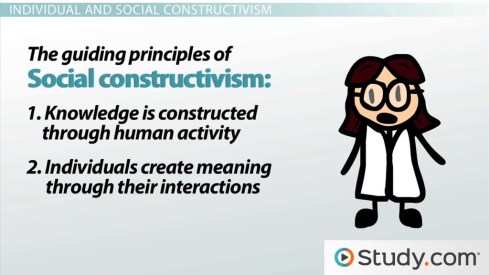
Social constructivism asserts that gender differences are sculpted by relentless socialization: parents, schools, and media mold girls into nurturing roles, boys into assertive ones. Historical shifts, like women’s rising STEM participation—from 14% of U.S. engineering jobs in 1980 to 27% in 2020 (Women in STEM)—suggest that equal opportunities can diminish disparities. Cross-cultural variability in gender roles strengthens their case: if society shapes gender, egalitarian policies should align behaviors. This view, compelling in its focus on malleability, falters when data reveals growing differences in freer societies, hinting at deeper, innate forces.
The biological perspective counters with robust evidence: sex differences are rooted in hormones, brain structures, and evolutionary imperatives. Testosterone drives male-typical traits like risk-taking, while evolutionary pressures link women’s nurturing to reproductive success (Neuroscience and Sex/Gender). In egalitarian nations, these differences often widen—a gender-equality paradox. Stoet and Geary (2018) found larger STEM attitude gaps in gender-equal countries (Gender-Equality Paradox in STEM), while Falk and Hermle (2018) noted greater preference divergences in wealthier nations (Gender Differences in Preferences). Schmitt et al. (2008) observed amplified personality differences in prosperous cultures (Sex Differences in Personality). Freedom, it seems, unveils biology’s hand.
Yet, the paradox isn’t universal. Herlitz et al. (2024) found that while personality and cognitive gaps widen in egalitarian societies, math performance differences shrink, reflecting socialization’s role (Gender-Equality Paradox Review). Methodological critiques—replication issues in Stoet and Geary (2018), questionable indices in Falk and Hermle (2018)—urge caution. Social constructivists might argue that residual stereotypes persist, subtly shaping choices. Still, cross-cultural patterns suggest biology’s enduring influence. A balanced view integrates both: biology sets the foundation, socialization shapes its expression, with egalitarianism amplifying innate tendencies while narrowing specific gaps.
Social constructivism’s overreliance on culture risks a debacle: ignoring biology can lead to policies—like rigid quotas—that dismiss individual choice, undermining equality’s spirit. The gender-equality paradox corrodes its premise, revealing biology’s weight. Yet, socialization’s role in domains like math demands respect. Truth-seeking requires unity, not division—a synthesis of nature and nurture. By embracing this complexity, we can craft policies that honor human diversity, resisting ideological traps that obscure the intricate tapestry of sex differences.
Bibliography
-
Falk, A., & Hermle, J. (2018). Relationship of gender differences in preferences to economic development and gender equality. Science, 362(6412), eaas9899. https://science.sciencemag.org/content/362/6412/eaas9899
-
Herlitz, A., et al. (2024). A Systematic Review and New Analyses of the Gender-Equality Paradox. Perspectives on Psychological Science, 19(1), 147–165. https://pubmed.ncbi.nlm.nih.gov/38170215/
-
Hines, M. (2020). Neuroscience and Sex/Gender: Looking Back and Forward. Journal of Neuroscience Research, 98(4), 559–568. https://onlinelibrary.wiley.com/doi/10.1002/jnr.24609
-
Schmitt, D. P., Realo, A., Voracek, M., & Allik, J. (2008). Why can’t a man be more like a woman? Sex differences in Big Five personality traits across 55 cultures. Journal of Personality and Social Psychology, 94(1), 168–182. https://psycnet.apa.org/doi/10.1037/0022-3514.94.1.168
-
Stoet, G., & Geary, D. C. (2018). The gender-equality paradox in science, technology, engineering, and mathematics education. Psychological Science, 29(4), 581–593. https://journals.sagepub.com/doi/10.1177/0956797617741719
Critical Social Constructivism (CSC) underpins the ideology known as “woke,” as explained by James Lindsay on his New Discourses website. Lindsay (2025) describes CSC, or Critical Constructivism, as a framework where knowledge and reality are entirely socially constructed, devoid of any objective foundation beyond human perception and agreement. Within woke ideology, this perspective views social concepts like race, gender, and justice as products of narratives and power dynamics rather than universal truths. Woke activism uses this foundation to prioritize marginalized groups’ narratives, aiming to reshape societal truths to align with ideological goals. By rejecting objective reality, CSC enables woke activists to redefine reality based on who controls the dominant discourse.
Woke activists often avoid debate due to CSC’s logic, which Lindsay (2025) argues fosters a totalitarian power dynamic. Since CSC denies an objective reality accessible through reason or evidence, truth depends on social consensus shaped by power rather than rational dialogue. For woke activists, debating risks validating opposing views, which conflicts with their belief that truth emerges from enforcing the “correct” narrative. Instead of engaging in discussion, they employ social coercion through tactics like shaming, cancellation, or institutional pressure to silence dissent and ensure conformity. Lindsay emphasizes that this approach stems from viewing power as the ultimate determinant of accepted truth.
This reliance on coercion reflects a core CSC tenet: whoever holds power to enforce a narrative defines what is “true.” Lindsay (2025) notes that CSC’s rejection of objective reality implies truth is not discovered but created, and those controlling institutions, media, or cultural norms shape reality. In woke ideology, this translates to a relentless push to dominate discourse, equating narrative enforcement with truth establishment. By prioritizing power over reason, woke activists favor control over debate, using social force to validate their constructed realities and ensure their version of truth prevails.

Reference
- Lindsay, J. (2025). The Book of Woke: Introducing Critical Constructivism. Retrieved from https://newdiscourses.com/2025/04/the-book-of-woke-introducing-critical-constructivism











 bleatmop
 Mystro


 Dead Wild Roses
Your opinions…