
You are currently browsing the tag archive for the ‘Amy Eileen Hamm’ tag.
Amy Hamm, a British Columbia nurse, faces a $93,811 fine from the B.C. College of Nurses and Midwives (BCCNM) for a thought-crime: stating that humans are biologically sexed and gender identity cannot override this reality. Her off-duty remarks defending women’s sex-based rights, like female-only spaces, were ruled “discriminatory and derogatory” by a disciplinary panel. The decision, released March 13, 2025, followed over 20 days of hearings triggered by activist complaints—not patients—over her support for J.K. Rowling and posts declaring “there are only two sexes.”
Hamm’s ordeal mirrors a Maoist-style struggle session, a public shaming meant to crush dissent. The BCCNM’s 115-page ruling, backed by ideologically aligned “experts,” condemned her for challenging gender identity dogma, equating her advocacy with “erasing” trans existence. No evidence of patient harm surfaced. Yet Hamm—fired without severance by Vancouver Coastal Health—faced harassment, death threats, and accusations of professional misconduct for her views.
This is no anomaly but a trend: regulators weaponize “professional standards” to silence dissent on gender ideology, as seen in the Ontario College of Psychologists’ pursuit of Jordan Peterson for his social media critiques of progressive orthodoxy. Canada’s Charter protects free expression, but bodies like the BCCNM act as enforcers of dogma. Hamm’s appeal to the B.C. Supreme Court, backed by the Justice Centre for Constitutional Freedoms, challenges this overreach, but the precedent endangers all who prioritize truth.
Canada’s buckling healthcare system squanders resources on ideological witch hunts while patients languish. Hamm’s near-$100,000 fine for speaking truth signals a nation veering from reason into authoritarian zeal, where dissent becomes heresy and free inquiry burns.

Sources Referenced
- B.C. College of Nurses and Midwives, Discipline Committee Decision, March 13, 2025
- Justice Centre for Constitutional Freedoms, Press Releases, March–April 2025
- National Post, Opinion, April 6, 2025
- Aggregated X posts, August 2025
Amy Hamm, a registered nurse with 13 years of experience, was recently fired by Vancouver Coastal Health following a ruling by the British Columbia College of Nurses and Midwives (BCCNM) that deemed her guilty of “professional misconduct.” Her termination stemmed from her public advocacy for sex-based rights, including her co-sponsorship of a 2020 billboard stating “I love JK Rowling” and her statements asserting that biological sex distinctions matter, particularly in contexts like women’s private spaces. This decision has sparked widespread debate, with critics arguing that her firing represents a severe overreach by her professional organization, punishing her for exercising free speech rather than any failure in her nursing duties.
The BCCNM’s investigation, which spanned over four years, focused on Hamm’s off-duty comments made in articles and a podcast where she identified as a nurse. The disciplinary panel labeled her statements about transgender issues as “discriminatory and derogatory,” claiming they undermined trust in the nursing profession. However, Hamm and her supporters contend that her views—rooted in the belief that biological sex is immutable—were not only unrelated to her professional conduct but also reflect a scientifically grounded perspective. The panel’s ruling, followed by her immediate dismissal without severance, raises questions about whether the BCCNM prioritized ideological conformity over fairness and evidence.
Hamm’s mistreatment highlights a broader issue of professional organizations stifling dissent under the guise of maintaining public trust. Her case suggests that nurses and other regulated professionals in Canada may face severe repercussions for expressing personal opinions, even outside their workplace, if those views clash with prevailing social narratives. The Justice Centre for Constitutional Freedoms, which supported Hamm legally, decried the ruling as a blow to free expression, arguing that it sets a chilling precedent for others in similar positions. This punitive approach effectively silences debate on contentious issues, forcing professionals to self-censor or risk their livelihoods.
 The decision to fire Hamm also appears disproportionate when considering her exemplary record as a nurse. No evidence was presented that her views impacted her patient care or professional performance; instead, the BCCNM focused solely on the perceived social implications of her statements. This disconnect between her job performance and the punishment meted out underscores a troubling trend: professional bodies acting as arbiters of personal belief rather than guardians of competence. Hamm’s termination without severance after 13 years of service further amplifies the perception of vindictiveness, suggesting an intent to make an example of her rather than address any tangible harm.
In the aftermath, Hamm has vowed to continue speaking out, supported by figures like JK Rowling and a growing chorus of advocates for free speech and women’s rights. Her case exposes the fragility of individual rights within Canada’s regulatory frameworks and the potential for professional organizations to wield unchecked power against those who challenge orthodoxy. As Hamm faces a possible appeal, her ordeal serves as a stark warning: the mistreatment she endured—being fired for her convictions—may foreshadow a future where intellectual freedom is sacrificed for institutional control, leaving professionals vulnerable to ideological purges.
The British Columbia College of Nurses and Midwives (BCCNM) Discipline Committee’s ruling against Amy Hamm on March 13, 2025, represents a significant setback for women and their freedom of speech in Canada. By disciplining Hamm—a nurse and vocal advocate for sex-based rights—for her gender-critical statements, the decision effectively punishes women who challenge prevailing transgender ideology, particularly when it encroaches on female-only spaces and identities. This ruling not only silences a woman defending biological reality and women’s rights but also signals to others that expressing such views, even off-duty, risks professional ruin, disproportionately chilling female voices in a debate where they have a unique stake.
The 115 page document is a bit of a read, so here are the main points, and a refutation right after.
5-Point Summary of Evidence Supporting the BCCNM Decision
- Discriminatory Statements Linked to Professional Identity: The panel found that Hamm made “discriminatory and derogatory” statements about transgender people across online platforms (e.g., articles, podcasts) between July 2018 and March 2021, while explicitly identifying herself as a nurse or nurse educator. This nexus to her profession was key, as it was seen to undermine the nursing profession’s reputation.
- Violation of Professional Standards: The BCCNM argued that Hamm’s statements breached the College’s Code of Ethics and Professional Standards, which require nurses to provide care without discrimination and uphold public trust. The panel agreed that her public comments contradicted these obligations.
- Intent to Harm Reputation of Transgender Community: The ruling highlighted that Hamm’s statements were designed to “elicit fear, contempt, and outrage” against transgender individuals, particularly by denying their existence (e.g., rejecting gender identity as a concept). This was deemed unprofessional and harmful.
- Specific Instances of Misconduct: The panel pinpointed four instances (Tabs 4, 24, 28, and S3 from the evidence extract) where Hamm’s comments—tied to her nursing identity—were ruled as crossing the line into professional misconduct. These included writings and a podcast appearance explicitly linked to her role as a nurse.
- Public Role and Accountability: By leveraging her professional credentials in public discourse, Hamm was held to a higher standard. The panel concluded that her actions damaged the integrity of the nursing profession, justifying regulatory intervention despite her off-duty status.
Refutation of the Evidence
- Freedom of Expression Overreach: Hamm and her legal team, supported by the Justice Centre for Constitutional Freedoms (JCCF), argued that her statements were protected under the Canadian Charter of Rights and Freedoms (Section 2(b)). The panel’s ruling infringes on her right to express personal views—especially on a contested public issue like gender ideology—without evidence of direct harm to patients or professional practice.
- No Nexus to Professional Conduct: The defense contended that Hamm’s statements lacked a sufficient connection to her nursing duties. Most of her online activity (e.g., Twitter posts) did not explicitly tie her nurse identity to the comments, and the panel itself declined to find misconduct in those cases. Penalizing her for a handful of instances where she mentioned her profession stretches regulatory authority too far.
- Scientific and Reasonable Basis: Hamm’s rejection of gender identity as a “mystical belief” aligns with biological reality (sex as immutable) and is a defensible stance in scientific debate. The panel’s characterization of this as “discriminatory erasure” imposes an ideological litmus test, punishing her for not conforming to transgender advocacy rather than for any professional failing.
- Lack of Demonstrable Harm: There was no evidence presented that Hamm’s statements caused tangible harm to transgender individuals or compromised her nursing practice. The BCCNM’s case relied on hypothetical reputational damage to the profession, which the defense argued is too vague to justify discipline—especially given the public’s varied views on gender issues.
- Regulatory Overreach and Precedent: The ruling sets a dangerous precedent for all regulated professionals, chilling free speech by suggesting that any controversial opinion expressed publicly, if tied to one’s job title, can trigger discipline. Hamm’s advocacy for women’s sex-based rights (e.g., supporting J.K. Rowling) is a legitimate political stance, not a professional lapse, and the BCCNM’s intervention risks turning regulators into arbiters of acceptable thought.
This ruling underscores a tension between professional regulation and personal expression, with particular implications for women like Hamm who advocate for sex-based rights.
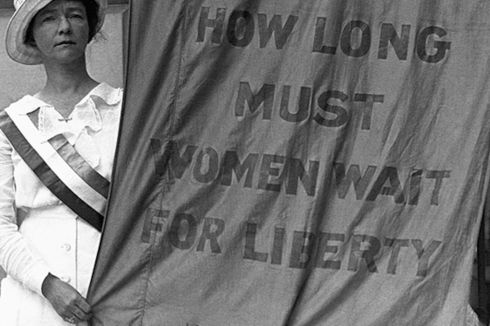
The decision against Amy Hamm, detailed in the Justice Centre for Constitutional Freedoms document from March 13, 2025, casts a shadow over the rights of women to speak freely. As a nurse, Hamm faced professional misconduct charges for sharing gender-critical views, a ruling that suggests her words were too heavy a burden for her profession to bear. This outcome feels like a quiet wound to women who rely on open expression to navigate a world that often overlooks their perspectives. It raises a somber question: if a woman’s honest thoughts can cost her livelihood, what space remains for her to speak without fear?
Women’s rights depend so much on the ability to voice what matters—whether it’s about their bodies, their work, or the policies that shape their lives. The Hamm case hints at a troubling pattern: when women step outside accepted lines, even thoughtfully, they risk being muted by those meant to protect fairness. It’s disheartening to think that a nurse, someone who cares for others daily, could be penalized not for her actions but for her words. This doesn’t just touch Hamm—it brushes against every woman who hesitates to speak up, wondering if her voice might carry too high a price.
Please, let’s hold onto the simple truth that free speech is a lifeline for women. I ask for a gentler approach, one that doesn’t rush to punish but listens instead. Hamm’s story shouldn’t end with her silence; it should remind us to safeguard the right of women to express themselves, even when it’s hard to hear. We need a world where women like her can share their views—raw, real, and human—without losing what they’ve worked so hard to build. That’s not too much to hope for, is it?
The recent ruling against Amy Hamm by the British Columbia College of Nurses and Midwives (BCCNM) is nothing short of a travesty, a glaring assault on free speech and common sense that should leave any reasonable person fuming. Hamm, a nurse and vocal advocate for women’s sex-based rights, was found guilty of “professional misconduct” in March 2025 for stating biological facts and expressing opinions critical of gender identity ideology. Specifically, the disciplinary panel zeroed in on a handful of her online statements—made while identifying as a nurse—deeming them “discriminatory and derogatory” toward transgender individuals. This isn’t just a punishment for Hamm; it’s a warning shot to every professional in Canada: step out of line with the prevailing ideology, and your career could be next. How dare a regulatory body, meant to ensure competence in healthcare, stretch its tentacles into policing personal beliefs expressed off-duty?
What’s particularly infuriating is the absurdity of the tribunal’s reasoning—or lack thereof. One so-called expert reportedly argued that being a woman is a “social identity category rather than a biological reality,” a statement so detached from science it’s laughable if it weren’t so dangerous. Hamm’s crime? Asserting that biological sex is real and matters, especially when it comes to women’s spaces and rights—a position grounded in observable fact, not hate. Yet, the panel chose to side with ideological fantasy over evidence, slapping Hamm with a guilty verdict for daring to speak her mind. This isn’t about protecting anyone; it’s about control, about silencing dissent under the guise of professionalism. The fact that her extensive Twitter posts, where she didn’t explicitly tie her nurse status, were spared only highlights the flimsy, cherry-picked nature of this witch hunt.
The implications of this ruling are chilling, and that’s putting it mildly. If a nurse can be professionally crucified for advocating for women’s rights and biological truth, what hope is there for free discourse in Canada? The BCCNM’s decision doesn’t just harm Hamm—it erodes the freedom of every regulated professional, from doctors to teachers, who now must tiptoe around controversial issues or risk their livelihoods. This is the kind of dystopian overreach that should spark outrage, not apathy. Hamm’s fight isn’t over—she’s hinted at appeals, potentially up to the Supreme Court—and thank goodness, because someone needs to stand up to this madness. We should all be rooting for her, not because we agree with every word she says, but because the principle at stake is too precious to let slip away without a fight.

Reprinted from the National Post by Amy Hamm: Ms.Hamm writes a formidable polemic on the current war on women and their rights in Canadian society.
“J.K. Rowling saved western civilization. Yes, one woman alone.
Rowling, billionaire, famous author of Harry Potter, and outspoken critic of gender ideology, is arguably the largest single force behind a recent inflection point in the West’s culture wars.
Our culture has been pushed to the brink of an irreversible takeover by delusional despots of a radicalized and bastardized left and now — mercifully — appears to be trending in the direction of a relative normal. We are not there yet. And while some countries, Canada included, are lagging, there’s no denying that a seismic cultural shift was recently felt across the West. We certainly felt it with president-elect Donald Trump’s win in the U.S., in which the “trans issue” pushed swing voters en masse to the Republican Party. But the “trans issue” was at the forefront of voter’s minds not only because of Trump, but because J.K. Rowling spent several years instigating an international conversation on gender.
Article contentGender, or more specifically, gender ideology — which posits that gender is socially constructed, as if each of us has a unique, personalized “gender identity” existing as a soul-like essence contained within, but apart from, our physical bodies — has become a state religion across western countries over the last decade. So unique and special is one’s inner and metaphysical sense of gender, we are to believe, that there are potentially infinite variations; indeed, the British Broadcasting Corporation once proudly told children that more than 100 of them existed, including “bi-gender” and “queer-gender.” Their “educational” program has since been memory-holed. Good riddance.
Believe whatever you like about your identity. All of us deserve to be treated with dignity regardless of our beliefs. It is when women are told they must obey — both in action and within the privacy of their own minds — that things have gone too far.
The madness of gender ideology cannot be separated from the generalized madness of modern “progressivism,” which is, simply, a nouveau and left-wing identitarianism. It is a politicized and destructive obsession with gender, race, and sundry categories that may form the basis of one’s (often alleged and dubious) oppression. Gender appears to be the primary obsession of this new zealotry, with race coming in a close second. There is nothing this new identitarianism doesn’t touch — it falls like darkness at sunset. By way of example, we are told that climate change is, in fact, a race issue — via claims that it disproportionately affects racial minorities. Athletics, rather than being about, well, athletics, are now the “frontier of people who are trans,” according to astrophysicist and author Neil deGrasse Tyson, who recently stuffed his clown-sized foot so deep into his craw on the issue of natal males competing in female sports that he — a scientist — was handily bested on biology by journalist Piers Morgan.
A belief in gender ideology makes one lose their senses entirely. And that’s the point: adherents are to denounce basic reality to demonstrate their faithfulness. To prove they are not evil heretics. Or else. During the period that most were too terrified of speaking up, gender ideology took over our institutions — cultural, government, and health care — our workplaces, and even our personal lives. Then J.K. Rowling came along and said: “To hell with that.”
Rowling did three things, when it came to gender, and she did them as the first of her (famous, fantastically wealthy) kind: she refused to repeat the institutionalized lies of gender ideology; she used her clout to intervene in the public abuse of un-famous women who did the same; and — crucially — she refused her own cancellation. In fairness, she didn’t just do these things, but she does them daily; on repeat, and to a chorus of her self-identified sworn enemies who can be found stomping, screaming, crying, calling for her assassination, and warming themselves by the pyre of 1,000 Harry Potter paperbacks. These fits are no matter to Rowling, whose sass is unparalleled: “I get the same royalties whether you read them or burn them. Enjoy your marshmallows!” she has quipped at one such book burner.
In a recent X post, Rowling made it clear she will never back down. “If there’s a better hill to die on than the rights and safety of women and children, I’ve never found it,” she wrote.
Detractors claim that Rowling adopted a “pet issue” in gender ideology’s impact on women and children — which couldn’t be further from the truth. The impact is enormous and terrible. Rowling is accused of being obsessed with transgender persons: their lives, their choices, and even their genitals. Such accusations are common refrains of gender activists. It is mere projection. It is a tactic of abusers — to turn their own fears, anger, and ugly emotions onto someone else: to accuse others of what they do best and constantly.
Is it Rowling, they say, who obsesses over what’s between someone’s legs; but it is the gender activists who’ll go on record referring to women by such grotesque names as a “person with a vagina.” That doozy was from Canada’s Supreme Court Justice Sheilah Martin, used in a sexual assault ruling in 2024. Last month, from an American courtroom, a newly-minted epithet: women might be known as “vaginally-presenting people.” Are you offended? Disgusted? Well, that’s only because you are flatly obsessed with genitals! Have you got a fetish or something?
How did we get here? As I mentioned, it appears that, over the last decade, peculiar and irrational ideas began to creep into the everyday thematics of western culture. What you might once have expected to hear while eavesdropping on first-year university students gathered for a heady anarcho-post-modernist-topple-the-patriarchy-anti-capitalist-save-the-planet-eat-the-rich-power-to-the-oppressed club became something you would hear in quotidian conversation.
Suddenly, your peers, friends, and colleagues were began obnoxiously vomiting the language of the indignant and nouveau activism, all doggedly obsessed with intersectionality and hierarchies of oppression. Everyone, it seemed, wanted to be known as a social justice activist. Everything nuanced became black and white. Good and evil. Things we used to say, thoughtlessly, became verboten. The definition of “hate” grew exponentially and by the day. Included in the new definition of “hate” was any rejection — no matter how considerate and moderate — of the mantra: “Trans women are women.”
You can’t say that, we were told, certainly not as a “cis” woman, or — even worse — a white woman, or a “colonizer.” Check that privilege, girl. We started to fret before we even opened our mouths to speak: Is this speech permitted under the new world order? Best to stay quiet, than to risk saying something wrong. Words, we were told, were now literal violence.
We women dared not speak about our experiences without first consulting with a “woman” who was “assigned male at birth” — lest we utter the phrase that would not just offend, but erase the very existence of, a transwoman. There are endless variations of this powerful and annihilating expression, the simplest of them being: He is a male. How ironic, that at the same time as we women lost our sex-based rights, we gained the lethal skill of obliterating others using only our words.
We lost friends and entire social circles, for refusing to bend the knee.
Countries began to enshrine the metaphysical concept of “gender identity” into law. Canada’s Bill C-16, passed in 2017, did just that, adding the concept as a protected class under human rights legislation. It paved the way for self-identification policies that now allow natal males to identify their way into our bathrooms, rape shelters, prisons, sports — or any other space where women and children once had the right to segregation for our own safety or dignity.
Across the West, we all fell into four broad categories regarding the “trans issue”: those unaware; those terrified or otherwise unwilling to speak out; those who’d gleefully punish you if you did; and those who spoke out anyways.
Then came Rowling. It began with a December 2019 tweet: “Dress however you please. Call yourself whatever you like. Sleep with any consenting adult who’ll have you. Live your best life in peace and security. But force women out of their jobs for stating that sex is real? #IStandWithMaya #ThisIsNotADrill.”
The tweet referred to Maya Forstater, a British woman whose online posts about gender ideology cost her a job. Ultimately — and on appeal — she won the case against her employer and was awarded hefty costs for their ugly and wrongful dismissal. The Employment Tribunal ruled that Forstater’s beliefs — centred upon the bald fact that men can never become women — are protected under the country’s 2010 Equality Act. Indeed, Forstater’s “beliefs” in observable and testable reality, often referred to as “gender critical,” were deemed “worthy of respect in a democratic society.”
Rowling used her fame and clout to stand up for an everyday woman. She has done this many times. This story is close to me. Like she did with Forstater, Rowling also stood up for me, by showing public support during my four-year (and counting) legal battle with the B.C. College of Nurses and Midwives. Like Forstater, I have refused to lie and say that males can declare themselves females. (Full disclosure: Rowling recently surprised me by generously gifting a $5,000 Gucci purse for Christmas. I was writing this piece before this happened.)
Politicians or celebrities would be so lucky to be accused of representing the “everyman.” But representing the “everyman” or “everywoman” is generally theoretical; it’s a set of promises, a way of speaking, and one’s broad appeal to the average person. It is hauling “regular Joe” on the stage for a political rally, flaunting his everyday-ness to the crowd, and then never speaking to him again. It does not require meaningful action.
It’s not the same thing as finding the “everywoman,” taking on her struggle, and materially changing her life with your clout and backing. Rowling did this for Forstater. It was unprecedented. The world paid attention because of how unusual it was for a billionaire to go to bat for a stranger facing public cancellation after expressing her political views. On gender, no less.
In 2019, women’s growing opposition to the prevailing gender orthodoxy rarely made the news. Not only were “uppity” women like Forstater being silenced and fired for speaking out, but our stories, too, were kept quiet, our work and actions to raise awareness of gender ideology conveniently looked over by politicians and most media — lending credence to the false narrative that no significant opposition to gender ideology existed at all. Rowling elevated women’s opposition to the mainstream. We were no longer lone bigots with “transphobic” intentions. We were with Rowling, and she was with us. And gender ideology went from being widely perceived as a silly or niche concern to what it really was: a serious attack not just on women and children, but also on our freedoms, our culture, and reality itself.
And then, in June 2020, Rowling penned an essay that sparked a furor that kept us on track to change the very direction of western civilization.
In it, Rowling explained her interest in sex, gender, and trans. She also revealed she has survived sexual assault and domestic abuse. Not a word of it was remotely “transphobic”; the opposite, in fact — Rowling detailed her belief that “the majority of trans-identified people not only pose zero threat to others, but are vulnerable… Trans people need and deserve protection,” she insisted.
“I refuse to bow down to a movement that I believe is doing demonstrable harm in seeking to erode ‘woman’ as a political and biological class and offering cover to predators like few before it. I stand alongside the brave women and men, gay, straight and trans, who’re standing up for freedom of speech and thought, and for the rights and safety of some of the most vulnerable in our society: young gay kids, fragile teenagers, and women who’re reliant on and wish to retain their single sex spaces,” wrote Rowling.
To the gender activists, the thoughtful and not-at-all-hateful essay was taken as heresy on top of apostasy. Rowling was a witch, and she needed to immediately burn atop a pile of her own books. A CNN headline quoted a trans activist calling the essay “devastating” in its “misinformation and transphobia.” The young actors Rowling made famous and wealthy with her Harry Potter movies, including Emma Watson and Daniel Radcliffe — the little brats — went on a tear by publicly denouncing the woman they owe their every success to. Rumours about how “transphobic” a screed Rowling’s essay was were as fantastical as a Hogwarts’ tale. And Rowling received countless threats of violence and death, which continue to this day.
Rowling’s essay was as much an explanation of her involvement in our increasingly venomous culture war as it was a declaration of a counterwar. It fired back at those who would destroy society with their censorship, repressive tolerance, and total disregard for the truth. It wasn’t just about “gender” any longer, it was about halting the accelerating decline of the West. It was a huge middle finger to the barbarians already past our gates.
After Rowling’s essay, when the mob again came to cancel her — with fresh vigour — her refusal to apologize provided a short answer: No. Ever since, the cancellation mob, no matter their target, has seen diminishing returns on their investments of outrage.
Later in June 2020, employees of Rowling’s publisher, Hachette, told the company they would henceforth refuse to work on the production of “The Ickabog,” a children’s story, because of Rowling’s views. Rather than capitulate, Hachette reminded their staff about the raison d’être of the industry they (apparently witlessly) found themselves employed in: “Freedom of speech is the cornerstone of publishing,” the company said in a statement.
Rowling would not be cancelled. She would not apologize. Cancel culture, she decided, was over. To hell with her legacy, invoked by critics wanting to bash the non-existent thing over her head to make her feel shame. It was nothing more than the lukewarm threats of would-be tyrants, whose cultural power was now starting to slip. “You know, what a pompous way to live your life walking around thinking, ‘What will my legacy be?’ Whatever, I’ll be dead,” Rowling said in the first episode of her podcast, The Witch Trials of J.K. Rowling.
Though she clearly doesn’t care — and as the character of her enemies suggests — I am certain that Rowling’s legacy will be just fine.
People who lack vast sums of money (nearly all of us) will say: “If only I had the money and I could finally say what I really mean.” But we are forgetting one thing: there are many persons who have that type of money — f*ck you money, never-work-another-day money, where should I overwinter my yacht money — and nearly all of them fail to wake up every morning and stand up to a mob of self-righteous and deluded gender cultists. One does not need to be a psychic to understand that what is occurring in the minds of the wealthy who do not stand up is the same phenomenon occurring in the minds of the non-wealthy who do not stand up: a lack of courage.
A lack of courage, and, as Rowling posted recently, a desire for social accolades: “…there’s certainly a benefit to simpering that you’re completely fine with it, can’t see what the issue is and calling women who disagree fascists, or we wouldn’t be seeing so many wealthy, famous, protected women throwing vulnerable women under the bus.” It is a widely appealing method to collect praise by proclaiming one’s unremitting loyalty to a dominant ideology, no matter how harmful that ideology is to the fabric of our civilization. Given the opportunity, many willingly demonstrate that they are unimpressive henchmen.
And while those lacking in courage are busy grovelling for dopamine hits by publicly “supporting the current thing,” as the meme goes, Rowling can be found risking her safety and freedom to protect others.’ You cannot cancel Rowling, and she will not permit you to cancel others.
In April 2024, Rowling responded to the Scottish government’s passing of a new “hate speech” law by tempting her arrest and taunting the Scottish police to lock her up. At the end of a long X thread highlighting the crimes, scandals, and abuses of numerous transgender-identified males, Rowling wrote: “Freedom of speech and belief are at an end in Scotland if the accurate description of biological sex is deemed criminal. I’m currently out of the country, but if what I’ve written here qualifies as an offence under the terms of the new act, I look forward to being arrested when I return to the birthplace of the Scottish Enlightenment.”
Gender activists lodged thousands of public complaints in a single day. Rowling was not arrested. Police told the public they would take no action against her. The new law — antithetical to any western democracy — was effectively neutered by one woman’s courage.
That’s Rowling. She possesses a defiance that is both legendary and critical for our times. She did not need to do any of this. It would have been far easier had she not. In fact, in her essay on sex and gender, she admits that being hounded by gender extremists is “endlessly unpleasant.” She’s human, after all. “I’d stepped back from Twitter for many months both before and after tweeting support for Maya, because I knew it was doing nothing good for my mental health,” wrote Rowling.
Her wealth and fame ensure that when she speaks, people listen — but they do nothing to insulate or make her immune from the vicious hatred she gets in return. And yet, she doesn’t let up.
A civilization that institutionalizes and enforces the telling of absurd lies — including the lie that humans can change their sex — is in decline. Likewise, for a civilization that not only does not protect women and children from male violence — but enables and excuses it to occur in the service of upholding the states’ mandated lies. Again, the same can be said of a western culture that normalizes the chemical — followed by surgical — castration of its own children, as we see with the medical scandal that is pediatric “gender affirming care.” The West is very sick right now.
We have been living under forced subservience to the foolish and dangerous notion that nothing is more important than “identity” — including self-declared and patently false ones — and that we must upend our culture, institutions, and even our safety and lives in a demonstration of fealty.
I do not wish to imagine where we would be, in 2024, had Rowling not done what she has done — for women and children, for freedom, and for the West. Do not mistake my praise for celebrity worship, either: this is about character, bravery, and virtue in the context of the power conferred by Rowling’s celebrity and reach. If any single person is to one day receive credit for saving western civilization, it is Rowling.
The fight is not over, but she has shown us the way.”
Catch the article in the National Post.
Last November, the Post ran a column by transwoman Julia Malott who allegedly supports my right to free expression but simultaneously believes that my “persona” has devolved and that I’ve become divisive and resentful. The devolution, she wrote, occurred during my three-year-and-counting legal battle with the British Columbia College of Nurses and Midwives over my political speech on women’s rights and the binary nature of human sex.
The situation in Canada is dire; we are well beyond the point of change making via raising our hands to speak before whimpering politely towards a cacophony of rainbow-adorned tyrants. There are sexual predators that have been transferred from men’s to women’s prisons based on “gender identity” rather than anatomy. The same is true of rape shelters. Those born as males are competing in women’s sports categories. Hundreds of underage Canadian girls are being greenlighted for double mastectomies because they do not wish to be girls. Our health-care system continues to medicalize and transition gender non-conforming youth, despite the fact that other countries have realized this is a medical scandal not based on sound — or even any — evidence.
Canada’s self-identification policies, flowing from gender identity legislation, have enabled 50-year-old transwoman Melody Wiseheart, who began swimming under that name in 2019, to compete against and undress in the same changing room as little girls and teens. And for Kayla Lemieux to wear obscenely large prosthetic breasts with protruding nipples while teaching high school students. Tara Desousa, known pedophile, rapist, and murderer, transitioned while in prison and now resides in a B.C. prison that runs a mother-baby program.
Regulated professionals like me, or Jordan Peterson, are being sanctioned, punished, defamed, and censored for following truth, evidence, and our conscience — whether we are anodyne or not. And our court system, as Peterson has shown, may not afford any remedy. At this juncture, trying not to be “divisive” with our words is no different than waving a white flag. I refuse to equivocate over or sanitize the truth — and the provocation of an extremist minority is, to me, an acceptable side effect of my refusal to do so. They’re mad? So be it. I’m mad too.
Malott wrote that she “was struck by a sense of lost potential” and saw me as someone she could “possibly envisaged as a friend” — if only I hadn’t become so bitter and devolved as a result of my free speech battle. Well, I’m not fighting to make friends or hold ineffectual conversations.
Amy Hamm is a freelance writer and healthcare professional. She is co-founder of the nonpartisan Canadian Women’s Sex-Based Rights (caWsbar).











 bleatmop
 Mystro
 The Arbourist


 Dead Wild Roses
Your opinions…