
You are currently browsing the tag archive for the ‘Atheism’ tag.
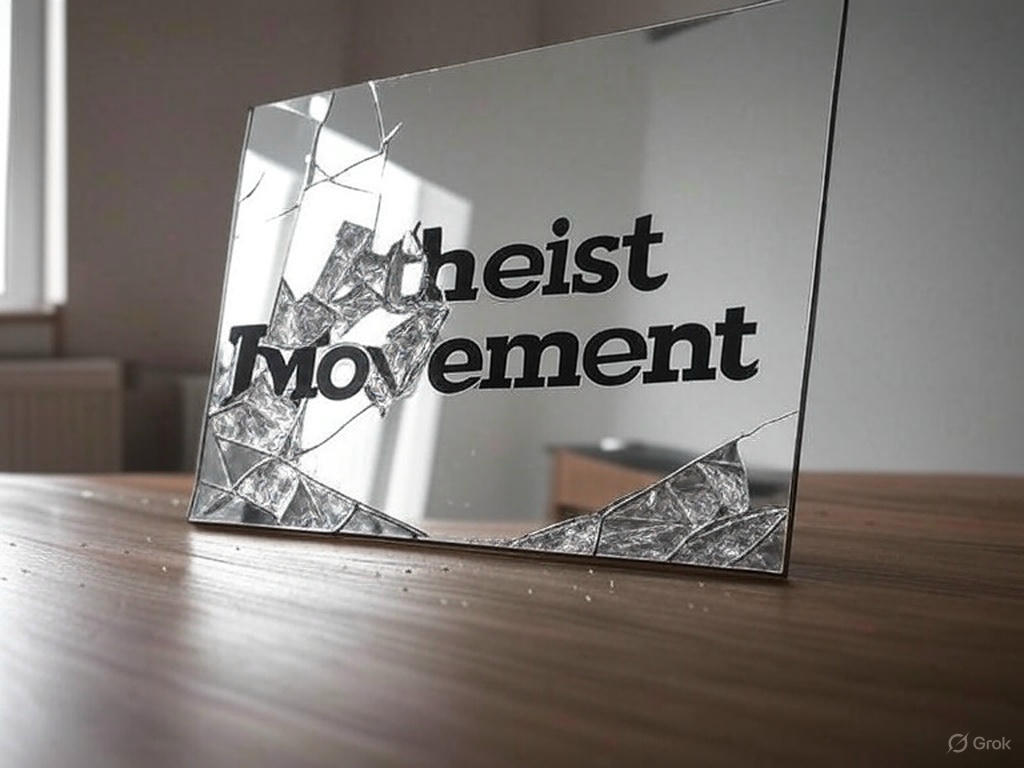
The atheist movement, once a beacon of skepticism and rational inquiry, was significantly disrupted by the emergence of Atheism+ in the early 2010s. Atheism+, an attempt to merge atheism with progressive social justice ideologies, particularly feminism and identity politics, shifted the focus from critiquing religious dogma to enforcing ideological conformity on issues like gender and sexuality. This pivot alienated many atheists who valued the movement’s original emphasis on evidence-based reasoning. As Amarnath Amarasingam notes in The Rise and Fall of the New Atheism, the integration of identity politics created tensions within the movement, with activists like Jen McCreight, who spearheaded campaigns like Boobquake, highlighting the schism by prioritizing feminist concerns over universal skeptical principles. The resulting infighting, as seen in online forums like Reddit’s r/atheism, fractured the community, with many feeling that Atheism+ mirrored the dogmatic rigidity it once opposed.
This ideological shift led some atheists to adopt tactics reminiscent of religious apologetics—name-calling, shaming, and deflections—particularly when defending progressive stances on biological sex. Rather than applying the same skepticism they used to dismantle theistic claims, many “woke” atheists embraced gender ideology without rigorous scrutiny, treating it as an unassailable truth akin to a new deity. Posts on X from 2021 highlight this irony, with users like @SwipeWright observing that a significant portion of the atheist community “fully bought into gender ideology and sex denialism,” abandoning critical thinking for ideological loyalty. This uncritical acceptance echoes the blind faith atheists once criticized, as arguments about biological sex are often dismissed with moralistic fervor rather than engaged with empirically, revealing a departure from the movement’s foundational commitment to reason.
The implosion of the atheist movement, driven by these internal conflicts, underscores a broader lesson: skepticism must be consistently applied, whether to gods or to fashionable ideologies. The New Atheism, once galvanized by figures like Dawkins and Harris, faltered as it became entangled with identity politics, losing its coherence as a unified force. Today, the movement’s legacy is a cautionary tale of how even rationalist communities can succumb to ideological pressures, adopting the same dogmatic tactics they once decried. For atheism to reclaim its intellectual rigor, it must return to its roots, questioning all claims—divine or secular—with unflinching skepticism.
 The foundations of classically liberal societies, characterized by individual freedoms, rule of law, and democratic governance, are significantly influenced by Judeo-Christian values that shaped Western civilization. These values, rooted in the ethical and moral frameworks of Judaism and Christianity, provided a philosophical basis for concepts such as human dignity, personal responsibility, and the inherent worth of the individual. While secular ideologies emphasize empirical reasoning, historical evidence suggests that Judeo-Christian principles played a pivotal role in the development of modern liberties. This essay presents the strongest possible arguments for the influence of Judeo-Christian values on contemporary freedoms, ensuring historical accuracy and addressing potential criticisms from an objective perspective.
Human Dignity and Natural Rights
The Judeo-Christian concept of imago Dei—the belief that humans are created in the image of God—established a foundation for universal human dignity. Found in Genesis 1:26-27, this principle asserts that every individual possesses intrinsic value, regardless of social or economic status. This theological idea significantly influenced Enlightenment thinkers like John Locke, who argued in his Two Treatises of Government (1689) that individuals have inalienable rights to life, liberty, and property, which governments are obligated to protect (Locke, 1689). Scholars such as Jeremy Waldron and John Dunn emphasize that Locke’s political philosophy was deeply rooted in Christian theism, with his concept of human equality derived from the belief that all humans are equal before God (Waldron, 2002; Dunn, 1969). However, Locke’s ideas also drew from broader intellectual traditions, including Greek philosophy and Roman law, indicating that while Judeo-Christian values were a critical influence, they were not the sole driver of natural rights theory.
Rule of Law and Justice
Judeo-Christian teachings on justice and morality, particularly through the Ten Commandments and biblical legal codes in Exodus 20, contributed to the development of the rule of law. These teachings emphasized accountability, fairness, and the principle that laws apply equally to all, influencing key historical documents like the Magna Carta (1215), which curtailed monarchical power, and the U.S. Constitution (Hamburger, 2002). The Christian concept of a higher moral law, accountable to divine authority, reinforced the idea that no one, including rulers, is above the law—a cornerstone of liberal governance. Organizations like the National Center for Constitutional Studies highlight how biblical principles informed concepts such as the consent of the governed (NCCS, 2018). Nevertheless, other civilizations, including ancient Greece and Rome, also developed robust legal systems, suggesting that Judeo-Christian values were one of several influences on the rule of law.
Individual Conscience and Democratic Ideals
The Protestant Reformation, with its emphasis on individual conscience and the priesthood of all believers, challenged the centralized authority of the Catholic Church and fostered democratic principles. Reformers like Martin Luther and John Calvin promoted personal interpretation of scripture, cultivating a culture of questioning authority and valuing individual agency. Historian Brad Gregory argues that this shift influenced protections like the U.S. First Amendment, which safeguards freedom of religion and speech (Gregory, 2012). Sources such as the Free Speech Center and Modern Reformation further note that the Reformation’s focus on individualism contributed to modern democratic thought (First Amendment Encyclopedia, 2023; Modern Reformation, 2022). However, the rise of democracy was also shaped by Enlightenment ideas and nationalism, indicating that the Reformation was a significant but not exclusive factor.
Addressing Counterarguments
Critics, particularly from secular perspectives, may argue that modern freedoms could have emerged solely through rational, secular reasoning, citing philosophers like Voltaire and Montesquieu, who championed individual rights and separation of powers. While secular contributions were substantial, historical evidence suggests that Judeo-Christian values provided a moral and cultural framework that lent legitimacy to these ideas during their formative periods. For instance, the concept of natural rights was grounded in Christian thought before being secularized, and the Reformation’s challenge to ecclesiastical authority paved the way for broader critiques of centralized power. This interplay between religious and secular influences underscores the complexity of the development of modern freedoms.
Conclusion
While modern liberal societies often operate under secular frameworks, their core freedoms—individual rights, rule of law, and democratic principles—owe a significant debt to Judeo-Christian values. The belief in human dignity, the emphasis on justice, and the promotion of individual conscience provided essential ethical and philosophical foundations for these liberties. However, these values were part of a broader historical process that included Greek, Roman, and secular Enlightenment influences. Recognizing this multifaceted heritage enriches our understanding of the roots of contemporary freedoms, offering a balanced perspective that respects both religious and secular contributions.
It’s so darn easy. :)

We are moving toward this sort of frank discussion when it comes to the religion of gender identity. The days when we have a gender atheist the caliber of Richard Dawkins will not be here too soon.

Pretty much. Believing in the grand Ooga-booga is just too many steps outside of rational belief.
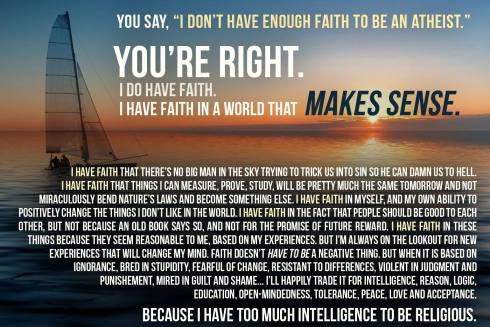
Such a preciously addled gift to the atheist community.











 bleatmop
 Mystro


 Dead Wild Roses
Your opinions…