
You are currently browsing the tag archive for the ‘China’ tag.
Iran, American Hegemony, and Western Resolve.
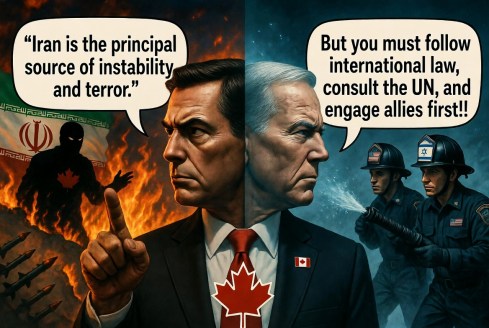
For years, Iran has functioned not as a normal state with normal ambitions, but as a regime that exports pressure through proxies, intimidation, missile programs, and calibrated disorder. Ottawa itself has repeatedly described Iran as “the principal source of instability and terror in the Middle East,” while stressing that Tehran must never be allowed to obtain or develop nuclear weapons. That matters because it cuts through the usual fog. This was not a strike against a harmless status quo. It was a strike against a regime that has spent years making the region more combustible, more violent, and more difficult to govern. (Canada PM)
That does not make war clean. It does not make every target choice wise. It does not make every legal question disappear. But it does clarify the strategic question. If a regime repeatedly funds, arms, and directs forces that destabilize the region, then eventually someone must decide whether deterrence is a word or a policy. The American and Israeli action in Iran is best understood in those terms. Not as a fantasy of moral purity, but as a decision to reimpose costs on a state that had grown used to exporting them. Ottawa’s own language makes that case harder to evade than many critics would like. (Canada PM)
This is the part many Western governments still struggle to say plainly. Order is not maintained by sentiment alone. It is not maintained by declarations, concern, and another exhausted appeal to “the international community.” Canada’s March 3 statement admitted the core reality: years of negotiations, sanctions, international monitoring, and multilateral pressure did not neutralize the Iranian threat. That is a brutal admission, and an important one. It means the soft-language consensus failed on its own stated terms. At some point, if the threat remains, either somebody acts or the speeches become a form of theatre performed over a steadily deteriorating map. (Canada PM)
“American hegemony, however much the word offends refined opinion, has often been the hard outer shell of a wider Western order.”
So yes, there is a case for saying the strikes were good in strategic terms. Iran was not a stabilizing power that got misunderstood by the usual Western moralists. It was a revolutionary regime that helped build and sustain a network of armed clients and auxiliaries across the region. Striking at that centre of gravity carries risks, but so did allowing it to operate under the assumption that the West had become too managerial, too conflict-averse, and too morally confused to act decisively. The risk of action is real. The risk of permanent indulgence was real too, and too often treated as invisible. (Canada PM)
That is why this moment matters beyond Iran. Not because one campaign settles the world. Not because every adversary will instantly become cautious. But because power still communicates. It communicates especially to regimes that have spent years studying the West and concluding that we prefer procedure to force, messaging to punishment, and managed humiliation to escalation. The lesson of Iran may not be that America will always act. It is simpler and more important than that: America still can act, and under some conditions still will. Even the White House’s preferred language of “peace through strength” matters less here as slogan than as signal. Adversaries do not have to admire the wording to understand the demonstration. (Canada PM)
That broader message is where China enters the discussion, but only carefully. It would be too strong, and probably false, to say Beijing has “backed down” because of Iran. Reuters reporting on Chinese military activity around Taiwan points to a narrower and more ambiguous picture: visible Chinese air activity around Taiwan has fallen sharply, but Taiwanese officials and analysts offered multiple possible explanations, including a possible Trump-Xi meeting atmosphere and internal turbulence inside China’s military. They explicitly warned against reading too much into a short lull. So the honest claim is not that China has folded. It is that Beijing is being reminded, in public, that the United States still possesses both the means and, at times, the appetite to use hard power. That is an inference. It is not yet a proved geopolitical shift. (Reuters)
The January Venezuela raid helps make that point, though only in a limited sense. Reuters reported that U.S. officials explicitly framed the operation as a warning to Beijing to keep its distance from the Americas. That does not prove deterrence has been restored, and it does not establish a new global pattern on its own. It does show that the message was sent. In Venezuela and now Iran, Washington has demonstrated that recent American power has not been purely rhetorical. Rivals may draw their own conclusions, but they are being given fresh evidence that the United States still possesses both the means and, at times, the appetite to use hard force. (Reuters)
And that matters because American hegemony, however much the word offends refined opinion, has served for decades as the hard outer shell of a wider Western order. It has not produced a perfect world. It has produced something rarer: a world in which hostile powers, rogue regimes, and ambitious revisionists often had to think twice. That “think twice” space is not everything, but it is a great deal. Lose it, and you do not get peace. You get more tests, more probes, more daring clients, more rulers gambling that the old sheriff now prefers seminars to force. The language may rankle. The reality remains. (Reuters)
“Ottawa could identify the arsonist, but still felt compelled to lecture the firefighters on process before the building stopped burning.”
And then there is Canada, performing once again its favourite late-imperial routine: saying the truest thing in the room and then rushing to blur it. On March 3, Carney said Iran is the principal source of instability and terror in the Middle East and condemned Iranian violence against civilians. On March 4, he also stressed that the United States and Israel acted without engaging the United Nations or consulting allies, including Canada, and reaffirmed that international law binds all belligerents. In other words, Ottawa could identify the arsonist, but still felt compelled to lecture the firefighters on process before the building stopped burning. (Canada PM)
That is the embarrassment. Not caution as such. Caution can be prudent. The embarrassment is the inability to rank moral and strategic realities in the right order. A serious government can say: Iran is the principal destabilizing force, diplomacy failed, the strikes carry grave risks, and the next task is preventing a wider regional catastrophe. That would at least sound like an adult hierarchy of judgment. What we got instead was a familiar Canadian blend of partial clarity and procedural recoil, as if sounding too decisive might itself be a diplomatic offence. (Canada PM)
The deeper issue is civilizational confidence. A West that cannot impose costs on regimes that menace its allies, fuel regional disorder, and exploit every sign of hesitation will not be admired for its restraint. It will be read as tired. The value of American hegemony, whatever its flaws, has never been that it creates a frictionless world. It is that it has often underwritten a world in which enemies of the West had reason to fear miscalculation. That fear is not barbarism. It is one of the costs of preserving order. Remove it, and you do not get a more humane international system. You get a more predatory one. (Canada PM)
So the case for the strikes is not that war is noble or that consequences will be tidy. It is that deterrence sometimes has to become visible again. Iran built power by betting that the West preferred delay to decision. In this case, that bet was answered with force. Even America’s enemies, and Canada’s evasive political class, may have been reminded of something they had started to forget: strength still speaks, and sometimes it is the only language a revolutionary regime believes. (Canada PM)
References
Prime Minister of Canada. “Statement by Prime Minister Carney on the evolving situation in the Middle East.” March 3, 2026.
Prime Minister of Canada. “Prime Minister Carney delivers remarks to media in Sydney, Australia.” March 4, 2026.
Reuters. “Chinese military flights around Taiwan fall, Trump-Xi meeting may be factor.” March 5, 2026.
Reuters. “With Venezuela raid, US tells China to keep away from the Americas.” January 11, 2026.
Canada is in the middle of a familiar temptation: the Americans are difficult, therefore the Chinese offer must be sane.
The immediate backdrop is concrete. On January 16, 2026, Canada announced a reset in economic ties with China that includes lowering barriers for a set number of Chinese EVs, while China reduces tariffs on key Canadian exports like canola. (Reuters) Washington responded with open irritation, warning Canada it may regret the move and stressing Chinese EVs will face U.S. barriers. (Reuters)
If you want a simple, pasteable bromide for people losing their minds online, it’s this: the U.S. and China both do bad things, but they do bad things in different ways, at different scales, with different “escape hatches.” One is a democracy with adversarial institutions that sometimes work. The other is a one-party state that treats accountability as a threat.
To make that visible, here are five egregious “hits” from each—then the contrast that actually matters.
Five things the United States does that Canadians have reason to resent
1) Protectionist trade punishment against allies
Steel/aluminum tariffs and recurring lumber duties are the classic pattern: national-interest rhetoric, domestic political payoff, allied collateral damage. Canada has repeatedly challenged U.S. measures on steel/aluminum and softwood lumber. (Global Affairs Canada)
Takeaway: the U.S. will squeeze Canada when it’s convenient—sometimes loudly, sometimes as a bureaucratic grind.
2) Energy and infrastructure whiplash
Keystone XL is the poster child of U.S. policy reversals that impose real costs north of the border and then move on. The project’s termination is documented by the company and Canadian/Alberta sources. (TC Energy)
Takeaway: the U.S. can treat Canadian capital as disposable when U.S. domestic politics flips.
3) Extraterritorial reach into Canadians’ private financial lives
FATCA and related information-sharing arrangements are widely experienced as a sovereignty irritant (and have been litigated in Canada). The Supreme Court of Canada ultimately declined to hear a constitutional challenge in 2023. (STEP)
Takeaway: the U.S. often assumes its laws get to follow people across borders.
4) A surveillance state that had to be restrained after the fact
Bulk telephone metadata collection under Patriot Act authorities became politically toxic and was later reformed/ended under the USA Freedom Act’s structure. (Default)
Takeaway: democracies can drift into overreach; the difference is that overreach can become a scandal, a law change, and a court fight.
5) The post-9/11 stain: indefinite detention and coercive interrogation
Guantánamo’s long-running controversy and the Senate Intelligence Committee’s reporting on the CIA program remain enduring examples of U.S. moral failure. (Senate Select Committee on Intelligence)
Takeaway: the U.S. is capable of serious rights abuses—then also capable of documenting them publicly, litigating them, and partially reversing course.
Five things the People’s Republic of China does that are categorically different
1) Mass rights violations against Uyghurs and other Muslim minorities in Xinjiang
The UN human rights office assessed serious human rights concerns in Xinjiang and noted that the scale of certain detention practices may constitute international crimes, including crimes against humanity. Canada has publicly echoed those concerns in multilateral statements. (OHCHR)
Takeaway: this is not “policy disagreement.” It’s a regime-scale human rights problem.
2) Hong Kong: the model of “one country, one party”
The ongoing use of the national security framework to prosecute prominent pro-democracy figures is a live, observable indicator of how Beijing treats dissent when it has full jurisdiction. (Reuters)
Takeaway: when Beijing says “stability,” it means obedience.
3) Foreign interference and transnational pressure tactics
Canadian public safety materials and parliamentary reporting describe investigations into transnational repression activity and concerns around “overseas police stations” and foreign influence. (Public Safety Canada)
Takeaway: the Chinese state’s threat model can extend into diaspora communities abroad.
4) Systematic acquisition—licit and illicit—of sensitive technology and IP
The U.S. intelligence community’s public threat assessment explicitly describes China’s efforts to accelerate S&T progress through licit and illicit means, including IP acquisition/theft and cyber operations. (Director of National Intelligence)
Takeaway: your “market partner” may also be running an extraction strategy against your innovation base.
5) Environmental and maritime predation at scale
China remains a dominant player in coal buildout even while expanding renewables, a dual-track strategy with global climate implications. (Financial Times)
On the oceans, multiple research and advocacy reports emphasize the size and global footprint of China’s distant-water fishing and associated IUU concerns. (Brookings)
Takeaway: when the state backs extraction, the externalities get exported.
Compare and contrast: the difference is accountability
If you read those lists and conclude “both sides are bad,” you’ve missed the key variable.
The U.S. does bad things in a system with adversarial leak paths:
investigative journalism, courts, opposition parties, congressional reports, and leadership turnover. That doesn’t prevent abuses. It does make abuses contestable—and sometimes reversible. (Senate Select Committee on Intelligence)
China does bad things in a system designed to prevent contestation:
one-party rule, censorship, legal instruments aimed at “subversion,” and a governance style that treats independent scrutiny as hostile action. The problem isn’t “China is foreign.” The problem is that the regime’s incentives run against transparency by design. (Reuters)
So when someone says, “Maybe we should pivot away from the Americans,” the adult response is:
- Yes, diversify.
- No, don’t pretend dependency on an authoritarian state is merely a swap of suppliers.
A quick media-literacy rule for your feed
If a post uses a checklist like “America did X, therefore China is fine,” it’s usually laundering a conclusion.
A better frame is risk profile:
- In a democracy, policy risk is high but visible—and the country can change its mind in public.
- In a one-party state, policy risk is lower until it isn’t—and then you discover the rules were never meant to protect you.
Canada can do business with anyone. But it should not confuse trade with trust, or frustration with Washington with safety in Beijing.
If Canada wants autonomy, the answer isn’t romanticizing China. It’s building a broader portfolio across countries where the rule of law is not a slogan in a press release.
References
- Canada–China trade reset (EV tariffs/canola): Reuters; Guardian. (Reuters)
- U.S. criticism of Canada opening to Chinese EVs: Reuters. (Reuters)
- U.S. tariffs/lumber disputes: Global Affairs Canada; Reuters. (Global Affairs Canada)
- Keystone XL termination: TC Energy; Government of Alberta. (TC Energy)
- FATCA Canadian challenge result: STEP (re Supreme Court dismissal). (STEP)
- USA Freedom Act / end of bulk metadata: Lawfare; Just Security. (Default)
- CIA detention/interrogation report: U.S. Senate Intelligence Committee report PDF. (Senate Select Committee on Intelligence)
- Guantánamo context: Reuters; Amnesty. (Reuters)
- Xinjiang assessment: OHCHR report + Canada multilateral statement. (OHCHR)
- Hong Kong NSL crackdown example: Reuters (Jimmy Lai). (Reuters)
- Transnational repression / overseas police station concerns: Public Safety Canada; House of Commons report PDF. (Public Safety Canada)
- China tech acquisition / IP theft framing: ODNI Annual Threat Assessment PDF. (Director of National Intelligence)
- Coal buildout: Financial Times; Reuters analysis. (Financial Times)
- Distant-water fishing footprint / IUU concerns: Brookings; EJF; Oceana. (Brookings)
Footage from Shanghai’s Pudong district offers an unfiltered look at how algorithmic governance operates when efficiency becomes a pretext for control. Inside the city’s “Urban Brain”—a sprawling AI system that integrates cameras, databases, and behavioral scoring—daily life is rendered into data points for state management. Occupancy of apartments, movement of the elderly, waste disposal habits, even parking irregularities—everything feeds into a real-time ledger of “acceptable” and “unacceptable” behaviour. Enforcement no longer waits for human judgment. Automated alerts dispatch teams, algorithms flag residents, and facial-recognition systems reportedly identify individuals in seconds.
Some observers frame this as the promise of the “smart city”—a way to streamline services, detect hazards faster, or help vulnerable citizens. But Pudong’s model shows how quickly that promise can harden into something else entirely. Once a government can observe everything, the line between assistance and discipline becomes impossally thin. Citizens begin policing one another through app-based reporting; infractions become entries on an invisible scorecard; social pressure becomes a tool of the state. The technology doesn’t force authoritarianism—but it supercharges its reach.
This isn’t science fiction, and it isn’t uniquely Chinese. Western policymakers watch these experiments closely, often through the lens of innovation rather than power. International organizations—from the World Economic Forum to UN smart-city initiatives—regularly showcase such systems as examples of “urban optimization.” Meanwhile, closer to home, governments have tested their own versions in more modest forms:
• traffic-camera systems calibrated for behavioural nudging,
• digital IDs tied to expanding databases,
• lingering post-pandemic contact-tracing infrastructure,
• carbon-tracking tools that incentivize or shame consumption.
These tools may not be malicious in design, but intent matters less than trajectory. Once data feeds administrative decision-making, and administrative decisions condition everyday freedoms, the architecture of a “soft” social-credit system begins to emerge—quietly, gradually, and often without the public debate such power deserves.
The core issue isn’t technology itself. It’s governance. Liberal democracies depend on thick boundaries between the individual and the state, including the right to act without constant monitoring or algorithmic interpretation. When those boundaries erode, even incrementally, the cost is not abstract: it is the loss of private space, unobserved choices, and the freedom to make mistakes without consequence.
If Pudong shows us anything, it is that systems designed for convenience can be repurposed—rapidly—into systems of compliance. The lesson for the West is not paranoia but prudence. We can adopt data-driven tools, but only if we embed them in strict legal guardrails, transparent governance, and a presumption of personal liberty.
The measure of a free society is not how efficient its systems become, but how widely it preserves the right to live beyond the gaze of the state—and increasingly, beyond the reach of its algorithms.

References
- Cui, Q., Chen, R., Wei, R., Hu, X., & Wang, G. (2023). Smart Mega-City Development in Practice: A Case of Shanghai, China. Sustainability, 15, 1591. (MDPI)
- Marvin, S., While, A., Chen, B., & Kovacic, M. (2022). Urban AI in China: Social control or hyper-capitalist development in the post-smart city? Sustainable Cities and Society. (Frontiers)
- ChinaDaily. (2019, August 31). Shanghai using tech for city management. China Daily. (China Daily)
- U.S.–China Economic and Security Review Commission. China’s Smart Cities Development. (PDF) (USCC)
- CES.tech. (2020, November 30). Three Projects from the World’s Smartest City of the Year. (CES)
Tweet Link
https://x.com/JimFergusonUK/status/1989983450636435560
Canada’s tariff wars reveal a glaring double standard: confrontation with Communist China draws muted shrugs, while disputes with the United States ignite fiery “elbow up” rhetoric and national outrage. When China slapped a 75.8% tariff on Canadian canola in August 2025—retaliation for Ottawa’s 100% tariff on Chinese electric vehicles and 25% on steel and aluminum announced earlier that spring—Manitoba farmers were left reeling. Nearly half of their canola exports go to China, and industry estimates project multi-billion-dollar losses. Yet Canada’s political class and major media outlets framed Beijing’s move as a mere “tit-for-tat” trade dispute, urging patience and diplomacy. Outside the mainstream, social media filled with posts lamenting the devastation in farm country.
Contrast this with the uproar over U.S. tariffs. In March 2025, President Donald Trump imposed 25% duties on Canadian goods (excluding energy), escalating them to 35% by August. Ottawa erupted. Prime Minister Mark Carney thundered about the need for a unified “North American market,” while pundits and media outlets blasted “unjustified” American aggression. Canadians were rallied with slogans of defiance and “elbow up” resolve. Yet under CUSMA, more than 85% of Canada–U.S. trade remains tariff-free, meaning the outrage over Washington’s measures dwarfed the reaction to China’s far heavier blow to canola.
The contrast betrays selective indignation. China, an authoritarian regime, cripples a vital Canadian industry yet escapes national fury. The United States, a democratic ally, delivers a lesser economic hit and is vilified. Such narrative hypocrisy undermines both unity and credibility, sacrificing farmers’ livelihoods for geopolitical posturing. If Canada roars at Washington but bows to Beijing, it sends a dangerous message: principle is negotiable, and farmers are expendable.

Sources:
-
Statistics Canada, 2023 Trade Data
-
CBC News, “China’s Tariffs on Canadian Canola,” Aug. 13, 2025
-
Fraser Institute, “Trump’s Trade War Update,” Aug. 12, 2025
-
Globe and Mail, “Over 85% of Canada–U.S. Trade Remains Tariff-Free under CUSMA,” Aug. 2025
-
Aggregated X posts, Aug. 2025
 China’s interference in Canada and its politics involves a mix of economic leverage, influence operations, and clandestine activities aimed at shaping outcomes to favor Beijing’s interests. Based on what’s been uncovered so far, here’s how it’s playing out.
Economically, China has sunk deep roots into Canada. They’ve snapped up significant chunks of Vancouver’s real estate and farmland in British Columbia’s interior, giving them a tangible stake in the country’s resources and infrastructure. This isn’t just investment—it’s leverage. When you control housing markets or food production, you’ve got a say in local pressures and politics without firing a shot. Add to that the 2014 FIPA deal—a 31-year agreement giving Chinese businesses in Canada special protections, including the right to secretly sue the government if laws hurt their profits. It’s a quiet foothold, locking in influence for decades.
Politically, the interference gets murkier. Canada’s spy agency, CSIS, has tracked China’s hand in the 2019 and 2021 federal elections. A February 2023 briefing straight to the Prime Minister’s Office laid it out: China “clandestinely and deceptively” meddled, pushing for candidates who’d either back Beijing or at least not rock the boat. Tactics included funneling cash—possibly $250,000 in one case—through proxies like community groups tied to the Chinese consulate in Toronto. They’ve also used disinformation, like WeChat campaigns smearing Conservative candidates as “anti-China” to scare Chinese-Canadian voters away from them. Think Kenny Chiu in 2021—his riding flipped after a barrage of messaging tied to Beijing’s playbook. The goal? Keep the Liberals in power, preferably with a minority government reliant on softer voices like the NDP.
Then there’s the personal angle. Take Michael Chong, a Conservative MP who got on China’s bad side by calling out their Uyghur policies. In 2021, Beijing allegedly targeted his family in Hong Kong, using a diplomat in Toronto to dig up dirt. Canada booted that guy, Zhao Wei, in 2023, but only after a stink was raised—showing how slow the response can be. And it’s not just MPs. CSIS says China’s Ministry of State Security and United Front Work Department have been cozying up to officials at all levels, sometimes with “honey pots” or trips to China funded by groups like the Chinese People’s Institute of Foreign Affairs. Between 2006 and 2017, parliamentarians took 36 of those sponsored jaunts.
Beyond elections, China’s reach extends to intimidation and control. Reports of “overseas police stations” in cities like Toronto and Vancouver—denied by China’s embassy—suggest they’re keeping tabs on the diaspora, pressuring Chinese nationals to toe the line or face family back home paying the price. CSIS calls this a “sophisticated tool kit”—cyberattacks, economic coercion, even military flexing—all to bend Canada’s democracy without leaving fingerprints.
The kicker? Despite all this, the interference often skates by legally. The Commissioner of Canada Elections found China’s 2021 voter influence didn’t break election laws—free speech, even if it’s foreign-orchestrated, gets a pass. And while CSIS says it’s the “greatest strategic threat” to Canada’s security, the government’s been criticized for dragging its feet. Trudeau’s team got warnings as early as 2017 about PRC agents infiltrating “all levels of government,” yet responses—like expelling Zhao—only came under pressure.
So, China’s playing a long game: buy influence, sway votes, intimidate dissenters, and exploit Canada’s openness. It’s not about flipping the whole system—just nudging it enough to keep Beijing’s interests safe. How much it’s changed actual outcomes is debated, but the stain on trust is real. What’s Canada doing about it? Not enough, if you ask the folks who’ve been targeted.
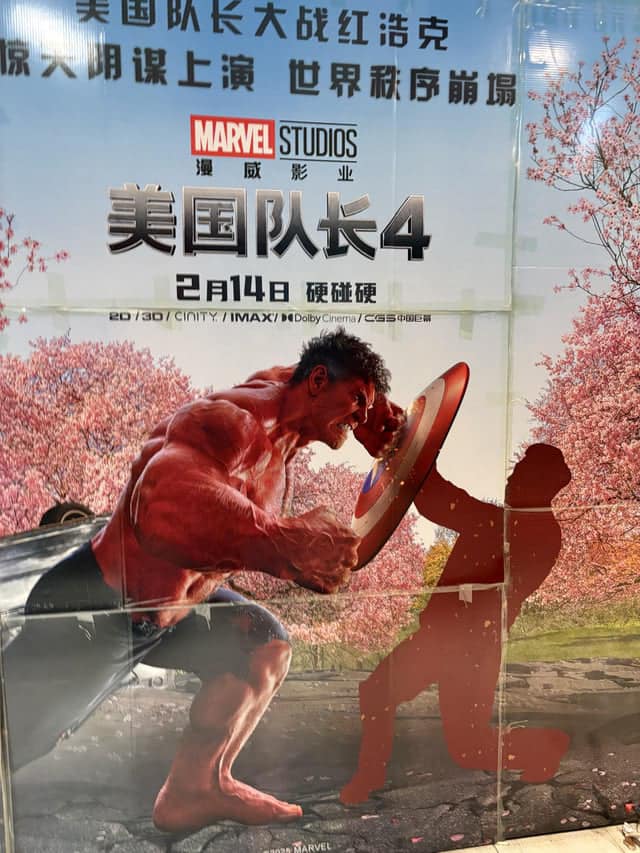
Well, here we have 3 movie posters as they were displayed in mainland China. What do you see missing?
Are the anti-racism activists losing their minds about this? Can the vaunted arbiters of social justice be bothered with actual racism?
Naaaah. The REAL work is to keep looking for the systemically racism Unicorn that permeates EVERY facet of western society and must be rooted out – but only the experts can see it and you’ll have to hire them to get these dire systemic Unicorns out of your organization…
Should we actively oppose racism and racists sentiments, absolutely. Do we need a class of self appointed experts to root out the systemic racism that only they have the insight to see and root out? – Probably not.


In reference to an interesting coincidence, that through civil rights activism and a incremental changes to our society overt and institutionalized racism is largely over. But with most of racism in society gone, what then (thanks grok) – When cults face falsification of their beliefs, they often employ several strategies to retreat from reality:
Denial and Reinterpretation:
Denial: Cults might outright deny any evidence that contradicts their beliefs, claiming it to be false, misleading, or part of a conspiracy against them.
Reinterpretation: They might reinterpret the evidence in a way that fits their narrative. For example, if a prophecy doesn’t come true, they might claim it was a “spiritual” fulfillment or that the prophecy was misinterpreted by outsiders.
Isolation: Cults often increase their isolation from the outside world. This can involve moving to remote locations, restricting access to external information (like news or internet), or discouraging interactions with non-members. Isolation helps prevent members from being exposed to contradicting information or viewpoints
.
Shifting Blame or Goalposts:
Shifting Blame: If something goes wrong, rather than questioning the belief system, the leadership might blame members for not being faithful enough or external forces for interference.
Moving the Goalposts: They might change their doctrines or predictions subtly or significantly to account for the falsification without admitting error. This can mean setting new dates for prophecies or redefining what the prophecy meant.
Cognitive Dissonance Management:
When faced with evidence against their beliefs, members might experience cognitive dissonance. Cult leaders often provide explanations or new interpretations to reduce this discomfort, reinforcing loyalty and belief.
Increased Control and Manipulation:
There might be an increase in psychological manipulation techniques, like love bombing, where members are showered with affection to quell doubts, or fear tactics where leaving the group is associated with dire consequences.
Creation of Parallel Realities:
Cults might develop their own news sources, vocabulary, or interpretations of events to create a reality that aligns with their beliefs. This parallel reality can make external critique seem irrelevant or part of an antagonistic narrative.
Rituals and Practices:
Increasing the frequency or intensity of rituals can reinforce group identity and belief. These practices can act as a distraction from reality or as a mechanism to reaffirm faith in the face of contradictory evidence.
Charismatic Leadership:
The leader might become more central, perhaps through claiming new revelations or visions that explain away the falsification. This can also involve the leader becoming more authoritarian, ensuring that followers remain under tight control.
By using these methods, cults not only protect their belief systems from external critique but also maintain internal cohesion and loyalty among members, even when faced with undeniable evidence against their doctrines.
The very last thing we need in the world is a military conflict with China, David Vine writes in Counterpunch about the folly of taking the Cold War path again.
“The Biden administration and the United States must do better than resuscitate the strategies of the nineteenth century and the Cold War era. Rather than further fueling a regional arms race with yet more bases and weapons development in Australia, U.S. officials could help lower tensions between Taiwan and mainland China, while working to resolve territorial disputes in the South China Sea. In the wake of the Afghan War, President Biden could commit the United States to a foreign policy of diplomacy, peace-building, and opposition to war rather than one of endless conflict and preparations for more of the same. AUKUS’s initial 18-month consultation period offers a chance to reverse course.
Recent polling suggests such moves would be popular. More than three times as many in the U.S. would like to see an increase, rather than a decrease, in diplomatic engagement in the world, according to the nonprofit Eurasia Group Foundation. Most surveyed would also like to see fewer troop deployments overseas. Twice as many want to decrease the military budget as want to increase it.
The world barely survived the original Cold War, which was anything but cold for the millions of people who lived through or died in the era’s proxy wars in Africa, Latin America, and Asia. Can we really risk another version of the same, this time possibly with Russia as well as China? Do we want an arms race and competing military buildups that would divert trillions of dollars more from pressing human needs while filling the coffers of arms manufacturers? Do we really want to risk triggering a military clash between the United States and China, accidental or otherwise, that could easily spin out of control and become a hot, possibly nuclear, war in which the death and destruction of the last 20 years of “forever wars” would look small by comparison.
That thought alone should be chilling. That thought alone should be enough to stop another Cold War before it’s too late.”











 bleatmop
 Mystro


 Dead Wild Roses
Your opinions…