
You are currently browsing the tag archive for the ‘Media’ tag.
 Did you want to get the gist of Edward Herman and Noam Chomsky’s master work ‘Manufacturing Consent’ but not have to read that long, dryly informative tomb? Have I got the book for you. ‘Why are we the Good Guys?’ by David Cromwell runs on essentially the same thesis but is many more times engaging and yet at the same time, marginally less academically verbose than Manufacturing Consent. I thoroughly enjoyed the entire work and would like to share a pertinent excerpt on how media coverage perpetuates the destructive cycles (the financial meltdown of 2008 et cetera) we see in our society.
“All the media samples we’ve seen so far in this chapter are indicative of the narrow spectrum of permitted corporate and political opinion on the financial and economic crisis. Viewpoints are heavily biased toward the status quo, with only occasional fig leave of mild dissent. This spectrum of news reporting and commentary is systemically biased; it avoids scrutiny of an economic system that is both fundamentally flawed and stacked against the majority of humanity.
As Shutt notes, one of the most striking features of the ongoing crisis is: “the uniformly superficial nature of the analysis of its causes presented by mainstream observers, whether government officials, academics or business representatives. Thus it is commonly stated that the crisis was caused by a combination of imprudent investment by bankers and others […] and unduly lax official regulation and supervision of markets. Yet the obvious question begged by such explanations – of how or why such a dysfunctional climate came to be created – is never addressed in any serious fashion”. Shutt continued: ” The inescapable conclusion […] is that the crisis was the product of a conscious process of facilitating ever greater risk of massive systemic failure.”
With a few ruffled feathers here and there, Western leaders and their faithful retinue in the media and academia continue to deceive the public about the global economic crisis and its root causes; because power and profits demand it. Otherwise these elites run the serious risk of a huge slump in public confidence in the current system and even in what passes for democratic policies. As it turned out, the chair of the prestigious US law firm Sullivan & Cromwell was not far off in his prediction that ‘Wall Street, after getting billions of taxpayer dollars, will emerge from the financial crisis looking much the same as before the markets collapsed.’ Indeed it was strengthened, as explained by Simon Johnson, former chief economist of the IMF: ‘Throughout the crisis the [US] government has taken extreme care not to upset the interests of the financial institutions, or to question the basic outlines of the system that got us here.’ Moreover, the ‘elite business interests … [who] played a central role in creating the crisis, making ever-larger gambles, with the implicit backing of the government, until the inevitable collapse … are now using their influence to prevent precisely the sorts of reforms that are needed, and fast, to pull the economy out of its nosedive’ while ‘the government seems helpless, or unwilling to act against them.’ As Chomsky notes: this is ‘no surprise, at least to those who remember their Adam Smith,’ and adds, ‘The outcome was nicely captured by two adjacent front-page stores in the New York Times, headlined “$3.4 Billion Profit at Goldman Revives Gilded Pay Packages” and “In Recession, a Bleaker Path for Workers to Slog.”‘
-David Cromwell. Why Are We The Good Guys? pp 174 – 175
Cheery stuff I realize, but its good to know who is doing what to who. Perhaps during the next collapse we’ll hold the bastards accountable.
 Our Canadian media is taking a beating as of late. Neil Macdonald opines:
“Consider Postmedia, the biggest newspaper chain in the country.
It is largely owned by an American hedge fund, which regularly drains the member newspapers’ dwindling profits at a handsome interest rate as their newsrooms are merged and hollowed out to cut costs, and editorial direction is dictated from corporate headquarters.
No one knows where it will end, but end-stage asset stripping is probably a safe bet.”
My very own Edmonton Journal has been gutted in the latest round of cuts to the editorial board. Where do people think ‘news’ comes from? Primary sources – professional journalists – are the ones reporting and writing the stories that provide the grist for the mill for carrion feeders (bloggers like myself and the rest of the internet) possible. We should be very concerned that our eyes and ears to the world are slowly being hacked to death by corporations that prioritize everything but the actual process of Journalism.
“Baron, now executive editor of the Washington Post, acknowledged the economic forces ripping the business to shreds.
It is so on target that I’m going to quote its most salient passage:
“The greatest danger to a vigorous press today,” he begins, “comes from ourselves.
“The press is routinely belittled, badgered, harassed, disparaged, demonized, and subjected to acts of intimidation from all corners — including boycotts, threats of cancellations (or defunding, in the case of public broadcasting) …
“Our independence — simply posing legitimate questions — is seen as an obstacle to what our critics consider a righteous moral, ideological, political, or business agenda.
“In this environment, too many news organizations are holding back, out of fear — fear that we will be saddled with an uncomfortable political label, fear that we will be accused of bias, fear that we will be portrayed as negative, fear that we will lose customers, fear that advertisers will run from us, fear that we will be assailed as anti-this or anti-that, fear that we will offend someone, anyone.
“Fear, in short, that our weakened financial condition will be made weaker because we did something strong and right, because we simply told the truth and told it straight.”
Yeah. The facts of matter might be offensive, but they still are the facts of the matter. We seem to have lost sight of this salient feature in much of society. The problem, of course, is that our press depends on advertising and therefore behest to many sorts of of influences that detracts from the reporting of the facts.
I hope we as a society get back on track and start supporting our journalists and the crucial role they play in society. Being able to comment and critique in a contextually appropriator manner is founded on having access to the facts of any particular situation.
“But the original information, before it is aggregated and re-aggregated a thousand times, has to come from someone with the experience, brains and training to uncover it in the first place.
That is usually the work of credentialed journalism. It’s what Baron did in Boston. The alternative is usually just spin and corporatist fantasy, and let us all hope the latter does not overwhelm the former.”



Completely shocking I know…
Oh hey, if you have not zipped over and read the whole article on the New York Times, you should. The attitudes expressed and the hurdles women face are replicated in almost every occupation and fascinatingly enough the dudes in charge seem pretty “OK” with the situation.
“There had long been a strange sort of omertà on talking about the gender disparity. Even though women watched things getting worse, said Helen Hunt, the actress and director, it was hard to speak up: ‘‘Women who say it’s not O.K. are wet blankets or sore losers.’’ When I began reporting this article several months ago and asked some male moguls in the entertainment industry for their perspectives, they shrugged the issue off as ‘‘bogus’’ or ‘‘a tempest in a teapot.’’
‘‘Not that many women have succeeded in the movie business,’’ one top entertainment boss told me, while insisting on anonymity. ‘‘A lot of ’em haven’t tried hard enough. We’re tough about it. It’s a hundred-year-old business, founded by a bunch of old Jewish European men who did not hire anybody of color, no women agents or executives. We’re still slow at anything but white guys.’’
When I phoned another powerful Hollywood player to ask about the issue, he said dismissively, ‘‘Call some chicks.’’
Yep. Go call some chicks… Indeed.

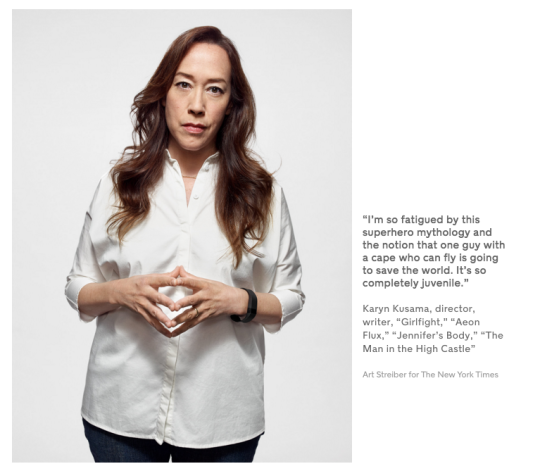
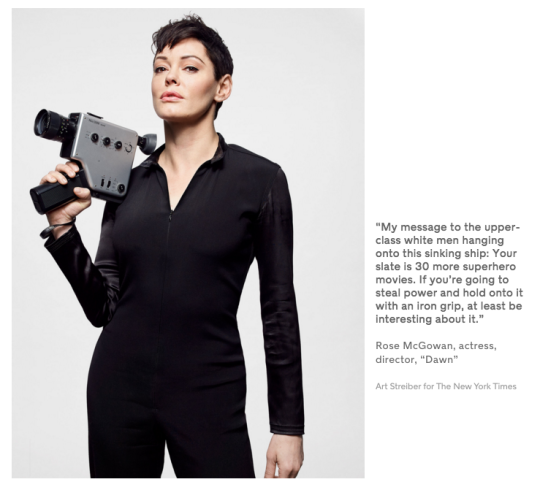
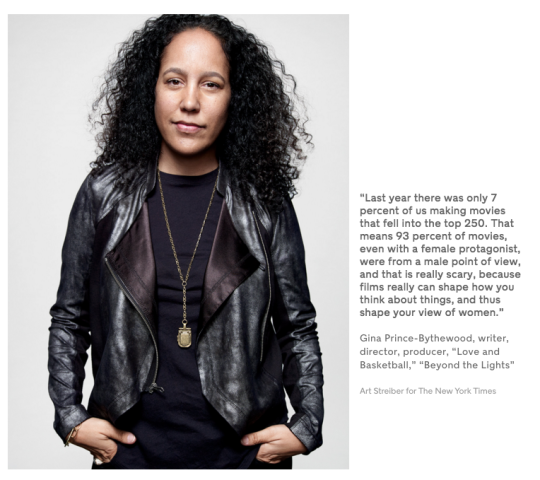
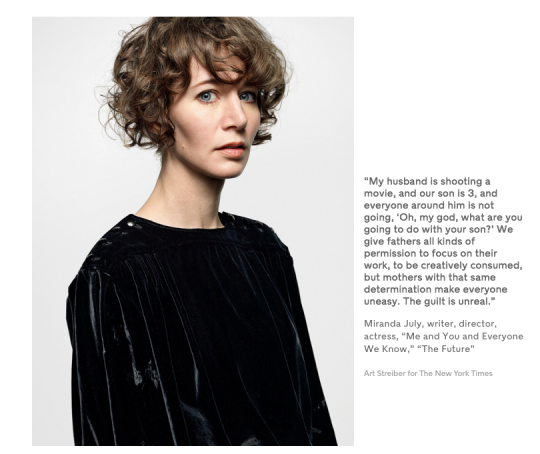

Need more lobe blowing fun(?):shitpeoplesaytowomendirectors
This is a heroic tale of a brave woman who sacrificed her saving children from terrorists. Can you ever imagine a Hollywood film portraying this kick ass female hero’s life?
…
Yah, me neither. It’s too hard for the hollywood dude establishment to tart up the heroine and tell a serious story at the same time. :( Instead we get more of the tight sexy skinsuit phenomena (bleh):

Let’s not go there. Onward to the real hero.
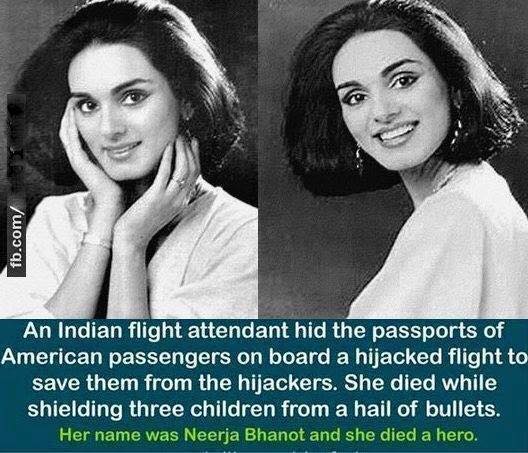
“Yesterday would have been her 52nd birthday, but PAN AM Flight Attendant Neerja Bhanot of Chandigarh, India died at 23 being a hero. She is credited with saving the lives of 360 passengers onboard PAN AM 73. When radical Islamic terrorists hijacked her A/C in Karachi, Pakistan she informed the pilots (who used their escape hatch to runaway) and kept both the passengers/remaining crew calm. When the terrorists demanded to know who the Americans were on the flight so they could execute them she gathered all the passports and hid the ones belonging to Americans under seat cushions. The terrorists confused and unable to determine the national origins of the passengers didn’t execute anyone. When Pakistani police raided the plane she was able to nearly singlehandedly evacuate all the passengers as the firefight ensued. She being one of the last people on board did a last check and found three children still hiding. As she led the children to safety the surviving terrorists spotted the children and opened fire on them. Neerja jumped in the way of the bullets and was mortally wounded. She was able to evac the children to safety before dying from her wounds. Neerja was awarded the Ashok Chakra Award by India, the highest peacetime gallantry award possible. She was the youngest and first civilian to ever be awarded this honor.”
There is some good news, there is a film being made outside of Hollywood about this fine female hero.
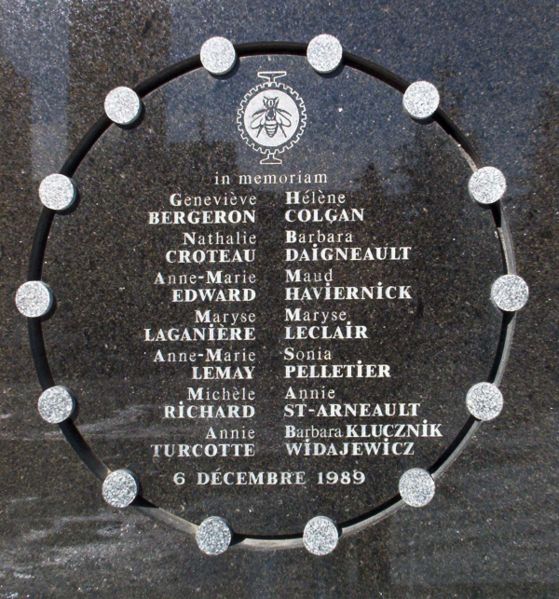 I’m probably already reprinting to much, but frack it. This shit is too important not to repeat. Go to the Ottawa Citizen’s webpage and read the entire article by Shelly Page.
“I was 24, sent by the Toronto Star to write about the slaughter of female engineering students, all around my age; fourteen of them.
Looking back, I fear I sanitized the event of its feminist anger and then infantilized and diminished the victims, turning them from elite engineering students who’d fought for a place among men into teddy-bear loving daughters, sisters and girlfriends.
Twenty-five years later, as I re-evaluate my stories and with the benefit of analysis of the coverage that massacre spawned, I see how journalists— male and female producers, news directors, reporters, anchors — subtly changed the meaning of the tragedy to one that the public would get behind, silencing so-called “angry feminists.” We were “social gatekeeping,” as filmmaker Maureen Bradley later asserted in her 1995 film, Reframing the Montreal Massacre: A media interrogation.”
[…]
“That evening, I thawed my feet in my hotel and watched the late Barbara Frum, one of Canada’s most respected journalists, refuse to admit that the massacre was indeed an act of violence toward women.
“Why do we diminish it by suggesting that it was an act against just one group?” Frum asked on CBC’s The Journal.
Frum was puzzled that so many women insisted the massacre was a result of a society that tolerates violence against women.
“Look at the outrage in our society,” Frum said. “Where is the permission to do this to women?
“If it was 14 men would we be having vigils? Isn’t violence the monstrosity here?”
She refused to even utter the word feminist. But then, her neutralizing of feminist anger must have resonated, and perhaps was reflexive. Bradley, in her documentary, wondered about Frum’s stance: “Was it necessary to deny any shred of feminism in herself in order to get where she was in this bureaucratic, media institution, boys’ club?”
Bradley also pointed out that the national media did not cover an emotional vigil the day after the massacre, where there was an angry confrontation between Montreal feminists and male students from the Université de Montréal. It would have made great content. Intelligent women voicing their outrage. But the story didn’t make it out of campus newspapers and local TV coverage onto a national stage. This story was not allowed to resonate with angry women.
When I review the stories I wrote, I almost never used the word feminist; I never profiled the achievements of one of the slain engineering students or the obstacles she’d toppled. I never interviewed a single woman who was angry, only those who were merely sad. Why? No one told me what not to write, but I just knew, in the way I knew not to seem strident in a workplace where I’d already learned how to laugh at sexist jokes and to wait until a certain boss had gone for the day before ripping down Penthouse centrefolds taped on the wall near his desk.
My stories were restrained, diligent and cautious. For years, I remembered one of my sentences with particular pride. Reading it now, it shows everything that was wrong with how I covered the event:
They stood crying before the coffins of strangers, offering roses and tiger lilies to young women they never knew.
I turned the dead engineering students into sleeping beauties who received flowers from potential suitors.
I should have referred to the buildings they wouldn’t design, the machines they wouldn’t create and the products never imagined.
They weren’t killed for being daughters or girlfriends, but because they were capable women in a male-dominated field.
I should have written that then.”
 The recent terrorist shooting in South Carolina have brought the issue of racism back to the top of the heap in the mainstream media. I’m sure there will be deep introspective think pieces in all of the major dailies and magazines. Then, like any story the media deigns “having being milked enough”, the racist terrorist attack will be quietly shunted to the side while the next tragedy is cued up for consumption.
Consumption of news these days seems to be the problem though. We are expected to keep track of the world, hell even personalize our ‘news experience’, but that is not what being an educated, engaged member of society is all about. The 5th Estate is (should) there to monitor the centres of power in society and report their activities for the citizens of democratic countries can engage with and evaluate said activities. With so much of media today being focused on infotainment rather than critical analysis of important events how the the average citizen get the information she needs?
There are a couple of threads to pull apart with the questions being raised. Firstly, the idea that personalized news is good idea for democratic societies, secondly the role of infotainment media and lastly the effect of the professional media colluding with the centers of power in society. All three of these aspects work against the creation of active, informed democratic participation in society.
“Society” is the watchword here – the ludicrous amount of personalization options presented to us in North America society gives us choice – and we all know (or should know by now the neo-liberal taint associated with that concept) that the choice presented to us is really a form of atomization that keeps our fingers firmly off the pulse of society and rather, firmly on our own as we sail alone through society.
What comes to mind is an captioned black and white image (pro-tip:if you want to every reuse something save it the first time you see it) of people on a train all
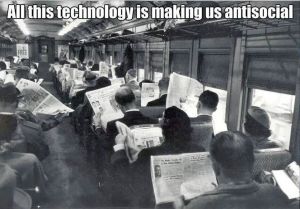
A big tip of the hat to Bleatmop for tracking down this picture.
reading the paper. The witty caption was something like this – smartphones and technology have changed society darn much… You can see the obvious parallel being made; every buried in a newspaper vs. everyone buried in their smart phones. On the surface this is correct but I remember pausing then thinking that something wasn’t quite right.
That “something” was that reading the daily newspaper was a still a shared experience in society. You could talk to someone about an article, even a complete stranger, and it was likely that they would have read the same article and then you could start a conversation about it. How neat is is that? Today though, that is a much taller order as many people have tailored their consumption of news to their tastes and sphere of interests making finding a common ground with people that much more difficult. Talking to people about important issues is what community is about, especially when they have different views on what is the correct course of action. Hashing things out, being charitable, accepting an well reasoned argument are all part of living in a democratic society.
Democracy is not a streamlined affair, nor should it be, because our personal freedom and ethical concerns are at stake. When governments act unilaterally and secretly it doesn’t matter what personal choices you make, it is the society around you that is going to shit and your choosy-choices and personal experiences will also be circling the drain since you are part of said society(see Canadian bill C-51, NAFTA, Trans-Pacific-Partnership). So having a reliable, accessible, common base of public knowledge is important to democratic society.
Democratic society has given us many media choices but, coupled with the capitalist infrastructure that actually runs the show our media sources have conglomerated and become ensconced within the power structures of society. See Fox and Faux News for the most shining example of the marriage between news and corporate propaganda. The focus of much of our news media today is to sell advertising, while educating/informing the public on crucial issues facing society is quite far down the list. I shudder when I see how much of the professional media now resembles Entertainment Tonight rather than the venerable Front Page Challenge (The Fifth Estate, Marketplace, et cetera). It now takes a great deal of time just to filter out the dross to get to the important news that people should know about their society and even then one must take into account the bias and elite influence present within ‘serious news’. The importance of public broadcasters cannot be overstated here – public institutions such as the CBC, NPR, and BBC are more free from the elite consensus and can more accurately report on the issues without the elite’s point of view being considered the default (This is a relative judgment – see Media Lens for an annotated listing of how awesomely independent Auntie Beebs is becoming).
Public broadcasting, with all of its problems aside, is one avenue to escape ‘the preferred message’ being broadcast to society by the corporate media with their vested interests of the status-quo. This isn’t a wild conspiracy theory – the way the world currently works benefits a certain class of people and it is their best interests to maintain the current system because it keeps them at the top of the heap. No mystery present. This system also provides the answers to why certain problems keep cropping up again and again within society – inequality, institutionalized racism and sexism for example. There structures within society serve their purpose; the ‘right people’ profit from their existence and thus are maintained. Just look at the perspectives surrounding mass murders:

The evidence, but then put through the media filters and the very different result…

The NYT’s nails it, for once, and lays down a view into the systemic racism that permeates North American society. This is the story that needs constant repetition. Yet, watch how soon the white racial violence dissipates into the ether. This is not a fluke, not a statistical aberration, this is policy. And thus, because of the collusion of much of the media with the current centres of power, the problems that face our society are not adequately dealt with nor are they given the proper amount of time or analysis that would help the people of the nation understand these problems and what can be done about them.
For those in power though it wise to note that only so much tamping down of these systemic problems can be done. Eventually, these issues take a life of their own and people will take radical action to resolve these seemingly ‘intractable’ problems and not in the way that the nestled elite likes.











 bleatmop
 Mystro


 Dead Wild Roses
Your opinions…