
You are currently browsing the tag archive for the ‘Safeguarding’ tag.
Canada’s Bill C-4 was sold as a targeted ban on abusive “conversion therapy.” That goal of ending coercive, shame-based attempts to “pray the gay away”is legitimate, and the harms from such practices are well documented. (Library of Parliament)
But C-4 didn’t stop at prohibiting coercion. It built contested premises about “gender identity” into the Criminal Code—then wrapped ordinary clinical caution in legal risk. For children, that’s not a symbolic problem. It’s a downstream harm problem.
1) C-4 hard-codes a contested concept into criminal scope
The Criminal Code definition of “conversion therapy” includes any “practice, treatment or service designed to… change a person’s gender identity to cisgender,” or “repress… a person’s non-cisgender gender identity.” (Department of Justice Canada)
That’s not the same category as sexual orientation. Whatever one’s politics, “gender identity” is not measured like blood pressure. In real child psychotherapy, you do differential diagnosis: you test hypotheses, you treat comorbidities, you watch patterns over time, you revisit interpretations.
C-4 makes one interpretive direction toward “cisgender”a uniquely danger to be seen as the “design” of therapy. (Department of Justice Canada)
2) The preamble signals something stronger than “don’t abuse people”
The Act’s preamble denounces “myths and stereotypes,” including “the myth that… cisgender gender identity… [and] gender expression that conforms to the sex assigned… are to be preferred over other… gender identities.” (Parliament of Canada)
Supporters will say this is a dignity claim: no one should be pressured to “be cis.” Fine. But when Parliament declares a core premise a “myth,” it doesn’t just condemn abuse it pressures institutions to treat skepticism as suspect.
In therapy, that matters, because the clinician’s job is not to recite a moral slogan. It’s to find the causal engine of distress in a specific child.
3) “Exploration” is permitted—until it looks like exploration with a destination
C-4 includes a “for greater certainty” carve-out for “exploration or development of an integrated personal identity… such as… gender transition,” provided the service is not “based on an assumption that a particular… gender identity… is to be preferred over another.” (Department of Justice Canada)
Here’s the problem: in actual clinical practice, the line between exploration and influence is not a clean statutory boundary.
A careful therapist might say:
- “Let’s treat anxiety/OCD first and see what remains.”
- “Let’s explore trauma and dissociation before we interpret identity claims.”
- “Let’s reduce online reinforcement and stabilize sleep, mood, and social stress.”
- “Let’s slow down—puberty is a confounder, not an oracle.”
That’s not “conversion.” That’s normal clinical sequencing.
But under C-4’s language, a motivated complainant (or risk-averse administrator) can reframe caution as an attempt to “repress” a non-cis identity, or as therapy “designed” to steer toward “cisgender.” (Department of Justice Canada)
Even if a prosecution is unlikely, the chilling effect doesn’t require convictions. It only requires enough ambiguity that clinicians and clinics decide it’s not worth the exposure.
4) This isn’t “college policy.” It’s Criminal Code territory.
Bill C-4 received Royal Assent on December 8, 2021 and came into force in January 2022. (Parliament of Canada)
It created Criminal Code offences around causing someone to undergo conversion therapy, promoting/advertising it, and profiting from it. (Parliament of Canada)
So when therapists ask, “Can I safely do exploratory work with this child without being accused of ‘conversion’?” they are not being melodramatic. They are doing what professionals do when lawmakers write broad definitions: they assume the worst plausible reading—and they self-censor.
5) Why this hits children hardest
Adults can absorb bad ideology and still have time to course-correct. Kids often can’t.
Children need therapy that is:
- exploratory (many hypotheses, not one script),
- developmentally sober (puberty changes the picture),
- comorbidity-first (anxiety, depression, autism traits, trauma, dissociation),
- family-systems aware (parents are usually the safety net, not “the enemy”),
- outcome-humble (no foreclosed conclusions).
C-4 subtly tilts the playing field: it makes “don’t be seen as steering away from trans identity” the safest institutional posture regardless of whether that posture serves the child in front of you.
6) Why this question is sharper now
After the February 10, 2026 Tumbler Ridge shootings, public attention has turned—again—to institutional failure chains: mental health, gatekeeping, warning signs, and what “care” actually means when a young person is unstable. The BC RCMP’s Feb 13 update refers to autopsies for “eight victims and the suspect” (nine deceased total), and notes ongoing review of prior interactions with the suspect. (RCMP)
A tragedy doesn’t “prove” a policy critique. But it does remove the luxury of pretending that scripts are the same thing as safeguards.
A better standard (without reviving abusive conversion practices)
If Parliament’s aim is to ban coercion and fraud, it can do so cleanly without criminalizing clinical caution.
A fix would explicitly protect:
- Open-ended psychotherapy for gender distress, including differential diagnosis and comorbidity treatment.
- Neutral therapeutic goals (reducing distress, improving functioning, strengthening self-acceptance) without predetermining identity outcomes.
- The clinician’s ability to discuss biological sex reality, uncertainty, and developmental pathways without that being treated as “preference” or “myth.” (Parliament of Canada)
- Bright-line prohibitions aimed at the actual evils: coercion, aversive techniques, confinement, threats, and misrepresentation.
Canada can still denounce abuse and defend evidence-based exploration. Kids deserve therapists unbound by ideology—not just ideology unbound by evidence.

References
- Bill C-4 — First Reading (House of Commons) — Nov 29, 2021
https://www.parl.ca/DocumentViewer/en/44-1/bill/C-4/first-reading
Source: (Parliament of Canada) - Bill C-4 — Third Reading (House of Commons) — Dec 1, 2021
https://www.parl.ca/DocumentViewer/en/44-1/bill/C-4/third-reading
Source: (Parliament of Canada) - Bill C-4 — Royal Assent (Chapter 24) — Dec 8, 2021
https://www.parl.ca/DocumentViewer/en/44-1/bill/C-4/royal-assent
Source: (Parliament of Canada)
Core legal text (Criminal Code, consolidated)
- Criminal Code — s. 320.101 (definition + exploration carve-out)
https://laws-lois.justice.gc.ca/eng/acts/c-46/section-320.101.html - Statutes of Canada 2021, c. 24 (Annual Statutes full text — includes preamble)
https://laws-lois.justice.gc.ca/eng/AnnualStatutes/2021_24/FullText.html
Official legislative record / metadata (timeline, status)
- LEGISinfo — Bill C-4 (44-1) (dates, stages, summary trail)
https://www.parl.ca/legisinfo/en/bill/44-1/c-4
Source: (Parliament of Canada)
Neutral institutional summary
- Library of Parliament — Legislative Summary (PDF)
https://publications.gc.ca/collections/collection_2022/bdp-lop/ls/YM32-3-441-C4-eng.pdf
Source: (Government of Canada Publications)
Government explainer / enforcement framing
- Justice Canada — “Conversion therapy” page (in-force date, offences overview)
https://www.justice.gc.ca/eng/rp-pr/jr/ct-tc/p1.html
Context reference used in the essay (Tumbler Ridge)
- RCMP — Tumbler Ridge investigative update (Feb 13, 2026)
https://rcmp.ca/en/bc/tumbler-ridge/news/2026/02/4350292
Many thanks to Courage is a Habit on “X”.
“Strong parenting is fundamentally about exclusion, and the imposition of boundaries becomes paramount.
From the moment our children are born, it is our duty as parents to build formidable barriers that protect their growth and development. We do not welcome inclusion; we embrace exclusion. Newborns, delicate and defenseless, require a fortress against the tumultuous outside world. We rigorously limit the number of individuals permitted to hold them, acknowledging the necessity of a controlled environment that minimizes potential health risks.
As these beautiful tiny beings evolve into crawling explorers, our parenting role transforms into a vigilant act of exclusion – shielding them from the lurking dangers of electrical sockets, sharp edges, household hazards, and countless other items they want to put into their mouths.
The trajectory of parenthood traces a deliberate expansion of boundaries, mirroring the child’s burgeoning independence. With every developmental stage, our responsibility as parents pivots towards a meticulous curation of the influences that shape their world. The friends they choose, the content they consume, and the food they ingest all fall under the scrutiny of our discerning oversight.
Friendships In the realm of friendships, we guide them towards relationships that instill confidence and personal growth. By cultivating a discerning approach to friendships, we foster an environment that nurtures values that reflect those within our family.
Social Media In the digital era, where a deluge of information bombards impressionable minds, the imperative of exclusion becomes even more pronounced. We assume the role of gatekeepers, wielding control over the content they consume. In a world teeming with both constructive and detrimental influences, setting firm boundaries on screen time, online interactions, and the nature of digital content is critical to sculpting responsible, discerning individuals.
Food The practice of exclusion extends decisively to dietary habits, where we vigorously steer our children away from the insidious allure of junk food and sugar. By instilling a profound appreciation for nutritious choices, we not only contribute to their physical well-being but also lay the groundwork for enduring habits that transcend a lifetime.
Embrace Exclusion In essence, strong parenting asserts itself through a resolute rejection of inclusion for its own sake. While love and support remain foundational, the imposition of unwavering boundaries becomes the scaffolding that empowers our children to navigate, learn, and flourish within the safety of predefined limits.
Strong parenting has always been about exclusion, not inclusion. Never let anyone, especially government school employees, guilt you into accepting “inclusion”.
Those who cannot respect parental boundaries never have good intentions for children.”
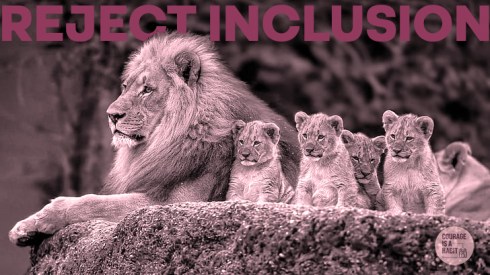
If your school has directives to keep information about your child away from you, action is necessary. Stand up, make noise and protect your children from age inappropriate ‘gender-queer’ nonsense.
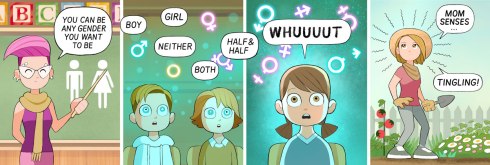
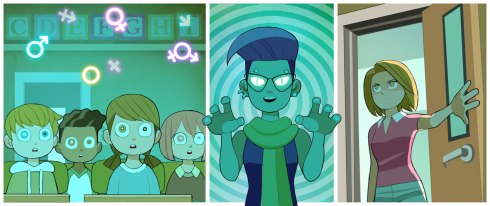
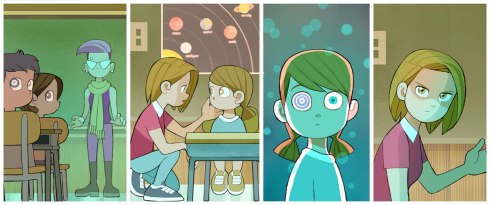
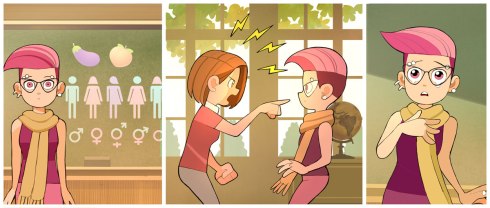
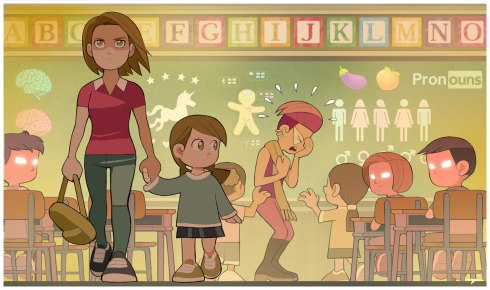
A conflict exists between those who would like us to believe that when a man says he is a woman, he *because magic gender reasons* becomes one. The reality of the situation is that all men belong to the class of individuals that abuses, assaults, and rapes females. There is no way to tell the difference between a predatory male and a good male. Because there are enough predators and perverts scattered through the male population females need a spaces (not to mention DV shelters and sports and medical care) away men.
A female patron at Wispa complained that there was a naked male in the female only area, exposing himself to her daughter. Spa staff did nothing as they are following the ludicrous California law that says as long as a man feels like he is a woman, then he IS a woman. You see, in California, being progressive equates to prioritizing the gender feelings of men over the physical and mental well being of women (read that twice).
Later, antifa went to war on innocent women and men protesting this gross violation of female boundaries and safety, see the video from the link above. This is yet another example of how far off the rails the purported ‘progressive’ left has gone when women are placed in situations where their safety is ignored because of male gender feelings.
Men do not belong in female spaces. The entire self-id/transgender ideology piece is a free ticket for perverted abusive men to harm women and children without repercussions – it has no place in a society that values the safety of women and children.
The following is a thread from twitter user “Femme Loves” who writes eloquently about how wrong this (gender ideologically) sanctioned intrusion into female spaces is.
“This is a thread about why telling girls to “avert your eyes” when they see people with penises in the changing room is so wrong. It is a thread about red flags, and seeing no evil and why most people fail child safeguarding at the very first hurdle.
The sexual abuse of children thrives in the dark. Most abused children have multiple people in their life who “half know” what’s going on. Most people I have told as adults said something like “I had my suspicions.” Many people in authority had the chance to intervene and did not. For example, my father lost his teaching job for inappropriate sexual behaviour with teenage girls. He had three daughters at home, the oldest of which was a teenager. No investigation of his home life was done, he was allowed to retire quietly.
All a child abuser asks is that you politely look the other way. See no evil. Don’t cause any waves. Weesht. Just mind your business, wash your hands of it like Pontius Pilate. After all, it’s only suspicion. He’s harmless. Sure he does loads for the community, avert your eyes. An abused child cries out to be heard, is desperate to be heard, but the things she has to tell you are horrific. An abused child demands action of you, action which may result in the fracturing of your family and your community. Easier to avert your eyes. See no evil.
I can feel it in me now, still, that desperate need to be heard, seen, believed. The loneliness of not being believed. The absolute betrayal of the adults in my life who should have protected me, and instead, protected the men abusing me. They averted their eyes. I didn’t need to “tell” what was happening to me. Everybody knew. Instead of taking action, I was labelled a bad kid, a “terrible teenager,” because sexual abuse caused hypersexuality, and led to me seeking out situations in which I could be reabused. I was shamed for their sin. I just accepted it – ok, I’m the bad guy. I’m a slut, I’m responsible, as a young teenager, for adult men wanting to fuck me. I didn’t have the language or understanding to explain any of it, and even if I had, I would have been blamed instead of helped. I just needed to be seen.
But nobody saw me, they just saw this terrible teenager, this slut, this lost girl who put herself in harm’s way, who climbed out of her window and fucked strangers and got falling down drunk and didn’t care what happened to her. Nobody really looked beyond that. Avert your eyes. Averting your eyes is loaded language for abuse victims in another way, though. There’s a defence mechanism called dissociation which involves essentially averting your eyes from your own experience. I went away in my head. I can remember very little of what I actually did not just when I was being abused, but of all the sex I have ever had with men as an adult. I just went away in my head. I have fractured, broken images, but mostly I averted my eyes, Elvis has left the building.
Victims’ tendency to blame ourselves for what happened is another way to avert our eyes. We can’t look squarely at a person who was supposed to protect us, and accept that they abused us instead. So I went back and forth between the poles of a Hobson’s choice. My father used to make it feel like the sun was coming out. He sat me on his knee and sat me on his workbench and threw me in the air. I loved him. If he was a bad man, then one of the only bright spots in my childhood wasn’t real, and I had lived without love. Easier to avert my eyes from evil, literally, to see no evil. Easier to take the shame on myself. Easier to conclude that it was me who was bad, that I deserved it. But if you see no evil, you take that evil on yourself, and live without love either way.
This aversion of the gaze is why abuse victims’ accounts of what happened to them may sound deceptive, even to professional lie detectors. Dissociation, guilt and shame conspire to make truthful narratives sound like lies, full of holes. It is also why victims so often feel so desperate to speak, to tell the truth about what happened to them, and so desperate to be heard, to be believed. I used to feel like I was in a crowded room, screaming, but everybody just looked the other way. The first rule of child safeguarding is that if you see a red flag, you have a duty, as an adult, to take action on it. A penis in a women’s changing room is the red flag equivalent of the Kremlin on the anniversary of Lenin’s death.
If you are swinging your dick in the women’s changing room, you are not dysphoric. I am married to somebody who lives with dysphoria. If you’re dysphoric, you want to hide. This is not a case of a trans person just wanting to get changed. Make no mistake, this is a pervert. It is already flashing, which is a sexual offence. The men and women saying, without a hint of irony, “avert your eyes” are directly enabling sexual abuse. They are giving a free pass to flashers. They are emboldening perverts. They are feckless, thoughtless cowards. They are averting their eyes, they are seeing no evil. They are excusing predators and perverts with whatever excuse seems most fitting to them. And they are encouraging others to do the same. I hope they are proud of themselves.
It couldn’t be me. I swore, before I had children, that little people would be safer around me. That I would see red flags and act on them, that I would not avert my eyes, not from what happened to me, and not from adults around me. I am here, looking the truth in the face, and the truth is that defending flashers, perverts and molesters by saying “it’s a woman’s penis,” and doing it in public, is the exact same energy as moving paedophile priests to different parishes. It is the exact same energy as failing to investigate the home life of a teacher who has teenage daughters, and has lost his job for interfering with teenage girls at school. It is gaslighting, it is covering up for child abuse. It is a cowardly, polite kind of evil.
I will leave you with this. I have done a lot of reading about molestation and grooming, trying to understand what happened to me, and learning how to spot red flags, how to protect children. Of all that reading, one phrase stuck with me. It was from a prolific abuser of children. He said that even if he didn’t actually get to abuse a child that he was grooming, he would “get her ready for the next guy.” Telling a child just to “avert your eyes” is getting her ready for the next guy. It is breaking down her boundaries. It is telling her to ignore her feelings and her gut. It is gaslighting her. Child molesters are pure evil and fairly rare, but the kind of craven coward who covers for child molesters and blames the victim are ten a penny.
If you say and do these things, you should know what you are. You are Pontious Pilate. You are seeing no evil. You are looking the other way and allowing the sexual abuse of children on your watch, for woke points.
I despise you.”











 bleatmop
 Mystro
 The Arbourist


 Dead Wild Roses
Your opinions…