
You are currently browsing the tag archive for the ‘Venezuela’ tag.
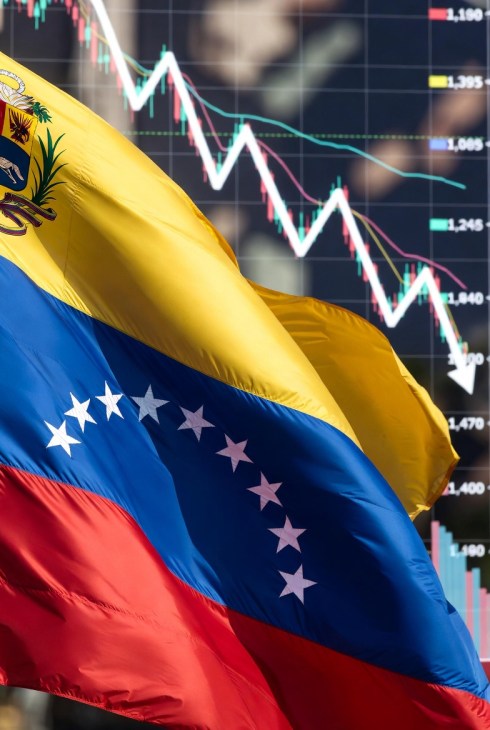
In recent years, Venezuela was often held up as a shining example by some Western socialists as the ultimate proof that their economic model could create a fairer society. Big names on the left, from Jeremy Corbyn to Bernie Sanders, once praised Venezuela as a socialist success story.
But when the country’s economy collapsed, when its people faced hunger, and when millions fled, those same voices grew notably quiet. Today, the narrative has shifted. Supporters who once looked to Venezuela now point to Nordic countries, distancing themselves from what they once endorsed.
The reality is that Venezuela’s tragic decline serves as a cautionary tale. It shows that simply promising “free stuff” and wealth redistribution doesn’t automatically lead to prosperity. Instead, it can lead to economic dysfunction and suffering.
In this post, we’ve unpacked how the once-celebrated Venezuelan model has become an uncomfortable silence among its former admirers. We’ve seen how the economic realities and human suffering in Venezuela stand in stark contrast to the optimistic promises of socialism. And as we look at these lessons, it’s clear that Western societies need to reevaluate the ideologies we champion. Ultimately, if we want to build fairer and more prosperous societies, we need to be honest about what works and what doesn’t, and not shy away from these tough conversations.
First, from the Manhattan Institute, there’s an analysis by Daniel Di Martino arguing that Venezuela’s crisis was primarily caused by socialist policies like nationalizations and price controls.
Second, the Fraser Institute provides a historical perspective from Fred McMahon, who notes that Venezuela’s decline started with economic mismanagement even before the full rise of socialist policies.
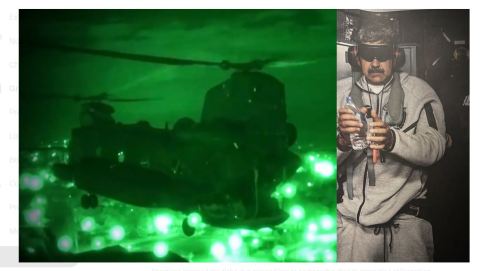
On January 3, 2026, the United States carried out a large-scale operation in Venezuela that resulted in the capture of Nicolás Maduro and his wife, Cilia Flores, and their transfer into U.S. custody. [1] Within hours, the story stopped being only about Maduro. It became a stress test of the West’s default assumptions about how global order actually works.
The reaction split fast and predictably: condemnation framed in the language of sovereignty and the UN Charter; applause framed in the language of liberation and justice; and, underneath both, a quieter argument about whether “international law” is a meaningful constraint—or primarily a vocabulary used to legitimize outcomes power already permits.
Two languages for one event
When a great power uses force to remove a sitting head of state and relocate him for prosecution, states and commentators typically reach for one of two languages.
The first is legal-institutional: Was this lawful? Was it authorized? What does the UN Charter permit? What precedent does it set?
The second is strategic-realist: What will it cost? Who can impose consequences? What does it deter? What does it invite?
These languages often coexist, but Venezuela forced a choice because it exposed the tension between *the claim* of a rules-governed international order and *the mechanism* by which order actually persists.
The enforceability problem
The measured point is not that international law is “fake” in every domain. A great deal of international life runs on rules that are real in practice: treaties, trade arrangements, financial compliance, aviation coordination, maritime norms, and sanctions enforcement. In those domains, rules can be highly consequential because they are tied to access, markets, and institutional membership.
But in the domain that states care about most—hard security and regime survival—international law runs into a structural limitation: there is no global sovereign with a monopoly on force. The question is not whether rules exist, but whether they bind the actors most able to ignore them.
That isn’t a rhetorical flourish. It’s the structural fact everything else sits on.
The UN can convene, condemn, and deliberate. But it cannot consistently coerce major powers into compliance. In the wake of the Maduro operation, the UN Security Council moved to meet and the UN Secretary-General warned the action set a “dangerous precedent.” [2] That may shape legitimacy and alliances. It may raise political costs. But it does not function like law inside a state, because law inside a state ultimately rests on enforceable authority.
This is why the phrase “international law” so often behaves less like binding law and more like legitimacy currency—something states spend, something rivals contest, and something that matters most when it is backed by power.
The reaction spectrum makes more sense as philosophy, not partisanship
The political reactions were not merely partisan reflexes; they were expressions of competing world-models.
Institutionalists treated the precedent as the core danger: once unilateral force becomes normalized, the world becomes easier for worse actors to imitate.
Sovereignty-first critics (especially in regions with long memories of intervention) treated it as a return to imperial patterns—regardless of Maduro’s character.
Results-first supporters treated it as overdue action against an entrenched authoritarian regime and criminal networks.
Realists treated it as a reminder that rules do not restrain actors who cannot be credibly punished.
It is possible to disagree with the operation and still accept the realist diagnosis. “This was reckless” and “this reveals how order works” are not contradictions—they’re often the same conclusion stated in different registers.
A small but telling detail: systems moved, not just speeches
One detail worth noting is that the event had immediate operational spillover beyond diplomacy: temporary Caribbean airspace restrictions and widespread flight cancellations followed, with U.S. authorities later lifting curbs. [3] That’s not a moral argument either way. It’s simply a reminder that great-power action produces real-world system effects instantly—while multilateral processes operate on a different clock.
Meanwhile, Venezuela’s internal institutions scrambled to project continuity. On January 4, 2026, reporting described Venezuela’s Supreme Court ordering Vice President Delcy Rodríguez to assume the interim presidency following Maduro’s detention. [4] Again, one can read this in legal terms or strategic terms. But it underscores the same point: the decisive moves were being made through power, institutional control, and logistics—not through international adjudication.
What Venezuela is really teaching
The strongest measured conclusion is this:
1. International law can matter as coordination and legitimacy.
2. But in hard-security conflicts, it does not function like ordinary law because enforcement is selective, especially against great powers.
3. Therefore, when Western leaders speak as though “international law” itself will constrain outcomes, they are often describing the world they want—or the world they remember—more than the world that exists.
This is the wake-up Venezuela delivers: not that rules are worthless, but that rules don’t become rules until they are paired with credible consequences. If the West wants a world that is safer for liberal societies, it must stop mistaking procedural vocabulary for strategic capacity.
What Western leaders should do differently
If “international law” is often a language of legitimacy rather than a source of enforcement, then the task for Western leaders is not to abandon norms—but to rebuild the conditions under which norms can actually hold. That requires a change in posture that is both external and internal.
First: speak honestly about interests and tradeoffs.
A rules vocabulary can be morally sincere and still strategically evasive. Western publics deserve leaders who can say, without euphemism, what outcomes matter, why they matter, and what costs we are willing to pay to secure them.
Second: re-embody Western values in our institutions, not merely our slogans.
The West is not “a place that sometimes gets things right.” It is the most successful civilizational experiment yet produced: freedom under law, pluralism, scientific dynamism, broad prosperity, and the moral insight that the individual matters. If leaders treat this as an embarrassment rather than an inheritance, they will govern as caretakers of decline.
Third: restore civic confidence by repairing the narrative infrastructure.
A civilization that teaches its own children that it is uniquely evil will not defend itself—or even understand why it should. The “mono-focused West-is-bad” story has become a kind of institutional reflex across parts of education, culture, and bureaucracy. You can reject naïve triumphalism while still insisting on civilizational honesty: that the West has flaws, committed crimes, and still produced the best lived human outcomes at scale to date.
Fourth: build capacity again—material, strategic, and moral.
Norms without capacity do not preserve peace; they invite tests. This means defense industrial readiness, energy resilience, border and migration competence, counterintelligence seriousness, and the willingness to impose costs where deterrence requires it.
Finally: treat multilateralism as a tool, not a substitute for power.
Institutions can amplify strength; they cannot conjure it. A West that wants a stable order must stop acting as though process is the engine. Process is the dashboard.
Afterword: the more polemical take
Western elites keep reaching for “international law” the way a sleepwalker reaches for the bedside table—by habit, not by sight. They speak as if naming the norm substitutes for enforcing it. But there is no authority behind it for the actors that matter most.
So the scandal isn’t disagreement about Venezuela. The scandal is that so many of our leadership classes still talk like we live in a world where legitimacy language can replace power, unity, and competence. That was a comfortable posture in a more unipolar era. It is a dangerous posture now.
In a multipolar environment, moral declarations without strength don’t preserve order. They advertise weakness. And weakness is not neutral: it invites tests.
Footnotes
[1] Reuters (Jan 3–4, 2026): reporting on the U.S. operation capturing Nicolás Maduro and Cilia Flores and transferring them to U.S. custody.
[2] Reuters (Jan 3, 2026): UN Security Council to meet over U.S. action; UN Secretary-General calls it a “dangerous precedent”; meeting requested with backing from Russia/China.
[3] Reuters (Jan 3, 2026): Caribbean airspace restrictions and flight cancellations following the operation; later lifted.
[4] Reuters (Jan 4, 2026): Venezuela’s Supreme Court orders Delcy Rodríguez to assume interim presidency after Maduro’s detention.
Direct Reference Links
[1] Reuters — “Mock house, CIA source and Special Forces: The US operation to capture Maduro”
https://www.reuters.com/business/aerospace-defense/mock-house-cia-source-special-forces-us-operation-capture-maduro-2026-01-03/
[2] Reuters — “UN Security Council to meet Monday over US action in Venezuela”
https://www.reuters.com/world/americas/un-chief-venezuela-us-action-sets-dangerous-precedent-2026-01-03/
[3] Reuters — “US lifts Caribbean airspace curbs after attack on Venezuela”
https://www.reuters.com/world/americas/us-airlines-cancel-flights-after-caribbean-airspace-closure-2026-01-03/
[4] Reuters — “Venezuela’s Supreme Court orders Delcy Rodriguez become interim president”
https://www.reuters.com/world/americas/venezuelas-supreme-court-orders-delcy-rodriguez-become-interim-president-2026-01-04/
This from Counterpunch shedding some light onto what is happening in South America, without being filtered through the corporate press.
“Over the last year reports about Venezuela in the corporate media have been depicting a country undergoing a “humanitarian crisis.” What they described was not consistent with what I know about the country, and I wondered what was actually happening. To find out, I traveled with a group of other North Americans who wanted to see the reality on the ground, and how the majority, the “popular classes,” were responding to the pressure of economic sanctions and threats of war.
My first impression was the scene on the streets. I was wondering if there would be signs on the streets of those same conditions returning—begging, homelessness, street vending. What I saw was surprising. Things looked so normal. People were going to work, relaxing on the weekend, just as they had been on my more recent visits. Media in the US and around the world were creating an image of desperate suffering, hardship and chaos, but I did not see signs of that on the street. No begging, no homeless, no masses of peddlers. There was food in restaurants and stores, business as usual in retail shops, and people were working at their jobs.
Although life appeared outwardly normal, I soon learned about the two big problems beneath the surface: inflation and the blockade.
The government is trying to deal with one aspect of inflation by providing food through a system known as CLAP, an acronym of the Spanish words for Local Committees to Supply the People. Every two weeks bundles of basic foods like rice, beans, oil, sugar, etc. go directly to households, distributed by neighborhood committees. There is enough food in the bundle for people to survive on, but just barely. If supplies run out, food is available in stores, but some people’s salaries have not kept up with inflation. There are other ways that some get food—school lunches, etc,—but many suffer from the problem of not being able to afford to buy what they need, food and other things.
The second problem is the blockade on imported products. Venezuela has the industrial capacity to produce a substantial amount of what the country consumes. The road to the west of Caracas, for example, goes past huge plants, large populations of working people, highways full of big trucks hauling things to stores. But no country of 30 million people can produce all the things it needs. Countries have to import things, from medicine for specific diseases like HIV, to spare parts for most of the cars in the country. The blockade creates a lot of suffering.
On the other hand, the popular classes are in a much better position to withstand economic war than they were in earlier years. Free health care, education, and many other basic needs are available. Very important among these is housing. In the past 8 years the government has built 2.6 million homes, rural and urban. Enough to provide a new home to one third of the population. The goal is 5 million.
On past visits I have ridden past big blocks of apartment buildings, many under construction. One group after another, it takes many minutes to pass them, speeding along the highway. I thought about big apartment complexes for poor people in the US that turned out so badly, and wondered how these would be different. This recent visit was the first time I had an opportunity to see one of those developments from inside, and my question was answered.
Our group happened to be in Caracas at the time of a big conference about housing. Delegates from many countries were there to learn about Venezuela’s remarkable achievement. We were invited to attend, and we went with a busload of other “internationals” to the state of Vargas, on the coast of the Caribbean.
We saw a community of apartment buildings that house 32,000 people, many who had lost everything in the catastrophic mudslides of 1999, when whole communities in the area were swept out to sea. The buildings are designed to include much more than housing: childcare, cooking and dining, meeting and educational space, sports courts, a community radio station…a long list. The community manages its affairs through communal councils.
These spaces make it easy and natural for people of all ages to get together. We had a taste of this as we were welcomed with a concert by young people who had learned to play their instruments through el sistema. The star of the show was a girl of 8 or 9 who sang three long songs from memory, in a strong, confident voice. It seemed like a good place to raise kids.
This kind of housing would soon be history if the opposition were to come to power. Soon after they won a majority in the National Assembly they attempted to privatize the millions of homes the government had built, so landlords could buy them up as rentals and speculative investments. The Supreme Court was able to block that move, but if the opposition were in power they would do it.
We had come to Venezuela to learn how the popular classes are responding to the economic attacks and military threats from the US. One very visible response is that they are joining the militia; we were impressed by how this has been taken up. Our visit coincided with two demonstrations and two Sundays: four days when militia members did not need to dress in routine work-day clothing, and chose to wear their distinctive khaki uniforms in the marches and as they strolled around the plazas and shops. People of literally every adult age, and both sexes. It seemed there are about as many women as men. Even more remarkable was the number of people who are quite old, many in their seventies.
These militia groups train regularly. Their guns are kept in secure locations in communities around the country, close to where they might be needed. It was recently announced that the militia will be responsible for delivering the packages of food to be distributed to neighborhoods. This is a prudent measure given the history of violent attacks on medical clinics and other services provided to the popular classes. There are one and a half million members of the militia at this time, the goal being two and a half million.
Another response of the popular classes is a massive effort to produce food, through urban agriculture as well as in the countryside. We visited one substantial facility in Catia, a large hilly section at the western end of Caracas, where four communes with a total population of about 150,000 have created an urban farm named after Fabricio Ojeda, a revolutionary who died in the struggles against the oligarchy in the last century.”
Wow, people power in action.
The US has a funny notion of what is in its ‘backyard’. It would be really wonderful if the citizens of the US would decry the economic terrorism being carried out on their behalf.
“The success of Chávez and Maduro’s governments in reducing poverty and inequality in Venezuela and their ability to lend aid to working people around the world pose a direct threat to the United States’ agenda. During the 14 years of Chávez’s presidency, the country experienced an average of 3.2 percent economic growth, increasing to 4.1 percent after Chávez took control of the state oil company, PDVSA, in 2004. The profits from the oil sector have been used to bolster social programs in areas such as housing, health, and education.
Programs such as the Comité Local de Abastecimiento y Producción (CLAP) and Plan de Atención a la Vulnerabilidad Nutricional provide 50,000 tons of food per month to 6 million Venezuelan families (compared to the measly 60 tons that could be purchased with the $20 million of aid offered by the United States). According to Mark Weisbrot and Luis Sandoval of the Center for Economic and Policy Research and other sources, inequality has decreased substantially compared to the pre-Chávez era.
It is true that Venezuela today is experiencing an economic crisis. But it is important to put the current reality in context with the pre-Chávez neoliberal era—which failed to provide basic services to the Venezuelan people even without the staunch opposition of the United States and its allies—and in the context of crushing economic sanctions and an economic war that has systematically denied the country access to credit and repeatedly staged a series of economic and political interventions.
Today, the U.S.-imposed sanctions alone cost Venezuela an estimated US$30 million per day. Under pressure from the U.S., the Bank of England has denied Venezuela access to $1.2 billion of gold stored there—money that could be used to provide medicine and aid to the Venezuelan people. While painting a picture of Maduro as a heartless dictator who refuses to provide aid to his people, the U.S. is simultaneously lobbying the Bank of England to deny Maduro access to crucial funds and instead turn Venezuela’s gold over to Guaidó.
Meanwhile, the United States has stationed military planes on the Colombian border carrying US$20 million worth of so-called humanitarian aid. Maduro, recognizing the history of humanitarianism as a trojan horse for intervention and the political motives behind the U.S.’s offer, has denied the aid. Even the United Nations and the Red Cross have refused to support the U.S. aid shipment, which they accuse of being politically motivated. In other words, if one is to take a step back and look at the bigger picture of the crisis in Venezuela, the missteps of Maduro’s administration pale in comparison to the impact of U.S. economic warfare.
In stark contrast to the United States’ foreign relations and stance on international aid, Venezuela has used its natural wealth to provide aid to working people around the world and to fund social programs domestically. In doing this, the country has set an example for what is possible if countries under the current grip of U.S. imperialist policies set out to stop the bleeding of their resources and wealth into the coffers of the United States and its allies and instead use their resources for the good of everyday people. It is an attempt toward what the late Egyptian Marxist Samir Amin would call “de-linking,” or “compelling imperialism to accept your conditions or part of those conditions [… and] to drive one’s own policy.”
American foreign policy seems to be carefully insulated from the majority of the American population. I’m thinking that, outside the respective frenzied political bases, the general populace has little or no taste for international misadventures and the inevitable blowback that accompanies imperial meddling in the affairs of other states. Yet here we be, because the venerated elite have decided that Venezuela’s impertinence (questioning and moving against the US sphere of influence in Central/South America) is distinctly unpalatable and, indeed, *something* must be done.
The kowtowing to this interventionialist narrative crosses party lines and speaks to the amount of power wielded by the power brokers that set the tone for US political discussion. David Rosen writes:
“While the Republicans led the fictitious chant for a “hard coup,” the Democrats were divided, split over a “hard” vs a “soft” coup and – for a growing number — a “no” coup. Will Trump’s ham-fisted effort to topple Maduro split the Democratic Party?
***
South Florida’s three Democratic Congresswomen — Donna Shalala, Debbie Wasserman Schultz and Debbie Mucarsel-Powell – are among the strongest supporters of the administration’s campaign to overthrow the Maduro government.
Donna Shalala – a classic liberal, Pres. Bill Clinton’s formerSecretary of Health and Human Services and leading Hillary-for-president supporter – has taken an unequivocal stand: “And all of us are waiting to see what the military will do and to make sure that we send very clear messages of our support for the people of Venezuela, for the acting president as well as for military leaders that are prepared to step up and bring down the Maduro government.”
This no-nonsense interventionist position is shared by other Democrats, most notably the (undeclared) presidential candidate, Joe Biden, who said: “The international community must support Juan Guaidó and the National Assembly. It is time for Maduro to step aside and allow a democratic transition.” The declared candidate Sen. Cory Booker (D-NJ) shouted, “Maduro has to go.”
Senate Minority Whip Dick Durbin (D-IL) has taken up Trump’s call to oust Maduro:
He [Guaidó] knows how much the Venezuelan people have suffered, how the Maduro regime bankrupted the nation and destroyed its democracy and its economy, and how desperate the people of his country are to rejoin the community of democracies. I told him we in the United States stand ready to help, and the Venezuelan people need our help to rebuild their country’s democracy and economy and to help the millions of Venezuelan refugees safely return home.
Some Democratic presidential candidates seek cover in the “soft” coup approach. A spokesperson forSen. Kirsten Gillibrand (D-NY) said she “supports working with our allies to recognize Juan Guaidó – who was legitimately elected – as the interim president under the Constitution until Venezuela can hold new elections.” And Sen. Amy Klobuchar whimpered, “I support the people of Venezuela standing up against Maduro, installing a new leader, and restoring democracy in Venezuela.”
But those who appear to oppose a “hard” coup, including U.S. military intervention, don’t want to come out and say it explicitly. Sen. Sherrod Brown (D-OH), another undeclared presidential candidate, lambasted the Trump administration’s “loose talk of possible military intervention” as “reckless and irresponsible.” But then fell back on the “free and fair elections” – or soft coup – stand. “We should work with our allies and use economic, political and diplomatic leverage to help bring about free and fair elections, limit escalating tension, and ensure the safety of Americans on the ground,” he said.
Sen. Elizabeth Warren (D-MA), a declared presidential candidate, shares Brown’s half-hearted stand. She has strongly opposed the use of sanctions and then intones: “The Venezuelan people deserve free and fair elections, an economy that works, and the ability to live without fear of violence from their own government.” Dah?
Unremarkably, the Democrats who take either a hard or soft position regarding a coup in Venezuela present themselves as “progressives.” In the good-old-days of American politics, say 2010, Democrats were “liberals,” “moderates” and – with rare exception – “radicals” (i.e., secret socialists, even Marxists). Unfortunately, today every Democrat claims to be a “progressive.”
A handful of Democrats have come out against U.S. intervention, no matter whether hard or soft. Rep. Tulsi Gabbard (D-HI), another declared president candidate, has taken the strongest, most unequivocal stand opposed to intervention. She said, put simple: “The United States needs to stay out of Venezuela.” She tweeted, rejecting Trump’s recognition of Guaidó as president: “Let the Venezuelan people determine their future. We don’t want other countries to choose our leaders — so we have to stop trying to choose theirs.” Like no other politician, she went to heart of the issue, tweeting:“It’s about the oil … again,”
Sen. Bernie Sanders (I-VT), a declared presidential candidate and self-declared democratic socialist, has been criticized for his rather wimpy stand on Venezuela. However, he’s reframed Gabbard’s statement about the role of oil, recognizing the core driving force of U.S. imperialism. “However, we must learn the lessons of the past and not be in the business of regime change or supporting coups – as we have in Chile, Guatemala, Brazil, and the Dominican Republic.” Driving the point home, he insisted: “The United States has a long history of inappropriately intervening in Latin American countries; we must not go down that road again.”
Some critical voices are out there, but sadly, not enough to derail the interventionalist narrative that is dominating the discourse.
It doesn’t really matter who is at the helm in the US, the foreign policy remains the same. Central/South America has been deemed within the sphere of influence of the United States and states resisting vassal status are punished for their crimes.
I’m guilty of not looking past the news coverage on this one was getting the impression that Maduro was not only suspect in this leadership of the country, but that his election was somehow illegitimate. However the electoral system in Venezuela is quite doing well and possesses a fair amount of resiliency, if we are to take the Carter Centre’s word for it:
“Of the 92 elections that we’ve monitored,” said former President Jimmy Carter, whose Carter Centre is a respected monitor of elections around the world, “I would say the election process in Venezuela is the best in the world.” By way of contrast, said Carter, the US election system, with its emphasis on campaign money, “is one of the worst”.
The picture presented to us by more mainstream media doesn’t seem to reflect the Carter Centre’s statement. There are other incongruities in coverage as well as evinced by much of what John Pilger writes in his article on Counterpunch.
“A war has been declared on Venezuela, of which the truth is “too difficult” to report.
It is too difficult to report the collapse of oil prices since 2014 as largely the result of criminal machinations by Wall Street. It is too difficult to report the blocking of Venezuela’s access to the US-dominated international financial system as sabotage. It is too difficult to report Washington’s “sanctions” against Venezuela, which have caused the loss of at least $6billion in Venezuela’s revenue since 2017, including $2billion worth of imported medicines, as illegal, or the Bank of England’s refusal to return Venezuela’s gold reserves as an act of piracy.
The former United Nations Rapporteur, Alfred de Zayas, has likened this to a “medieval siege” designed “to bring countries to their knees”. It is a criminal assault, he says. It is similar to that faced by Salvador Allende in 1970 when President Richard Nixon and his equivalent of John Bolton, Henry Kissinger, set out to “make the economy [of Chile] scream”. The long dark night of Pinochet followed.
The Guardian correspondent, Tom Phillips, has tweeted a picture of a cap on which the words in Spanish mean in local slang: “Make Venezuela fucking cool again.” The reporter as clown may be the final stage of much of mainstream journalism’s degeneration.
Should the CIA stooge Guaido and his white supremacists grab power, it will be the 68th overthrow of a sovereign government by the United States, most of them democracies. A fire sale of Venezuela’s utilities and mineral wealth will surely follow, along with the theft of the country’s oil, as outlined by John Bolton.
Under the last Washington controlled government in Caracas, poverty reached historic proportions. There was no healthcare for those could not pay. There was no universal education”
The situation in Venezuela is indeed looking grim. We are being misdirected (again) as to how and why events are unfolding as they are. We not forget the lessons of Chile (1974) and should be wary of our media coverage that is filtered through the ideological lens of American foreign policy directives.
 The situation in Venezuela is grim. When conditions take a turn for the worse those on the bottom of the social hierarchy feel it the worse, and of course those are almost always females. I read in the Globe and Mail about Carmen Tovar and her now deceased daughter Nakarid.
“Carmen Tovar remembers the apologies. The doctors who stood around the body of her 17-year-old daughter Nakarid told her they were so very sorry, but the girl had died, and so had the baby she was trying to deliver. We did all we could, the doctors told Ms. Tovar – we’re terribly sorry.
Nakarid had high blood pressure all through her pregnancy, but the free clinic in their hillside slum on the edge of Caracas had no drugs to treat it, and her mother could not afford the wildly inflated prices in the private pharmacies. When Nakarid’s contractions started, on the night of Dec. 7, Ms. Tovar took her to a nearby maternity clinic, but they were turned away: no beds available there. Same thing at the next clinic. By the time they reached the third, Ms. Tovar, 49, was out of money to pay another taxi, and her daughter was disoriented, dizzy with a shattering headache. Ms. Tovar demanded a bed, and that clinic reluctantly took Nakarid. But she died a few hours after they reached the hospital. The doctors said she had pre-eclampsia; they lacked even a basic intravenous line to treat her.”
Most people in the wealthy parts of North America would have difficulty connecting the idea that becoming pregnant would be death sentence for (some) women. Maternal mortality rates in Venezuela have significantly increased due to the lack of basic medical services and supplies.
“When Mr. Chavez was first elected, nearly two decades ago, Venezuela had some of the best public health indicators in Latin America. That reflected decades of steady progress: In 1958, at the start of the democratic era, 140 of every 100,000 women died giving birth, but the figure had fallen to 68 women by 1990. When the government finally released 2016 data a few weeks ago, the figure was back up to 112 per 100,000 women. “The health system is so deteriorated that we’re going back in time,” said Rayfael Orihuela, who was the minister responsible for public health in the last government before Mr. Chavez swept to power.
“What do I have when I go to deliver a baby? Only a pair of gloves and maybe a clamp for the cord,” said David Flora, who recently completed a two-year stint as the sole doctor in a referral hospital in Rio Chico, a town three hours’ drive west of Caracas. “If the placenta doesn’t descend, if I need to stop bleeding, if the baby has respiratory distress – I have no way to attend that. I have one bed and a pair of gloves and a line of women waiting at the door to deliver. Women arrive at 40 weeks pregnant with no file, they have had no prenatal care, and I know nothing about them. I don’t even know how many babies are in that belly because they haven’t had an ultrasound. I don’t even have a fetoscope to listen, so I don’t know the size of the pelvis, the size of the baby, if the baby is even alive. If the mother needs a caesarean, she dies.”
AAAAAChilling isn’t it? If you need a C-section, you’re dead.
AAAAAWhy though? What is happening in Venezuela?
“Venezuela is not facing only one crisis but multiple interconnected crises.
Key among them is the state of the economy. In January 2017, according to estimates by the Finance and Economic Development Commission of the National Assembly (AN), it was predicted that inflation will close this year at 679.73 percent.
However according to the International Monetary Fund, this year and next year’s projection is even higher. The organisation estimates that inflation will reach 720.5 percent this year, the highest in the Americas, and 2,068.5 percent by 2018.
However, the economic crisis is hitting Venezuela’s public health system the hardest. In the country’s public hospitals, medicine and equipment are increasingly not available.”
AAAAAOuch.
“Venezuela depends heavily on its oil. It has the largest oil reserves in the world which, in 2014, had 298 billion barrels of proved oil reserves.Oil revenue has sustained Venezuela’s economy for years. During the presidency of Hugo Chavez, the price of oil reached a historic high of $100 a barrel. The billions of dollars in revenue were used to finance social programmes and food subsidies.
But when the price of oil fell, those programmes and subsidies became unsustainable.”
During the rule of Hugo Chavez, the price of key items, food and medicines were reduced. Products became more affordable but they were below the cost of production. Private companies were expropriated, and to stop people from changing the national currency into dollars, Chavez restricted the access to dollars and fixed the rate.When it became unprofitable for Venezuelan companies to continue producing their own products, the government decided to import them from abroad, using oil money. But oil prices have been falling since 2014, which has left the economic system unable to maintain the system of subsidies and price controls that functioned during the oil boom years.
The inability to pay for imports with bolivares coupled with the decline in oil revenues has led to a shortage of goods. The state has tried to ration food and set their prices, but the consequence is that products have disappeared from shops and ended up in the black market, overpriced. As many as 85 of every 100 medicines are missing in the country. Shortages are so extreme that patients sometimes take medicines ill-suited for their conditions, doctors warn.
Given the long litany of woes, some analysts think there are two options before Maduro’s government: to default on its debt or to stop importing food.”

Add in government corruption and massive inequality and it isn’t a much of a stretch to see Venezuela on the downward spiral toward Failed State status. Another revolution or return to military dictatorship seems to be in the dark future for Venezuela. Either option though likely won’t help the poorest of the nation, their misery is guaranteed in the years to come.
[Source: Globe and Mail]











 bleatmop
 Mystro
 The Arbourist


 Dead Wild Roses
Your opinions…