
You are currently browsing the tag archive for the ‘Woke’ tag.
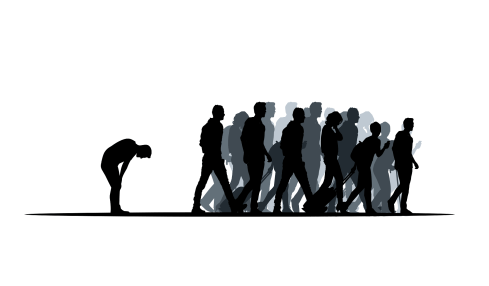
Hannah Arendt’s portrait of Adolf Eichmann as a thoughtless bureaucrat lingers as a caution against evil’s mundane guise. Christopher Browning’s Ordinary Men extends this indictment, trading Eichmann’s desk for the blood-soaked forests of Poland, where Reserve Police Battalion 101—500 Hamburg ‘everymen’—executed 39,000 Jews and deported 44,000 more to Treblinka in 1942-43. These were no zealots: middle-aged draftees, family men untouched by Nazi fervor, yet they pulled triggers with grim efficiency. Browning’s forensic reconstruction from postwar trials complements Arendt, illuminating how conformity, not conviction, forges complicity. In an age of ideological silos, their story warns that thoughtlessness scales from individual abdication to collective carnage.
Arendt diagnosed Eichmann’s evil as a failure to think—to judge actions against universal humanity—yielding obedience’s autopilot. Browning operationalizes this in RPB 101’s crucible. On July 13, 1942, in Józefów, Major Trapp’s order to slaughter 1,800 innocents included an opt-out: a dozen stepped forward, fathers haunted by their own children’s faces. The rest? They fired, vomited, and fired again, bound not by hatred but by the group’s inexorable pull. Peer pressure proved the deadliest weapon: to demur meant isolation, whispers of cowardice, or worse—standing alone amid the splatter of brains and pleas. As Browning dissects, “binding factors” like deference to authority and aversion to shame radicalized the reluctant. Initial nausea faded into routine; Jews devolved from neighbors to “bandits,” their deaths logged as quotas met. This mirrors Arendt’s “banality”: not demonic intent, but the quiet erosion of moral agency, where thinking cedes to fitting in.
Browning’s men prefigure Arendt’s broader fear—that totalitarianism thrives on unreflective masses. Unlike Eichmann’s abstracted ledgers, these policemen confronted the visceral: a mother’s wail, a child’s gaze. Yet empathy atrophied through diffusion—blame smeared across the chain of command—and progressive desensitization. A few resisted, sabotaging hunts or feigning illness, their conscience a fragile bulwark against the tide. Most drifted, careerism and alcohol dulling the sting. Browning invokes social experiments like Milgram’s obedience studies, positing such dynamics as human universals, not German pathologies—a riposte to claims of cultural exceptionalism.
This convergence sharpens lessons for our fractured present, where critical constructivism and woke Marxism summon conformity’s specter. Critical constructivism, an epistemological framework that treats knowledge as socially mediated and entwined with power—rejecting empirical objectivity for interpretive lenses shaped by culture and positionality—echoes RPB 101’s euphemisms, recasting dissent as dominance while evidence bows to constructed narratives. Proponents propagate without pause, their deference to “lived experience” a peer-enforced gag on Socratic probe. Woke Marxism, a repackaged Marxism applying class struggle to identity oppressions—framing queer theory as “gender Marxism” and intersectionality as “identity Marxism”—amplifies this through performative allegiance. Its rituals—DEI oaths, cancellation tribunals—demand uncritical adherence, sidelining judgment for allegiance, much as Trapp’s men traded qualms for camaraderie. Ordinary adherents comply, not from malice, but inertia: promotions hinge on nods, ostracism on silence.
Arendt and Browning converge on the antidote: reclaim thinking as defiant praxis. In algorithm-curated echo chambers, where ideologies brook no fracture, epistemic humility—questioning, pluralizing, judging—arrests the slide. Thoughtlessness is choice, not fate; conformity’s shadow lifts only through vigilant reflection. Honor the dead of Józefów not with memorials alone, but by fortifying the ordinary against atrocity’s call. Goodness demands depth; evil preys on the shallow. In choosing to think, we dismantle the battalion within.
References
Arendt, H. (1963). Eichmann in Jerusalem: A Report on the Banality of Evil. New York: Viking Press. (Primary source for the concept of the banality of evil and its philosophical underpinnings.)
Browning, C. R. (1992). Ordinary Men: Reserve Police Battalion 101 and the Final Solution in Poland. New York: HarperCollins. (Core historical analysis based on postwar judicial testimonies, detailing the battalion’s actions and psychological dynamics.)
Dead Wild Roses. (2025, August 25). “Unraveling the Roots—How ‘Woke’ Emerges from Social Construction.” https://deadwildroses.com/2025/08/25/unraveling-the-roots-how-woke-emerges-from-social-construction/. (Defines critical constructivism via Kincheloe’s assumptions, linking it to woke epistemology and power-mediated knowledge.)
Dead Wild Roses. (2022, April 6). “Queer Theory is Gender Marxism – James Lindsay.” https://deadwildroses.com/2022/04/06/20651/. (Critiques woke Marxism as repackaged identity-based Marxism, drawing on Lindsay’s analysis of queer theory and intersectionality.)
Goldhagen, D. J. (1996). Hitler’s Willing Executioners: Ordinary Germans and the Holocaust. New York: Alfred A. Knopf. (Contrasting thesis on German antisemitism, referenced by Browning to highlight universal rather than cultural explanations.)
Hilberg, R. (1961). The Destruction of the European Jews. Chicago: Quadrangle Books. (Foundational Holocaust scholarship on the “short, intense wave of mass murder” in 1942, informing Browning’s timeline.)
Milgram, S. (1963). “Behavioral Study of Obedience.” Journal of Abnormal and Social Psychology, 67(4), 371–378. https://doi.org/10.1037/h0040525. (Seminal experiment on authority compliance, invoked by Browning to explain diffusion of responsibility in RPB 101.)
Trunk, I. (1972). Judenrat: The Jewish Councils in Eastern Europe Under Nazi Occupation. New York: Macmillan. (Contextual background on Jewish councils’ coerced roles, paralleling themes of complicity under duress.)
Picture a library, its shelves stripped of Orwell and Atwood, replaced by outrage: this is the activist’s trap. Critical social constructivism—commonly branded as “woke ideology”—does not depend on truth-seeking but on the imposition of narrative, luring well-meaning observers into excusing captured institutions as merely inept (Kincheloe, 2005). To extend such charity is to enable agendas that corrode trust in public institutions and divide communities.
The Edmonton Public School Board’s (EPSB) recent book removal controversy exemplifies this dynamic. In late August 2025, a leaked list of more than 200 titles slated for removal from K–12 school libraries ignited national outrage. The list included canonical works such as Margaret Atwood’s The Handmaid’s Tale and Aldous Huxley’s Brave New World. Media coverage swiftly framed the list as a right-wing purge: a literary witch-hunt torching academic freedom and signaling Alberta’s dystopian slide.
Yet this spectacle obscures the actual policy. In July 2025, Education Minister Demetrios Nicolaides issued a directive requiring school boards to remove sexually explicit materials by October 1, 2025, to ensure age-appropriate resources in K–12 libraries (Alberta Ministry of Education, 2025). The directive does not ban classics nor prohibit parents from providing controversial works privately. Its scope is limited: public schools, funded by taxpayers, must not circulate sexually explicit material to children.
Seen in this light, the EPSB’s list appears less a bureaucratic stumble than a narrative maneuver. By placing revered classics alongside contested titles such as Maia Kobabe’s Gender Queer—which contains explicit illustrations of sexual acts—and Jonathan Evison’s Lawn Boy, which describes sexual encounters between minors, the Board ensured the reaction would focus on “censorship” rather than explicit content. The outrage generated by the supposed “banning” of Atwood and Huxley distracts from the substantive question: whether K–12 libraries should carry graphic sexual material at all.
To be fair, some argue this was an honest misstep. Officials under pressure may have over-applied vague guidelines, fearing punishment if they erred on the side of permissiveness. From this perspective, the inflated list reflects incompetence, not ideology. This interpretation has surface plausibility—and acknowledging it is crucial. Yet it falters when weighed against the broader intellectual context.
The precise inclusion of classics alongside sexually explicit texts mirrors the rhetorical tactics of queer pedagogy, which openly embraces provocation as a teaching tool. In their influential article Drag Pedagogy: The Playful Practice of Queer Imagination in Early Childhood, Harper Keenan and Lil Miss Hot Mess (2021) describe initiatives such as Drag Queen Story Hour as “strategic defiance” designed to “disrupt normative understandings of childhood” (p. 433). Drawing on José Esteban Muñoz’s Cruising Utopia (2009), they frame queerness as a “future-oriented ideality” (p. 1), using performance and play to challenge authority, destabilize binary categories, and cultivate “embodied kinship” rather than passive empathy (Keenan & Lil Miss Hot Mess, 2021, pp. 434–436).
This framework is not hypothetical. It explicitly advocates the use of aesthetics, provocation, and imaginative unruliness to reshape children’s perceptions. In their words, “Drag pedagogy embraces an unruly vision of childhood as a site of potentiality” (p. 437). Texts like Gender Queer or Lawn Boy, with their focus on sexual exploration and destabilization of normative boundaries, can be read as curricular extensions of this agenda. Their presence in K–12 libraries is not incidental but reflects a coherent intellectual project to prioritize queer cultural forms over developmental appropriateness.
From this perspective, the EPSB’s list functions as a narrative cudgel. By spotlighting Orwell and Atwood, defenders can recast the government’s directive as authoritarian censorship while obscuring the ideological drive to embed queer pedagogy in public institutions. The effect is the same whether activists deliberately curated the list or whether bureaucrats, steeped in activist frameworks, reproduced them unconsciously: outrage is amplified, and the debate is reframed on activist terms.
This is the trap of charitable interpretation. To dismiss the list as simple incompetence is to ignore its functional alignment with queer pedagogy’s playbook: provoke, inflate, and obscure. Even if intent cannot be definitively proven, the effect is unmistakable—a shift of public discourse away from the legitimate question of protecting children’s developmental environments and toward a defensive posture about “book banning.”
The consequences are corrosive. Communities fracture, as defenders of childhood innocence are painted as censors, and activists wield “inclusivity” as a battering ram against parental concerns. Public trust in schools erodes further. And children—the supposed beneficiaries—are caught in the crossfire of ideological contestation.
Children deserve age-appropriate materials in their school libraries—full stop. No law prevents parents from accessing contested works privately, but schools should not be battlegrounds for ideological conquest. The EPSB controversy demonstrates how critical social constructivism (woke) thrives not on truth but on narrative imposition. To resist this, we must reject the activist trap of charitable interpretation and confront directly how such narratives are engineered. Only by doing so can we restore unity, rebuild trust, and protect the integrity of public education.

“Queer is by definition whatever is at odds with the normal, the legitimate, the dominant. There is nothing in particular to which it necessarily refers. It is an identity without an essence.”
(Halperin, 1995, p. 62)
References
-
Alberta Ministry of Education. (2025). Ministerial Order No. 2025-07: Age-Appropriate Resources in School Libraries. Edmonton, AB: Government of Alberta. Retrieved from https://www.alberta.ca/ministerial-orders
-
Keenan, H. B., & Lil Miss Hot Mess. (2021). Drag pedagogy: The playful practice of queer imagination in early childhood. Curriculum Inquiry, 51(5), 433–452. https://doi.org/10.1080/03626784.2020.1864621
-
Kincheloe, J. L. (2005). Critical constructivism. New York: Peter Lang.
-
Muñoz, J. E. (2009). Cruising utopia: The then and there of queer futurity. New York: NYU Press.
I. Certitude as a Cross-Ideological Poison
In the modern culture war, the most dangerous weapon isn’t censorship or cancellation—it is certainty. Certainty that your worldview is the only legitimate one. Certainty that dissent equals harm. Certainty that debate is violence. This mindset—what I’ve previously called sociognostic certainty—is most visible in the ideological left, but it is increasingly mirrored on the right.
The woke movement often silences critics not through reasoned rebuttal, but through moral accusation: you’re not just wrong—you’re a racist, bigot, or transphobe. But as anti-woke voices grow louder, many fall into the same trap: purity tests, denunciations, and rhetorical gatekeeping in reverse. The danger isn’t just that woke ideology dominates—it’s that we become it while resisting.
We’ve seen this before. The New Atheist movement began as a defense of rationality and open inquiry. But its leading voices soon traded in dialogue for dogma, responding to disagreement with sneers and smug certitude. It became a mirror image of the religious authoritarianism it once critiqued.
So how do we fight the woke juggernaut without turning into zealots ourselves? The answer lies in rediscovering the epistemic foundations of liberal democracy: open-ended inquiry, equal participation, and structured disagreement. These norms are what thinkers like Jonathan Rauch, Karl Popper, John Stuart Mill, Jonathan Haidt, and James Lindsay have defended—often against powerful ideological tides.
II. Liberal Science and the Culture of Disagreement
In Kindly Inquisitors, Jonathan Rauch identifies two rules at the heart of a liberal society’s truth-seeking tradition:
- No one gets the final say.
“Every idea is open to challenge, no matter how sacred or widely accepted.”
- No one gets to say who may speak.
“Everyone has the right to participate in the conversation. There are no gatekeepers of legitimacy.”
Rauch calls this “liberal science”—a decentralized process that evolves through open critique and trial-and-error. “The liberal regime is the only one ever devised that systematically seeks out and corrects its own errors,” he writes. It is a system designed for humility.
This insight builds on Karl Popper’s concept of falsification: that scientific progress happens not by proving ideas right, but by exposing them to the possibility of being wrong. Popper warned that ideologies insulated from criticism drift toward totalitarianism. Liberal societies flourish not by avoiding mistakes, but by remaining willing to correct them.
III. Why These Norms Are Being Abandoned
Woke ideology, rooted in the practice of consciousness-raising, assumes that those who have not been “awakened” are epistemically and morally inferior. This produces what James Lindsay has described as “a knowledge regime based on belief, not inquiry.” It assumes that disagreement is not just misguided, but oppressive.
As Lindsay and Helen Pluckrose write in Cynical Theories, “Woke ideology doesn’t merely assert ideas—it positions itself as the one true way of seeing the world. It replaces knowledge with belief and inquiry with obedience.”
This ideology treats opposition as evidence of guilt. White Fragility teaches that resisting anti-racist training proves one’s racism. Ibram X. Kendi insists neutrality is impossible: “You’re either a racist or an antiracist.” These are not empirical frameworks. They are gnostic in character—immune to criticism and uninterested in falsifiability.
But the anti-woke response is often no better. The populist right, with its own culture-war crusades and purity tests, increasingly mirrors the very forces it claims to fight. Declarations of moral emergency are replacing liberal norms of debate.
In Canada, we’ve seen this from both ends. When the University of British Columbia postponed a speech by philosopher Mark Mercer on academic freedom, critics called it “institutional cowardice,” yet some of those same critics support political interference in other academic expressions. Meanwhile, psychologist Jordan Peterson’s ongoing regulatory battles with the College of Psychologists of Ontario highlight a broader cultural breakdown in tolerating dissent—no matter the direction it flows.
As Jonathan Haidt puts it in The Coddling of the American Mind: “When we teach students that their feelings are always right, and that disagreement equals danger, we do not prepare them for citizenship in a pluralistic society—we prepare them for life in a war zone.”
IV. The Classical Liberal Antidote
To escape the cycle of tribal certainty, we must return to the liberal framework that allows for conflict without coercion.
In On Liberty, John Stuart Mill made a timeless argument: suppressing even false opinions robs humanity of the “collision of ideas” that refines our understanding. “He who knows only his own side of the case,” Mill warned, “knows little of that.”
Rauch extends this into our age of information: “Liberal science does not protect feelings. It protects the process by which we challenge claims and revise beliefs.”
This is not about defending speech merely for its own sake. It is about preserving a culture of mutual correction. That means:
- Tolerating speech we disagree with, not because we approve of it, but because suppressing it corrodes our capacity for self-correction.
- Engaging rather than excommunicating, even when our interlocutors are wrong or offensive.
- Resisting the tribal call to certainty, even when we feel most justified in wielding it.
To do this, we need courage—not the moral grandstanding of cancel culture, but the intellectual humility of listening, debating, and sometimes losing the argument.
V. Conclusion: How to Win Without Destroying What We’re Defending
If we truly want to defeat woke ideology—or any ideology that claims moral and epistemic supremacy—we must do more than oppose it. We must model a better way.
That means rejecting the tools of coercion, purification, and outrage. It means embracing fallibility, tolerating disagreement, and recommitting to open inquiry as a civic virtue.
We won’t always win the argument. But we can keep the argument alive. That is the foundation of liberal society—not that it always gets things right, but that it remains willing to be wrong.
Lose that, and we don’t just lose to the woke. We lose the very civilization we’re trying to save.
References
- Rauch, J. (1993). Kindly Inquisitors: The New Attacks on Free Thought. University of Chicago Press.
- Popper, K. (1963). Conjectures and Refutations: The Growth of Scientific Knowledge. Routledge.
- Mill, J.S. (1859). On Liberty. [Various editions].
- Lindsay, J. & Pluckrose, H. (2020). Cynical Theories: How Activist Scholarship Made Everything about Race, Gender, and Identity—and Why This Harms Everybody. Pitchstone Publishing.
- Haidt, J., & Lukianoff, G. (2018). The Coddling of the American Mind. Penguin Books.
- DiAngelo, R. (2018). White Fragility. Beacon Press.
- Kendi, I.X. (2019). How to Be an Antiracist. One World.
The corrosion of Canadian society is becoming increasingly apparent as disparities in the application of law erode the principles of justice and equality that underpin national cohesion. A telling example is the cancellation of concerts by Sean Feucht—a Christian musician associated with conservative American politics—in cities like Vaughan and Montreal, contrasted with law enforcement’s seemingly permissive stance toward disruptive street protests held by certain Islamist groups. This uneven enforcement of the law not only undermines the rule of law but also stokes populist resentment, creating fertile ground for political polarization.
At the root of this problem lies the influence of critical social constructivism — often expressed through “woke” ideology — which prioritizes identity-based oppression narratives over impartial justice. This essay explores how the disparate treatment of public expression—illustrated by the Feucht case—threatens to fracture Canadian society and how ideological bias within institutions exacerbates the risk.
The Sean Feucht Concert Cancellations
Sean Feucht, known for his conservative Christian beliefs and affiliation with the MAGA movement, faced significant resistance when attempting to host concerts in Canada. In Vaughan, the city revoked his permit for a scheduled event at Dufferin District Park, citing concerns about “health and safety as well as community standards and well-being” (National Post). In Montreal, a church hosting Feucht was fined $2,500 over permit issues, and during the event, a smoke bomb was thrown into the venue—allegedly by Antifa-aligned protestors—yet no arrests followed (CBC News).
Other cancellations occurred in Quebec City and at a Parks Canada site in Nova Scotia, often citing vague concerns about “community standards” or “public safety,” despite no comparable crackdown on ideologically favored events (CBC News; Globe and Mail).
Unequal Application of Law
In contrast to the concert cancellations described earlier, public demonstrations involving Islamic street prayers have been met with a markedly different approach. For example, in March 2025, protesters blocked Toronto’s Yonge and Bloor intersection to perform anti-Israel Islamic prayers. Despite obstructing traffic and complaints from residents, Toronto Police took no enforcement action, citing a need to balance Charter rights and public safety (True North).
Similarly, in Montreal, Quebec Premier François Legault publicly criticized city police for allowing protesters to block streets during Islamic prayers, noting that no fines or charges had been issued across numerous demonstrations. Legault even considered invoking the notwithstanding clause to prohibit such practices outright (The CJN).
Adding to the perception of enforcement bias, journalists covering these protests reported being obstructed or threatened by police. In one instance, Montreal police allegedly told a journalist to “let them pray” while preventing him from filming, yet protesters causing the disruption faced no consequences (Rebel News).
This stark contrast — Christian concerts shut down, yet Islamic street blockages tolerated — reinforces public perception that Canadian authorities selectively apply the law based on ideological alignment.
Legal Framework: Religious Freedom and the Charter
Section 2(a) of the Canadian Charter of Rights and Freedoms guarantees that everyone has “freedom of conscience and religion.” This protection applies equally to Christians, Muslims, Jews, atheists, and others. Section 15 of the Charter further guarantees “equality before and under the law” and the “right to equal protection and equal benefit of the law without discrimination.”
However, Section 1 of the Charter allows for “reasonable limits prescribed by law as can be demonstrably justified in a free and democratic society.” This is the legal mechanism by which governments or municipalities may argue that certain forms of expression or assembly—such as large concerts or disruptive protests—can be restricted in specific circumstances.
The problem arises when these limits appear to be enforced inconsistently, not based on objective criteria like safety or legality, but on the perceived ideological or religious affiliation of the participants. When secular authorities use Section 1 to suppress Christian gatherings while allowing disruptive Islamic demonstrations under Section 2(a), it creates the impression that some faiths are politically privileged while others are disfavored. This perception undermines public trust in the legal system and calls into question the neutrality of state institutions.
Societal Fracture
Unequal treatment before the law is a potent catalyst for societal division. When one segment of society perceives that its freedoms are systematically constrained while others are indulged, resentment grows—and with it, the risk of reactionary backlash.
Feucht himself characterized the cancellations as “Christian persecution,” accusing Canadian authorities of suppressing religious expression (CBC News). Whether one agrees or not, such rhetoric resonates with those who feel alienated by mainstream institutions. This kind of alienation feeds populist sentiment, erodes civic trust, and empowers more extreme political actors who promise to right perceived injustices.
Without a return to legal consistency, Canada risks a vicious cycle of grievance and counter-grievance, fueled not by reasoned discourse but by tribal loyalty and ideological recrimination.
The Ideological Engine: Critical Social Constructivism
The ideological root of this unequal application of law lies in critical social constructivism, particularly its contemporary “woke” form. Emerging from postmodern thought, this worldview holds that social reality is constructed through language and power relations, and that justice requires actively correcting historical imbalances.
In practice, this framework often leads to the privileging of marginalized identity groups while casting traditionally dominant groups—especially white, male, Christian, or conservative individuals—as inherently suspect. In the Feucht case, decision-makers may have acted out of a desire to affirm progressive social norms and suppress what they perceive as regressive or harmful speech.
This ideologically motivated asymmetry undermines the foundational liberal principle of equal treatment under the law. By replacing legal neutrality with identity-based adjudication, institutions risk becoming instruments of factionalism rather than guardians of justice.
Conclusion
If Canadian institutions continue to apply the law unevenly, motivated by ideological commitments rather than legal consistency, the resulting erosion of public trust will not remain confined to the political margins. It will spread. For a pluralistic society to function, citizens must believe that laws are applied fairly, regardless of ideology, religion, or identity.
The corrosion of this principle—whether in the name of safety, social progress, or cultural sensitivity—threatens the very cohesion it claims to protect. It is only through a recommitment to impartial justice that Canada can reverse its drift toward ideological tribalism and restore the unity that undergirds a truly free society.

Sources Cited
- National Post. “All six Canadian venues cancel Christian musician Sean Feucht’s shows.” https://nationalpost.com/news/canada/vaughan-cancels-sean-feucht-concert
- CBC News. “Quebec City cancels concert of MAGA musician, following lead of other Canadian cities.” https://www.cbc.ca/news/canada/montreal/sean-feucht-concert-montreal-1.7012345
- The Globe and Mail. “MAGA-affiliated American musician faces wave of cancellations on eastern Canadian tour.” https://www.theglobeandmail.com/canada/article-maga-affiliated-american-musician-faces-wave-of-cancellations-on/
- CBC News. “Permit revoked for MAGA musician’s concert at Parks Canada site, but show will go on.” https://www.cbc.ca/news/canada/nova-scotia/sean-feucht-concert-cancelled-parks-canada-1.7012345
- True North Wire. “Toronto residents upset after Hamas supporters blockade busy intersection.” https://truenorthwire.com/2025/03/toronto-residents-upset-after-hamas-supporters-blockade-busy-intersection/
- The CJN. “Quebec’s premier wants to ban public prayer after protests block traffic and challenge secularism.” https://thecjn.ca/news/quebecs-premier-wants-to-ban-public-prayer-after-protests-block-traffic-and-challenge-secularism/
- Rebel News. “Shocking: Threatened with arrest for covering Islamic public prayers.” https://www.rebelnews.com/shocking_threatened_with_arrest_for_covering_islamic_public_prayers?
- Government of Canada. “Canadian Charter of Rights and Freedoms.” https://laws-lois.justice.gc.ca/eng/Const/page-15.html
This is what happens when you let activists into your organizations. Ideological capture is inevitable. Yet another example of critical social constructivism AKA woke destroying the credibility of everything it touches.

This post is inspired by the writing of James Lindsay on X.
The Mechanics of Woke Sociognosticism: A Persuasive Analysis
Contemporary “woke” ideology—focused on systemic injustice, identity-based power dynamics, and cultural transformation—has morphed into a quasi-religious framework that claims exclusive access to sociological truth. Its adherents, wielding an implacable certainty, cast dissent as ignorance or complicity, undermining the pluralism essential to liberal societies. This essay argues that woke ideology operates as sociognosticism: a fusion of critical social theory with gnostic epistemology, where salvation lies in “awakening” to hidden structures of oppression. While its moral aim to address inequities is undeniable, its totalizing worldview risks authoritarianism, stifling dialogue and fracturing society.
I. Defining Sociognosticism
Sociognosticism marries sociological critique with a gnostic belief in hidden, redemptive knowledge. Historically, gnosticism posits that gnosis—secret knowledge—unlocks salvation by revealing a dualistic reality of light versus darkness (Voegelin, 1952). Political theorist Eric Voegelin applied this to ideologies like Marxism, which claim to expose a veiled truth behind social structures. In woke sociognosticism, society is a prison crafted by hegemonic groups (e.g., white, male, capitalist), who maintain power through a “false consciousness” internalized by the masses (Gramsci, 1971). Activists position themselves as enlightened guides, dismantling this illusion. Yet, their framework is often presented not as one perspective but as the sole legitimate lens, dismissing alternative views as inherently flawed.
II. The Elect and the Awakened: Epistemic Elitism
Woke ideology fosters an “elect” class—those “awakened” to systemic oppression—who view their insight as both morally and intellectually unassailable (Lindsay, 2025). This mirrors Herbert Marcuse’s argument in Repressive Tolerance, where dissenting views are deemed intolerable if they perpetuate systemic harm (Marcuse, 1965). Disagreement is recast as evidence of false consciousness, as seen in online campaigns on platforms like X, where critics of woke orthodoxy face accusations of racism or transphobia (e.g., high-profile cancellations of public figures for questioning prevailing narratives, X, 2024–2025). Such epistemic elitism conditions dialogue on ideological conformity, punishing dissent with social ostracism or demands for public “self-education,” effectively silencing pluralistic debate.
III. Struggle, Awakening, and the Maoist Echo
Woke sociognosticism employs rituals of struggle and awakening, echoing Maoist techniques of “self-criticism” and “struggle sessions” (Mao, 1967). Originating during the Chinese Cultural Revolution, these were public rituals of ideological repentance in which individuals were forced to confess alleged wrongthink to reinforce social conformity. Contemporary analogues include institutional diversity training programs that require participants to acknowledge privilege or complicity in systemic bias. For example, several corporate and university DEI (Diversity, Equity, and Inclusion) initiatives between 2023 and 2025 have included exercises in which employees or students must complete “privilege checklists” or write statements of commitment to anti-racism. Refusal to comply is often interpreted as regression or resistance to enlightenment.
The concept of “allyship” reinforces this structure, demanding continuous affirmation of anti-oppression principles, with failure interpreted as betrayal. This creates a narrative of inevitability: crises—social, economic, or personal—are seen as catalysts for “waking up” to the truth. While rooted in a desire to address inequities, these tactics prioritize conformity over dialectic, substituting performative repentance for genuine inquiry.
IV. A Closed Epistemology
The woke worldview is self-sealing, absorbing contradictions into its narrative. Karl Popper’s critique of unfalsifiable theories applies here: counter-evidence is reinterpreted as proof of the system’s pervasive influence (Popper, 1963). For instance, when a woman denies experiencing gender-based oppression, she may be accused of internalized misogyny; when a Black individual critiques critical race theory, they are often labeled as “anti-Black” or as supporting white supremacy. Notably, prominent Black academics who voice heterodox views—such as critiques of DEI bureaucracy—have been targeted with denunciations on platforms like X (2025), reinforcing the idea that dissent is heresy. This totalizing simplicity reduces complex realities to a binary of oppressors versus oppressed, rendering the ideology immune to challenge and hostile to nuance, even when confronting legitimate inequities.
V. The Political Danger
While woke ideology seeks justice—a noble aim—its sociognostic structure threatens pluralism. Hannah Arendt warned that ideologies reducing reality to a single explanatory framework erode judgment and shared political life (Arendt, 1951). Woke influence in institutions like academia and media, where speech codes and DEI policies increasingly frame dissent as harm, raises concerns about encroaching authoritarianism. For example, university speech guidelines updated in 2024 at several U.S. campuses have redefined “harmful speech” to include disagreement with concepts such as gender self-identification or systemic racism, chilling open discourse.
If silence, speech, or disagreement can be deemed oppressive, liberal norms—due process, open debate, individual conscience—are subordinated to a dogmatic moral code. Acknowledging the validity of addressing systemic inequities does not negate the danger: a worldview that pathologizes dissent risks fracturing the very society it aims to redeem.
Conclusion
Woke sociognosticism, while driven by a moral impulse to rectify injustice, operates as a closed belief system that stifles dissent and undermines pluralism. Its adherents’ certainty—rooted in a gnostic claim to hidden truth—casts disagreement as ignorance or sin, fostering division over dialogue. For a liberal society reliant on free inquiry and epistemic humility, this poses a profound challenge. Justice is essential, but it must not sacrifice the principles—open debate, mutual respect—that make justice possible.

References
Arendt, H. (1951). The Origins of Totalitarianism. New York: Harcourt, Brace.
Gramsci, A. (1971). Selections from the Prison Notebooks. New York: International Publishers.
Lindsay, J. (2025). X Post, July 5, 2025. Retrieved from https://x.com/ConceptualJames/status/1941564050707501548
Mao, Z. (1967). Quotations from Chairman Mao Tse-Tung. Peking: Foreign Languages Press.
Marcuse, H. (1965). Repressive Tolerance. In R. P. Wolff, B. Moore Jr., & H. Marcuse, A Critique of Pure Tolerance (pp. 81–123). Boston: Beacon Press.
Popper, K. (1963). Conjectures and Refutations: The Growth of Scientific Knowledge. London: Routledge.
Voegelin, E. (1952). The New Science of Politics: An Introduction. Chicago: University of Chicago Press
Philosophy Professor Letitia Meynell in this portion of an essay postulates how we need to deal with ‘woke’ in our society. I read the essay and found that it misses one of the key aspects of ‘woke’ and that is the use of polysemy to confuse the meanings of words and terms. Let’s read her essay together and then propose a some counters to her arguments. A long read, but it is necessary to see how ‘woke’ works in the wild and what you can do to counter it.
“A few years ago, there was considerable anxiety in some quarters about “political correctness,” particularly at universities. Now it’s known as wokeness, and even though the terminology has changed, the concerns are much the same.
Some years ago, I offered an analysis of political correctness that equally pertains to wokeness today. What interests me are ways to think about and discuss political correctness/wokeness so as to avoid polarizing polemics and increase mutual understanding.
The goal is to help us all envision and create a more just and peaceful society by talking with each other rather than talking past each other.
‘Woke interventions’
Typically, “wokeness” and “woke ideology” are terms of abuse, used against a variety of practices that, despite their diversity, have a similar character. Often, what is dismissed as “woke” is a new practice that is recommended, requested, enacted or enforced as a replacement for an old one.
These practices range from changing the names of streets, institutions and buildings to determining who reads to pre-school children in libraries and altering the words we use in polite conversation.
When a practice is identified as “woke,” there is an implication that the non-woke practice is better or at least equally good. Thus the dismissal of something as “woke” is an endorsement of some alternative.
If we stop there, all we will see is a power struggle between progressive and conservative values. To dig deeper, I am going to share a particular case of calling out, or language policing, as an example of wokeness.
This incident happened to a Jewish friend of mine when we were students. She was directing a play about the Holocaust and, during auditions, a young woman casually used the word “Jew” to mean cheat. When my friend challenged this, the young woman asserted that it wasn’t offensive; it was just the way people from her town talked.
In the wrong
I use this example because I think it’s clear this young woman was in the wrong. My friend wasn’t being overly sensitive and was right to call her out.
But this example is also useful because it’s fairly typical of cases where someone attempts a “woke intervention” and it’s rejected — someone follows a practice that is common in their community, a “woke” intervenor calls it out, and the person responds not with an apology or even a question, but with outright dismissal.
Often, such responses come with an explicit criticism that the “woke” intervenor is over-sensitive, irrational or controlling. Sometimes, the original speaker claims victimization at being targeted, ironically displaying the hypersensitivity often attributed to people described as woke.
Three claims
In thinking about this and similar situations, it strikes me that woke interventions tend to share the same kinds of motivations. They boil down to the following three claims about the targeted practice that justify the woke intervention:
- The practice is offensive to the members of a group to which it pertains;
- The practice implies something that is false about this group and reflects and reinforces this inaccuracy;
- The practice implicitly endorses or maintains unjust or otherwise pernicious attitudes about the group that facilitate discrimination and various other harms against them.
So, in my friend’s case, she was right to call out this young woman, who had insulted her to her face and implied something about the Jewish community that is not only false but dangerously and perniciously antisemitic.
Now, in any particular instance, it is an open question whether, in fact, a specific term or practice is offensive, inaccurate or facilitates discrimination. This is where the difficult work starts.
Real effort is required to learn to see injustices that are embedded in our ordinary language and everyday practices.
Social psychological work on implicit biases suggests that good intentions and heartfelt commitments are not enough. It takes integrity and courage to critically examine our own behaviour and engage in honest conversations with people who claim we have hurt them.
However, once we recognize what’s at stake, to dismiss something as woke is a refusal to even consider the possibility that the targeted practice might be offensive, premised on false or inaccurate claims or discriminatory or harmful.
Defensiveness
Often such refusals are grounded in defensiveness and embarrassment. I suspect many of us can recognize the young woman’s sense of shock, hurt and denial at being called out for her behaviour.
But for those who disagree with a woke intervention, the right response is not glib dismissal or bombastic accusations of “being cancelled.”
Rather — after a sincere attempt to understand the woke intervenor’s perspective and consider the relevant facts — the right response is a respectful, tempered explanation of why they believe their remarks or actions were neither premised on false claims nor discriminatory. An apology may be in order. After all, at the very least, one has inadvertently insulted someone.
If my analysis is correct, we can now see why the knee-jerk dismissal of something as “woke” is so nasty; it amounts to a self-righteous choice not only to insult or denigrate others but to protect one’s ignorance and support injustice.
Unless we learn to talk with each other rather than past each other, it’s difficult to see how we can ever achieve peace on Earth or truly show our good will to each other.”
Refuting Wokeness: Clarity Over Obfuscation
Introduction: The Polysemy Trap
Philosophy Professor Letitia Meynell, in her essay on navigating “wokeness,” seeks to foster dialogue about contentious social practices. Yet her analysis falters by overlooking a critical feature of “woke”: its polysemy, which obscures meaning and confounds discourse. The activist Left often deploys poorly defined terms, resisting crystallization into cohesive arguments. This ambiguity is deliberate, enabling the Motte and Bailey strategy—where “woke” advocates defend controversial policies under the guise of innocuous ideals. For supporters, “woke” connotes kindness, empathy, and social awareness; in practice, it can manifest as discrimination against perceived “oppressor” groups. Meynell’s failure to grapple with this duality undermines her vision of mutual understanding, necessitating a sharper critique.
Engaging Meynell’s Core Claims
Meynell posits that “woke interventions” target practices deemed offensive, false, or discriminatory, citing an antisemitic slur used casually during a play audition as a clear case of harm. Her framework, at its strongest, is not a dogmatic defense of all interventions but a call to assess practices critically: might they offend a group, misrepresent them, or perpetuate unjust attitudes? She urges critics to engage intervenors’ perspectives before dismissing their concerns, a reasonable plea for open-mindedness rooted in social psychological research on implicit biases.
Yet this approach stumbles on two counts. First, it ignores the polysemy of “woke,” which allows advocates to glide between benign ideals and coercive measures. A call for inclusive language (the motte) can escalate into punitive actions (the bailey), as seen in the 2018 case of a University of Michigan professor disciplined for refusing to use preferred pronouns, despite no evidence of discriminatory intent. Meynell’s essay elides this slippage, presenting interventions as primarily corrective. Second, her reliance on subjective offense risks overreach. While the antisemitic slur is unequivocally harmful, many “woke” targets—debates over cultural appropriation or microaggressions—hinge on context and interpretation. Absent clear criteria for harm, interventions can stifle discourse, a tension Meynell underestimates.
The Unproven Premise of Systemic Harm
Meynell’s most compelling claim is that “woke interventions” address practices that “implicitly endorse or maintain unjust attitudes,” facilitating discrimination. She invokes implicit bias research to argue that good intentions cannot preclude harm—a point with merit, as biases can operate unconsciously. Yet she assumes systemic harm as axiomatic, demanding critics disprove it rather than requiring proponents to prove it. Research on implicit bias, like the Implicit Association Test (IAT), faces scrutiny for weak predictive validity in real-world behavior (Oswald et al., 2013). Correlation is not causation; asserting that everyday practices inherently perpetuate discrimination requires evidence—say, data linking specific language to measurable disparities. By sidestepping this rigor, Meynell inverts rational inquiry, undermining her call for “honest conversations.”
The Motte and Bailey’s Polarizing Effect
The polysemy of “woke” fuels a rhetorical sleight-of-hand: the Motte and Bailey strategy. In the motte, “woke” is empathy—uplifting the marginalized, fostering inclusion. In the bailey, it justifies policies that alienate or vilify, often without substantiating harm. Consider the 2020 backlash against J.K. Rowling, labeled “transphobic” for questioning gender ideology, despite her nuanced arguments. Such interventions, cloaked in moral righteousness, suppress debate. Meynell’s essay endorses the motte, ignoring the bailey’s divisive impact. A 2021 Cato Institute survey found 66% of Americans fear expressing political views due to social repercussions, suggesting “woke” practices can fracture rather than unite. Polysemy exacerbates this: without shared definitions, dialogue devolves into mutual incomprehension—a debacle Meynell’s framework fails to address.
A Path to True Dialogue
Meynell’s vision of dialogue is laudable but lopsided. She rightly urges critics to consider intervenors’ perspectives, yet spares advocates the same scrutiny. True dialogue demands reciprocity: proponents must substantiate harm with evidence—statistical impacts, not anecdotal offense—while critics must articulate principled objections, such as free speech or empirical skepticism. Meynell’s call for critics to offer “tempered explanations” or apologies assumes intervenors’ claims are prima facie valid, tilting the scales. Dismissing dissent as “nasty” or “self-righteous” poisons discourse, as does the polysemic dodge that shields “woke” policies from critique. A just society requires evidence-based debate: terms defined, assumptions tested, ambiguity exposed.
Conclusion
Meynell’s essay, at its core, aspires to bridge divides through reflection on social practices. Yet it falters by ignoring the polysemy of “woke” and presuming systemic harm without proof. Her prescriptive tone—demanding critics justify dissent while excusing advocates’ vagueness—corrodes the mutual understanding she champions. By dismantling the Motte and Bailey tactic and grounding discourse in evidence, we can forge a society that is both just and cohesive. Clarity, not obfuscation, is the path forward.
References
- Oswald, F. L., Mitchell, G., Blanton, H., Jaccard, J., & Tetlock, P. E. (2013). Predicting ethnic and racial discrimination: A meta-analysis of IAT criterion studies. Journal of Personality and Social Psychology, 105(2), 171–192.
- Cato Institute. (2021). National Survey: Americans’ Free Speech Concerns. Retrieved from cato.org.











 bleatmop
 Mystro


 Dead Wild Roses
Your opinions…