
You are currently browsing the monthly archive for July 2015.

“The String Quartet No. 1 in F Major, Op. 18, No. 1 begins one of the greatest cycles of music in the entire Western Classical canon, the sixteen quartets of Beethoven spanning the whole of his creative life. Composed between 1798 and 1800, the six Op. 18 quartets show an astonishing mastery of the language of Haydn and Mozart, a language that Beethoven used nonetheless to express his own emerging personality and to demonstrate his own relentless innovative creativity. These are “classical” works in the truest sense: Beethoven’s closest “imitation” of Haydn and Mozart before he would revolutionize the genre with his next set, Op. 59. Naturally considered to be from Beethoven’s “early” period, the Op. 18 quartets reveal, in all their variety and complexity, all the elements of Beethoven’s middle and late styles albeit clear perhaps only in retrospect. Actually the second quartet that he composed, the F Major was placed first within the published Op. 18 set by Beethoven. For its energy, drama and craftsmanship, it is a perfect opening move, a showcase for this new young maverick to break ground in a daunting and already mature tradition.
The opening Allegro con brio demonstrates one of the chief characteristics of the Viennese style: the motive or motif. The music begins with a fleet, six-note figure. Not so evolved as a melody or a theme, it is a small musical fragment clearly recognized by its rhythmic and melodic profile. In this sense, a “motif” is a musical cell that tiles the majority of the music like the minute, repetitive textural patterns in wallpaper or skin. It is nearly omnipresent though it shifts and changes throughout the music. The artful use of short motifs to create drama and variation while sustaining a specific unique signature with the music was a central design principle for Haydn, Mozart and Beethoven (and Bach). The motif weaves a fabric that is draped over the sonata form, a plan for harmonic and sectional drama, a narrative journey of highly articulated musical development. Beethoven’s first sonata for string quartet features an intense development bristling with contrapuntal juxtapositions of the motif through a jarring series of chord and key changes. The conclusion finds Beethoven in one of his earliest great “afterthoughts”, the coda following the recapitulation, wherein he would further explore and conclusively exhaust the momentum of his giant musical thoughts with magnificent endings like brilliant bows tied around brilliant packages. This first movement also highlights that Beethoven inherited the string quartet with a fully mature and independent cello part, a feat slowly established in the quartets of Haydn and Mozart and cemented in the early chamber works of Beethoven, especially the string trios and the very first classical cello sonatas on record.
Beethoven concludes his “first” quartet with another motif-driven movement, a dazzling little flourish that recalls both Mozart and Bach. While the motif plays a central role, this music is rich with a variety of musical ideas, an abundant cornucopia that is almost obscene, especially when compared with the obsessive monothematicism of the first movement. Here again the influence is most definitely Mozart. Essential to the classical Viennese style is the rich infusion of counterpoint rescued, as it were, from the high Baroque and married with the fad for gallant, dramatic expressiveness that had temporarily abandoned such writing as old-fashioned pedantry. Haydn, Mozart and quintessentially Beethoven all invested their chamber music with a dazzling array of contrapuntal techniques and processes that so perfectly matched the independent part-writing possibilities of this “new” string quartet ensemble. Here, Beethoven deploys the frothy flourish motif in two sections of fugato, little swatches of fugue that invest the musical development with a special kind of intensification through obsession. This was the first extended example of this kind of learned counterpoint in Beethoven’s quartets, and it was merely the beginning. Throughout the ensuing series of sixteen quartets, Beethoven would repeatedly drive the concept of fugue to such extended lengths that his purview of radical innovation would even extend backwards to this technique—a technique considered archaic even before the death of Bach. Beethoven, Mozart and Haydn would all freely and organically intermix this kind of linear part-writing with the vertical chords and “accompanied” melody of the gallant in a fresh, complex amalgam that was yet another hallmark of Viennese classicism. Here was a very specific and highly cultivated musical genre pioneered by Haydn, invested with divine perfection by Mozart and, eventually, revolutionized by the giant force of Beethoven to contain all the power, intellect, beauty, violence, personal passion and transcendent profundity that any music could ever hold.”
[Source]
Our cool science video of the day goes to the Space Rip channel on youtube a they have cobbled together some of the latest imagery from our space based solar observatories.
 The case for constructing more pipelines from the Alberta Tar Sands Kill Our Biosphere Extravaganza to the rest of the world weakened when a new pipeline, armed with state of the art accident notification system quietly ruptured and had the never not to notify anyone until a couple of football fields worth of sludge poured out.
“Nexen is apologizing for a pipeline break that leaked five million litres of bitumen, sand and water at its Long Lake oilsands facility in northern Alberta this week.
The spill was discovered Wednesday afternoon at Nexen Energy’s oilsands facility near Long Lake, south of Fort McMurray.
The material leaked through what Bailey says was a “visible burst” in the pipeline. a double-walled, high-pressure line installed in 2014. Bailey said the line was shut down immediately after the leak was discovered.
The detection system did not work in this case, so it isn’t known how long the substance was leaking. A contractor walking along the pipeline discovered the spill.”
Well it’s only FIVE million litres of liquid petrochemical death being splashed around. How bad could that be?
“A spokesman for the Athabasca Chipewyan First Nation said a spill this big will have an “extremely serious” impact on the muskeg, which is home to aboriginal medicines, berries and wild game.
“There is no way to clean or reclaim the muskeg,” said Eriel Deranger in a news release Friday. “Destruction and contamination like this that directly affects a key component of our ecosystems is affecting First Nations’ ability to access lands and territories for hunting, fishing, gathering and trapping rights, rights protected by both the Constitution and our treaties.”
Chief Allan Adam said the spill is “dangerously close” to the Clearwater River, which flows directly into the Athabasca River.
“The repercussions from the incident could potentially be felt far and wide by those that rely on the Athabasca basin,” he said.”
Fascinating stuff.
I’m thinking that we need less pipelines and infrastructure that caters directly to the destruction of our biosphere. This is another warning, in a long list of warnings, about how badly we need to divorce ourselves from fossil fuels and the fossil fuel industry.
The funny-sad notion is that with current technology in renewable energy production, we can lessen and then eventually eliminate our dependence on dirty energy. The government, backed by the people, needs to stop all the subsidies to oil and gas industry and redirect investment into renewable energy solutions. This is not a job for the free market because the free market gives exactly no fucks about the our future climate or well-being. This is not the time for cap and trade or any other ‘market based solution’ – because profitability will always trump environmental stewardship.
It is time to make the stewardship of our ecology the number one priority, for the sake of the future and our continued existence on Earth because the Earth’s climate, like Free-Marketers, gives exactly no fucks about the future of humanity.

How I (mostly) feel about video games
I grew up playing with Barbies and reading books, and didn’t really use a computer for anything other than basic word processing until around the turn of the century. On top of that, I have really bad hand-eye coordination, and not great depth perception, so simulated 3D environments just break my brain. In other words, video games are not something at which I’m primed for success. I’ve never made it past the first hole you have to jump over in the original Mario game. Ever.
Arb really enjoys video games, and over our years together, he’s tried to get me involved. I end up getting stuck in a door or falling off a cliff repeatedly or getting lost or just getting shot a lot and having no idea where I’m getting shot from. (On one memorable occasion, it was Arb shooting me in the back, running in a circle around me and keeping just ahead of me awkwardly spinning around trying to see what was happening.) And then I get mad and quit.
Now, I’m trying again. Read the rest of this entry »
 The authors here at DWR have a mean atheistic streak. There is no denying that. I mean we have a whole day of postings that deal specifically with religion and the goofiness that ensues when you allow magical thinking into your wheelhouse. My readership mostly knows that believing in religion is seen by most rational people, a character flaw at best and a reason to make funny and derisive comments at worst. It is obvious how toxic religion is to critical thinking, progress (social and otherwise) and advancement of the human condition (see the religion/patriarchal ‘love-in’ for instance).
We Atheist types know this.
We have the truth on our side (*grins*), yet it matters not a whit to those firmly cocooned in the oily grasp of religion. Explaining exactly where their belief system fails and importantly, why it fails, consistently fails to provoke the ‘ah-ha’ moment of realization in many believers.
It would seem that some truths are more inconvenient than others and thus are easily ignored, talked around, and even outright dismissed when arguing.
I know the justification for continuing the pwnage of the religious and their arguments – the lurkers following the arguments might get an opportunity to see a point of view outside their faith and the thin sliver of doubt might creep into their consciousness and the process of embracing living life in this world can begin. Woo-haa!
We can chalk up another win for Atheism!
But how come it almost never feels like a win in situ? I’ve spent a great deal of keystrokes arguing with the religious – mostly charitably, sometimes not so charitably, but the local outcome is almost always the same. Thanks for your opinion and the neat arguments – excuse me while I catch up on my prayers to jebus now.
Meh.
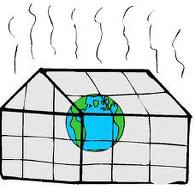 I think there is a bigger problem that religion. Religion has its moments of putting all of humanity at risk (looking at you nuclear Middle East solutions) but you know what is really killing us? State supported neo-liberal capitalism and the “fuck you, I’ve got mine” ethic that goes along with it. This ideology is systematically grinding societies, the climate, and ultimately our future into dust. Is being the last to draw breath on a ruined planet that much of a privilege? I mean the elites that run our system our well insulated from the reality that they create for the rest of us, but eventually, they too will have to bow before the forces they have unleashed.
Knowing that elite will also suffocate in the shithole they’ve created is a cold Pyrrhic victory – it is the only assured outcome if the status-quo remains the same.
*sigh*
Maybe I need to focus on the christians that espouse the prosperity gospel – two birds with one stone and whut not.











 bleatmop
 Mystro
 The Arbourist


 Dead Wild Roses
Your opinions…