
Most Canadians could not point to the Strait of Hormuz on a map.
They are about to feel it anyway.
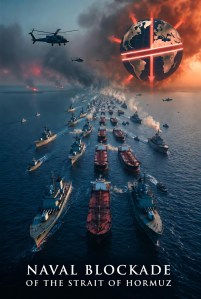
Roughly a fifth of the world’s oil passes through that narrow stretch of water. When it is stable, nobody notices. When it is threatened, everything downstream begins to move—prices, shipping costs, political calculations. Geography, in this sense, is not abstract. It is mechanical.
The current tension in the region has put that mechanism back into play.
It does not require a full disruption to matter. Risk alone is enough. Insurance premiums rise. Tanker routes adjust. Traders price in uncertainty. Oil climbs before a single barrel is lost. And because energy sits underneath everything—transport, production, food—the effects do not stay contained.
“When energy moves, everything else follows.”
This is where the distance between foreign policy and daily life collapses.
Higher fuel costs bleed into groceries. Shipping delays ripple into availability. Central banks, already cautious, hesitate further. Governments face pressure to respond to a problem they do not control. The system tightens, not through a single shock, but through accumulated friction.
None of this depends on whether people are paying attention.
The map exists either way.











 bleatmop
 Mystro


 Dead Wild Roses
1 comment
Comments feed for this article
April 18, 2026 at 10:40 am
tildeb
Funny how reality has this tendency to impose itself on us no matter contrary view to it we may hold, no matter how much we wish and believe and state otherwise, no matter how many critics of our anti-reality views we punish and condemn. Naturally, it’s all Trump’s fault.
LikeLiked by 1 person