
There are few modern spectacles more interesting than Richard Dawkins speaking warmly about Christianity.
Not converting. Not recanting The God Delusion. Not wandering into Evensong with a softened heart and a sudden interest in incense. But speaking warmly, nevertheless.
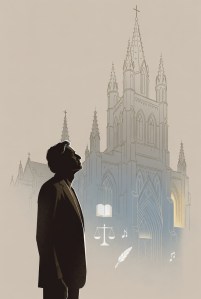 Dawkins has called himself a “cultural Christian.” He remains an atheist, which is what makes the admission interesting. He is not saying Christianity is true. He is noticing that Christianity helped form a civilization in which he could become Richard Dawkins: skeptical, eloquent, publicly irreverent, protected enough to criticize sacred things, and still culturally at home among the ruins and residues of the faith he rejects.
For a long time, many secular Westerners treated Christianity as something they had outgrown. It was old, morally complicated, often hypocritical, and associated with repression, scolding, and bad Sunday mornings. Keep the music, perhaps. Keep the architecture. Keep Christmas, provided no one gets doctrinal about it. The rest could be packed away.
There were reasons for that impatience. Churches persecuted, censored, lied, protected abusers, cozied up to power, and sometimes confused institutional self-interest with the will of God. No honest appreciation of Christian civilization can skip that part. But there is a difference between remembering the failures of an inheritance and forgetting that we inherited anything worth having.
The West was not built from one source. It is a quarrelsome inheritance: Greek reason, Roman law, Jewish moral seriousness, Christian theology, Germanic custom, common law, Reformation fracture, Enlightenment skepticism, scientific inquiry, and the long institutional habit of limiting power. Christianity did not invent every virtue from nothing, but it became one of the great furnaces in which those virtues were universalized, moralized, preached, contradicted, betrayed, and recovered.
Modern liberalism did not merely inherit Christian assumptions and put them in nicer clothes. It built institutions Christianity often resisted: robust free speech, religious disestablishment, broader suffrage, empirical science protected from clerical authority, and legal equality that went well beyond what most Christian societies were willing to grant. Some of the freedoms Dawkins enjoys were made possible by Christian moral inheritance. Others required sharp breaks from dominant Christian practice.
That tension is the point. The West is the product of argument, correction, rebellion, restraint, and institutional memory.
This is what modern secular people often miss. We imagine ourselves as freestanding moral adults. We believe in human dignity, equality before the law, freedom of conscience, care for the vulnerable, suspicion of tyranny, and the right to criticize authority. Fine. Keep all of that. But those commitments have a history. They were not produced by vibes, nor assembled last Tuesday by a committee with a land acknowledgement and a catering budget.
They came through centuries of conflict, doctrine, reform, law, blood, repentance, philosophy, institutional restraint, and exhaustion after too many people had killed each other over ultimate things.
To appreciate that inheritance is not to baptize every part of it. Christendom was not gentle. Christianity often had to be forced into better conduct by dissidents, reformers, scientists, heretics, abolitionists, and Christians reading their own scriptures more honestly than their institutions did. The West’s moral inheritance was not a clean gift. It was an argument, often conducted under pressure.
“The West is the product of argument, correction, rebellion, restraint, and institutional memory.”
But the argument happened inside a civilization shaped deeply by Christianity.
The freedom to doubt, mock religion, publish irreverent books, leave a faith, criticize clerics, and live without being ruled by priests was not inevitable. Nor was the expectation that women may walk unveiled, educated, employed, politically equal, and legally protected. These are achievements produced by particular histories, institutions, and moral restraints.
That is where Dawkins’ comparison with Islam enters the discussion, though it needs care.
The issue is not Muslim neighbours. Millions of Muslims live peacefully, work hard, raise families, keep faith privately, and want the ordinary goods everyone else wants: safety, dignity, friendship, decent schools, and a stable life. A serious argument begins by refusing collective suspicion.
The harder question is what happens when Islamic doctrine becomes politically confident and expects the wider society to accommodate its rules around blasphemy, apostasy, religious offence, sex roles, homosexuality, and public criticism. Outcomes differ by interpretation, education, migration patterns, and host-society confidence, but liberal societies still cannot survive by pretending every moral and legal order is equally compatible with liberal freedom.
Dawkins seems to understand that cultural Christianity has learned to live with disbelief in a way many religious systems have not. The Anglican church may annoy you. It may bore you. It may produce beige sermons, awkward committees, and hymns sung by twelve people spread across a nave built for three hundred. But it is unlikely to demand the state punish you for mocking it, which is not a small thing.
“But criticism without gratitude curdles into contempt, and contempt is a poor steward of anything worth preserving.”
The Sunday lesson, then, is not “become Christian or die,” nor “atheists secretly know God is real,” nor “all Muslims are enemies.” It is more modest and more useful: know where you are standing.
If you live in the West, you live inside an inheritance. You may criticize it. You should criticize it. The tradition itself contains the tools for doing so. But criticism without gratitude curdles into contempt, and contempt is a poor steward of anything worth preserving.
Secular liberalism has been living partly off inherited moral capital for a long time, even while adding real achievements of its own. Compassion, rights, conscience, equality, dissent, human dignity, forgiveness, reform, and care for the weak remained available, but the story of how they arrived became unfashionable.
A culture can run on inherited habits for a while. Maybe longer than its critics expect. But inheritance is not self-renewing, and gratitude alone is not repayment. If people are taught only to sneer at what formed them, they will not know what to keep, what to reform, what to defend, or what to pass on. If they merely admire the ruins, they become tourists in their own civilization.
Dawkins has not found God. He has noticed a debt.
The harder question is whether a civilization can repay that debt without pretending to believe what many of its citizens no longer believe.











 bleatmop
 Mystro


 Dead Wild Roses
3 comments
Comments feed for this article
June 7, 2026 at 6:09 am
Steve Ruis
Re “Keep the music, perhaps. Keep the architecture. Keep Christmas, provided no one gets doctrinal about it. The rest could be packed away.”
(And much of the rest … )
Too often we compare Christianity’s positives and negatives but we never seem to look at its opportunity costs. I was reading a book on the Hundred-Years War in England, which basically was a series of wars between Catholics and Protestants, each outlawing the other when it got power, and the amount of wealth (immense) and lives (huge numbers) this “disagreement” cost are mind boggling. And this is just one of many such disputes.
What could all of that wealth and effort produced other than those wars prompted by the egos of the elites? If it were invested in food production or better medicines, for example.
Another example is that Christianity consoles the dying? What about an alternative, one in which the ones we live behind are made to be secure, well fed and housed, etc? Maybe “rituals” in which memories of the dying are shared? Telling somebody they are going to wake up in a place in which the paths are paved in jewels seems more than a little ridiculous. How about they are surrendering their atoms so that other organisms may live instead? There has to be better options tan what we have, but we do not put our minds to them because of the gigantic toad sitting in our consciousness.
LikeLiked by 1 person
June 7, 2026 at 8:21 am
The Arbourist
Steve, I think the “opportunity cost” point is fair, and it is one Christians and cultural Christians alike should not dodge. Religious conflict burned enormous human effort, wealth, imagination, and life. Even when the stated cause was doctrine, it was often braided together with dynastic ambition, elite vanity, land, succession, and raw power. There is no need to romanticize any of that.
One small historical wrinkle: the Hundred Years’ War itself was not really a Catholic-versus-Protestant conflict, since it predates the Reformation. But your larger point still stands when applied to Europe’s later religious wars, persecutions, and confessional struggles. Vast resources were spent on conflicts that could have been spent on food, medicine, housing, learning, or ordinary human flourishing.
Where I would still defend the essay’s thesis is here: the fact that Christianity had terrible opportunity costs does not mean it produced no inheritance worth noticing. My argument is not that Christianity was an unambiguous good, or that the Church as an institution deserves credit for every liberal freedom we now enjoy. In fact, some of those freedoms had to be wrestled away from Christian authorities.
The point is narrower: secular liberalism did not emerge from nowhere. It developed inside a civilization deeply shaped by Christian moral categories, even when later reformers, skeptics, scientists, dissenters, and heretics had to argue against the churches to make those categories more humane and consistent.
On death, I am probably more sympathetic to your criticism than you might expect. Bad consolation can become evasion. “You’ll wake up on streets of gold” can be emotionally cheap if it lets us ignore the real duties owed to the dying and to those left behind. Food, housing, memory, care, dignity, and honest ritual all matter.
But again, I do not think that cancels the essay’s argument. The inheritance is mixed. It contains beauty, cruelty, evasion, moral seriousness, institutional failure, reform, hypocrisy, charity, persecution, and genuine care for the weak. My concern is that modern secular people often remember only the indictment and forget the inheritance. That forgetfulness leaves us less able to decide what should be rejected, what should be reformed, and what still needs defending.
LikeLike
June 7, 2026 at 9:18 am
Steve Ruis
Egad, I was conflating later conflicts into the HYW! Clearly that was England v. France over who rules the two counties. Alas. too much stuff rattling around in my brain and it poorly organized at that!
My apologies!
LikeLike