
Intersectionality was supposed to widen moral vision. It was supposed to help us notice people whom ordinary politics missed: the poor, the powerless, the socially disposable, the ones institutions found easy to ignore. In the UK grooming-gang scandals, fashionable activism too often managed the reverse. It did not merely fail to see vulnerable girls clearly. It helped teach institutions which facts were too dangerous to see.
“The answer is equality under reality. No exemptions. No euphemisms. No protected categories of fact.”
That failure has affected women and girls in the UK directly, and it still has to be discussed.
This is not a claim that every feminist organization said nothing. Some did necessary frontline work. Some supported survivors. Some backed reinvestigations, better data collection, and reforms to the criminal justice system. But institutional service provision is not the same thing as public moral leadership. When thousands of girls were exploited, trafficked, raped, dismissed, and disbelieved, the response from much of fashionable feminism was nowhere near equal to the horror. There was no great reckoning. No sustained mass campaign. No “believe these girls” moment of the kind the activist class knows perfectly well how to create when the story fits its preferred map.
And that is the point. The facts crossed the wrong political wires.
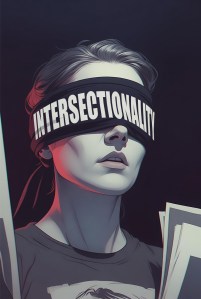 Many of the victims were poor, working-class girls. Some were in care. Many had already been written off as difficult, damaged, promiscuous, unreliable, or not worth the trouble. They were exactly the kind of girls feminism should have defended without hesitation. But in several major local scandals, the perpetrators did not fit the easier script. Naming patterns around ethnicity, culture, community silence, misogyny, and institutional cowardice risked giving ammunition to the wrong people. So the moral machinery jammed.
The official record is blunt enough. In Rotherham, the Jay report estimated that around 1,400 children were sexually exploited between 1997 and 2013. It described girls raped by multiple perpetrators, trafficked between towns, threatened with guns, beaten, intimidated, and treated with contempt by police and other adults who should have protected them. The report also recorded institutional nervousness around naming perpetrators’ ethnic origins, including concern that doing so would be seen as racist or damage community cohesion.
A decade later, the Casey audit found that the problem had not been honestly mastered. Ethnicity was still not recorded for two-thirds of perpetrators in the national data. National evidence remained too poor to support simple claims, but local evidence from several force areas showed enough disproportionality involving Asian and Pakistani-heritage men to require further examination. Casey’s point was not racial blame. It was moral adulthood: refusing to examine these questions fails victims and leaves the field open to political extremists.
This is the coalition-protection filter in bureaucratic form. Under it, facts are no longer first tested by whether they are true. They are tested by whether they protect the approved political coalition. Will this strengthen the anti-racist narrative? Will it risk “Islamophobia”? Will the far right use it? Will it embarrass multicultural institutions? Will it complicate the story activists prefer to tell about power?
Those concerns are not invented from nothing. Bad actors do exploit real suffering for ugly ends. Racists have used these scandals to smear entire communities, and that should be rejected plainly. But the existence of bad actors cannot become a veto over truth. A fact does not stop being true because a deplorable notices it. A victim does not become less abused because her testimony is politically inconvenient. When that becomes difficult to say, fashionable intersectionality has moved from caution into moral irresponsibility.
At its best, intersectionality noticed that vulnerability is not always single-file. A poor girl in care is not simply “female.” She is female, poor, young, institutionally dependent, socially disposable, and already mistrusted by the adults around her. A serious intersectional feminism should have seen these girls with devastating clarity.
Too often, activist intersectionality became something else: an oppression-ranking system that sorted people into moral categories before listening to them. It encouraged activists to ask not “What happened?” but “Which group has more structural power?” Some vulnerabilities became politically legible; others became inconvenient noise. When the victim map and perpetrator map did not align cleanly, the abused girls were pushed behind the narrative.
That is an evasive machine, built to blur moral accountability and weaken allegiance to truth.
Oppression-based claims become dangerous distortions of reality when they stop being tested as claims and start being treated as moral credentials. They are not insight by default. They are not evidence by default. They are not compassion by default. A theory of power that cannot survive contact with awkward facts is not a serious moral framework. It is a shield.
In the grooming-gang scandals, the cost of that distortion was not academic. Girls paid when police treated them as troublemakers. They paid when social services minimized what was happening. They paid when officials avoided naming patterns for fear of racism accusations. They paid when public institutions became more anxious about community cohesion than child protection. And they continue to pay when debate is still diverted away from truth and toward reputation management.
The answer is not racial blame, collective guilt, or the lie that all abuse belongs to one community, one religion, or one ethnicity. That would be false and unjust.
The answer is equality under reality.
“Oppression-based claims become dangerous distortions of reality when they stop being tested as claims and start being treated as moral credentials.”
If white men offend, name it. If Pakistani-heritage men offend, name it. If institutions fail because of sexism, say so. If they fail because of class contempt, say so. If they fail because officials are frightened of being called racist, say so. If cultural attitudes toward women, outsiders, shame, honour, or sexual entitlement play a role in a specific pattern of offending, investigate it honestly. No exemptions. No euphemisms. No protected categories of fact.
Truth-based analysis is not cruelty. It is the minimum requirement for justice.
The girls failed by these scandals did not need a theory that arranged them neatly inside an activist diagram. They needed adults who could see them, believe them, protect them, and tell the truth about what had been done to them.
Intersectionality promised to see the overlooked.
These girls were overlooked anyway.
That should shame everyone who claims to care about women.











 bleatmop
 Mystro


 Dead Wild Roses
4 comments
Comments feed for this article
June 24, 2026 at 7:14 am
tildeb
Speaking truth to power: a lowball estimate is over 250,000 girls over 90% white were raped and sexually trafficked by men over 90% Pakistani. Hence the name ‘Pakistani rape gangs’ that operated basically without police interference and often with intentional ‘looking the other way’ by all public authority for over 25 years. Out of fear of being called a name.
The scale and scope and duration of this crime is hard to wrap one’s head around in any western democracy that pays lip service to individual legal rights but allows this activity to go on and on and on in the name of whatever ideology produces such a mass moral failure. That ideology is called ‘progressive’ and goes under many others like ‘woke’ and ‘critical theory.’ But the take-away is that the entire language of ‘progressive’ ideology no matter what it is called that grants groups to have identities as if inherited with real characteristics is exposed for its toxic and malignant core that it is. That’s the lesson here: believing in group rights in law is socially disastrous because it’s anti-liberal. And so anyone who continues to support this linguistic travesty by using these terms like ‘intersectionality’ as if meaningful enough to be granted legal support is very part part of the growing problem of social dysfunction that facilitates just this: mass crime and real discrimination against real people in real life trying to protect individuals behind the shield of victimized group membership and then excuses these using more group-based verbal diarrhea we are to swallow as if nutritious to understanding debts and special considerations and legal ‘accommodations’ owed by members assigned to ‘vicitimizer groups’ to ‘vicitimized groups’. It’s a game that creates real world victims and doubles down on creating more. Supporters of ‘progressive’ ideology are the grease necessary and then used to help liberal democracies rot from within.
LikeLiked by 1 person
June 24, 2026 at 7:30 am
tildeb
To show the level of self-harm to any society that believes in ‘progressive’ ideology (meaning belief in the group-based model of power and privilege transferred into law), look at the same scale, scope, and duration of institutionalized harm of another branch: gender belief. Look at the vast harm caused to children yet again in the service of this belief, this time in children’s publishing of genderwang:
“What would we make of a children’s literature industry that produced numberless books encouraging young people to starve themselves to better fit their idealised self-perception? There would be calls for boycotts, if not criminal proceedings. Yet here we have children’s books romanticising the removal of healthy body parts. When this occurs in tandem with medical practitioners who are keen to promote the identical cause, you have the template for child safeguarding failures on an industrial scale. And that is precisely what has happened.”
There is no virtue in supporting a group-based belief system dedicated to the destruction of liberalism (individual legal autonomy). There is only harm. And is as massive as it is malignant. People have to stop believing group-based bullshit and have to stop empowering the group-based bullshit with bullshit group-based language. It is the most toxic of vices as wee see this in how it intentionally attacks and tries to harm our children.
LikeLiked by 1 person
June 24, 2026 at 8:52 am
tildeb
The rise of the Narrative State. Once you see it, you cannot unsee it. This description (specific to Britain in this case but recognizable throughout the West) helps understand the growing divide between people – believers and non believers in the Narrative – and why reality seems to be playing a distant second in government concerns like the grooming gangs, furthering not only the social decline we see and experience daily but the expanding loss of trust in media, institutions, and our collective future. Going along to get along has never been more destructive.
LikeLiked by 1 person
June 27, 2026 at 8:54 am
The Arbourist
Thank you for the link to that article – it was very informative.
I think we’re all feeling this manipulation and starting to push back against it.
LikeLike