
You are currently browsing the category archive for the ‘Culture’ category.
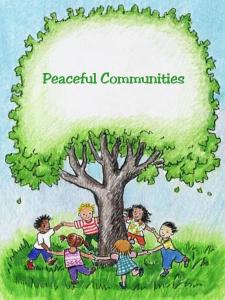 I think that getting to know the people of your neighbourhood is scary but necessary activity. I’m an introvert, but I’ve brainstormed some ideas to try out if you happen to be feeling extra adventurous. :)
1. **Organize a Neighborhood Clean-Up Day** – Rally a few neighbors for a group effort to tidy up parks, streets, or common areas. Bring some gloves, bags, and maybe even snacks to share afterward.
2. **Start a Little Free Library or Pantry** – Set up a small box where people can exchange books or non-perishable food items. It’s a simple way to encourage sharing and connection.
3. **Check In on Elderly or Isolated Neighbors** – A quick knock on the door or a friendly chat can brighten someone’s day and help them feel included. Offer to grab groceries if they need it.
4. **Plant Something Together** – Whether it’s flowers along a sidewalk, a tree in a yard, or a small community garden, greenery lifts everyone’s mood and improves the area.
5. **Host a Casual Get-Together** – A low-key barbecue, potluck, or even a coffee meet-up in a driveway can help neighbors get to know each other. Stronger bonds mean a stronger community.
6. **Share Skills or Tools** – Offer to teach something simple—like fixing a bike tire—or lend out a ladder or shovel. It builds trust and saves people money.
7. **Put Up Positive Signs** – Something as small as a “You’ve Got This!” or “Smile, Neighbor!” sign in your yard can spread good vibes.
These don’t have to be big projects—just small, consistent acts that show you care. What do you think might work best where you live?
it’s fun-fact woke learning time! First a new vocabulary word!
Polysemy – Having a word or concept that has multiple meanings. What it does is allow the activists to say one thing, while meaning something completely different.
Employed skillfully, the woke can flit between the reasonable definition and the one they really intend.

The “woke mind virus” is a dogmatic, control-seeking ideology, not the benign traits listed. These 10 points misfire by assigning warped meanings to common virtues, fueling confusion and division.
- “Reading books, not burning them” sounds noble, but woke ideology often curates what’s “acceptable” to read, banning dissent subtly.
- “Embracing science” shifts to cherry-picking studies that fit narratives, not raw inquiry.
- “Changing your mind” becomes abandoning principles for trending dogma, not reasoned flexibility.
- “Issues aren’t black and white” morphs into relativism that dodges accountability.
- “True equality” redefines as forced sameness, not equal opportunity.
- “Liking to share” turns into mandating redistribution, not generosity.
- “Embracing cooperation” means silencing disagreement for fake unity.
- “Respecting rights” flips to prioritizing select groups’ feelings over universal freedoms.
- “Valuing culture and arts” becomes worshipping approved expressions, not creativity.
- “Caring for the planet” slides into eco-orthodoxy, shaming nonconformists.
By cloaking coercion in virtuous terms without admitting the shift, these points don’t expose the virus—they spread it, eroding clarity and free thought under a moral mask.
Environmental, Social, and Governance (ESG) frameworks in America have drawn scrutiny for parallels to Maoist ideology, particularly in their emphasis on collectivism, ideological conformity, and the reshaping of societal norms. Maoism, rooted in Marxist-Leninist principles, sought to dismantle traditional structures—family, religion, and individual liberties—through mass mobilization and centralized control, often under the guise of egalitarianism. Similarly, ESG proponents push for a unified moral framework where corporations and individuals are judged not by profit or merit but by adherence to progressive ideals like climate justice, equity, and systemic overhaul. Critics argue this mirrors Mao’s Cultural Revolution, which weaponized social pressure and reeducation to enforce compliance, suggesting ESG acts as a soft authoritarian tool to erode personal agency and economic freedom in favor of a homogenized, state-aligned culture.
In practice, ESG’s Maoist undertones emerge through its mechanisms of enforcement and cultural disruption. Companies are scored and ranked by ESG metrics, often dictated by unelected bodies like rating agencies or activist investors, reminiscent of Mao’s cadre-led purges of dissenters. Non-compliant businesses face boycotts, divestment, or public shaming—tactics akin to Maoist struggle sessions—while employees are subjected to diversity training and sustainability pledges that echo Mao’s thought reform campaigns. This creates a climate where profit motives are subordinated to ideological loyalty, fracturing the traditional American ethos of individualism and free enterprise. By prioritizing stakeholder consensus over shareholder value, ESG shifts power from market dynamics to a quasi-collective authority, dissolving the cultural bedrock of competition and innovation that once defined the U.S. economy.
The cultural dissolution accelerates as ESG intertwines with political polarization, amplifying its revolutionary zeal. In America, it’s become a battleground: progressives champion it as a moral imperative, while conservatives decry it as “woke capitalism” undermining national identity. This echoes Mao’s strategy of pitting classes against each other to destabilize and rebuild society. ESG’s focus on dismantling “systemic inequities” and rewriting corporate purpose challenges foundational American values—meritocracy, liberty, and limited government—replacing them with a narrative of perpetual grievance and centralized oversight. Critics contend this slow erosion, masked as virtue, mirrors Mao’s long-term goal of cultural erasure, leaving a society unmoored from its historical anchors and vulnerable to control by an elite vanguard, whether corporate or governmental.

So much of the discussion around DEI is people arguing about two or more very different ideas of what DEI is. Let’s investigate that problem – like many of the situations we face as a society today much of the furor is being caused by have multiple definitions of the same idea.
Polysemy—the fact that words or concepts like DEI (Diversity, Equity, and Inclusion) can have multiple meanings—does indeed complicate discussions about it. Supporters might define DEI as a noble effort to ensure fairness and opportunity for all, as seen in your earlier examples (e.g., accommodations for disabled neighbors or pregnant friends). Critics, however, might interpret it differently, focusing on its implementation or unintended consequences. Below is a 5-point breakdown of why DEI, as commonly applied, might not be a good thing for society, while acknowledging this definitional divide and approaching the critique thoughtfully.
1. It Can Prioritize Group Identity Over Individual Merit
-
Critics’ View: DEI often emphasizes categories like race, gender, or disability status, which can shift focus away from a person’s skills or qualifications. For example, hiring quotas (real or perceived) might lead to someone being chosen to “check a box” rather than based on their ability.
-
Supporters’ Definition Clash: Supporters might say DEI is about removing barriers, not enforcing quotas—like ensuring the autistic barista gets a fair shot. But when DEI translates into policies that seem to favor group outcomes over individual effort, it risks alienating those who value meritocracy, creating resentment instead of unity.
2. It May Undermine Equal Treatment Under the Guise of Equity
-
Critics’ View: Equity, a core DEI pillar, seeks equal outcomes rather than equal opportunities. This can lead to unequal treatment—e.g., giving extra resources to one group while others receive less, even if their circumstances differ due to personal choices or chance. Critics argue this contradicts the principle of fairness it claims to uphold.
-
Supporters’ Definition Clash: Supporters might frame equity as leveling the playing field (e.g., accommodations for a pregnant friend via FMLA). Yet when DEI pushes beyond legal protections into preferential policies, it can feel like reverse discrimination to those outside the targeted groups, fueling social division.
3. It Risks Oversimplifying Complex Social Issues
-
Critics’ View: DEI often reduces multifaceted problems—like poverty, education gaps, or workplace struggles—to identity-based solutions. For instance, a veteran’s employment challenges might stem from PTSD or lack of training, not just their veteran status. DEI’s broad brush can miss these nuances, offering symbolic fixes rather than addressing root causes.
-
Supporters’ Definition Clash: Supporters might argue DEI raises awareness of systemic barriers (e.g., for the Down syndrome bagger). But critics contend that awareness alone, without tailored solutions, can become performative, leaving deeper issues unresolved while claiming progress.
4. It Can Foster Resentment and Polarization
-
Critics’ View: When DEI initiatives spotlight certain groups for special attention, others may feel excluded or unfairly judged. For example, a non-disabled worker might resent extra accommodations for a colleague who works fewer hours, even if those accommodations are fair. This breeds a “zero-sum” mindset where one group’s gain feels like another’s loss.
-
Supporters’ Definition Clash: Supporters might see DEI as uplifting everyone (e.g., ensuring the disabled neighbor thrives). Yet if the messaging or execution seems to pit groups against each other, it can erode trust and cohesion—counter to the inclusive society supporters envision.
5. It May Encourage Dependency on Institutional Fixes Over Personal Agency
-
Critics’ View: By framing systemic change as the solution, DEI can unintentionally discourage individual initiative. If people expect workplaces to adapt to every need (beyond reasonable accommodations), it might weaken resilience or accountability—like assuming a job should mold to you rather than you rising to meet its demands.
-
Supporters’ Definition Clash: Supporters might say DEI empowers people (e.g., giving the autistic barista tools to succeed). Critics, though, worry that over-reliance on DEI frameworks could shift responsibility from individuals to institutions, reducing self-reliance and long-term societal strength.
Closing Thought:
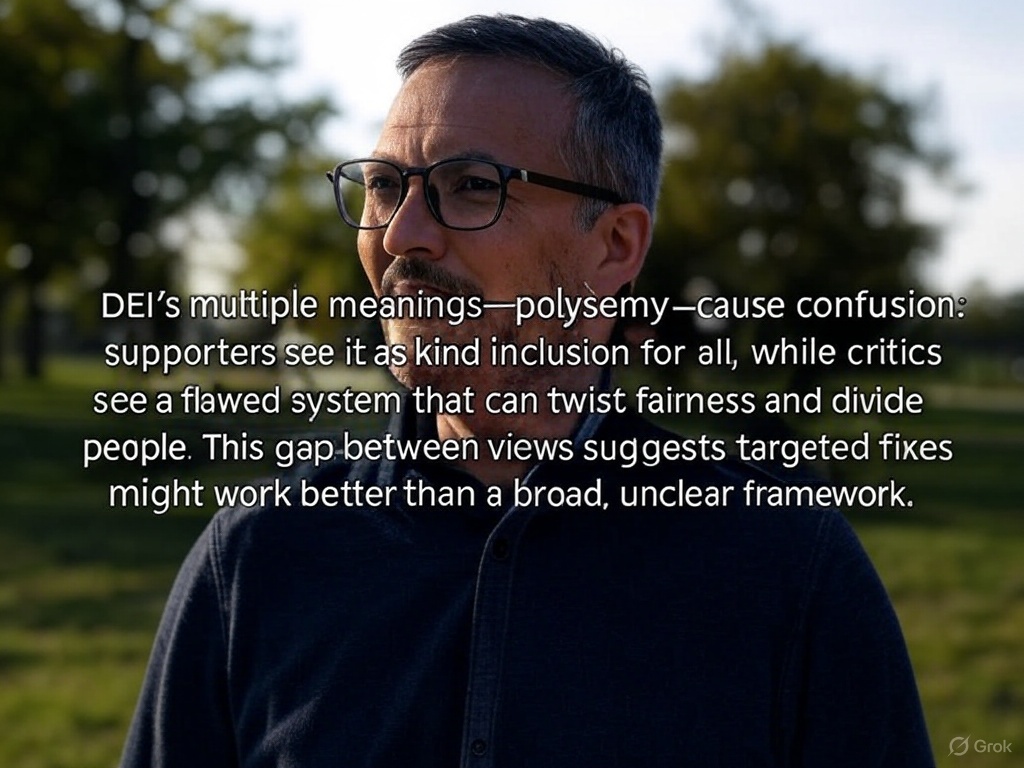
The polysemy of DEI is key here. Supporters often define it as a compassionate, inclusive ideal—helping the marginalized shine, as in your examples. Critics, however, see it as a bureaucratic or ideological tool that, in practice, can distort fairness, divide people, and oversimplify reality. The tension lies in how it’s applied: a supporter’s vision of DEI as “opportunity for all” might not match the critic’s experience of it as “preference for some.” This gap suggests society might benefit more from targeted, practical solutions (like existing laws or community efforts) than a catch-all framework that means different things to different people.
The decision against Amy Hamm, detailed in the Justice Centre for Constitutional Freedoms document from March 13, 2025, casts a shadow over the rights of women to speak freely. As a nurse, Hamm faced professional misconduct charges for sharing gender-critical views, a ruling that suggests her words were too heavy a burden for her profession to bear. This outcome feels like a quiet wound to women who rely on open expression to navigate a world that often overlooks their perspectives. It raises a somber question: if a woman’s honest thoughts can cost her livelihood, what space remains for her to speak without fear?
Women’s rights depend so much on the ability to voice what matters—whether it’s about their bodies, their work, or the policies that shape their lives. The Hamm case hints at a troubling pattern: when women step outside accepted lines, even thoughtfully, they risk being muted by those meant to protect fairness. It’s disheartening to think that a nurse, someone who cares for others daily, could be penalized not for her actions but for her words. This doesn’t just touch Hamm—it brushes against every woman who hesitates to speak up, wondering if her voice might carry too high a price.
Please, let’s hold onto the simple truth that free speech is a lifeline for women. I ask for a gentler approach, one that doesn’t rush to punish but listens instead. Hamm’s story shouldn’t end with her silence; it should remind us to safeguard the right of women to express themselves, even when it’s hard to hear. We need a world where women like her can share their views—raw, real, and human—without losing what they’ve worked so hard to build. That’s not too much to hope for, is it?

Activists realize that they cannot argue on the basis of fact, therefore they must always derail the conversation with hyperbole and emotive rhetoric. Let’s see what you can do to nullify their framing and keep the conversation going.
 The phrase “You just don’t want trans people to exist” is often used as a rhetorical jab in debates about transgender issues, implying that opposition to specific policies or ideas equates to denying trans individuals’ right to exist. Here are three counterarguments that challenge this framing without negating the humanity or rights of trans people:
1. **Disagreement Isn’t Denial**: Opposing certain transgender-related policies—like sports participation rules, bathroom access, or medical interventions for minors—doesn’t mean someone wants trans people erased. It’s possible to support trans individuals’ right to exist while questioning specific implementations based on fairness, safety, or biological considerations. For example, some argue that in sports, physical differences tied to biological sex can impact competition, citing cases like Lia Thomas in NCAA swimming, where debates centered on fairness, not existence.
2. **Framing Oversimplifies Complex Issues**: The phrase flattens nuanced discussions into a moral absolute, shutting down debate. Issues like gender dysphoria treatment, especially for kids, involve competing views—some push for affirmation-only approaches, while others advocate caution, pointing to studies like the Cass Review in the UK, which found weak evidence for puberty blockers’ long-term benefits. Disagreeing on medical protocols doesn’t mean rejecting trans people’s existence; it’s about differing on what’s best for well-being.
3. **Intent Matters**: Accusing someone of wanting trans people gone assumes malicious intent that might not be there. Many people, even conservatives or traditionalists, don’t wish harm but hold views rooted in their understanding of biology, culture, or religion. A 2023 Gallup poll showed 69% of Americans believe trans athletes should compete based on birth sex, yet most don’t advocate for banning trans people from society. Conflating policy disagreement with existential denial misrepresents motives.
These counterarguments aim to refocus on substantive issues rather than emotional gotchas, though they don’t dismiss the real fears or experiences of trans individuals in heated debates.
For most people, the time to consider the switch is coming soon. If you happen to be me, you never left. :)
 Sandals offer a level of comfort and breathability that closed-toe shoes simply cannot match, making them a superior choice in many situations. The open design allows air to circulate freely around the feet, reducing sweat and preventing the buildup of heat, which is especially beneficial in warm climates or during summer months. This ventilation helps keep feet dry and less prone to issues like athlete’s foot or odor, which can develop in the trapped, moist environment of closed-toe shoes. Additionally, sandals often have fewer pressure points—no tight laces or rigid materials squeezing the toes—allowing for a more natural and relaxed fit that can alleviate discomfort during prolonged wear.
Beyond comfort, sandals provide practical advantages in terms of convenience and versatility. They’re easy to slip on and off, saving time when heading to the beach, running quick errands, or navigating airport security. This ease of use also makes them ideal for activities where shoes might frequently need to be removed, such as visiting someone’s home or attending a casual outdoor gathering. Moreover, sandals come in a wide range of styles—from sporty to formal—meaning they can adapt to various settings without sacrificing functionality. Closed-toe shoes, while sometimes necessary for specific environments like construction sites, often lack this flexibility and can feel cumbersome in scenarios where sandals shine.
Finally, wearing sandals promotes better foot health and freedom of movement, encouraging a more natural stride. Without the constraints of a closed structure, toes can spread and flex more easily, which can improve balance and reduce strain on the feet and lower legs over time. Some studies even suggest that minimalist footwear, like sandals, can strengthen foot muscles and improve overall posture by allowing the feet to move as they were biologically intended. While closed-toe shoes have their place for protection in rugged or hazardous conditions, they can sometimes restrict natural motion and lead to issues like blisters or cramped toes. For everyday wear, sandals offer a liberating alternative that prioritizes both health and comfort without compromising on style or practicality.











 bleatmop
 Mystro
 The Arbourist


 Dead Wild Roses
Your opinions…