
You are currently browsing the category archive for the ‘Philosophy’ category.
The concept seems straightforward enough.

Grabbing the article in full. Charitably exploring the topic of privilege and specifically ‘white privilege’ is a contentious topic. Here is one case against the idea that White Privilege is reasonable concept in our society.
From the Michael Dahlen Objective Standard –
“On his SiriusXM Radio show in 2019, David Webb spoke with civil rights attorney and CNN legal analyst Areva Martin. The following exchange occurred.
Webb: I’ve [worked] across different parts of the media world, done the work so that I’m qualified to be in each one. I never considered my color the issue. I considered my qualifications the issue.
Martin: Well, David, you know that’s a whole ’nother long conversation about white privilege of things that you have the privilege of doing that people of color don’t have the privilege of.
Webb: How do I have the privilege of white privilege?
Martin: David, by virtue of being a white male, you have white privilege. It’s a whole long conversation. I don’t have time . . .
Webb: Areva, I hate to break it to you, but you should’ve been better prepped. I’m black.1
Martin obviously misused the phrase “white privilege.” But does her mistake reveal a deeper problem with the idea? What is white privilege?
Wellesley College professor Peggy McIntosh popularized the term in her 1989 essay “White Privilege: Unpacking the Invisible Knapsack.”2 The influence of this essay is difficult to overstate. Many scholarly journals started using the term, as it gradually spread throughout academia, from psychology to sociology to anthropology. Education professors wrote articles on strategies for teaching the theory of white privilege to students.3 The annual White Privilege Conference started in 2000. By the early 2010s, the notion of “white privilege” had broken into the mainstream. Today, the term is nearly ubiquitous. It’s frequently used on social media and by conventional news outlets. Dr. Phil devoted an entire episode of his show to it. In many schools and in most public discussions of race, you can expect to hear about white privilege.
The theory of white privilege asserts that white people gain unfair, unearned, and undeserved benefits, advantages, and entitlements. According to McIntosh, “White privilege is like an invisible weightless knapsack of special provisions, maps, passports, codebooks, visas, clothes, tools, and blank checks.”4 Because these benefits are “invisible,” as McIntosh puts it, white people are unaware of them. In a lesson plan for middle and high-school students, the National Association of School Psychologists declares, “Privilege is not visible to its holder; it is merely there, a part of the world, a way of life, simply the way things are.”5
The invisibility of white privilege is allegedly what sustains it. As Andrew O’Hehir (Salon) writes, “the virus of white privilege survives by convincing its host organism that it does not exist.”6
McIntosh gives forty-six concrete examples of how she, a white woman, supposedly benefits from white privilege, including, “I can choose to ignore developments in minority writing and minority activist programs, or disparage them”; “I can go into a book shop and count on finding the writing of my race represented, into a supermarket and find the staple foods that fit with my cultural traditions, into a hairdresser’s shop and find someone who can deal with my hair”; “I can be reasonably sure that my neighbors . . . will be neutral or pleasant to me”; and “I can go shopping alone most of the time, fairly well assured that I will not be followed or harassed by store detectives.”7
McIntosh’s forty-six examples fall into four categories: (1) White people can ignore minority concerns and perspectives. (2) White people are widely “represented” in art, media, history, and elsewhere. (3) Goods and services demanded by white people are widely available. (4) White people are not discriminated against on the basis of race.
But are these actually privileges? And how do they unfairly benefit white people? A privilege, keep in mind, is a favor or entitlement. It’s something positive, such as the “special provisions” and “blank checks” that McIntosh mentions.
Category #1 is not unique to white people. Any person, regardless of race, is free to ignore other people’s concerns and perspectives—this isn’t a privilege. Supreme Court justice Clarence Thomas, for example, need not listen to white leftists who relentlessly smear him.
Regarding category #2, white people are the majority, so you would expect them to be widely “represented.” Calling this a privilege is silly. A white person derives no rational benefit from seeing a high percentage of “people who look like himself” on television. As for category #3, you would expect that goods and services demanded by the majority—in any grouping, not just race—will be widely available. That’s how markets work. This is better characterized as a causal, economic convenience than a privilege.
This brings us to the fourth category, which comprises nearly two-thirds of McIntosh’s examples. She and other “social justice” scholars say that privilege is about the unfair advantages some people have—but, in reality, it isn’t. Performing a rhetorical sleight of hand, they deceptively conflate advantages with a lack of disadvantages. “Unearned advantage,” she writes, “can also be described as exemption from discrimination.”8 In other words, white people benefit from the “privilege” of not being discriminated against. But is this really a privilege? A privilege, to repeat, is a favor or entitlement; it’s not the absence of a penalty. If someone gives me $1,000, that’s a favor or privilege; if someone refrains from stealing $1,000 from me, that’s not.
It makes as much sense to conclude that white people are privileged because they’re not victims of racism as it does to hold that a bystander at a robbery is privileged because the thief did not demand his wallet. Equating privilege with the absence of disadvantage leads to absurdity, for it means that everyone is privileged in countless ways. On this perverse conception, I’m “privileged” because I haven’t been assaulted, poisoned, or murdered.
Despite this, McIntosh advises, “Do not get trapped in definitions of privilege and power. They lack nuances and flexibility.”9 In other words, ignore whether she’s using the concept “privilege” properly; she and other peddlers of the phrase “white privilege” want the “flexibility” to use it in a way that taints all white people.
Of course, race-based privileges can and have existed. From the 1930s to the 1960s, for example, the Federal Housing Administration (FHA) insured mortgages for white people but not for black people. It also subsidized builders on the condition that they sell new homes only to white people.10
Race-based privileges such as this, however, are not the basis for McIntosh’s theory. None of her examples of privilege include actual privileges. She doesn’t cite government policies that favor white people while excluding minorities, probably because such policies no longer exist in the United States.
The FHA policy, moreover, privileged some white people. Yet white privilege, we are told, is everywhere. As professor Paula S. Rothenberg says, “it is woven into the fabric of society.”11 Or as professors Özlem Sensoy and Robin DiAngelo put it, “one automatically receives privilege by being a member of a dominant group (e.g., cis-men, Whites).”12 In this view, a white person’s privilege sets the context of his life, influencing all of his decisions. If he doesn’t think about race, that’s white privilege. If he speaks, that’s white privilege. If he remains silent, that, too, is white privilege. If he ignores, denies, or confesses his privilege, that’s white privilege. As Chauncey DeVega (Salon) explains, white privilege is “hegemonic and omnipresent.”13
This underscores the fundamental doctrine behind the theory of white privilege: collectivism and, more specifically, racism.
What matters, on this premise, are not individuals but racial groups. A white person’s individual context and circumstances are irrelevant. All white people “automatically receive privilege” simply and only because they’re white.
McIntosh’s racist-collectivist framework is what precludes her from defining privilege, using the concept properly, or highlighting actual, legitimate examples of privilege. Her theory, in other words, must distort the concept of privilege in order to ensnare and defame all white people.
Because the theory is rooted in collectivism, one perverse consequence is that it diverts our attention away from the individual victims and perpetrators of racism. If a racist “store detective,” using McIntosh’s example, groundlessly follows a black person, we should focus on those two individuals, not on the innocent bystander: the unfollowed white person, a person irrelevant to the situation. By contrast, the theory of white privilege tells us that we must focus not only on the bystander, but on all other white people, including those not in the store. The proper question here is not: Which racial group is privileged? The question is: Is the detective’s treatment of the black person unfair? If a black man is followed because of his race, that’s unfair. The unfairness is not that the bystander and all other white people aren’t followed.
As this example shows, McIntosh’s conception of white privilege amounts to little more than the idea that white people don’t treat other white people negatively because of their race—and that this is somehow bad.
Yet scholars, activists, and pundits say white privilege is much worse than this, equating it with “unjust enrichment.” All white people, they argue, are privileged because they benefit from racism. As Ella Alexander (Harper’s Bazaar) argues, “white privilege means actively benefitting from the oppression of people of colour, whether being the dominant representation in the media or not being questioned about your citizenship.”14 “Their oppression lifts us up,” Sensoy and DiAngelo write; “because the minoritized group has less, we necessarily have more.”15 According to professor Lawrence Blum, “Whites in general cannot avoid benefiting from the historical legacy of racial discrimination and oppression. So unjust enrichment is almost never absent from the life situation of Whites.”16
These claims are patently false. Only by dropping context and ignoring the consequences of living in a society with racist norms can people regard racism as benefiting anyone. In truth, no one benefits from racism. White people don’t benefit when “store detectives” unfairly follow black people. Their lives are not enriched when minorities are groundlessly questioned about their citizenship. Their well-being is not improved when other white people spew racial slurs. They are not “lifted up” by racially motivated police brutality.
According to a Citigroup study, over the past two decades “$13 trillion [was] lost in potential business revenue because of discriminatory lending [policies against] African American entrepreneurs, with an estimated 6.1 million jobs not generated as a result.”17 Like any counterfactual economic estimates, these numbers should be taken with a grain of salt. But the underlying point is valid: Racial discrimination harms not only minorities; it harms everyone. Excluding individuals from economic opportunities because of their race deprives others of the goods, services, capital, and innovations that those excluded would otherwise have created. Racial discrimination is not a zero-sum game but a negative-sum game.
Many commentators, including McIntosh, argue that we must fight to “end,” “remove,” “combat,” or “dismantle” white privilege. In a video for The Root, Felice León quotes Damon Young, saying, “What white privilege means, for white people, is that their whiteness hasn’t been a social, political, professional, financial, or legal hindrance. They have the privilege of the benefit of the doubt, which manifests as the privilege to just be.” León then asks, “So now that you know, are we going to dismantle white privilege, or not?”18
But shouldn’t all people, whites included, have “the privilege to just be”? Why should a white person’s race be a “social, political, professional, financial, or legal hindrance”? If “white privilege” means white people are not disadvantaged because of their race, then ending white privilege implies that white people should be disadvantaged because of their race.
This is the logic of the argument. But let’s be extra charitable and assume this isn’t what users of the phrase mean when they say they want to end white privilege. If they actually mean that minorities shouldn’t be disadvantaged because of their race, then they should focus on fighting racism, not on the alleged privileges that they falsely ascribe to white people.
So, how is this theory manifesting in practice? Consider how educators are pushing this idea. Professor Blum writes, “Those of us who teach US American White students think it morally and politically important for them to learn to acknowledge their White privilege.”19 One exercise educators use is a “privilege walk.” This entails lining up students side by side, then instructing them to either step forward if they’re privileged or step backward if they’re not in response to several statements. Examples include, “If your ancestors were forced to come to the USA not by choice, take one step back”; “If one or both of your parents were ‘white collar’ professionals: doctors, lawyers, etc., take one step forward”; “If you had to rely primarily on public transportation, take one step back”; “If your primary ethnic identity is ‘American,’ take one step forward.”20
What is the purpose of ranking students like this? And doing so publicly? We need not speculate, as many “privilege walks” have been recorded. At a primary school in Britain, a young girl said, “It’s kind of frustrating that like me and Sarah are just standing at the back here while the majority of people who may be white are like standing right in the front. That just frustrates me a bit.”21 On his television show, Dr. Phil had a group of college students do the “privilege walk.” Afterward, an Asian male said, “I kept stepping forward, and . . . it was like, ‘Am I really that privileged?’ I didn’t feel like I deserved to be up there.” A white male said, “When I turned around and saw . . . everyone behind me, it was like, ‘Whoa.’ . . . It felt like I had done something wrong even though I couldn’t like, pinpoint. It felt like I shouldn’t be here.”22
This is the purpose of the privilege walk and the theory underlying it: to warp the minds of innocent young people, quashing their dignity and branding them with undeserved guilt because of their skin color. A theory that leads white students to feel like they have “done something wrong” when they haven’t, that leads them to bemoan their nonexistent racial “privileges,” that defines them by their race, undermining their individuality; a theory that leads nonwhite students to feel frustrated that others are not unfairly discriminated against, to resent their white peers, to view white people as walking collections of unfair “privileges”—such a theory is, to put it mildly, toxic.
Consider Steve Majors. He’s a black man so light skinned that others think he’s white. This gives him “an embarrassing advantage,” he writes in the Washington Post. “I am ashamed of the white privilege I carry around. . . . I have the privilege of living in a world where my race simply doesn’t matter.”23
Shouldn’t living in a world where one’s race doesn’t matter be everyone’s goal for themselves and everyone else? But this is not the goal of those peddling the phrase “white privilege.”
A closer look reveals that “white privilege” is not a legitimate concept; it is an anti-concept, a fallacy identified by Ayn Rand. “An anti-concept,” she wrote, “is an artificial, unnecessary, and rationally unusable term designed to replace and obliterate some legitimate concept.”24 What legitimate concept is “white privilege” designed to replace and obliterate? The concept of individual merit (among others). As McIntosh explains, we “must give up the myth of meritocracy. If these things are true, this is not such a free country; one’s life is not what one makes it; many doors open for certain people through no virtues of their own.”25 In other words, white people’s achievements are not due to merit or virtue, but to white privilege.
If a white person thinks, “I worked hard to get where I am,” Sensoy and DiAngelo say that such a person is “rationalizing privilege as earned.”26 According to professors Stephanie Wildman and Adrienne Davis, “Achievements by members of the privileged group are [falsely] viewed as the result of individual effort, rather than privilege.”27 Professor Rothenberg argues that the invisibility of white privilege “has helped foster the illusion that those who succeed do so because of their superior intelligence, their hard work, or their determination.”28
Such absurd proclamations logically follow from collectivism. Fixating on the group while dismissing individual differences, these intellectuals treat white people as one homogeneous, race-based clump. One’s group membership, in this view, overrides one’s autonomy. Because whites are collectively “privileged” by virtue of their skin color, their individual choices, actions, and efforts are irrelevant.
From an individualist perspective, by contrast, if racist policies hold a person back, we should recognize that he didn’t have the chance to earn what he otherwise could have earned had he not been unjustly discriminated against. But this doesn’t mean that those not discriminated against—those who were not victims of racism—didn’t earn what they have. A particular white person’s success might not have been fully earned for various reasons, but his not being discriminated against isn’t one of them.
The theory of white privilege unjustly foments suspicion toward any white person whose success is earned. “Does this white person deserve his job? Or does he have it only because of his unearned white privilege?” Recall that when Areva Martin was on David Webb’s radio show, she mistakenly assumed that he, a black man, was white and that his success in radio must have been because of his supposed white privilege.
By destroying the concept of individual merit, the theory of white privilege discredits not only white people’s achievements, but also their ideas, shutting down debate. In any discussion of race, we are told, having white privilege automatically taints one’s perspective. The “invisibility” of white privilege means that white people have a blind spot. Their view is limited, for they can’t see what the non-privileged can. Thus, such privilege disqualifies one’s thoughts and opinions. Anyone voicing ideas counter to woke “social justice” ideology in general, or the theory of white privilege in particular, will often hear such snarky responses as, “Your privilege is showing,” or “That’s your privilege talking,” or—most commonly—“Check your privilege.” The subtext here is unmistakable: The privileged don’t know what they’re talking about because they’re privileged; therefore, their views, perspectives, and arguments mustn’t be taken seriously.
An individual, in this view, cannot judge an idea by reference to an objective standard of truth; he can only judge it by reference to the standards of his (privileged or non-privileged) group identity. This is an updated version of the Marxist doctrine of polylogism—the idea that each group has its own logic, and thus its own truth. Just as the proletariat, according to Marx, necessarily think differently from the bourgeoisie, so the non-privileged necessarily think differently from the privileged. But this doesn’t mean that each group’s truth is equally valid. In both cases, the “truth” of the “marginalized” groups (the proletariat and the non-privileged) supersedes the “truth” of the “dominant” groups (the bourgeoisie and the privileged). This is why “the privileged” must “check” themselves.
Some pundits, however, reassure us that “check your privilege” isn’t meant to silence anyone; it’s just meant to be helpful. Christine Emba (Washington Post) writes that it’s “just a reminder to be aware—aware that you might not be able to fully understand someone else’s experiences, or that the assumptions you were brought up with may be blinding you to certain concerns.”29 If that’s what it means, why is it directed only at white people? Wouldn’t such a “reminder” apply to everyone? But this isn’t how activists use the phrase. They use it not to remind people but to browbeat them and shut them up.
Tal Fortang can attest to this. When he was a freshman at Princeton, he wrote an article for a university publication that was picked up by Time magazine. “There is a phrase that floats around college campuses, Princeton being no exception, that threatens to strike down opinions without regard for their merits, but rather solely on the basis of the person that voiced them,” Fortang wrote. “‘Check your privilege,’ the saying goes, and I have been reprimanded by it several times this year. The phrase, handed down by my moral superiors, descends recklessly.”30
It descends recklessly, moreover, beyond college campuses. In Canada, Immigration Minister Ahmed Hussen proclaimed that the nation’s new budget was historic for “racialized Canadians” because it includes, among other things, a “national anti-racism plan” and a “centre for racial/gender data.”31 In response, Member of Parliament (MP) Maxime Bernier tweeted, “I thought the ultimate goal of fighting discrimination was to create a colour-blind society where everyone is treated the same. Not to set some Canadians apart as being ‘racialized.’”32 MP Celina Caesar-Chavannes then stepped in. Replying to Bernier, she tweeted, “Do some research, or a Google search, as to why stating colour blindness as a defence actually contributes to racism. Please check your privilege and be quiet.”33
Check your privilege—and be quiet. That says it all.
The theory of white privilege is demonstrably false and racially divisive. It’s an anti-concept, based on a collectivist, nonobjective conception of privilege. It subverts individualism, treating all people as interchangeable cogs within their racial groups. It needlessly diverts our focus from genuine instances of racism to white people’s supposed “advantages”—that is, their lack of disadvantages. It wrongly claims that white people benefit from racism. It induces undeserved guilt and shame in those who have supposed privileges while inducing resentment and frustration in those who don’t. Because the theory destroys the concept of individual merit, “social justice” scholars and activists use it not only to discredit their adversaries’ achievements, but to silence them. For these reasons, we should reject this pernicious theory and persuade educators to stop indoctrinating students with it.”
Controversial topics are hard to talk about. What makes the process even more difficult is when one side, for whatever reason, decides that disagreeing with their position is equivalent to you *hating* their position.
The disagreement=hate confab is almost an exclusive feature of attempting to dialogue with someone on the Left of the political spectrum. I hesitate to use the Left/Right distinction though because the terms are not describing the political reality we now inhabit. Perhaps authoritarian vs anti-authoritarian might be a better way to describe positions these days.
Authoritarians whether on the Left or the Right seem to have a built in predisposition to thinking that their choice is the moral choice and that somehow by questioning their assertions you are questioning their morality or ethics.
It really isn’t that, at least not a first. One must grapple with the argument the person makes not the morality or ethics the person in question happens to hold.
An easy example is a person stating the fact that women, exclusively, are adult human females. The simple action of stating a fact can lead to accusations of hatred, discrimination, and even bigotry.
How does that even work? My hypothesis is that when you encounter the disagreement=hate trope the person that you are dealing with isn’t willing to put the thought or effort in to make a reasonable counter-argument. It is much easier to simply dismiss statements and thoughts that do not comport with what you hold to be true than do the work to properly refute them (also the statement in question may be closest to the truth and thus more accurate than your worldview).
Another issue is that your interlocutor may rate highly on the authoritarian scale. Woke ideologies like transgender ideology are totalizing, for them to reach their final stage *everyone* has to believe in the ideology. The utopian magic can’t happen until everyone is ideologically congruent thus wrong-thinkers must be converted or removed from the equation. If you are speaking against gender ideology -for the converted it simply must be “hate” – because the ideologue is convinced that their position is not only factually correct, but morally and ethically correct as well. Thus, the problem lies in you, not them as they have deep insight into the question, that gives them access to the “truth” and speaking against this “truth” must be hateful in nature.
It isn’t.
Being able to interrogate and critique ideas is part of the bedrock of a free society. We need to be able to objectively look at what people say and determine for ourselves the value of their arguments. Doing this now in society can be challenging precisely because questioning the orthodoxy is often misconstrued as “hatred”, thus speech and debate must be kept in check to stop the “hate” if one is to follow the reasoning from those who seek to limit speech in our society.
Limiting speech is such a completely terrible idea and we should really pause and consider the nature of so called progressive movements that advocate for the censure of speech in society.
I’m up to Chapter 3 so far and would highly recommend this book to those who want understand the ‘why & how’ of what is happening in our society. Understanding post-modernism is the first step. This is a short summary gleaned from ‘Goodreads’ is a part of what the book is explaining about Postmodern thought.
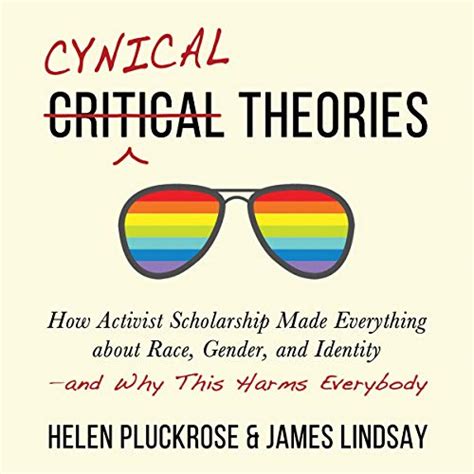
“The online Encyclopedia Britannica defines postmodernism as: “a late 20th-century movement characterized by broad scepticism, subjectivism, or relativism; a general suspicion of reason; and an acute sensitivity to the role of ideology in asserting and maintaining political and economic power.” The authors of this book mentions the two principles and four themes of postmodernism thus:
1. The postmodern knowledge principle: Radical skepticism about whether objective knowledge or truth is obtainable and a commitment to cultural constructivism.
2. The postmodern political principle: A belief that society is formed of systems of power and hierarchies, which decide what can be known and how.
The Four Major Themes
1. The blurring of boundaries
2. The power of language
3. Cultural relativism
4. The loss of the individual and the universalNow, to translate this to words of one syllable.
The first principle means that we can never know the objective truth: indeed, it is doubtful whether it exists at all. The second principle means that what is known as the truth is decided by the power hierarchy inside the system.
Thus, in one fell swoop, postmodernism dethroned science from its pedestal – because if we are not sure whether there is objective truth at all, why spend time looking for it? And in the colonial world, most of the objective knowledge was based upon colonial viewpoints; so a deconstruction of this was essential, especially as Orientalism was holding sway in the West.
(However, this doesn’t negate the power of science – but the fallout of postmodernism has engendered dangerously unscientific attitudes.)
Now let’s move on to the themes.
The blurring of boundaries means categorisations are no longer trusted. Not only the boundaries between objective and subjective and between truth and belief have been blurred, but also those between science and the arts, the natural and the artificial, high and low culture, man and other animals, and man and machine, and between different understandings of sexuality and gender as well as health and sickness. Everything is a spectrum.
The power of language emphasises that it is through language that we define power structures in a society. Under postmodernism, many ideas that had previously been regarded as objectively true came to be seen as mere constructions of language. In postmodern thought, language is believed to have enormous power to control society and how we think and thus is inherently dangerous. It is also seen as an unreliable way of producing and transmitting knowledge. To summarise: we create reality through language.
In a world where there is no objective truth, no boundaries, and where everything is created through how we speak and think, truth and knowledge are different for each and every culture and no one from outside that culture can comprehend it. This is called cultural relativism.
Consequently, to postmodern theorists, the notion of the autonomous individual is largely a myth. The individual, like everything else, is a product of powerful discourses and culturally constructed knowledge. Equally, the concept of the universal—whether a biological universal about human nature; or an ethical universal, such as equal rights, freedoms, and opportunities for all individuals regardless of class, race, gender, or sexuality —is, at best, naive. At worst, it is merely another exercise in power-knowledge, an attempt to enforce dominant discourses on everybody. This leads to the loss of the individual and the universal.
I totally get this. It’s a very nice intellectual exercise: and I must say that in the field of arts, literature and sociology, it has got valid uses. The only place I take the high road while postmodernists take the low road is when it comes to the concept of the individual and the universal, which I do believe are required as valid concepts if we need an equitable world. And also, for all our subjective perceptions, science has discovered many objective truths through its powerful method, which are not dependent upon language and/ or culture.
But now, the authors started talking about Theory (with a capital T: applied postmodernism) and the concept of Social Justice; and I started getting a bit alarmed – because I could now make sense of how I was annoying all those woke people.
Arguing with certain people can be very frustrating as they seem to not want to engage with what is being said. Instead, the use of hyperbole, insults, and emotionally charged language are meant to infuriate and obfuscate with the goal of winning the superficially wrought emotional battle (arguing versus agitating). The Activist Left are engaging you with a Dialectical (See the third meaning) approach – they need you to strongly react so as to subsume your argument/position in order to advance the dialectic. Deny them their secret weapon and here’s how.
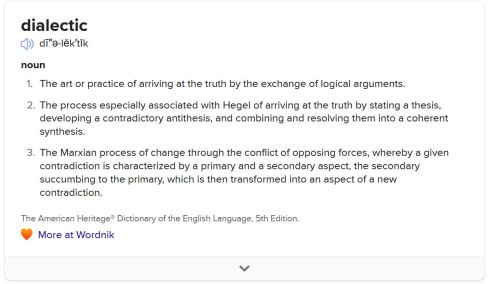
Fuzzy on what Dialectic is and how it is used? Find out here:
“In short, it’s the fusion of opposites in a way that understands them from a higher-level perspective, which is necessarily synthetic.”
If you want to be a Commie Disruptor, and I mean an effective one we have to break you from falling for Dialectical Traps while making you feel you are still being effective in combating the Woke. So we’re going to have break this down a bit and look at the components.
As previously mentioned the Woke use inflammatory agitation tactics to draw you into their contrived inanity.
Before we break down this aspect you must understand that…
You are being used by the Woke
I mean like used in the humiliating sense. When you engage in inflammatory Woke inanity you are doing EXACTLY what they plan and want you to do.Like lemmings off a bridge…Self Negation.
This usage of you should irritate and anger you, perhaps even more so than their stigmatization. Back to Agitation. This is simple:
Racist, Nazi, Fascist, Bigot, Anti-White, Anti-Christian, Nationalist, Christian Nationalist, White Nationalist, White Supremist, TERF, Transphobe, etcetera and etcetera.
Either you or they are being portrayed as these things right? Something about these terms rile you up, right?
Letting the Left twist and distort language and words that should have good meaning into bad ones or stigmatize us with hacks you off, right?
They shouldn’t be able to do these things!!! We shouldn’t let them do these things!!!
Right?
“You’re damn right in being completely justified in defending yourself and your family and your country against this inflammatory Woke inanity.”
Hmmm…I can’t blame anyone for this disposition, indeed sometimes I even fall for it.
I get it.
But you’re being used. Your justifiable obstinance to ideologically defend yourself is being used against you, to defeat you.
This tactic works on you because…
The Woke aren’t idealistic…they’re Operational.
They Operationally use your values and virtues against you. They Operationally use your railing against their inanity to negate you and undermine your Liberty.
So you’ll often here me an others say “Don’t step into the Wizard’s Circle” or Political Warfare Traps.
Don’t engage their Dialectical Inanity. We tell you to point out their real targets which is to undermine your Liberty and your Natural Rights, and normalcy, and your family, and your faith.
But the inflammatory stigmatization they impose on you is still there. Still inflammatory, sullying your way of life.
Furthermore while their inane beliefs aren’t real the effects of their inanity and prejudice against the “Oppressor” classes (white, male, woman, straight, Christian, normal) is VERY real.It’s not very satisfying at all to let this stand! To let them do this to us! See no one here is saying do nothing. Indeed do MORE but don’t do it THEIR WAY.
Watch.
Leftist Agitator: “All these MAGA people who are upholding White Nationalism are a threat to ‘our Democracy’!”
Now you’re reeeeally gonna want to call this Agitator “anti-white” or rail against the label of “White Nationalism”.And I would tell you “Don’t do it!” “It’s a trap! It’s a Dialectical Wizard’s Circle! You will negate yourself and help pseudo-legitimize their inanity Avoid!”
Then what I would do is point out that what this Agitator is doing is well first Agitating to amplify engagement and second point out what the real target is.Your Liberty.
How so? Again going back to previous threads the intent of the Agitator is to optically make it >look< like there is a “right wing” problem.
Why? So fence sitting, undecided Centrists (Left and Right) will be alarmed at “right wing attacks on Democracy” and vote in someone to “take care of this problem.”
So who exactly would take care of this problem? Neo Communists. Who have no compunction creating laws and policy to undermine your Liberty.
And all it took was for YOU to contribute by engaging in inflammatory Woke inanity.
But I do concede it’s not very…satisfying to only do this, only point out their end game. Even when it’s probably the most effective thing to do.
So let’s try this.
When confronted with inflammatory Woke inanity, tell them.
“We reject and will not tolerate your prejudice against your Contrived ‘privileged classes’ it doesn’t matter how many of you believe in it.”
“We also reject and will not tolerate your attack on our Liberty, Family, Faith and way of Life which is what you really are trying to destroy in the name of ‘Progress’.”
“We also know that this an Agitation tactic”
“You have NO LEGETIMACY”
See there, didn’t mention or amplify “White Nationalism” or “Anti-White” because it will be used against you, yet still addressed exactly the things they are attacking and more. Not just the local prejudice but the Woke’s ACTUAL Target.
YOUR’S AND EVERYONE’S LIBERTY.
Instead you rejected their Contrived prejudice, exposed their real target (Liberty), exposed their tactic (Agitation), and exposed their fake pseudo-real nonsense for what it is, illegitimate. And minimizing your own negation and the erosion of American Liberty in the process.
I know it’s hard. But it CAN be done with satisfying justification.HIT them where it counts.
THEY ABSOLUTELY >HATE< THIS
Do MORE of it!!
DON’T get used
DON’T get Negated
EXPOSE Them
DISRUPT their Operations
FIGHT for Liberty
Final Note: I need to make a CLEAR distinction here
While Woke ideological framework and inanity is not Objectively Real.
Their impact on society is VERY VERY Real and must be unequivocally rejected and fought against
Make sure you tell our anti-woke compatriots you know this.”











 bleatmop
 Mystro


 Dead Wild Roses
Your opinions…