
You are currently browsing the category archive for the ‘Religion’ category.
I do love what the commitment to mythology does to people. Religion distorts empathy and reason and allows bigots like the pastor featured in this clip to get away with spewing more than a few spitefully atrocious statements. It is funny though for a religion that often claims to represent absolute morality we observe that claims are presented such as: love thy neighbour. Note closely there is no “but only if they are heterosexual…” is not included anywhere in that phrase.
The heinous nature of christianity continues to stain our history with its bigotry and hate. We should do ourselves a favour and opt out as soon as possible.
Like to watch Christians tie themselves in knots trying to explain/justify sending infants to burn forever? Yah..me too.
This is a technical look at religious arguments, both for and against the way way in which religion describes our experience. I suggest you skim the preview of the paper for more understanding, but the video is an adequate primer for answering the following question – Are your beliefs, theistic or non-theist,ic causing you to beg the doxastic question?
Not too long ago Mystro wrote a persuasive piece about how horrible the ramifications are of being tormented for eternity and the loopy logic involved therein. Today’s Disservice will revisit that topic, only now in a helpful youtube video format to illustrate the machinations of a loving and just god.
Sometimes the related videos that show up in youtube are useful. This gem of a video from the call in show The Atheist Experience is almost like a for – dummies guide on how to discuss with Christians the paucity of truth in their sad fairy tale and the immorality of their so called ‘moral teachings’. Rather than having any actual proof that their delusion of choice is good for society and as a guide for life, the best argument they can offer goes something likes this: “this is my story and it makes me feel fuzzy on the inside and that’s good enough for me, truth be damned.”
That kind of insular thinking does not belong in the 21st century.
As if you need another reason to hate the rotten edifice of christian religion…
 There is a conversation that happens all the time between theists and non-believers. I have engaged in it many times myself as well as observed others engaging in it more times than I can count. While there are a number of seemingly valid ways atheists could deal with this conversation, I have come to believe that many of these methods merely lead to baited traps.
This conversation starts with the theist coming up with Claim X, asserting that no one could explain Claim X without invoking god, and smugly concluding that god must exist.
There are four categories Claim X might fall into:
1) Claim X is simply false
2) Claim X is easily explained without invoking god
3) Claim X is explained without invoking god, but it’s complex
4) Claim X actually has no current non-god explanations
While there have been millions of examples of ‘Claim X’ used in these conversations, scant few still fall into the fourth category. Because it’s so rare, most atheist responses to such a conversation ignore this category. This, I think, is the major reason such conversations can (and have) gone on for seeming eternities. To illustrate, let’s look at each of the categories.
Claim X is simply false
The bait here is nigh on irresistible. One of the theist’s premises are wrong, thus the argument is invalid and the conclusion does not follow! It’s irrefutable!
What do you mean it isn’t? Oh silly secularist, you fell into a trap of perpetual distortions.
Showing Claim X to be false simply invites the theist to propose ‘Claim X-prime’ that is slightly different or a bit more vague than Claim X. And when you do the same for Claim X-prime, the theists alters it again, and so on ad infinitum. Should you ever get to the point where all versions of Claim X are shown to be false, the theist then just says something to the effect of ‘Look at all that contorting and effort you had to do, just to grasp at straws. Your desperation indicates your flaw. Your story keeps changing, while my answer, “God”, stayed constant.’
Is that rational?
No.
But discourse is not based on rationality. It’s based on persuasion. As such, the theist is right, you have failed to be persuasive. To the theist, that is. Those exercising reason may indeed enjoy your absolute thrashing of whatever B.S. the theist churns up. But then, if we were only trying to persuade people with reason, we wouldn’t be talking to theists, would we?
Claim X is easily explained without invoking god
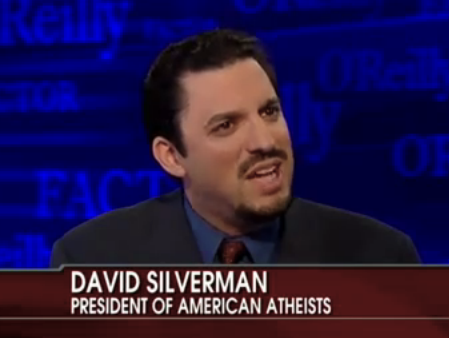 A wonderful example of this is Bill Head-Up-My-Arse O’Reilly’s infamous ‘Tide goes in, tide goes out’ line. Again, the pull here to shove reality based ideas in the theist’s face is often overwhelming. But, like in our previous case, just because the secularist is right, doesn’t mean they win. Once more, the theist backs up a bit and makes Claim X slightly harder to explain, and then slightly harder still and so on until it eventually turns into…
Claim X is explained without invoking god, but it’s complex
Now things can get tricky. We saw this as O’Reilly responded to the initial wave of attacks with his ‘How’d the moon get there?’ bit. Answering the theist’s challenge might now actually require formal education to supply the answer. In some cases, it might require a fair deal of study just to understand the answer. I personally enjoy listening to responses from people who have done the requisite schoolwork, as it can be a fun way to learn about things (I highly recommend TheLivingDinosaur ‘s “Holy Hallucinations” series) but alas, these are also doomed to fail. As the answers are now further away from the layman, the theist is safe to ignore all presented evidence. It’s not as if anyone in their camp is going to actually research this stuff. Thus, the theist vision of what fits into the next and final category is quite bloated.
Claim X actually has no current non-god explanations
This is where the theist wants to go and, as I’ve described above, there is little to be done to stop them from getting here, other than infinite loops of explanations that are ever more easily discarded. And you can’t get anywhere inside of an infinite loop.
A key point to realize is that in these conversations, the theist doesn’t really care to which category their particular ‘Claim X’ belongs. Rather, what matters is that somewhere out there, some ‘Claim X’ does reside in the fourth category.
And, ultimately, the theist is right. There are things that currently cannot be explained. There are things that may never be explained. Further, there may be things that inherently defy human understanding and are impossible to explain. So the theist wins. God exists. Accept it and go home.
Wait a minute…That can’t be right. Let’s back things up and look at the original argument structure.
1) Claim X is true
2) Claim X cannot currently be explained by humans without invoking god
3) Therefore god exists
There are two huge problems with this structure, regardless on the truth of the first two premises. The first problem is a false dichotomy implied by 2): as Claim X cannot be explained without god, it is explained *with* god. “God did it” does not explain anything. If I ask you ‘how does a clock work?’ and you reply ‘a clock-maker makes it work’, have I gained any understanding at all? Not one lick. All the god “answer” does is avoid explaining anything at all.
But a theist could potentially offer an actual explanation that is based on the god hypothesis. This tactic is used less and less, as these explanations are invariably discovered to be wrong (see Thunderf00t’s wonderful ‘Why people laugh at creationists‘ series). But lets say a brilliant theist comes up with an explanation that cannot be disproven by even the most intense scrutiny carried out by our most brilliant minds. If this were to ever happen (don’t hold your breath) we then run into the second problem: 3 does NOT follow from 1 and 2. Just because a hypothesis CAN explain a phenomenon, does not mean it DOES explain it.
 Going back to our clock, consider if, instead of “a clock-maker makes it work / god did it”, you replied “inside there is a team of invisible gremlins with perfect timing. They were captured and placed in this clock and forced to move the hands of the clock in order to relay time to outside viewers,” and there was an elaborate tale explaining all the ins and outs, and further, we had no way of observing the gremlins inside this clock to verify this (or any other) story. According to the theist’s argument model, we’ve just proven the existence of clock gremlins. The god hypothesis is a worthless ad-hoc conjecture as it is dependent on nothing, predicts nothing, and is non-falsifiable. As such, any of an infinite of imagined things could take god’s place in the theist’s argument and it would be equally valid.
The theist wants their argument to come off like this:
1) Claim X
2) Claim X would be impossible unless god exists.
3) Therefore god exists.
But the theist will never say anything close to this, because then the onus is obviously on them to demonstrate 2) and they just can’t do it. It is an impossible premise to validate. So they twist and distort until their argument takes the fallacious form we see so often, to try and shirk the onus of proof onto non-believers.
So how should one react to Claim X?
I would recommend immediately acknowledging that there are things that current science cannot explain, regardless of under which category Claim X falls. Resist the bait. Then, address how a gap in knowledge cannot prove any supernatural entity, as otherwise it could prove any of an infinite possible deities.
Remember, it doesn’t matter to the theist’s argument if Claim X is wrong or currently understood – even though it should – so it shouldn’t matter to yours.
Scientific truths in the Koran? TLD explores the issue.











 bleatmop
 Mystro


 Dead Wild Roses
Your opinions…