
You are currently browsing the category archive for the ‘Science’ category.
This is a repost from askepticrtn.com it is important concisely written work that needs to be shared and amplified in the Canadian Blogosphere.
Another Resignation at Statistics Canada
February 12, 2012 in General Science by askeptic
On February 01, Philip Cross, Chief Economic Adviser at Statistics Canada announced his leaving the agency. He follows the head of the agency, Munir Sheikh, who resigned last year over Government plans to redesign the Census. Mr. Cross is leaving for much the same reason.
At issue is replacing a compulsory census questionnaire with a voluntary questionnaire. In essence, this means replacing a random sample with a discretionary sample. Discretionary samples have their applications, but making inferences about the population isn’t one of them. Unfortunately, making just these types of inferences is whole point of the Census. That’s why Mr. Sheikh wrote in an open letter to the Government:
“I want to take this opportunity to comment on a technical statistical issue which has become the subject of media discussion … the question of whether a voluntary survey can become a substitute for a mandatory census . . . It can not.” “Under the circumstances, I have tendered my resignation to the Prime Minister.”
Mr. Cross is quoted in the Globe and Mail as expressing concern “that the free exchange of ideas at the agency is diminishing, and that internal dissent is no longer being tolerated by senior managers – particularly when it comes to discussions about the 2011 census and new national household survey.” He goes further by saying: “a lot of good can be offset if you get one big thing wrong – and the big thing in this instance is census and NHS.”
At least we know the two people at Statistics Canada (well, formerly at StatsCan) with some sense of public service and responsibility. Now that they’ve left, StatsCan should be free from such annoyances.
Long form census data is worthless. The efforts to gather it, a waste of taxpayers money. Minister Tony Clement claims that he has his magic mojo working, enabling StatsCan to overcome the limitations of the mathematical and statistical sciences. I hope he shares it with the rest of us.
One question remains though, who will be rewriting all those science textbooks?
 It is good to see yet another right wing fanatic has a crunchy crazy wing-nut history. Savor the irony when suddenly(?) they attempt to get all serious and try interacting with empirical reality. Ezra Levant has little traction with reality and seems to have more interest in keeping his oil friends happy and trying to convince you to do the same.
Lets take a look at how well EL-Douche’s latest work stand up to criticism from a writer in the U.K. –
“Apart from being based on a premise that is largely irrelevant to the concerns of tar sands critics (that the tar sands are by far the most energy intensive source of fuel around, that they are endangering the lives and livelihoods of first nations peoples, that the toxic waste is poisoning the water and local wildlife, that they are an incredibly inefficient use of Canada’s natural gas supply), Levant’s book is incredibly poorly researched. His references are from newspaper articles, blogs, press releases – hardly an academic journal in sight.” (emphasis mine)
You fail EL-douche… as usual. But, then lets see what someone who deals with reality has to say on the oilsands issue…
“Ripping a page — or the cover — from fellow Conservative and former tobacco industry lobbyist Ezra Levant’s book, Prime Minister Stephen Harper and his new environment minister, Peter Kent, have taken to referring to the product of the Alberta tar sands as ethical oil.
The Prime Minister and Mr. Levant go back a long way. It was Mr. Levant who reluctantly stepped aside as the Alliance candidate in Calgary Southwest so that Mr. Harper could run in a by-election there in 2002. But the “ethical oil” argument they promote has holes as big as the ones in the ground around Fort McMurray.
To start, the logic is faulty. Just because a country or society is considered “ethical” does not mean everything it produces or exports is ethical. If we are going to delve into the ethics of the issue, we must look at the ethics of energy overall. That means considering the impacts of various energy systems on people and the environment.
Here, the science is troubling. It shows that the Alberta tar sands contribute to about five per cent of Canada’s greenhouse gas emissions and are the country’s fastest growing source of emissions. To date, they have disturbed 600 square kilometres of boreal forest with little or no chance of true reclamation, use enormous amounts of water, and pollute the surrounding air and water.
This past summer, an independent, peer-reviewed scientific study showed that toxic byproducts from the tar sands extraction industry are poisoning the Athabasca River, putting downstream First Nations communities and the fish they eat at risk. Health studies show these First Nations communities already have elevated rare cancers associated with exposure to such toxins.
If this is the most “ethical” source of oil we can find, we need to ask other questions about the moral purity of our intensively processed bitumen. For example, if we sell the oil to countries with poor human-rights records, like China, does that affect the product’s “ethical” nature? And how “ethical” are the companies operating in the tar sands; for example, Exxon Mobil, well-known sponsor of climate-change disinformation campaigns; BP, responsible for last year’s massive oily disaster in the Gulf of Mexico; or PetroChina? There’s also the effect of greenhouse gas emissions on our children and grandchildren, which to me is an intergenerational crime.
In this light, wouldn’t energy from technologies or sources that limit the greenhouse gas emissions that contribute to climate change and that have a minimal environmental and health impacts be far more ethical than fossil fuels? And, from an economic perspective, wouldn’t these more ethical technologies or fuel sources be doubly attractive to foreign buyers if they came from an “ethical” country like Canada?
As award-winning Alberta author Andrew Nikiforuk has argued, with proper development, the tar sands could help provide Canada with the oil and money we need to shift to a low-carbon economy. But major changes are needed. Environmental regulation and monitoring must be strengthened. Pollution and related health problems must be addressed. More of the revenue must go to Canadians rather than fossil fuel companies. And a national carbon tax would help us move from oil to less-polluting energy sources.
The problem is, no matter what Ezra Levant and his friends in government say, oil has never been about “ethics”. It has always been about money. Those who argue the case for “ethical oil” should work to ensure that our energy needs are met in a truly ethical way, now and into the future. In the end, the only truly ethical solution is to phase out oil. The black eye that tar sands oil is sporting can’t be remedied with meaningless phrases such as “ethical oil”.
To be seen as truly ethical when it comes to energy policy, Canada must slow down tar sands development, clean up the environmental problems, implement a national carbon tax, improve the regulatory and monitoring regime, and make sure that Canadians are reaping their fair share of the revenues. We must also start taking clean energy seriously. Rather than subsidizing the tar sands and all the fossil fuel industry through massive tax breaks, we should be investing in energy technologies that will benefit our health, economy, and climate.
It might also help if Canada’s environment minister spent more time protecting the environment rather than appeasing the oil industry and its apologists.”
Thanks Dr.Suzuki for providing a reasonable version of what is actually happening in the Tarsands and what must be done.
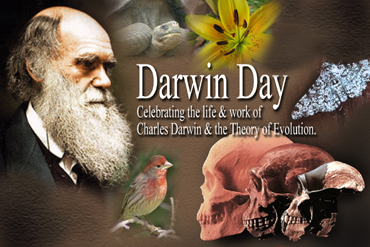
Darwin Day is a global celebration of science and reason held on or around Feb. 12, the birthday anniversary of evolutionary biologist Charles Darwin. In this episode of the Disservice we dispense with the direct god-bothering and present a BBC documentary on Darwin’s Dangerous Idea. It is important to recognize the importance of science and reason in our societies, it is the tonic that cures the affected with the vile contagion known as religion and science and reason represent the way forward toward a better future.
Gaining a better understanding of the reality which we inhabit aka doing Science. Brian Greene takes us on a light, generalist cosmological journey. Enjoy. :)
 “Canadian researchers have discovered they can induce supersoldier ants — whose bodies react to stress by expanding in size with huge oblong heads and giant vicious jaws — in the Pheidole ant species.
The findings are significant because they show there is dormant genetic potential that can be invoked by changes in the environment and locked in place for a very long time, said lead author Ehab Abouheif, a McGill University biology professor, whose research was published Friday in the journal Science.”
The fascinating part of this discovery is the way that it highlights the interaction between the environment and genes in a species.
“The authors suggest that hanging on to ancestral developmental toolkits can be an important way for organisms to evolve new physical traits.
“Birds with teeth, snakes with fingers and humans with ape-like hair – these are ancestral traits that pop regularly in nature,” Abouheif said. “But for the longest time in evolutionary theory, these ancestral traits were thought to go nowhere … the Barnum and Bailey of evolution. So they’ve been an unappreciated source of evolutionary variation.”
Typically, supersoldier ants are biological anomalies that occur rarely in nature and only in limited geographical regions. But the McGill researchers found these supersoldiers in unexpected regions and also created them by manipulating hormones.
Pheidole (big-headed) ant colonies contain millions of ants, including minor workers and soldiers. Depending on the food ants are fed, certain hormones are triggered in the ant larvae and they either develop into soldiers or minor workers.”
The Nature vs. Nurture debate is mostly over in scientific circles, but it is nice to have such a clear example to illustrate the interaction between a species and its environment.
“So what we’re showing is that environmental stress is important for evolution because it can facilitate the development of novel phenotypes. Any time you have a mismatch between the normal environment of the organism and its genetic potential you can release them – and these things can be locked in place for 30 to 65 million years.”
Go go mysteries of the genetic code.
And of course, neither am I. Our perception depends on where we are focusing our attention at the time. 75% of people did not notice that the person dealing with them changed. So…do you still think you are on the ball?











 bleatmop
 Mystro
 The Arbourist


 Dead Wild Roses
Your opinions…