
You are currently browsing the tag archive for the ‘Biology’ tag.
 “Canadian researchers have discovered they can induce supersoldier ants — whose bodies react to stress by expanding in size with huge oblong heads and giant vicious jaws — in the Pheidole ant species.
The findings are significant because they show there is dormant genetic potential that can be invoked by changes in the environment and locked in place for a very long time, said lead author Ehab Abouheif, a McGill University biology professor, whose research was published Friday in the journal Science.”
The fascinating part of this discovery is the way that it highlights the interaction between the environment and genes in a species.
“The authors suggest that hanging on to ancestral developmental toolkits can be an important way for organisms to evolve new physical traits.
“Birds with teeth, snakes with fingers and humans with ape-like hair – these are ancestral traits that pop regularly in nature,” Abouheif said. “But for the longest time in evolutionary theory, these ancestral traits were thought to go nowhere … the Barnum and Bailey of evolution. So they’ve been an unappreciated source of evolutionary variation.”
Typically, supersoldier ants are biological anomalies that occur rarely in nature and only in limited geographical regions. But the McGill researchers found these supersoldiers in unexpected regions and also created them by manipulating hormones.
Pheidole (big-headed) ant colonies contain millions of ants, including minor workers and soldiers. Depending on the food ants are fed, certain hormones are triggered in the ant larvae and they either develop into soldiers or minor workers.”
The Nature vs. Nurture debate is mostly over in scientific circles, but it is nice to have such a clear example to illustrate the interaction between a species and its environment.
“So what we’re showing is that environmental stress is important for evolution because it can facilitate the development of novel phenotypes. Any time you have a mismatch between the normal environment of the organism and its genetic potential you can release them – and these things can be locked in place for 30 to 65 million years.”
Go go mysteries of the genetic code.
With many thanks from Mr.Bowditch for posting this to his website.
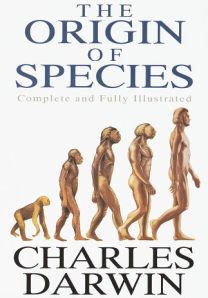 With Charles Darwin’s 200th birthday just past and the 150th anniversary of the publication of On the Origin of Species coming up, this is a big year for Darwin fans. The magazine Nature is celebrating as hard as anyone, and one of their contributions is a pamphlet titled 15 Evolutionary Gems. They are encouraging everybody to distribute it and I am only too happy to comply, so you can see a copy here. Feel free to distribute it as widely as possible. The list of its contents appears below.
- Gems from the fossil record
- Land-living ancestors of whales
- From water to land
- The origin of feathers
- The evolutionary history of teeth
- The origin of the vertebrate skeleton
- Gems from habitats
- Natural selection in speciation
- Natural selection in lizards
- A case of co-evolution
- Differential dispersal in wild birds
- Selective survival in wild guppies
- Evolutionary history matters
- Gems from molecular processes
- Darwin’s Galapagos finches
- Microevolution meets macroevolution
- Toxin resistance in snakes and clams
- Variation versus stability
Check out Richard Dawkins book on basic evolution here.











 bleatmop
 Mystro
 The Arbourist


 Dead Wild Roses
Your opinions…