
You are currently browsing the tag archive for the ‘Boundaries’ tag.
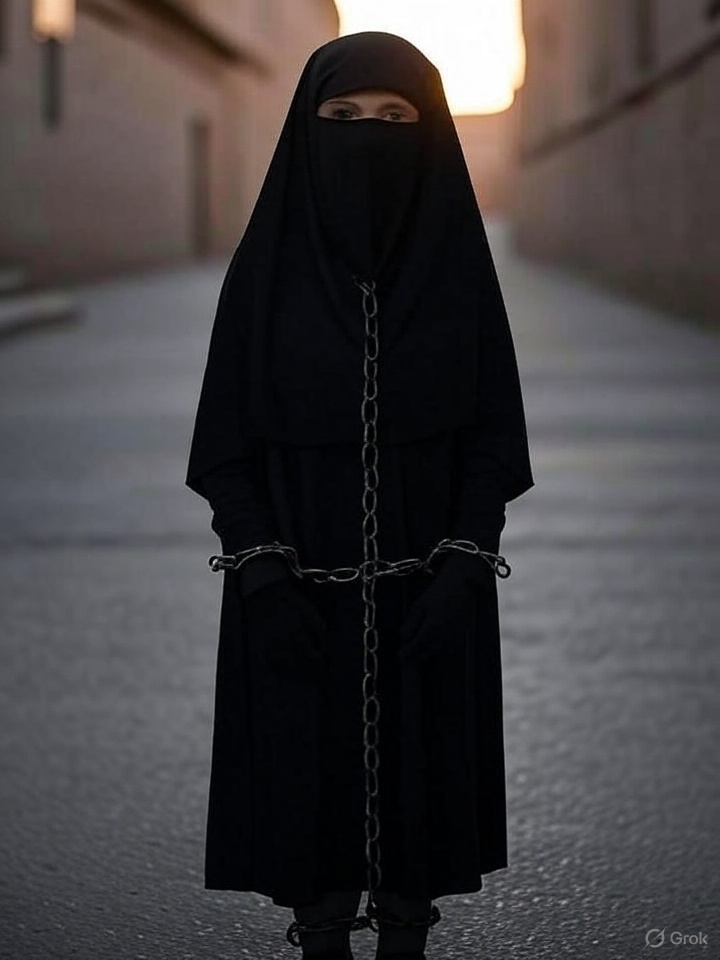
The situation of women in Afghanistan has been a topic of international concern for decades, with significant fluctuations in their rights and freedoms depending on the political climate. Since the Taliban regained control of the country in August 2021, there has been a marked deterioration in the state of women’s rights, boundaries, and freedoms. This essay explores the current state of women in Afghanistan under Taliban rule, examining the historical context, the specific restrictions imposed, and the profound impact these policies have on women’s lives. Through a combination of current stories and scholarly references, this essay aims to provide a comprehensive overview of the challenges faced by Afghan women today.
Historically, women’s rights in Afghanistan have seen periods of progress and regression. During the 1960s and 1970s, Afghan women enjoyed relative freedom, with access to education and employment opportunities. However, the first Taliban regime from 1996 to 2001 imposed severe restrictions, banning women from education and public life. After the Taliban’s ousting in 2001, significant strides were made, with women participating in politics, education, and the workforce. According to a report by the World Bank, female school enrollment increased from 0% under the Taliban to over 3.6 million by 2018 (World Bank, 2020). However, the Taliban’s return in 2021 has reversed much of this progress, reinstating draconian policies that severely limit women’s rights and freedoms.
Under the current Taliban regime, women in Afghanistan face numerous restrictions that curtail their basic rights and freedoms. One of the most significant is the ban on secondary education for girls, which has been in place since September 2021. According to a report by the United Nations, this ban affects over 1 million girls (UN, 2023). Additionally, women are barred from most forms of employment, except in specific sectors like healthcare and primary education. The Taliban have also imposed strict dress codes and restrictions on women’s movement, requiring them to be accompanied by a male guardian in public. These policies are enforced through the Ministry for the Propagation of Virtue and the Prevention of Vice, which has been known to use violence and intimidation to ensure compliance (BBC, 2023).
The restrictions imposed by the Taliban have had a profound impact on the lives of Afghan women, affecting their economic stability, social status, and mental health. Economically, the ban on employment has led to increased poverty, as many women were the primary breadwinners for their families. A study by the International Rescue Committee found that 97% of Afghan households are now living below the poverty line, with women-headed households being particularly vulnerable (IRC, 2023). Socially, the restrictions have isolated women, limiting their ability to participate in community life and access support networks. Psychologically, the constant fear and oppression have led to a rise in mental health issues. According to a report by Médecins Sans Frontières, there has been a significant increase in cases of depression and anxiety among women in Afghanistan since the Taliban takeover (MSF, 2023). Personal stories, such as that of Fatima, a former teacher who now struggles to provide for her family, highlight the human cost of these policies (Al Jazeera, 2023).
The state of women in Afghanistan under the Taliban regime is dire, with severe restrictions on their rights, boundaries, and freedoms. The historical progress made in women’s rights has been largely undone, and the current policies have devastating effects on women’s economic, social, and psychological well-being. The international community has condemned these actions, but more needs to be done to support Afghan women and pressure the Taliban to change their policies. Potential solutions include targeted sanctions, support for underground education initiatives, and amplification of Afghan women’s voices on the global stage. Addressing the situation in Afghanistan is not only a matter of human rights but also a crucial step towards stability and peace in the region.
References
- World Bank. (2020). Afghanistan Development Update. https://www.worldbank.org/en/country/afghanistan/publication/afghanistan-development-update-july-2020
- United Nations. (2023). Situation of Women and Girls in Afghanistan. https://www.un.org/en/situation-in-afghanistan
- BBC. (2023). Taliban Enforce Strict Rules on Women. https://www.bbc.com/news/world-asia-12345678
- International Rescue Committee. (2023). Afghanistan Crisis Report. https://www.rescue.org/report/afghanistan-crisis
- Médecins Sans Frontières. (2023). Mental Health in Afghanistan. https://www.msf.org/afghanistan
- Al Jazeera. (2023). The Plight of Afghan Women Under Taliban Rule. https://www.aljazeera.com/news/2023/1/1/afghan-women-under-taliban-rule
Males should not be in female changing rooms because these spaces are designed to provide women and girls with privacy, safety, and comfort—needs rooted in biological and social realities. Allowing males, regardless of identity, undermines this by introducing potential risks, from voyeurism to assault, as evidenced by cases like the 2021 Wi Spa incident in Los Angeles, where a registered sex offender exploited lax policies. Women’s boundaries deserve respect, not erosion under the guise of inclusivity, especially when separate facilities can accommodate everyone without compromising female security. Data backs this up: a 2018 UK study found 90% of sexual offenses in changing rooms occurred in mixed-sex spaces. Single-sex areas aren’t about exclusion—they’re about protection.
From Reduxx.info :
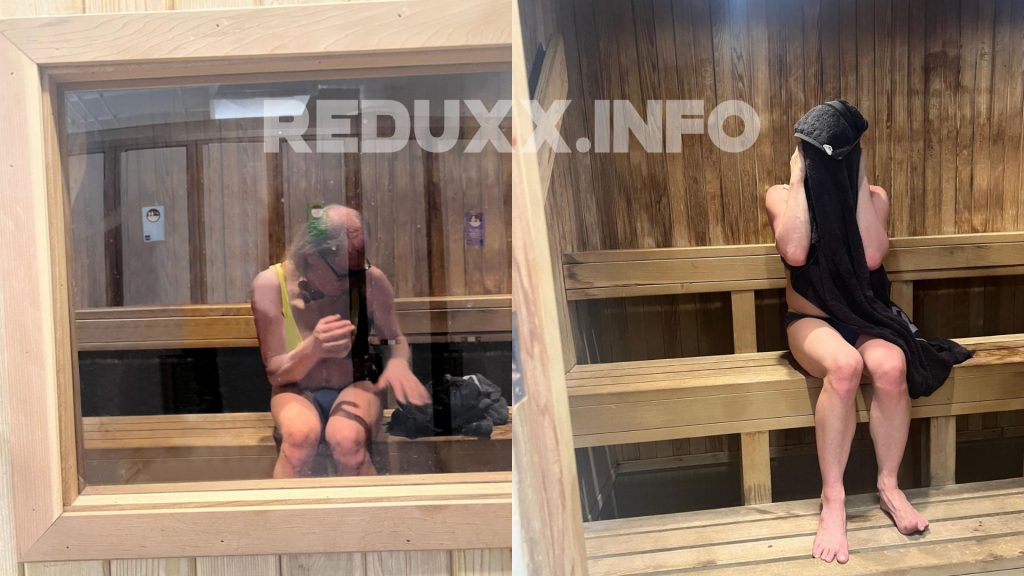
“A Canadian mother has come forward to reveal that she was chastised by staff at her local recreation center after reporting that a balding man wearing “fetish gear” was in the women’s changing room. Despite feeling so frightened that she called the police, the mother was told that the man had a right to self-identify into whatever changing room he felt like.
The incident occurred on February 18, when Keri* and her 14-year-old daughter visited the Bonnie Doon Leisure Centre in Edmonton, Alberta. Their plans to have a fun-filled afternoon at the local pool quickly took a turn for the worse after the two entered the changing area to see an adult man “naked except for fetish gear” standing in the center of the room.
Keri tells Reduxx that the man, who appeared to be in his mid-forties, was wearing a “black penis sling” and an exposed rubber breast form. So shocked by the sight, Keri immediately began to usher her daughter out of the changing area.
“My daughter was behind me… I backed up quickly so she would not keep walking forward and yelled ‘help, there is a man in the change room.’” Keri says she went back to the front desk, where she had just paid for the admission to the pool. After explaining what she had seen in the women’s changing area, a male staff member dismissed her concerns.
“He said something like: ‘yes, this is an inclusive facility, what are you afraid will happen?’ and so I told him I was calling the police. He asked me why I felt the need to call the police, but did not try to stop me.”
While waiting for an officer from Edmonton Police Service to arrive, a female staff member approached Keri to ask her about the situation. Keri recorded the conversation with the staff member, and provided the audio to Reduxx for review.
In the recording, Keri is heard giving a statement to the staff member and explaining precisely what she had experienced.
“I am telling you right now – he is a balding man, in his forties, wearing a penis sling and rubber breasts around his neck… fetish rubber breasts slung around his neck,” Keri is heard telling the staff member. “He is in the women’s washroom. I walked in with my 14-year-old daughter… I am 54, I should not have to put up with it. But she should definitely not be exposed to a man enjoying his fetish in the women’s washroom.”
In response, the staff member explains that “it is the city of Edmonton’s policy that you can use whatever changing room you are most comfortable using.” She goes on to defend the man’s attire, saying “they can wear whatever they are comfortable wearing.”
Let’s not forget the CBC and it’s startling(?) lack of coverage of this.
Bless the Canadian Broadcasting Corporation—our noble guardians of progressive virtue—turning a blind eye to fetish-driven males sashaying into female changing rooms with all the grace of a tax-funded diversity seminar. Why bother reporting on something as trivial as women’s safety when you can churn out another glowing piece on inclusivity, eh? It’s not like the CBC would dare risk its pristine reputation as Canada’s woke megaphone by admitting that some dudes in fishnets might not belong where girls are undressing—nah, that’d clash with the narrative. Besides, who needs pesky facts or viewer trust when you’ve got government cheques and a mandate to keep the maple syrup flowing smoothly over any hint of controversy?
Trans rights activists have argued that trans people have a right to be recognised as their preferred gender in both the private and public spheres and that the law should protect this right.
Gender critical groups, however, claim that efforts to undermine single sex spaces put women’s safety at risk while attempts to police language on this issue constitute a threat freedom of speech.
This panel event disentangled this debate by giving speakers from both sides the opportunity to present their case for whether transgender ideology is necessary outgrowth of liberal values, or a threat to them.
On the Panel:
Peter Tatchell – Human rights campaigner and activist.
Freda Wallace – Political commentator, freelance writer and host of the Gender Nebulous podcast.
Helen Joyce – Former finance editor at the Economist, author of Trans: When Ideology Meets Reality and director of advocacy at Sex Matters.
Marc Glendening – Head of Cultural affairs at the IEA and author of the Transgender Ideology report published by the IEA in August.

Transgender ideology is being debated and discussed in legislatures. If you value material reality you need to get involved and show up and participate otherwise this bullshit will get even more of a foothold in public institutions.
So brutal. Let’s erase females from society in the name of ‘trans inclusivity’. Absolutely not. We will use terms that accurately describe the reality we all share.
Where we are…
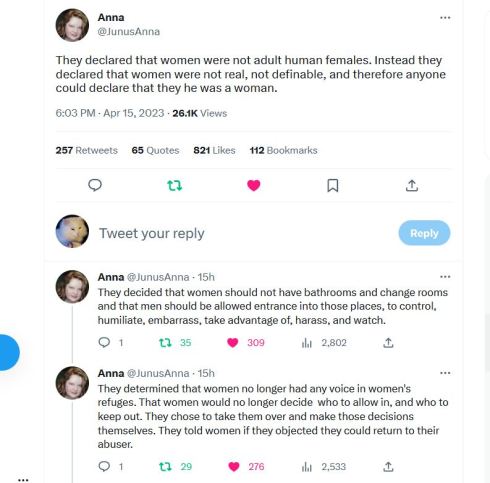


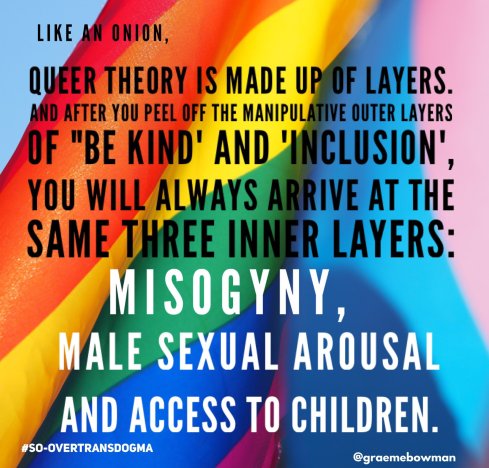
Be suspicious of everthing past the LGB in the LGBTQIA+ acronym, because the “+” sign does some very heavy, very questionable, lifting.
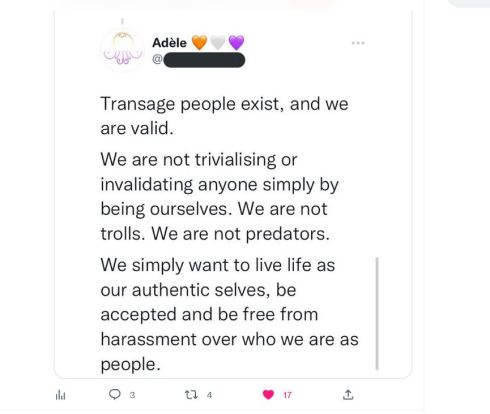
So remember folks:











 bleatmop
 Mystro
 The Arbourist


 Dead Wild Roses
Your opinions…