
You are currently browsing the tag archive for the ‘Canada Day’ tag.
Canada Day, celebrated every July 1st, commemorates the unification of three British colonies into the Dominion of Canada in 1867. However, the story of Canada spans thousands of years, weaving together Indigenous heritage, colonial struggles, and modern achievements. Reflecting on this history during Canada Day deepens our appreciation for the nation’s journey and the diverse peoples who have shaped it.

Indigenous Roots and European Arrival
For millennia, Indigenous peoples thrived across the land now called Canada, building sophisticated societies with unique languages, governance systems, and traditions. Nations like the Haudenosaunee (Iroquois) Confederacy and the Anishinaabe developed complex trade networks and political alliances long before European contact. The arrival of European explorers—John Cabot in 1497 and Jacques Cartier in 1534—marked the start of a transformative era. By the 17th century, French and British settlers established colonies, with the fur trade becoming a key driver of early economic and cultural exchanges between Indigenous peoples and Europeans. The 1763 Treaty of Paris, which transferred French territories to Britain after the Seven Years’ War, and the Royal Proclamation of 1763, which recognized Indigenous land rights, laid the groundwork for future relations. The establishment of the Hudson’s Bay Company in 1670 further intensified European presence, often leading to tensions over land and resources with Indigenous groups like the Cree and Métis. Additionally, diseases brought by Europeans, such as smallpox, devastated Indigenous populations, reshaping demographics and power dynamics in ways still felt today. This colonial history is vital to recall on Canada Day, as it underscores the enduring presence of Indigenous communities and the complex legacy of colonization that shapes ongoing reconciliation efforts.
Confederation: The Birth of a Nation
The mid-19th century brought a push for unity among Britain’s North American colonies, driven by economic challenges and the threat of American expansion. The Charlottetown Conference of 1864 and the Quebec Conference, attended by the Fathers of Confederation like George-Étienne Cartier and Thomas D’Arcy McGee, set the stage for the British North America Act, enacted on July 1, 1867. This act created Canada by uniting Ontario, Quebec, New Brunswick, and Nova Scotia, with Sir John A. Macdonald as its first prime minister. However, not all colonies joined immediately; Prince Edward Island and Newfoundland initially resisted, reflecting regional hesitations. Economic factors, such as the need for a unified railway system to boost trade, played a significant role in convincing colonies to join, with the Intercolonial Railway completed in 1876. The Red River Rebellion of 1869–70, led by Louis Riel, also highlighted early challenges to Confederation, as Métis and Indigenous peoples sought to protect their rights against encroaching federal authority. Confederation is the heart of Canada Day, symbolizing the beginning of self-governance and the foundation of a national identity rooted in cooperation and resilience.
The 20th Century: Defining Moments
Canada’s role in the 20th century solidified its global presence. The victory at Vimy Ridge in 1917 during World War I, where Canadian troops fought together for the first time, became a symbol of national unity and military prowess. Contributions to World War II, like the D-Day landings in 1944, further showcased Canadian courage. At home, the Great Depression of the 1930s tested the nation’s resilience, while social movements like women’s suffrage, which saw Manitoba grant women the right to vote in 1916, reshaped society. The Quiet Revolution in Quebec during the 1960s modernized the province and redefined its cultural landscape. Canada’s pioneering role in peacekeeping, starting with Lester B. Pearson’s efforts during the 1956 Suez Crisis (for which he won the Nobel Peace Prize), established the nation as a mediator on the world stage. The 1970 October Crisis, sparked by the FLQ’s separatist actions in Quebec, tested national unity and led to the controversial use of the War Measures Act. In 1982, the patriation of the Constitution and the Charter of Rights and Freedoms affirmed Canada’s independence and commitment to individual rights. These milestones, remembered on Canada Day, highlight the nation’s growth and dedication to justice and autonomy.
Modern Canada: A Mosaic of Diversity
Today, Canada embraces multiculturalism, bolstered by the Official Languages Act of 1969 and the Multiculturalism Act of 1988. Immigration trends, like the influx of refugees from Vietnam in the 1970s and Syria in the 2010s, have enriched the nation’s cultural fabric. Canada’s global role as a peacekeeper—beginning with the Suez Crisis in 1956—and its advocacy for human rights are notable, though challenges like Indigenous rights and climate change persist. The country’s response to global issues, such as signing the Paris Agreement in 2016, reflects its commitment to sustainability. Canada’s entry into free trade agreements, like NAFTA in 1994 (now USMCA), has shaped its economy, while cultural exports like the music of Céline Dion and the films of Denis Villeneuve showcase its soft power. The Truth and Reconciliation Commission, launched in 2008, has also brought renewed focus to addressing historical injustices against Indigenous peoples, with its 94 Calls to Action guiding modern policy. On Canada Day, this modern history reminds us of our collective responsibility to foster inclusivity and learn from the past to build a better future.
Why It Matters on Canada Day
Canada’s history—from Indigenous resilience to colonial foundations, Confederation, and beyond—reveals a nation shaped by struggle and unity. Celebrating Canada Day is more than a tribute to 1867; it’s a moment to honor all who have contributed to Canada’s story and to reflect on the values of diversity, peace, and progress that define it today.
Bibliography for Further Reading
- Canadian Encyclopedia – A comprehensive resource on Canadian history.
https://www.thecanadianencyclopedia.ca/en - CBC Archives – Historical articles and videos on Canada’s past.
https://www.cbc.ca/archives - Historica Canada – Interactive timelines and educational resources.
https://www.historicacanada.ca/ - Library and Archives Canada – Primary sources, including documents and photographs.
https://www.bac-lac.gc.ca/eng/Pages/home.aspx - University of Toronto – Department of History – Academic articles on Canadian history.
https://www.history.utoronto.ca/ - Government of Canada – Indigenous History – Information on Indigenous peoples and reconciliation.
https://www.rcaanc-cirnac.gc.ca/eng/1100100010002/1534874447533 - The Canadian Museum of History – Exhibits and resources on Canada’s past.
https://www.historymuseum.ca/ - Veterans Affairs Canada – Information on Canada’s military history.
https://www.veterans.gc.ca/eng/remembrance/history - Statistics Canada – Immigration and Diversity – Data on Canada’s demographic changes.
https://www.statcan.gc.ca/en/subjects/immigration_and_diversity - Environment and Climate Change Canada – Canada’s environmental policies and history.
https://www.canada.ca/en/environment-climate-change.html - Canada’s History Society – Articles and stories about key historical events.
https://www.canadashistory.ca/ - Parks Canada – National Historic Sites – Information on key locations in Canada’s history.
https://www.pc.gc.ca/en/lhn-nhs
Happy Canada Day!
Now that school is almost over (got called into a full-time temporary contract for June), I should have more time to write on the blog. I apologize for the sporadic scheduling for the last month or so, hopefully over the summer months we can get back into a regular publishing rhythm.
While perusing the CBC website I came across an article about calls to “Cancel Canada Day” in light of the mass graves being discovered at residential school sites across Canada, and the opinions of five Canadians on the topic.
“Don Amero – Country and folk singer-songwriter, Winnipeg
“I think my own belief is that Canada Day is a thing in terms of how we approach it. I think that’s where we really need to kind of take a deeper look at it. I think to spend millions of dollars in celebration, not sure if that’s what we should be doing as a country now. I think maybe [we should spend] time to reflect and to really educate ourselves.
“It is an opportunity for every individual, every Canadian, to say, ‘Where do I fit in this story?’ And I think if you’re here and you’re in this country, you’re a piece of this story. And I think that you really need to educate yourself. You can be complicit, you can be ignorant or you can educate yourself. My hope is that what we do this Canada Day is we spend more time educating ourselves on our history and who we were, who we are now and who we want to be in the future.”
I think that people won’t bother to ‘educate themselves’ unless it directly effects how they interact with society, or their income. I suspect that when asked, most Canadians will agree on the tragedy that was the Residential School system and sympathize. But not much past that.
I doubt that many Canadians will actually spend time ‘educating themselves’ unless it is job to be in the know. Historians, teachers, and the odd politician yes, but for the average person, most likely not.
If we move toward a society that values past knowledge and wisdom then then numbers may change a bit, but right now, sadly, we are not far behind the ahistorical United States when it comes to learning from history (see our Pandemic response vis-a-vis lessons the Spanish Flu Epidemic had to offer).
“Lynn-Marie Angus – Co-founder of B.C-based Sisters Sage, an Indigenous brand that hand-crafts wellness and self-care products, member of Gitxaala, Nisga’a and Métis Nations
“Honestly I never celebrate Canada Day. I haven’t since I think I was old enough to realize what Canada stood for, what Canada Day is. I’m Indigenous, so I’ve been brought up in a culture of racism. This is just something that’s normal. It’s normalized, unfortunately. But this is something that I deal with day to day It’s really difficult right now for Indigenous folks. So we’re all really suffering and traumatized and dealing with this very publicly through social media.
“There’s a saying that people are saying now: There’s no pride in genocide. And that’s so true. So it’s hard to be proud to be Canadian. I’m proud to be an indigenous person. Our existence Is our resistance. We are still here.”
I’m not sure that Canada is all about the genocide, at least these days. Canada as a minor power in the world does limited work on the world stage and mostly follows the lead of the US (like we have much choice in the matter). The successive governments that have ignored indigenous concerns is certainly not a record to be proud of, but one can hope we can improve on our political record regarding the treatment of indigenous Canadians.
“Scott Clark – Executive director, Vancouver ALIVE, director of the Northwest Indigenous Council Society
“I’ve never been a supporter of [Canada Day], recognizing the ongoing process Canada is doing to our people. But [calls to cancel Canada Day] are starting to shed light on the history of the relationship between Canada and Indigenous people. I would say that if anything [cancelling] is going to bring light to the historical and the contemporary relations between the Indigenous people, I would support that.
“I think [that] the uncovering of the the unmarked graves … for some reason, this has taken off with the Canadian public. I think they’re empathetic. I think they’re shocked.
“I do not identify as a Canadian citizen. That’s been imposed upon myself at birth. And that’s a result of the Canada Indian Act. So this is why I say there’s a lot of unfinished business that Canada has yet to do. So I don’t consider myself a Canadian, let alone a proud Canadian.”
Well, you happen to live in the political boundary of the landmass we like to call Canada, so there is that, but as with all self identification, you do you. Again, an appeal to shed light on our history. Once this news cycle is over, I’m not sure how much light will be left shining on the issue.
“Parry Stelter – President, founder of Word of Hope Ministries, originally from Alexander First Nation-Treaty Six Territory in Edmonton, Sixties Scoop survivor
“I feel that this Canada Day should not be cancelled. We should be standing at attention … but standing at attention.in fully acknowledging the full history of Canada and all its atrocities and the genocide and the residential schools.
“I think it’s a matter of changing your total perspective on the whole celebration, because many people go straight to ‘Why would I want to celebrate the past? Why would I?’ So now it’s a matter of changing perspective and saying, as I celebrate Canada Day, I’m not going to celebrate it for what it has been in the past. I’m going to celebrate it for what I want it to be in the future.
“The fact of the matter is that we still all live here. And so we have to make the most of it and move forward and not just be resilient and not just survive, but learn how to thrive in our lives. But I totally understand if my people or anybody else don’t want to celebrate. I totally understand because we all grieve in different ways.“
Parry has a great line in there – I’m going to celebrate it [Canada Day] for what I want it to be in the future. If we actually learned from our past mistakes Parry’s comment would resonate much more clearly. Unfortunately, the way our society is structured, just keeping our head above water and getting some time away from the rat-race is always fully centred in our consciousness. Historical reflection is a luxury many Canadians simply don’t have.
” Aziza Mohammed – Consultant for the World Bank, Toronto
“I don’t think it should be cancelled.I realize we’ve had some very troubling revelations, but the way forward is not to stop aspiring to be a better country, and it’s not to try and erase the existence of a country or erase history. It’s about acknowledging it and and trying to do something better.
“While acknowledging the pain of our Indigenous brothers and sisters, there’s lots of suffering throughout Canada’s history and even today. I’m a Muslim woman, I’m a racialized person. We have our places of worship burned down, vandalized with swastikas. I’ve been driven out of the first home I bought, which was in a small town in Canada, because the racist locals made my life so unbearable, I had to flee.
“There’s a lot for me personally to be upset about when it comes to our country, our history and fellow Canadians. But I still want to look forward. I still want to be positive…. Life here can’t just be suffering. It’s also a little bit of community and fellowship and joy. That’s worth celebrating to me.”
Tackling the more discriminatory elements in our society is a laudable goal.
What I think we should celebrate in Canada is the fact that we can (for the most part) state and freely share our opinions and thoughts. We still have a social rights framework in which the common people can safely hold a myriad of political thoughts and opinions and be able to disseminate them in our society. Without the freedom of the intellectual commons, Canada would be much diminished. I’m guessing that most Canadians take for granted the rights and freedoms that we have, since we have been exercising our freedom of thought and speech for so long now.
All of the diversity of opinion expressed here goes away if we lose our superstructure of guaranteed rights and freedoms. So, I think I’ll spend a little time reflecting on that fact that I live in a liberal democratic society that allows me to dissent from the majority and share opinions without deleterious consequences to my personal well being. And for that I am proud and grateful to live in, and be Canadian.
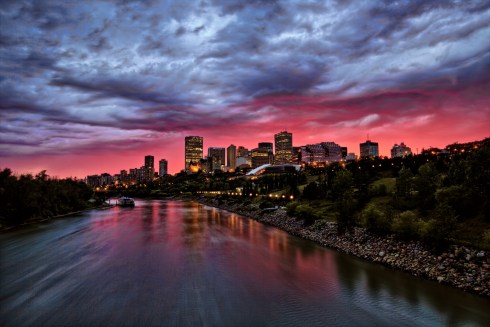
No public celebrations or fireworks in Edmonton this year. But that’s okay, eh… :)
“Patriotism assumes that our globe is divided into little spots, each one surrounded by an iron gate. Those who have had the fortune of being born on some particular spot, consider themselves better, nobler, grander, more intelligent than the living beings inhabiting any other spot. It is, therefore, the duty of everyone living on that chosen spot to fight, kill, and die in the attempt to impose his superiority upon all the others.”
-EMMA GOLDMAN, Anarchism and Other Essays
Celebrating Canada’s ‘nationhood’ seems a little trite and ephemeral to me. Woo, ethnic cleansing, woo cultural genocide and the rest of the checkered past gets layered under the cheers drunken yahoos happy to have another excuse to get pissed out of their minds while waving the Canadian flag.
Meh.
I choose this day to bring attention to something that Rachel Notley and the NDP Alberta Government chose to do, not too long ago.
“Premier Rachel Notley delivered an emotional apology for Alberta’s failure to take action against the residential school system on Monday and joined a growing call for a public inquiry into murdered and missing aboriginal women.
The announcement came nearly three weeks after the Truth and Reconciliation Commission concluded that almost a century of abuses at residential schools funded by the Canadian government amounted to “cultural genocide.”
Native Canadians have been marginalized and forgotten in Canadian society. We are aware of the stereotypes and misconceptions, but too often we choose to feed them and not try to reform ideas like “the lazy drunken Indian”. News-flash here friends – if people like your own ethnicity had been forcibly removed from their homes, put into schools where abuse and torture were the norm and punished for speaking your native language or performing your cultural practices, your generation – let me assure you – would be pretty fucked up.
 Canadians approved of the residential school system and thought *somehow* that the 1960’s Scoop was a good thing.
Alberta Premier Rachel Notley has finally addressed the issue:
“We were shocked and at times rendered speechless as we learned of the First Nation, Métis and Inuit children forcibly removed from their homes,” Ms. Notley said in the Alberta legislature.
“Although the province of Alberta did not establish this system, members of this chamber did not take a stand against it. For this silence, we apologize.”
A small, but very important first step. The last residential school closed in 1996, so 19 years is way overdue for the government and people of Alberta to step up and recognize the trauma inflicted on our First Peoples.
Hope. For such a long time I have not associated that word with our governance. The apology would have been enough, but Rachel Notley continued:
“I want the issue of missing and murdered aboriginal women to come out of the shadows and be viewed with compassion and understanding in the clear light of day,” Ms. Notley said. “The silence that once was, has long since passed. We will not fail these women. Not this time. Now is the time for their voices to be heard.”
I might be persuaded that this government has interests other than the oil/gas industry if this sort of thing keeps up. Of course, switching levels of governance, one can always find the dark cloud to the silver lining; case in point being Stephen Harper and his merry band of shit-lords that happen to be running the Federal Government:
“Prime Minister Stephen Harper has so far rejected calls for an inquiry, saying that authorities are already taking the proper steps to combat the issue and a further inquiry is not necessary.
In 2008, Mr. Harper issued an apology for residential schools and said at the time that the abuses inflicted by the system helped contribute to lasting social problems in First Nations communities.
According to an RCMP report, 206 of Canada’s 1,017 female aboriginal homicides between 1980 and 2012 were in Alberta. The report also noted that 28 per cent of Alberta’s female homicides between 1980 and 2012 involved indigenous women.”
Yah, these fine Conservative individuals need to be voted out of office in the upcoming federal election and a government like Alberta’s NDP that cares about people rather than profit, needs to be installed.
So there ya go.
Happy Canada Day!

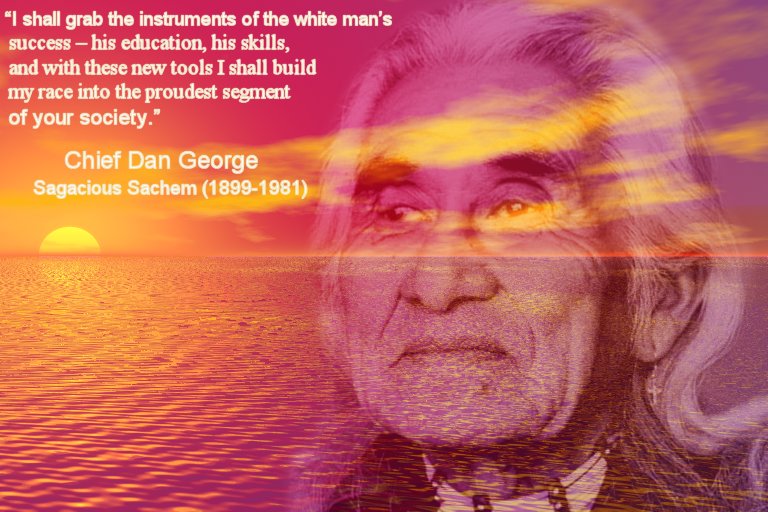
Canada needs to bring all of her peoples into the light. Respect and remember the past and try to fix the wrongs of our brief history since we now have the capacity to do so.











 bleatmop
 Mystro
 The Arbourist


 Dead Wild Roses
Your opinions…