
You are currently browsing the tag archive for the ‘Free Speech’ tag.
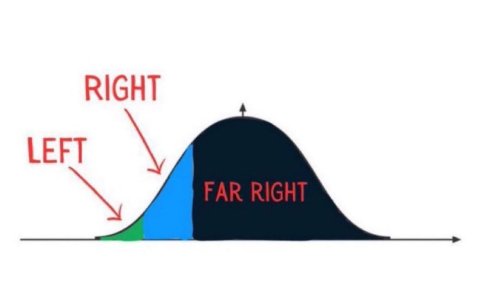
One of the most corrosive habits in current political discourse is the way plain factual claims get assigned a partisan label. Not arguments. Not policies. Facts. Or, more precisely, statements that point back to material reality, institutional limits, or ordinary human constraints. In theory, facts are supposed to discipline ideology. In practice, they are often treated as ideological aggression when they obstruct a preferred moral script.
That is what people are reaching for when they say facts are now treated as right-wing. The phrase is blunt, but it points to something real. In a growing number of disputes, especially around sex, gender, speech, and institutional policy, a person can say something materially true and be treated not as a participant in debate but as a moral suspect. The point is not answered on its merits. It is recoded as a signal of contamination. The speaker is no longer heard as describing reality. He is heard as choosing a tribe.
That shift matters because it changes the structure of argument. Once a factual claim is socially coded as “right-wing,” the burden quietly moves. The question is no longer whether the claim is true. The question becomes why you said it, what kind of person says such things, and who might feel endangered by hearing it. Motive replaces mechanism. Stigma replaces rebuttal. The claim is not refuted so much as quarantined.
You can see this clearly in disputes over sex and pronouns. For many people, saying that sex is real, binary in the ordinary human sense, and not altered by self-declaration is not an act of hostility. It is a claim about reality and a claim about language. “He” and “she” historically track male and female persons. Refusing to detach those words from sex is not, on its face, a partisan performance. It is an attempt to keep public language tethered to the material world rather than to inward identity claims.
“The disagreement is not mainly about politeness. It is about which reality gets public authority.”
That is exactly why the issue generates so much heat. The disagreement is not mainly about politeness. It is about which reality gets public authority. Does language track bodies, or does it track self-declared identity? Does a school treat sex as a stable feature of the world, or does it treat identity assertion as the governing fact? Those are not small etiquette disputes inflated by the internet. They are conflicts about ontology, law, and institutional power.
Canada now offers several live examples. Alberta’s Education Amendment Act requires parental notification when a student requests a gender identity-related preferred name or pronouns, and parental consent for students under 16 before staff may use them. The province says these changes are part of supporting families and setting clear school rules, with the remaining education amendments anticipated to take effect on September 1, 2025. Then, in late 2025, Alberta escalated further. Bill 9 invoked the notwithstanding clause to shield not only this school policy but other contested sex-and-gender measures from being struck down by the courts. That bundling matters. It shows this is no longer being treated as a narrow administrative disagreement, but as a foundational conflict over parental authority, child development, and the public meaning of sex.
Quebec presents the same fracture from the opposite direction, and it is ongoing now. Current reporting says a Montreal teacher is challenging the provincial policy that allows students 14 and older to change the name and pronouns used at school without parental consent. The teacher alleges she was required to use male pronouns at school while using female pronouns with the student’s parents. A preliminary hearing on anonymity and confidentiality was held on March 6, 2026, with the broader merits challenge still to come. Strip away the activist packaging and the conflict becomes plain: can institutional professionals be required to maintain two vocabularies of reality depending on the audience, and if they object, are they making an ethical argument or committing a moral offense?
The Barry Neufeld case in British Columbia shows the institutional end point of this logic. On February 18, 2026, the B.C. Human Rights Tribunal issued its decision and ordered substantial damages after finding that multiple publications were discriminatory, while some crossed the threshold into hate speech. That does not prove that every factual objection to gender ideology is punishable. It does show how readily dissent can be processed through systems that move from moral condemnation to formal classification. Once that line is crossed, everyone watching understands the lesson. The risk is no longer simply that you will be called wrong. The risk is that you will be treated as a public contaminant.
This is why the familiar “both sides are just choosing different facts” formula goes soft in exactly the wrong place. The conflict is not symmetrical. One side is generally making claims about bodies, language, legal authority, and institutional procedure. The other is often demanding that those things yield to identity-based recognition norms. Dignity is real and relevant. But dignity does not erase biological category, dissolve observable sex, or transmute factual disagreement into literal violence.
So when people say facts are treated as right-wing, the point is not that truth literally belongs to one side of the spectrum. The point is that in a culture saturated with moral performance, inconvenient facts are often recoded as partisan because it is easier to stigmatize them than to answer them. A factual claim that disrupts the script is no longer processed as description. It is processed as dissent. And dissent, under current conditions, is increasingly treated as a character defect.
Facts do not have a party. But when facts obstruct an ideological narrative, that narrative will often brand them right-wing and move straight to motive-policing. That is not a sign that the facts have changed. It is a sign that too much of public discourse has become allergic to reality when reality refuses to flatter the creed.
References
Government of Alberta. “Supporting Alberta students and families.”
https://www.alberta.ca/supporting-alberta-students-and-families
Government of Alberta. “Protecting youth, supporting parents, and safeguarding female sport.”
https://www.alberta.ca/protecting-youth-supporting-parents-and-safeguarding-female-sport
Global News. “Montreal teacher challenges policy for trans students to hide identity from parents.” March 6, 2026.
https://globalnews.ca/news/11719392/montreal-teacher-trans-students-challenge/
British Columbia Human Rights Tribunal. Chilliwack Teachers’ Association v. Neufeld (No. 10), 2026 BCHRT 49. February 18, 2026.
https://www.bctf.ca/docs/default-source/for-news-and-stories/49_chilliwack_teachers-_association_v_neufeld_no_10_2026_bchrt_49.pdf?sfvrsn=2d847803_1
Online discourse is exhausting for a simple reason: certain words are used not to describe reality, but to end the conversation. The label does the work. The argument never has to.
“Fascist” is one of those words.
In current usage, it often functions as a moral airhorn: you’re beyond the pale; you’re dangerous; you’re not worth debating. It gets tossed at people over ordinary ideological disputes about sex and gender, about speech norms, about state power, about immigration, about education. Sometimes it’s malice. Sometimes it’s a sincere attempt to name something authoritarian using the most nuclear term available. Either way, the practical effect is the same: “fascist” becomes a conversation-stopper rather than a description.
That’s why definitions matter. Not because language never evolves (it does), but because political language has consequences. When a term carries a freight of historical evil, using it casually is not “rhetorical adaptation.” It’s moral inflation. Moral inflation does not stay rhetorical for long.
Fascism isn’t just “authoritarian”
Start with what fascism is not.
Fascism is not merely “oppressive, dictatorial control.” That’s too broad. Plenty of regimes are oppressive. Plenty of dictators are brutal. If “fascist” just means “authoritarian,” it becomes a synonym for “bad,” and then it means nothing at all.
Fascism is a historically specific modern political project. A workable definition, tight enough to guide usage and broad enough to cover the main cases, looks like this:
Fascism is an authoritarian mass movement aimed at national rebirth, organized around the leader principle, hostile to liberal constraints (pluralism, due process, free speech), willing to use intimidation or violence against opponents, and committed to subordinating institutions to a single national story.
Notice the “mass movement” piece. Fascism is not only what the state does; it’s what a mobilized public is trained to do for the regime. It does not merely punish dissent. It cultivates a moral atmosphere in which dissent feels like treason, contamination, sabotage.
Economically, fascist systems often preserve nominal private ownership while subordinating markets, labour, and industry to regime goals through state direction and corporatist control. That’s not the essence, but it’s part of the recognizable package: the economy exists for the national project, not the other way around.
History: what it looked like when it was real
Words should cash out in the world.
Historically, fascism is anchored in early 20th-century Europe, most centrally Mussolini’s Italy and Hitler’s Germany. They differed in important ways, but the family resemblance is clear: politics becomes a spiritual drama of national humiliation and promised restoration; the leader becomes the embodiment of the nation; opposition becomes illegitimate by definition; and coercion becomes normalized as “necessary” for unity and renewal.
The methods are recognizably modern: propaganda, spectacle, the disciplining of media and education, the weaponization of law, the tolerated use of street-level intimidation, and the steady narrowing of permissible speech and association. It’s not merely “the government is strong.” It’s the fusion of power with myth, enforced socially and legally.
A practical threshold: not one trait, a cluster
If you want to use “fascist” responsibly, you need a threshold. Not a single feature, a cluster.
The label starts to become warranted only when several of these are present together:
- Leader principle: politics organized around a singular figure or party claiming a unique right to rule.
- Myth of national rebirth: humiliation plus promised restoration demanding unity and purification.
- Anti-pluralism: opponents treated as enemies, not fellow citizens.
- Suppression of dissent: legal, institutional, or social narrowing of speech and association.
- Propaganda and spectacle: mass emotional mobilization replacing open contest.
- Normalization of intimidation: harassment, threats, “consequences,” or violence used as political tools.
- Institutional capture: courts, schools, media, and professions bent into ideological instruments.
This is also how you keep your head when the internet offers you cheap clarity. If someone is merely wrong, stubborn, rude, or convinced, that is not fascism. If someone wants stronger regulation, that is not fascism. If someone defends free speech, or argues about sex and gender, that is certainly not fascism by definition. Those are disputes inside ordinary politics, however heated.
A concrete misuse: the pattern in miniature
Here’s the move you see constantly:
A person says, “I think compelled speech policies in workplaces and schools are a mistake.”
The reply is not, “I disagree, because…”
The reply is, “Fascist.”
What did the label accomplish? It converted a claim about policy into an accusation about moral essence. It implied the speaker is not merely mistaken but dangerous; not merely wrong but disqualifying. Once you have categorized someone as a “fascist,” the next steps feel justified: deplatforming, professional punishment, social exile, denial of hearing.
Maybe the labeler was “just venting.” Maybe it was “good-faith hyperbole.” But hyperbole has downstream effects. It trains the audience to treat coercion as civic hygiene.
Symmetry: this is not a left-only sin
And yes: the right does its own version. “Marxist” becomes a synonym for “liberal.” “Communist” becomes “anyone who wants a program.” “Groomer” becomes a sloppy club for any disagreement about education. “Traitor” becomes shorthand for “opponent who won.” Same mechanism, different tribe: labels as argument-substitutes and permission structures.
If we’re going to complain about language used as a weapon, we don’t get to only notice it when it hits our side.
Why this matters beyond the internet
The problem isn’t just vibes on social media. Label inflation spills into institutions.
When terms like “fascist” become casual descriptors, workplaces and professional bodies begin treating contested political disagreement as a safety issue. Media narratives start pre-sorting dissent as extremism. Politicians learn to substitute moral denunciation for persuasion. The public learns to fear argument and love punishment.
The final irony is that this habit corrodes the liberal norms that make pluralistic society possible: the expectation of disagreement, the discipline of evidence, and the moral restraint of not treating opponents as vermin.

A better standard
Here’s the rule I’m adopting: I’ll reserve “fascist” for cases where I can point to the cluster. Leader principle, anti-pluralism, suppression, intimidation, institutional capture, mythic rebirth. Not merely the heat of the dispute.
When I mean “authoritarian,” I’ll say authoritarian. When I mean “illiberal,” I’ll say illiberal. When I mean “coercive,” I’ll say coercive.
Definitions aren’t pedantry. They are the line between argument and excommunication, a public safety measure for language. “Fascist” should be a diagnosis you can defend, not a mood you can perform. If we flatten every disagreement into fascism, we train ourselves to crave punishment instead of persuasion, and we teach institutions to treat dissent as contamination. That habit does not protect democracy. It rots the muscles that make democracy possible, and it turns politics into a brawl we will eventually call governance.
Collin May has published a long, ambitious essay in the C2C journal (Hearts of Darkness: How the Left Uses Hate to Fuel its 21st Century Universal Imperium) on cancel culture, “hate” rhetoric, and the modern left’s moral posture. It is broader than I would write, more philosophical than most readers will tolerate, and occasionally overbuilt. But it names a pattern that matters, and one I return to often here: once “hate” becomes a universal accusation, institutions stop persuading and start policing.
May’s most useful contribution is not just the complaint (“cancel culture exists”) but the mechanism: “hate” stops being a moral description and becomes a category that pre-sorts who may be argued with and who may simply be managed.
That is the issue.
Not whether hatred exists. It does. Not whether some speech is vicious. It is. The issue is what happens when “hate” becomes the default label for disagreement, skepticism, refusal, dissent, or plain moral and factual judgments that cut against elite narratives.
At that point, the term stops describing and starts doing administrative work.
You can watch this happen across the institutions that shape public life: media, HR departments, professional bodies, universities, bureaucracies, and the expanding quasi-legal space around speech regulation. The sequence is familiar. Someone raises a concern about policy, ideology, language rules, school programming, medical ethics, public safety, immigration, religion, or sex-based rights. Instead of answering the argument, the institution reframes the speaker. Not wrong—harmful. Not questioning—spreading hate. Not participating in democratic friction—a threat to social order.
That move changes the rules of engagement. A wrong claim can be debated. A “hateful” claim can be quarantined. Once a claim is reclassified as harm rather than argument, the institutional response changes with it: less rebuttal, more restriction.
This language matters because it is not only moral language. It is managerial language. It justifies deplatforming, censorship, professional discipline, reputational destruction, and exclusion from ordinary civic legitimacy. It creates a class of people whose arguments no longer need to be answered on the merits. It also trains bystanders to confuse moral panic with moral seriousness.
May explains this through a large historical and philosophical genealogy. Fair enough. I am less interested in the full genealogy than in the practical result in front of us. In plain terms: the rhetoric of “hate” is often used to centralize authority in institutions that no longer trust the public and no longer feel obliged to reason with them.
That is one reason trust keeps collapsing.
People can live with disagreement. They can even live with policies they dislike. What they do not tolerate for long is being handled—being told their questions are illegitimate before they are heard. Once citizens conclude that institutions are using moral language as a shield against scrutiny, every future statement gets discounted. Even true statements are heard as spin.
And then the damage compounds. If “hate” is defined so broadly that it includes dissent, genuinely hateful speech becomes harder to identify and confront. The category gets inflated, politicized, and cheapened. Meanwhile, ordinary democratic disagreement becomes harder to conduct without professional or social risk.
That is not a confident free society. It is a managerial one.
Canada is not exempt. We have our own versions of this habit: speech debates reframed as safety debates, policy criticism recoded as identity harm, and public disputes (including over schools, sex-based rights, and even routine civic rituals like land acknowledgements) routed through tribunals, regulators, HR offices, and media scripts instead of open argument. The details vary by case. The mechanism does not. This tactic is not unique to one political tribe, but it is now especially entrenched in progressive-managerial institutions, which is precisely why it has so much reach.
The answer is not to deny hatred exists, or to become casual about cruelty. The answer is to recover civic discipline.
Name actual incitement when it occurs. Enforce existing laws where there are real threats, harassment, or violence. But stop using “hate” as a catch-all for disfavoured views. Stop treating condemnation as a substitute for evidence. Stop teaching institutions that the way to win an argument is to disqualify the speaker.
May quotes Pope Francis on cancel culture as something that “leaves no room.” Whether or not one follows his full historical argument, that phrase captures the operational problem.
A liberal society cannot function if citizens are only permitted to disagree inside moral boundaries drawn in advance by bureaucrats, activists, and legacy media.
The test is simple: can a claim be examined without first being moralized into silence?
If the answer is no, that is not moral confidence. It is institutional insecurity backed by power.
That is the pattern worth naming. And that is why essays like May’s, even when they overshoot, remain worth reading.

References
Collin May, “Hearts of Darkness: How the Left Uses Hate to Fuel its 21st Century Universal Imperium,” C2C Journal (February 16, 2026), https://c2cjournal.ca/2026/02/hearts-of-darkness-how-the-left-uses-hate-to-fuel-its-21st-century-universal-imperium/. (C2C Journal)
This essay is not an argument against transgender adults living freely and being treated decently. It is an argument about a specific set of claims—metaphysical, political, and clinical—that tends to generate persistent institutional conflict because it lacks a shared stopping rule. By “stopping rule,” I mean a principled boundary that both sides can recognize as legitimate: a line where accommodation ends and coercion begins, or where uncertainty requires caution. When subjective identity claims are treated as authoritative and dissent is treated as harm, disputes recur across domains—speech norms, public policy, and pediatric medicine—because there is no common adjudicator capable of resolving the underlying disagreement.
1) Thesis and scope: what is being argued, and what is not
The claim here is procedural. Whatever one’s moral intuitions, systems built to enforce contested metaphysics predictably produce friction that neither side can permanently “win.” A pluralist society can enforce civility and prohibit harassment. It cannot, without escalating conflict, require citizens and institutions to treat an internally felt identity as the final authority over publicly legible categories—especially when those categories structure law, safety, and fairness.
2) Metaphysical claim: identity as authoritative reality
The metaphysical claim, stated minimally, is: when sex and self-declared gender conflict, identity is treated as the authoritative reality for how others must speak and for how institutions must categorize. In a liberal society, people routinely request courtesy; the tension begins when courtesy becomes a duty enforced by institutional sanctions, because that converts disagreements about contested concepts into compliance problems.
The mechanism is structural rather than psychological. If a proposition is treated as morally obligatory yet largely unverifiable, enforcement shifts from evidence to norms, and from norms to penalties. This does not require attributing motives; it is a predictable consequence of asking public systems to operationalize contested metaphysics. The cost is an expansion of “speech governance,” where ordinary interpersonal mistakes or dissenting beliefs are treated as policy violations rather than social disputes. The verdict: making subjective identity authoritative at the level of public rulemaking tends to destabilize shared norms, because the principle contains no internal boundary that can settle recurring disputes.
3) Political claim: institutions forced to referee contested categories
The political claim extends the metaphysical one: public institutions must treat identity as authoritative in classification and access. The “no stopping rule” problem becomes concrete when policy must decide eligibility, categories, and competing rights. Sport is not the whole controversy, but it is a clear case study because sex-segregated categories exist to preserve fairness under stable biological differences.
World Athletics’ 2023 regulations excluding transgender women who have experienced male puberty from elite female competition were an explicit attempt to draw a boundary grounded in performance-relevant biology rather than identity.(worldathletics.org) This example does not “prove” the broader thesis; it illustrates the governing dilemma: once identity is treated as determinative, any sex-based boundary becomes contestable on the same logic, and institutions are pulled into continuous adjudication. The cost is not only policy churn but legitimacy loss, as significant segments of the public come to see institutions as enforcing contested beliefs rather than administering neutral rules. The verdict: when institutions are made to referee contested metaphysical claims, policy disputes harden into identity conflicts and become difficult to resolve through ordinary pluralist compromise.
4) Clinical claim: minors, uncertainty, and the need for evidentiary brakes
The clinical claim is narrower and higher-stakes: affirmation-first protocols are often presented as the evidence-based default for minors, despite ongoing disputes about evidence quality, long-term outcomes, and appropriate thresholds for irreversible interventions.
The mechanism is again about stopping rules. In pediatrics, where patients may have limited capacity to grasp lifelong tradeoffs and where interventions can be difficult to reverse, uncertainty normally triggers caution: structured assessment, conservative pathways, and high evidentiary standards. In England, the Cass Review’s recommendations prompted major service redesign, and NHS England’s implementation document outlines steps already taken and planned in response to those recommendations.(england.nhs.uk) The UK government also announced that emergency restrictions on the private sale and supply of puberty blockers would be made indefinite following advice from the Commission on Human Medicines, citing safety concerns; the DHSC explainer situates this within a broader shift toward research frameworks.(gov.uk)
The point is not that UK policy settles the science. The point is procedural: a major public health system treated evidentiary uncertainty as a reason to tighten pathways and emphasize research structures. The cost of overstating certainty is predictable—trust erosion among families, clinicians, and the public when policy appears to run ahead of evidence. The verdict: for minors, uncertainty should operate as a brake; when it does not, clinical decision-making becomes vulnerable to political and ideological pressure.
5) Steelman, with a credibility caveat: what proponents argue, and why WPATH cannot be treated as neutral authority
A fair steelman starts with the humane premise: some young people experience profound distress; social rejection correlates with worse mental health; supportive environments may reduce suffering; and for adults, liberal societies generally presume wide autonomy over body and presentation. Observational research has reported short-term associations between receiving puberty blockers or hormones and lower reported depression or suicidality among transgender and nonbinary youth, while still facing the usual limitations of nonrandomized designs (selection effects, confounding, short follow-up).(jamanetwork.com)
Advocates often cite WPATH’s Standards of Care (SOC8) as a professional consensus reference point. A publishable essay, however, has to include a procedural caveat: SOC8 is now contested as an uncontested authority, particularly for minors, due to public disputes about guideline-development process and evidentiary representation. The “WPATH Files” publication by Environmental Progress alleges internal discussions inconsistent with the public posture of evidentiary confidence.(environmentalprogress.org) Separately, an HHS report alleged that during SOC8 development, WPATH suppressed certain systematic reviews considered potentially undermining to preferred protocols.(opa.hhs.gov) WPATH and USPATH responded by disputing key characterizations and criticizing the HHS report, framing it as misrepresenting evidence, and noting constraints around ongoing litigation and related processes.(wpath.org)
The responsible conclusion is limited but important: SOC8 may still be used to describe the best-case articulation of the pro-affirmation position, but it cannot function as a neutral “settled science” stamp—especially in a pediatric domain where evidentiary confidence must be demonstrable rather than asserted. The verdict: steelman the humane intent and the reported short-term associations; do not outsource epistemic certainty to a guideline whose development and representation are under active public dispute.
6) Synthesis: stopping rules as the governance solution
The practical question is governance, not moral panic: can a pluralistic society accommodate people without compelling metaphysical assent, and can pediatric medicine proceed without overstating certainty? The answer is unglamorous: stopping rules.
In institutions, stopping rules mean enforcing civil treatment and anti-harassment norms while refusing to treat metaphysical agreement as a condition of participation in public life. In medicine, stopping rules mean evidence thresholds, transparent review, and heightened caution for minors where long-term outcomes remain contested. If stopping rules are refused, conflict tends to migrate: from clinics to courts, from policy to punishment, from persuasion to compulsion. The cost is durable polarization and degraded trust in institutions. The verdict: if the goal is social peace and clinical integrity, the burden is on advocates and opponents alike to articulate boundaries that are evidence-responsive, rights-consistent, and enforceable without demanding ideological conformity.

Glossary
Affirmation-first: A clinical approach that treats a person’s stated gender identity as true and prioritizes support for it; critics argue it may reduce exploratory assessment, especially for minors.
Cass Review: Independent review commissioned by NHS England into child and adolescent gender services; its recommendations prompted service redesign and tighter evidence standards.(england.nhs.uk)
Observational study: Research that observes outcomes without random assignment; can show association but generally cannot prove causation.(pubmed.ncbi.nlm.nih.gov)
Puberty blockers (GnRHa): Medications that suppress pubertal development; debated in youth gender medicine due to evidence-quality and risk/benefit uncertainty.(gov.uk)
SOC8: WPATH Standards of Care, version 8 (2022), widely cited in gender medicine; currently disputed as neutral authority in some public controversies.(environmentalprogress.org)
Stopping rule: A principled boundary that can settle recurring disputes (e.g., evidence thresholds for minors; category rules in sport).
WPATH Files: A publication of alleged internal WPATH materials by Environmental Progress; relevant here because it is part of an ongoing credibility dispute about guideline development.(environmentalprogress.org)
References
- NHS England, Implementing the Cass Review recommendations (PDF). https://www.england.nhs.uk/wp-content/uploads/2024/08/PRN01451-implementing-the-cass-review-recommendations.pdf
- NHS England, Children and young people’s gender services: implementing the Cass Review recommendations (long read). https://www.england.nhs.uk/long-read/children-and-young-peoples-gender-services-implementing-the-cass-review-recommendations/
- UK Department of Health and Social Care, “Ban on puberty blockers to be made indefinite on experts’ advice” (11 Dec 2024). https://www.gov.uk/government/news/ban-on-puberty-blockers-to-be-made-indefinite-on-experts-advice
- DHSC Media Blog, “Puberty blockers: what you need to know.” https://healthmedia.blog.gov.uk/2024/12/11/puberty-blockers-what-you-need-to-know/
- World Athletics press release (Mar 2023) on female eligibility. https://worldathletics.org/news/press-releases/council-meeting-march-2023-russia-belarus-female-eligibility
- World Athletics eligibility regulations PDF. https://worldathletics.org/download/download?filename=c50f2178-3759-4d1c-8fbc-370f6aef4370.pdf&urlslug=C3.5A%20%E2%80%93%20Eligibility%20Regulations%20Transgender%20Athletes%20%E2%80%93%20effective%2031%20March%202023
- Tordoff et al., JAMA Network Open (2022). https://jamanetwork.com/journals/jamanetworkopen/fullarticle/2789423
- Environmental Progress, “The WPATH Files.” https://environmentalprogress.org/big-news/wpath-files
- HHS, Treatment for Pediatric Gender Dysphoria (Nov 2025). https://opa.hhs.gov/sites/default/files/2025-11/gender-dysphoria-report.pdf
- WPATH/USPATH response (May 2025). https://wpath.org/wp-content/uploads/2025/05/WPATH-USPATH-Response-to-HHS-Report-02May2025-3.pdf
The background.
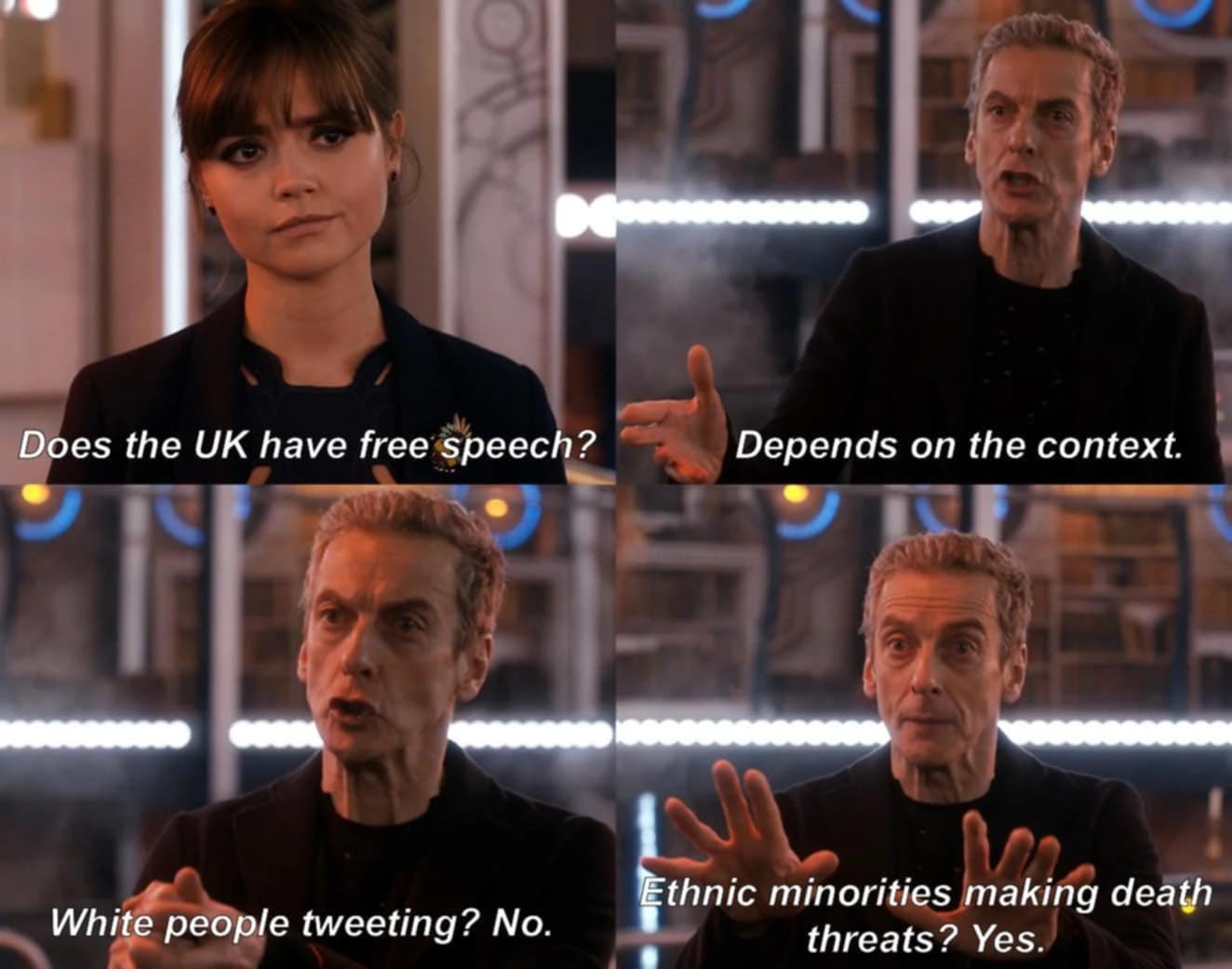
- https://www.bbc.com/news/articles/c62ln7mzd5ro – This BBC analysis explores the escalating debate on UK free speech limits, highlighting comparisons to authoritarian regimes like North Korea and the heated rhetoric around Starmer’s policies.
bbc.com
- https://www.wsj.com/opinion/free-expression/watch-what-you-say-or-two-tier-keir-might-put-you-away-73e99511 – A Wall Street Journal opinion piece critiques selective punishment of speech dissenting from progressive views in Starmer’s Britain, directly referencing the “Two Tier Keir” nickname.
wsj.com
- https://www.city-journal.org/article/britain-keir-starmer-free-speech-crime – This City Journal article discusses Britain’s shift toward authoritarianism, focusing on Starmer’s role in prosecuting speech crimes and curtailing individual freedoms.
city-journal.org
- https://www.foxnews.com/world/uk-government-accused-cracking-down-free-speech-think-before-you-post – Fox News reports on accusations of Starmer’s government rolling back free speech protections, including the “Two-tier Keir” label amid claims of selective law enforcement.
foxnews.com
In a revealing glimpse behind the curtain, commentator Andrew Doyle recently highlighted how certain narratives are tightly controlled within major media organizations. According to Doyle, the BBC has an “LGBT desk” that effectively acts as a gatekeeper, making sure all stories related to sexuality or gender must align with a particular viewpoint before they get the green light.
This revelation sheds light on how media outlets can become ideologically captured, turning into echo chambers rather than platforms for open dialogue. While there are undoubtedly excellent journalists at the BBC, Doyle’s insight reveals a systemic issue: when certain desks have the power of veto over stories, it raises questions about whose voices are being heard and whose are being filtered out.
In a time when free speech and diverse perspectives are more important than ever, understanding how these behind-the-scenes dynamics work is crucial. After all, a truly free press should aim to present a range of viewpoints rather than enforcing a single narrative.











 bleatmop
 Mystro


 Dead Wild Roses
Your opinions…