
You are currently browsing the tag archive for the ‘Media Literacy’ tag.
Some children are genuinely vulnerable, atypical, or distressed, and they deserve careful support.
That should be easy to say. It should also be the beginning of the conversation, not the end of it.
The problem starts when a narrow duty of care is expanded into a broad teaching mandate. Support for a small number of children becomes a reason to saturate schools, children’s media, and online spaces with contested identity frameworks. What begins as accommodation becomes doctrine. What begins as care becomes a general lens for everyone.
That is the central move.
It is usually framed in soft language: inclusion, visibility, affirmation, making room. Sometimes that language is fair. But it can also hide a scope change. A real minority need is used to justify population-level exposure. The existence of some children who need unusual support does not, by itself, justify turning child-facing institutions into delivery systems for anti-normative identity scripts many children are not developmentally ready to evaluate.
Put simply: support is not the same thing as saturation.
A useful heuristic is the inoculation model. The implicit argument often sounds like this: expose everyone early and often to the framework so harm is prevented later. But that assumes the framework is age-appropriate, conceptually clear, and socially harmless when applied at scale. Those assumptions are usually asserted, not argued.
You can see the pattern in school frameworks like SOGI 123. SOGI 123 describes itself as an initiative to help educators make schools safer and more inclusive for students of all sexual orientations and gender identities, with tools spanning policy, school culture, and teaching resources. In British Columbia, SOGI 123 has been broadly integrated through educator networks and district participation structures. In Alberta, similar SOGI 123 resources and supports exist and are used, but public acceptance and implementation have been more contested and uneven. (Your local framing here is fine; if you want, we can add a specific Alberta anchor in the next pass.)
The point is not that every teacher using these materials has radical intentions. Most likely do not. The point is structural. A framework introduced in the name of protecting a minority of vulnerable students can become a general lens for shaping the environment of all students. That is exactly where support turns into saturation.
None of this requires pretending there are no benefits. Anti-bullying frameworks and school supports can reduce harassment and improve school climate for vulnerable students, and in some cases for other students as well. Recent SOGI 123 evaluation reporting in B.C. has explicitly claimed reductions in some forms of bullying and sexual-orientation discrimination, including effects observed for heterosexual students in studied schools. But that is a different question from whether a framework is well-bounded, developmentally fitted, and appropriate as a general lens for all children. A program can produce some good outcomes and still be overextended in scope.
This is also where ordinary parents often feel morally cornered. They are told the framework is simply about kindness and safety. Then they discover it also carries contested claims about identity, norms, and development. When they raise questions about age, fit, or timing, the objection is treated as hostility rather than prudence.
That rhetorical move matters. It is how debate gets shut down.
Some activist frameworks are not just asking for tolerance or non-harassment. They are more ambitious. They treat ordinary social norms as presumptively suspect—or as things to be actively challenged—rather than mostly inherited and refined. Adults can debate that in adult spaces. The problem is when those frameworks are translated into child guidance and presented as common sense before children are developmentally ready to sort through the concepts.
You do not need a graduate seminar to see the issue. Children imitate. Children seek belonging. Children absorb prestige cues. Children are shaped by what trusted adults celebrate. That is not bigotry. That is basic reality.
This is why developmental fit matters. Children do not process abstract identity questions the way adults do. Identity formation is gradual. Social context matters. Timing matters. Adult authority matters. Age appropriateness is not a slogan; it shifts across developmental stages, and what may be discussable at 16 is not automatically suitable at 6. When institutions present contested frameworks in a celebratory register first and a cautionary register later (or never), adults should worry.
The usual public binary is false. The choice is not between cruelty and total affirmation. It is not between neglect and ideological immersion. A sane society can do both things at once: provide targeted support for the children who truly need it, while refusing to reorganize the symbolic environment of all children around contested anti-normative frameworks.
That is not repression. It is proportion.
And proportion is exactly what gets lost when every concern is moralized and every request for limits is treated as harm.
We should be able to say, plainly, that some children need exceptional care without turning exceptional cases into the template for everyone else. We should be able to protect the vulnerable few without swamping the many. We should be able to teach kindness without requiring ideological inoculation.
If we cannot make those distinctions, then we are not practicing compassion. We are practicing scope creep with moral language.

Support for vulnerable students is necessary. But targeted care is not the same as saturating schools with contested identity frameworks for all children.
References
- SOGI 123 / SOGI Education. “SOGI 123 | Making Schools Safer and More Inclusive for All Students.”
https://www.sogieducation.org/ (SOGI 123) - SOGI Education. “What Is SOGI 123?”
https://www.sogieducation.org/question/what-is-sogi-123/
(official explainer page) - SOGI Education. “British Columbia.”
https://www.sogieducation.org/our-work/where-we-support/british-columbia/
(B.C. implementation / network context) - ARC Foundation. “UBC Evaluation of SOGI 123 (October 2024).”
https://www.arcfoundation.ca/ubc-evaluation-sogi-123-october-2024
(evaluation / outcomes framing from SOGI-supportive side) - Alberta Teachers’ Association. “What is SOGI 123?”
https://teachers.ab.ca/news/what-sogi-123 (teachers.ab.ca) - Keenan, H., and Lil Miss Hot Mess. “Drag Pedagogy: The Playful Practice of Queer Imagination in Early Childhood.” Curriculum Inquiry 51, no. 5 (2021): 578–594.
https://doi.org/10.1080/03626784.2020.1864621 - Gender Report (opinion/critical perspective). “We need to take ideological gender rhetoric out of education.” (Jan. 28, 2021).
https://genderreport.ca/sogi-gender-curriculum-queer-theory/ (CANADIAN GENDER REPORT) - Global News. “Duelling protests held in Edmonton over sexual orientation and gender identity policies in schools” (Sept. 20, 2024).
https://globalnews.ca/news/10766483/edmonton-gender-identity-sexual-orientation-alberta-schools/ (Global News)
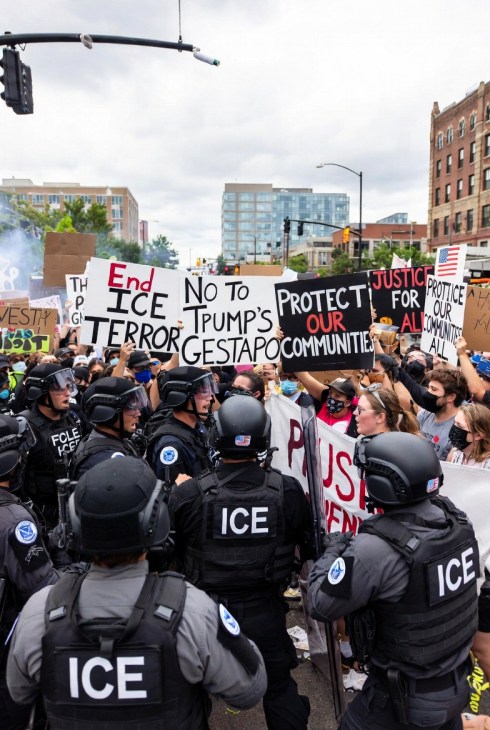
In his January 16, 2026 X post, James Lindsay treats the “ICE is Trump’s Gestapo” line as more than overheated language. He reads it as a political technique: a framing move that aims to provoke escalation, polarize interpretation, and sap legitimacy from federal immigration enforcement by making every subsequent clash look like retroactive confirmation.
Even if you don’t accept the strongest version of his claim (that it is centrally orchestrated), the underlying mechanism is worth taking seriously—because it doesn’t require orchestration to work. It requires an audience that consumes politics in fragments, and a media ecosystem that pays for heat.
The point of media literacy here is not to pick a side. It is to recognize when you are being handed a frame that’s designed to steer your moral conclusion before you are allowed to know what happened.
The loop, reduced to mechanics
The escalation loop has four moves.
1) Load the moral frame early.
“Gestapo” is not an argument. It is a verdict. It tells the audience what they are seeing before they see it. It collapses a contested enforcement dispute into a single image: secret police.
2) Convert observation into resistance.
Once people believe they’re facing secret police, ordinary scrutiny becomes morally charged. Disruption can be reframed as defense. Escalatory behavior becomes easier to justify, especially in crowds, especially on camera.
3) Force a response that looks like the frame.
As tension rises, agents harden posture: more crowd-control readiness, more force protection, more aggressive containment. Some of that may be lawful, and some may be excessive; the loop does not depend on the fine print. It depends on optics.
4) Circulate optics as proof.
Clips win. Captions win. The most provocative 15 seconds becomes “what happened,” for millions who will never read a court filing. The frame spreads because the frame is legible in low context.
Frame → friction → hardened posture → optics → reinforced frame. Repeat.
Notice what’s missing: slow adjudication of facts. The loop thrives on speed. It preys on low-context attention.
Why Minnesota is an instructive case
Minnesota matters here because the escalation loop is visible across multiple lanes at once: street-level conflict, political rhetoric, and rapid legal constraint.
Recent reporting describes the Department of Homeland Security deploying nearly 3,000 immigration agents into the Minneapolis–St. Paul area amid intense protests and public backlash. In that environment, a fatal shooting—Renée Good, shot by an ICE agent on January 7, 2026—became a catalytic event for further demonstrations and scrutiny.
Then the conflict moved into procedural warfare. On January 17, a federal judge issued an injunction restricting immigration agents from detaining or using force (including tear gas or pepper spray) against peaceful protesters and observers absent reasonable suspicion of criminal activity. That order is narrow, but it is not trivial: it codifies a boundary in exactly the arena where optics are most easily weaponized.
The rhetorical layer matters too. DHS has publicly condemned Minnesota Governor Tim Walz for using “modern-day Gestapo” language about ICE (and the White House has amplified that criticism). Whatever you think of the underlying enforcement operation, this is the accelerant: the label that turns complexity into a single moral picture.
If you want a single media-literacy takeaway from Minnesota, it’s this: the escalation loop often ends up constraining policy through courts and procedure, not merely through street confrontation. Once the story becomes “secret police,” legal process itself becomes part of the narrative battlefield—injunctions and motions become content, and content becomes legitimacy.
“Low information public” is the wrong diagnosis
“Low information” is typically used as a sneer. The sharper term is low context.
Most people aren’t stupid; they’re busy. They consume politics the way they consume weather: by glance. They get fragments, and fragments invite frames.
The “Gestapo” label works on low-context audiences because it is:
- Instantly moralized: villain and victim are assigned immediately.
- Highly visual: it primes the brain to interpret normal enforcement cues (gear, urgency, crowd control) as secret-police signals.
- Clip-native: it fits perfectly into captions and short video, where emotional clarity beats evidentiary completeness.
- Correction-resistant: anyone who says “slow down” can be painted as defending tyranny.
This is the real vulnerability narrative warfare exploits: not ignorance, but context starvation.
The key analytical distinction: intent vs incentives
Here’s where writers often lose credibility: they jump from “this pattern exists” to “this was orchestrated.”
Sometimes there is coordination. Often there isn’t. And you typically don’t need it to explain outcomes.
Shared incentives can produce coordinated-looking behavior without a central planner:
- Outrage frames mobilize attention.
- Attention produces fundraising, followers, and headlines.
- Headlines pressure officials and constrain institutions.
- Institutions respond in ways that produce more outrage footage.
That is enough.
The media action depends on showing a self-reinforcing system: rhetoric that increases confrontation risk, confrontation that increases hardened posture, posture that increases “secret police” plausibility to spectators.
That is media literacy: the ability to separate “this felt true on my feed” from “this is true in the world.”
How to defuse the loop
Defusing the escalation loop means starving it of inputs. That requires two fronts: institutional discipline and citizen discipline.
What institutions can do
1) Treat optics as a real constraint (not PR garnish).
In a clip-driven environment, unnecessary spectacle is narrative fuel. If tactics can be lawful and less visually coercive, the second option is often the strategically sane one.
2) Over-communicate rules, thresholds, and remedies.
Explain what triggers stops, detentions, and uses of force; explain complaint pathways; publish policy boundaries. If courts are drawing bright lines around peaceful protest and observation, those lines should become part of the public-facing doctrine, not buried in litigation.
3) Correct fast and publicly when mistakes occur.
Silence functions as permission for the loudest interpretation to win. Delay is a gift to the escalation loop.
4) Avoid “timing that reads like punishment.”
Even lawful actions can look retaliatory if they cluster around protests. In narrative warfare, timing becomes motive in the audience’s mind.
What readers can do
1) Treat moral super-labels as a stop sign.
When you see “Gestapo,” “fascist,” “terrorist,” “insurrection,” assume you’re being pushed into a conclusion. Slow down.
2) Refuse clip capture.
Ask: what happened thirty seconds before this clip starts? If you can’t answer, you’re watching a weaponized excerpt.
3) Use a two-source minimum.
One source gives you mood. A second source often provides the missing constraint—timeline, legal posture, or what is actually being alleged. The injunction’s specific limits, for example, are precisely the kind of detail clips rarely include.
4) Separate event, legality, and morality.
“This happened” is not “this was lawful,” and neither is “this was tyranny.” Narrative warfare succeeds by collapsing those categories into one reflex.
5) Ask what behavior the story is trying to elicit.
Is it trying to make you understand, or to make you react—share, donate, show up, escalate? That question alone breaks many spells.
Where this ends if we don’t learn
If the escalation loop runs unchecked, politics becomes performance for low-context consumption. Enforcement becomes optics. Protest becomes optics. Courts become props. Everyone plays to the camera because legitimacy is increasingly adjudicated there.
The antidote isn’t bland neutrality. It’s refusing to let a frame do your thinking for you—especially one engineered to convert fragments into certainty.
That’s what media literacy looks like now: not knowing everything, but knowing when you’re being steered.
“When a word arrives preloaded with a verdict, your job is to slow the tape.”
References
- James Lindsay, X post (January 16, 2026), “ICE is Trump’s Gestapo” narrative thread. (X (formerly Twitter))
- Reuters (January 17, 2026), report on federal judge’s injunction limiting immigration agents’ tactics toward peaceful protesters/observers in Minneapolis–St. Paul; includes mention of DHS deploying nearly 3,000 agents and context following Renée Good’s death. (Reuters)
- Associated Press (January 17, 2026), coverage of the same injunction and the lawsuit context, including limits on detentions and crowd-control measures against peaceful protesters/observers. (AP News)
- ABC News (January 14, 2026), background reporting confirming Renée Good was fatally shot by an ICE agent on January 7, 2026 and noting an FBI probe. (ABC News)
- U.S. Department of Homeland Security (May 19, 2025), DHS statement criticizing Gov. Tim Walz’s “modern-day Gestapo” language about ICE (useful for documenting the rhetoric’s public circulation). (Department of Homeland Security)
- White House (January 2026), article compiling public statements about ICE and “modern-day Gestapo” language (useful as an example of administration amplification rather than a neutral factual source). (whitehouse.gov)
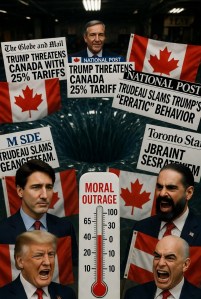
“Trump Derangement Syndrome” (TDS) isn’t a medical condition. It’s a rhetorical label for a recognizable pattern: Donald Trump becomes the organizing centre of political perception, so that every event is interpreted through him, and every interpretation is pulled toward maximal moral heat. Even people who agree on the facts can’t agree on the temperature, because the temperature is the point. Psychology writers describe it as a derogatory term for toxic, disproportionate reactions to Trump’s statements and actions.
And when politicians try to literalize it as a clinical diagnosis, it collapses into farce. It is fundamentally a political phenomenon, not a psychiatric one.
The useful question isn’t “Is Trump uniquely bad?” Reasonable people can say yes on qualities character, norms, rhetoric, policy, whatever. The useful question is: when does valid criticism become TDS? The answer is: when Trump stops being an object of analysis and becomes a gravity well.
What TDS looks like (beyond normal criticism)
Normal criticism is specific: this policy, this consequence, this evidence, this alternative. TDS is different in kind.
-
Totalization: Trump isn’t a president with a platform; he’s a single-cause explanation for everything.
-
Asymmetry: Similar behaviour in other leaders is background noise; in Trump it becomes existential threat (or, on the other side, heroic 4D chess).
-
Incentive blindness: The critic’s emotional reward (“I signaled correctly”) overrides the duty to be precise.
-
Predictable misreads: Even when Trump does something ordinary or mixed, it must be either apocalypse or genius.
This is why the term persists. It points generallyat a real cognitive trap: a personality-driven politics that makes judgment brittle. (It also gets used cynically to dismiss legitimate criticism; that’s part of the ecosystem, too.)
Why Canadian media amplifies it
Canada didn’t invent Trump fixation. But Canadian legacy media has strong reasons to keep Trump on the homepage. The reasons, in question, are not purely ideological.
1) Material proximity (it’s not “foreign news” in Canada).
When the U.S. president threatens tariffs, trade reprisals, or bilateral negotiations, Canadians feel it directly: jobs, prices, investment, and national policy all move. In Trump’s second term, Canadian economic and political life has repeatedly been forced to react to U.S. pressure: tariffs, trade disputes, and negotiations that shape Ottawa’s choices.
That creates a built-in news logic: Trump coverage is “domestic-adjacent,” not optional.
2) An attention model that rewards moral theatre.
Trump is an outrage engine. Outrage is a business model. Canadian mediais operating in a trust-and-revenue squeeze, and that squeeze selects for stories that reliably produce engagement. Commentators on Canada’s media crisis have argued that the Trump era intensified the trust spiral and the incentives toward heightened, adversarial framing.
3) Narrative convenience: Trump as a single, portable explanation.
Complex stories (housing, health systems, provincial-federal dysfunction) are hard. Trump is easy: one villain (or saviour), one emotional script, one endless drip of “breaking.” This is where amplification turns into distortion. A real cross-border policy dispute becomes a morality play; a complicated negotiation becomes a personality drama.
4) Coverage volume becomes self-justifying.
Once a newsroom commits, it has to keep feeding the lane it created. Tools that track Canadian legacy-media coverage of Trump-related economic conflict like tariffs for example, show how sustained and multi-outlet that attention can become.
The more space Trump occupies, the more “newsworthy” he becomes, because “everyone is talking about it” (including the newsroom).
None of this requires a conspiracy. It’s mostly incentive alignment: relevance + engagement + a simple narrative hook.
The cost: Canadians inherit America’s temperature
The predictable result is that Canadians import not just U.S. events, but U.S. emotional calibration.
-
Canadian politics gets interpreted as a shadow-play of American factions.
-
Domestic accountability weakens (“our problems are downstream of Trump / anti-Trump”).
-
Readers get trained to react first and think second, a reinforcing heuristic, because that’s what the coverage rewards.
And it corrodes trust: if audiences can feel when coverage is performing emotional certainty rather than reporting reality, they stop believing the institution is trying to be fair.
A reader’s heuristic: the TDS check
If this is going to be useful (not tribal), it needs a diagnostic you can run on yourself and on coverage:
-
Specificity test: Is the criticism about a policy and its consequences, or about Trump as a symbol?
-
Symmetry test: Would you report/feel the same way if a different president did it?
-
Proportionality test: Does the language match the evidence, or does it leap straight to existential claims?
-
Update test: When new facts arrive, does the story change—or does the narrative stay fixed?
-
Trade-off test: Are costs and alternatives discussed, or is “opposition” treated as sufficient analysis?
Pass those tests and you’re probably doing real criticism. Fail them repeatedly and you’re in the gravity well regardless of whether the content is rage or adoration.
The verdict
Trump is a legitimate target for strong criticism especially in a second term with direct consequences for Canada.
But the deeper media failure is not “being anti-Trump.” It’s outsourcing judgment to a narrative reflex: a system that selects for maximal heat, maximal frequency, and minimal precision. That’s how valid critique curdles into derangement—because it stops being about what happened, and becomes about what the story needs.
The fix is boring, which is why it’s rare: lower the temperature, raise the specificity, and let facts earn the conclusion.
Psychology Today — “The Paradox of ‘Trump Derangement Syndrome’” (Sep 5, 2024)
https://www.psychologytoday.com/ca/blog/the-meaningful-life/202409/the-paradox-of-trump-derangement-syndrome
The Loop (ECPR) — “Is ‘Trump Derangement Syndrome’ a genuine mental illness?” (Oct 13, 2025)
CBS News Minnesota — “Minnesota Senate Republicans’ bill to define ‘Trump derangement syndrome’ as mental illness…” (Mar 17, 2025)
https://www.cbsnews.com/minnesota/news/trump-derangement-syndrome-minnesota-senate-republicans/
Reuters Institute — Digital News Report 2025: Canada (Jun 17, 2025)
https://reutersinstitute.politics.ox.ac.uk/digital-news-report/2025/canada
The Trust Spiral (Tara Henley) — The state of media/trust dynamics (May 2024)
Reuters — “Trump puts 35% tariff on Canada…” (Jul 11, 2025)
https://www.reuters.com/world/us/trump-puts-35-tariff-canada-eyes-15-20-tariffs-others-2025-07-11/
Financial Times — “Canada scraps tech tax to advance trade talks with Donald Trump” (Jun 30, 2025)
https://www.ft.com/content/4cf98ada-7164-415d-95df-43609384a0e2
The Guardian — “White House says Canadian PM ‘caved’ to Trump demand to scrap tech tax” (Jun 30, 2025)
https://www.theguardian.com/world/2025/jun/30/canada-digital-services-tax-technology-giants-us-trade-talks
The Plakhov Group — Trade War: interactive visualizations of Canadian legacy-media coverage of Trump’s tariffs (Feb–Sep 2025 dataset)
https://www.theplakhovgroup.ca/detailed-briefs/trade-war-interactive-visualizations
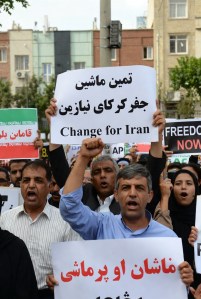
When Iran’s streets erupt, the regime’s first move is rarely ideological persuasion. It is logistical suffocation: arrests, fear, and the severing of communication. In early January 2026, reporting described widespread internet and phone disruptions as protests intensified. The point is not subtle. A state that can’t control bodies tries to control visibility.
Western audiences, meanwhile, do not experience Iran directly. They experience coverage: what makes the front page, what becomes “live,” what gets a correspondent, what earns context, what gets a single write-up and then disappears. That gatekeeping function doesn’t require fabrication to shape reality. It only requires allocation. In practice, editorial choices determine whether an uprising feels like history in motion or distant static.
The claim here is narrower than the familiar “the media lies” complaint. It is this: large news institutions can augment or diminish a story by controlling three dials — timing, framing, and follow-through — and those dials often track narrative comfort as much as factual urgency.
The timeline the public actually receives
Iran’s protest cycle began in late December 2025 and accelerated quickly. Wire reporting described large demonstrations after the rial hit record lows, police using tear gas, and protests spreading beyond Tehran. A few days later, reporting increasingly emphasized the state’s repression and the communications clampdown as the crisis deepened. By January 8–10, the blackout itself and the scale of unrest were central features in major coverage, alongside reports of deaths, detentions, and intensifying crackdowns.
None of this is to say “there was no coverage.” There was. The question is what kind of coverage it became, and when. A story can exist in print while being functionally minimized: treated as episodic, framed as local disorder, or kept at a low hum until a single undeniable hook forces it to the foreground. In this cycle, the communications cutoff became that hook — a reportable meta-event that is easy to verify and hard to ignore.
The BBC dispute is illustrative. Public criticism accused the BBC of thin or late attention; BBC News PR rebutted that claim. The argument itself is the point: audiences can feel the throttle even when they cannot quantify it precisely. When trust collapses, people start timing the coverage.
How stories are diminished without denying facts
1) Timing: when an event is treated as real.
In closed societies, early information is messy: shaky videos, activist claims, regime denials, and silence during blackouts. Caution can be defensible. But caution is also a convenient lever. If the bar for “confirmed” rises selectively, timidity becomes bias with clean hands. The public doesn’t see the internal deliberations; it sees the lag — and a lag signals “this isn’t important.”
2) Framing: what the story is about.
A protest can be framed as “economic unrest,” “public anger,” “unrest,” “crackdown,” or “a legitimacy crisis.” These are not synonyms. Each frame assigns agency and moral clarity differently.
“Economic unrest” implies weather: hardship produces crowds, crowds disperse, life continues. “Legitimacy crisis” implies politics: a governing order is being contested. Amnesty’s language, for example, emphasizes lethal state force; Reuters emphasizes regime warnings and suppression; AP emphasizes spread, detentions, and the hard edge of state response. Those differences matter because they tell the audience whether this is a temporary spasm or a turning point.
3) Follow-through: whether the story becomes a continuing reality.
One report is not coverage. Coverage is cadence: daily updates, on-the-ground reporting, explanatory context, and sustained attention when the situation is still unclear. Regimes understand this. A blackout isn’t only about disrupting domestic coordination; it also disrupts the foreign media rhythm that turns unrest into sustained international pressure.
The steelman case for restraint
There are good reasons major outlets hesitate:
-
verification is genuinely difficult during shutdowns,
-
misinformation can be weaponized by the regime and opportunists,
-
reckless amplification can endanger sources.
These are real constraints, not excuses. But they are only persuasive when applied consistently. The public’s frustration arises when “we can’t confirm” functions as a brake on some stories and not others — when caution looks less like discipline and more like selective incredulity.
A practical heuristic for readers
A useful concept must do more than flatter a tribe. It should help a reader detect when they are being shown an event versus being shown a story about the event. This can be done with a simple diagnostic — the Narrative Throttle Test:
-
Latency: How long did it take for a major outlet to treat it as major?
-
Vocabulary drift: Did coverage move from “unrest” to “crisis” only after the evidence became unavoidable?
-
Cadence: Was it sustained, or did it appear as isolated updates with no continuity?
-
Agency: Were protesters described as political actors with aims, or as reactive crowds with emotions?
-
Comparative salience: What else dominated the same window, and why?
These questions do not require assuming malice. They only require accepting that agenda-setting is power — and that power is exercised even by institutions that believe they are merely “reporting.”
The consequence
Iran’s future will be decided in Iran. But the West’s perception of Iran is decided in newsrooms. When coverage is delayed, flattened, or treated as a passing disturbance, the public receives a smaller event than the one unfolding. That matters because attention is a constraint on brutality. It is not the only constraint, and it is not always sufficient — but it is real.
The cleanest conclusion is also the least dramatic:
Facts do not reach the public raw. Institutions deliver them — loudly, softly, or not at all.
References
AP — Protests erupt in Iran over currency’s plunge to record low (Dec 29, 2025)
https://apnews.com/article/ddc955739fb412b642251dee10638f03
AP — Protests near the 2-week mark as authorities intensify crackdown (Jan 10, 2026)
https://apnews.com/article/c867cd53c99585cc5e0cd98eafe95d16
Reuters — Iran cut off from world as supreme leader warns protesters (Jan 9, 2026)
https://www.reuters.com/world/middle-east/iran-cut-off-world-supreme-leader-warns-protesters-2026-01-09/
The Guardian — Iran plunged into internet blackout as protests spread (Jan 8, 2026)
https://www.theguardian.com/world/2026/jan/08/iran-plunged-into-internet-blackout-as-protests-over-economy-spread-nationwide
Amnesty International Canada — Deaths and injuries rise amid renewed cycle of protest bloodshed (Jan 8, 2026)
https://amnesty.ca/human-rights-news/iran-deaths-injuries-renewed-cycle-protest-bloodshed/
BBC report mirrored via AOL — Huge anti-government protests in Tehran and other cities, videos show (Jan 8–9, 2026)
https://www.aol.com/articles/iran-regime-cuts-nationwide-internet-003409430.html
https://ca.news.yahoo.com/large-crowds-protesting-against-iranian-201839496.html
BBC report mirrored via ModernGhana — Iran crisis deepens: protests spread with chants of “death to the dictator” (Dec 31, 2025)
https://www.modernghana.com/videonews/bbc/5/597647/
Telegraph (commentary) — Critique of BBC’s Iran coverage (Jan 9, 2026)
https://www.telegraph.co.uk/news/2026/01/09/the-bbc-iran-coverage-poor/
BBC News PR tweet responding to coverage criticism (Jan 2026)
https://x.com/BBCNewsPR/status/2007048343793570289
CTP-ISW — Iran Update (Jan 5, 2026)
https://www.criticalthreats.org/analysis/iran-update-january-5-2026
CTP-ISW — Iran Update (Jan 9, 2026)
https://www.criticalthreats.org/analysis/iran-update-january-9-2026
In the machinery of modern media, false narratives do not emerge spontaneously. They are the product of deliberate groundwork: the careful shaping of public perception before an event occurs. Borrowing from military doctrine this tactic is called operational preparation of the environment (OPE) which are defined as activities that enhance situational awareness and set conditions for future operations.1 When adapted to the information domain, OPE becomes narrative control: seeding frames, priming audiences, and conditioning reflexive responses that can be triggered later for maximum effect.
Adversaries whether geopolitical rivals, activist networks, or opportunistic elites exploit this tactic by sowing division. The result is a public primed for outrage, where engineered crises and isolated incidents ignite prearranged narratives. Spotting these patterns is the first step toward resisting them.
Repetition and Priming
Narrative preparation often begins with repetition. Specific terms are echoed across platforms until they seem self-evident. Phrases like “stochastic terrorism” or “rising anti-LGBTQ hate” do not spread organically; they are priming devices. For instance, drag events framed as battlegrounds for “bigotry” and “inclusion” gain prominence not because of isolated incidents alone, but because media amplification primes audiences to see a pattern of systemic oppression.2
Consider also the long arc of the “racist policing” narrative. From Ferguson in 2014, through the cases of Michael Brown and Breonna Taylor, to the killing of George Floyd in 2020, framing evolved but the groundwork ensured predictable outrage.3 Media studies confirm that such coverage often prioritizes framing over fact, shaping reflexive responses rather than reasoned analysis.4
Selective Amplification
Once the ground is prepared, selective amplification takes over. An isolated incident for instance, graffiti on a council office, a slur at a rally—balloons into emblematic proof of a “hate wave.” Counter-evidence, such as a shooter’s non-binary identity, often disappears from coverage because it disrupts the narrative arc.5
This is not journalism as truth-seeking; it is journalism as engineering. Narrative amplification corrodes credibility, manufacturing crises that serve political and cultural goals. International rivals such as Russia and China employ similar techniques, weaponizing narrative dominance in conflicts and domestic politics alike.6
Case Study: Edmonton Public Schools
A recent example illustrates how this process operates in Canada. In 2025, the Edmonton Public School Board (EPSB) was accused of “book banning” after it questioned the suitability of certain titles with explicit sexual themes. Activist networks and sympathetic media framed the issue as a matter of “queer affirmation” and censorship. Yet, as I argued in a prior essay, this was not about censorship at all but about narrative warfare; casting parental concerns as bigotry while advancing a predetermined ideological script.7 The case demonstrates how operational preparation of the environment works at the local level: emotional language, repetition of “book ban” rhetoric, and selective omission of context primed audiences for outrage.
Building Inoculation
What does media literacy look like in this landscape? It means detecting the telltale signs of OPE:
- Uniform Surges: Are identical phrases appearing simultaneously across news outlets and social media?
- Emotive Frames: Does coverage push outrage before evidence is fully presented?
- Suppressed Counterpoints: Are inconvenient facts downplayed or omitted?
- Pre-seeded Narratives: Does the framing seem rehearsed, echoing earlier campaigns?
The solution is not paranoia but discipline. Verify facts independently, resist outrage cycles, and name the tactic when you see it—“this is OPE unfolding.” Exposing the method robs it of its power. In the contested terrain of fifth-generation warfare, awareness is both shield and sword.

End Notes
- U.S. Department of Defense, Dictionary of Military and Associated Terms, s.v. “Operational Preparation of the Environment.”
- Britannica, “Stochastic Terrorism,” and GLAAD, “Accelerated Rhetoric and Anti-LGBTQ Incidents” (2023).
- The Conversation, “Media Narratives and the George Floyd Protests” (2020).
- Reny, T. & Newman, B. (2021). “The Opinion-Mobilizing Effect of Frames: Media Narratives in the Black Lives Matter Movement.” American Political Science Review.
- NBC News, “Nonbinary Identity of Colorado Springs Shooting Suspect Raises Questions” (2022).
- Canadian International Governance Innovation (CIGI), “Narrative Dominance in the Information Age” (2021); Army University Press, “Information Operations and the Modern Battlespace” (2020).
- The Arbourist, “Book Bans and Narrative Warfare: How the Edmonton Public School Board Plays the Queer Pedagogy Script,” Dead Wild Roses (August 30, 2025).











 bleatmop
 Mystro
 The Arbourist


 Dead Wild Roses
Your opinions…