“You might find some success with the approaches you’re thinking of, depending on whose ears they land upon, but I don’t think you’ll win much ground with them. They certainly won’t convince anyone well-steeped in the Woke ideology. That’s now how these people think about the issue, and they’ll just point to your arguments as another example of you not really understanding how racism works. You’ll be hoisted by your own petard. The only way for you to get around this is to demonstrate that you do know how racism works, on their terms, and that you reject it for good reasons, which is almost impossible when you’re going up against a large group of people who think the opposite way.
Still, you have to understand “racism” like they do to try to do anything. The Woke use a very particular, very narrow definition of “racism” that has a very expansive application because it is believed to be “systemic” and thus applicable to and a part of everything. This extremely broad and expansive application of the term “racism” belies just how peculiar and restrictive the actual definition is.
The way they see “racism” is that it was something that was invented by early (pre)-scientific discussions of race and (genetic) heritability in the European context in the 15th–17th centuries, which were then amplified in the 18th and 19th centuries to justify the enslavement of black Africans and colonial conquests that Europeans were doing all over the world at the time. They believe, not wholly wrongly, that white Europeans invented the modern idea of “race” as an inheritable status and tied it to social standing so they could use it to conquer and enslave while providing themselves with access to society that they intentionally excluded all others from having. The trouble is, historically, this is mostly true. Some of the details are a bit messed up, like believing that “science” in the 16th century is roughly the same thing as science now and that most people think of race the same way in terms of the social-standing arguments as they did centuries ago, but the origin story they give is largely correct if you neglect the relevance of the evolution of human thought over the last several hundred years. They believe this system to be utterly pervasive throughout every possible aspect of every contemporary society that has been in any way influenced by any Western thought, and this is a huge problem (called “white supremacy” or “colonialism,” depending on the activist making a ruckus about it).
This brings us to a first important point. Because they only think in terms of this particular way of thinking about race, what happened in other contexts in the past, like the Muslim enslavement of the Slavs, or what happens outside of the West, as in India, cannot be understood as “racism” (or even racially-motivated behavior). This is because “race” and “racism” specifically refer to a system of domination tied to white people granting themselves superiority and all others having inferiority as described above. It doesn’t mean anything else, and that’s the heart of “prejudice plus power” definition they make so much noise about. The “power” part is the power white people gave themselves a few centuries ago and, in many—but not all—cases, fought tooth and nail to maintain until relatively recently in our history. Thus, Indians can be prejudiced toward each other and might even have their own systems of power, but they fall outside of the system of power in which “racism” is defined. Same goes for the Muslims enslaving the Slavs. The system of power isn’t the white, Western one and thus is inscrutable from their perspective. (It would be a culturally chauvinistic act to try to analyze other cultures because of the cultural relativism at the heart of the Woke worldview.) It could be theorized somehow, one must suppose, but not as “racism,” which was a white, Western invention (in their eyes). (This seems like a weird semantic game because it is one.)
Now we can make a little headway toward charting a useful reply, though. The confusion itself tells us something: that we don’t think about racism this way anymore. It took centuries of work in liberalism—seeing universal humanity, treating people as individuals, gathering better information through science and ethics, and persuading people to understand these improvements on their own terms through education and public appeal—to break that meaning down and replace it with the one we’re more familiar with today: holding some races up as superior or others down as inferior, or taking intentional actions that are in accordance with such beliefs. The “prejudice + power” reformulation by the Woke is an attempt to try to resurrect the old view, probably because things in society got too equal to continue using the more sensible liberal view and keep making radical gains.
But let’s back up and let something sink in. Their definition of “racism” is only that which white people set up in the 15th century going forward to justify slavery and colonialism by defining a white race that got the privileges of society and all the other races as inferior. That, and its legacy that remains today. Anything else, in the Woke worldview, is not “racism.” It might be bad; it might be prejudice; it might be discrimination; but it’s not “racism.” Yet again, in the Woke way of thinking, then, it’s considered a form of (white, Western) cultural chauvinism to call the racism that Indian people believe and do to each other by the term “racism,” or to believe that “racism” can be reversed and put back against white people, either by other racial groups gaining the effective power or by taking white people out of the white-majority or Western context and rendering them the minority.
So black people in a particular context—like a group of them kidnapping a lone white person—might be using race as a reason to act badly against a white person but, because that one relevant “system of power” is not in play, it wouldn’t be viewed by the Woke as “racism.” It just doesn’t meet their very peculiar and narrow definition of “racism” because that’s not the relevant “power” in the “system of power” that they demand be in operation. (This is the kind of argument that can only be maintained in the deepest confusion or by lying outright, by the way.) Even in India, the relevant power dynamic is held to be the one that white Europeans set up for themselves in the 15th century and since, and its influences by colonialism, and the way it applies to the Indian region now. No other power is the relevant system of power under consideration. (If you notice this is a form of white, Western chauvinism, that’s because it is one.)
Practically speaking, that means anything you do to try to argue against the Woke understanding of “racism” in terms that normal people today actually understand to characterize racism falls into their trap. They’ve set you up to be able to say you don’t understand racism—and then insinuate or state that it’s because you’re white. This last extra accusation follows, for them, because part of the definition of that system of racism is the internalization by white people that white dominance is normal and natural, and thus white people are unable to understand that “the system” even exists at all. More than that, they “don’t know and don’t want to know.” Again, this was probably (mostly) true 100 years ago, but it hasn’t been legally true in at least 50 years and hasn’t had almost any cultural influence in at least 30 years.
This is also why the Woke would tell you that you thinking “it’s racist to say white people can’t understand racism” shows that you don’t understand “racism,” as they mean it. In the Woke worldview, it’s the default state of affairs that white people can’t understand “racism” and that white people are in a dominant social position they created for themselves with regard to race. That means that, for them, thinking there can be “racism” against white people proves you don’t understand “racism” (probably because you’re white). The only understanding they can comprehend is that “racism” is a social and political fiction created by white people specifically for oppressing other races.
The Woke definition of “white” explicitly says this: “white,” in the Woke definition, is a racial category created by Europeans with white skin specifically to grant themselves social privilege and a position of social dominance over people with other skin tones. They named as a privilege of “whiteness” the ability to decide who is and who is not “white,” and thus who is and is not invited to share in the privileges of full membership in society. Then they naturalized this for themselves through many arguments appealing to early and incorrect “scientific” explanations that are now seen as pseudoscience and ethical arguments that have been rejected as unethical for decades, or in some cases, over a century. This, though, is also why they say that “whiteness” intrinsically contains “anti-blackness,” because whereas lighter “brown” skin-tones could be included as “white” (as with Italians and other Mediterraneans), black, by definition, can’t be made “white.” This is a duplicitous way for them to think about the issue because they also say that “whiteness” most relevantly not a feature of one’s birth but a kind of social property that could, in effect, be extended to anyone regardless of their race—and they know they’re playing both sides of the ball on this one.
To wrap up, any strategy you might take up for combating these ideas has to come from a position that shows you understand that “racism,” as they define it, is, and only is, a political creation by white people to advance their own interests and oppress other races in the advancement of their own interests. That’s what they mean by “racism,” and that’s what they believe white people can’t understand.
(You’ll notice I’ve proved them wrong in this right here and now, so the counterargument would be that it’s only truly comprehensible by lived experience—what racism is like to live with—which is, as you indicated, something white people often do experience in discrimination and prejudice, not least now under Woke terms, but also especially when leaving majority-white contexts, just like everyone else would in parallel situations. This then forces them to say that’s not “racism” being experienced, because they mean “racism” on their own definition, which white people can’t experience by their definition. This stance is what it seems as well, a demand that we all just have to take their word for it, which we all recognize as a terrible basis for making any kind of real-world decision with consequences that other people have to live with. And that’s the thing: people can believe whatever they want about racism, but if we’re going to set policy by it that effects everyone, we all have to understand the terms and have access to the basis for understanding them so that we can agree to them. Anything else is a form of gnostic totalitarianism.)
The way you challenge that, once you show you’ve understood it, is to point out that all of the meaningful progress on fighting racism has rejected, not embraced, this antiquated view and moved racism away from being considered a systemic property and toward being a matter of individual conscience, belief, and action. That is, racism was moved away from something that is (as a system) or that people are (as people) to something that people believe or do (and thus could reject or refrain from doing), and this specific change in understanding the concept is what allowed us to reduce its influence and what can allow us to minimize it going further, if not eradicate it entirely. Thus, you can demonstrate you understand and reject their understanding of racism and assert your own because it has more reason and better ethics behind it. You won’t convince the fully Woke, who will just retreat into their own appeals to “lived experience,” but pretty much everyone else will be impressed and see that it’s not you who doesn’t understand what’s going on.”
Here are three recent examples where fear of being labeled racist might have influenced the handling or reporting of crimes or corruption:
Rotherham Grooming Scandal (1997-2013) – In Rotherham, UK, there was significant delay and inaction by authorities in addressing the grooming and sexual exploitation of young girls, largely due to the perpetrators being of Pakistani descent. The Jay Report from 2014 highlighted that fear of appearing racist slowed down the response to these crimes, allowing them to continue for years with minimal intervention.
Telford Child Sexual Exploitation – Similar to Rotherham, the Telford case involved the sexual abuse of hundreds of children over several decades, with local authorities and police reportedly hesitant to act decisively due to fears of being accused of racism. The victims were primarily white girls, and the perpetrators were predominantly from the British Pakistani community. The council’s reluctance to enforce regulations on taxi drivers, some of whom were involved in the abuse, was noted as an example of this hesitancy.
Grooming Gangs in the UK – There have been multiple instances across the UK where grooming gangs operated with a significant delay in intervention by law enforcement or social services, reportedly due to concerns about racial sensitivity. These cases often involved British Pakistani men targeting vulnerable white girls, and the fear of backlash or being labeled racist has been suggested as a reason for the slow response. General posts on social media platforms like X have highlighted this issue, pointing out how political and law enforcement officials avoided confronting the issue to dodge accusations of racism.
These examples illustrate a pattern where cultural sensitivity and the fear of racial accusations have potentially influenced the speed and effectiveness of institutional responses to serious crimes.
I kind of need to know now, what the fuck is going on in Ontario with their interpretation of Human Rights and Discrimination. What I do know is that we do not solve present day discrimination by race, by MORE discrimination by race. This bizarre Kafkaesque excerpt from the C2C website.
On November 10, 2022 – lightning fast by HRTO standards – I heard from the Tribunal again. It was a brief but formal Decision that reasserted the SummerUp program’s legality and ended with an Order declaring, “The Application is dismissed.” In her decision, adjudicator Eva Nichols took issue, again, with the idea that I had a right to bring forward such a case when I had not “faced any form of discrimination on a protected ground” and because I had confirmed I was not bringing the application forward on behalf of another person, namely my son.
But it was the Decision’s Kafkaesque mental process that stood out. Nichols pointed out that “colour and race are among the protected grounds” under which discrimination is prohibited. But, she wrote, “They are not terms that are defined in the Code.”
“No fixed definition”: The HRTO now holds that race is a “social construct” that can be based on mutable characteristics from beliefs and manner of speech to clothing, diet and leisure preferences – things long considered stereotypes.
Instead, the OHRC “offers the following definitions in its Policy and guidelines on racism and racial discrimination…The Commission has explained ‘race’ as socially constructed differences among people based on characteristics such as accent or manner of speech, name, clothing, diet, beliefs and practices, leisure preferences, places of origin and so forth…Recognizing that race is a social construct, the Commission describes people as ‘racialized person’ or ‘racialized group’ instead of the more outdated and inaccurate terms ‘racial minority,’ ‘visible minority,’ ‘person of colour’ or ‘non-White.’ There is no fixed definition of racial discrimination… [emphasis added].”
So race is a legal grounds on which discrimination is prohibited. But it has no definition – and in fact can be based on things like what we eat or what we do for fun. In other words, on racial stereotypes the use of which, in the not so distant past, would themselves have been considered outrageously racist. Nor is there a definition of racial discrimination per se. The Tribunal’s decision did, however, specify one thing racial discrimination can’t be: “[19] It is important to note in the Tribunal’s jurisprudence that an allegation of racial discrimination or discrimination on the grounds of colour is not one that can be or has been successfully claimed by persons who are white and non-racialized [emphasis added].”
In other words, according to the Tribunal, white people cannot be discriminated against on the basis of their whiteness. (It’s not true, however, that such a claim has never succeeded. A group of white employees in B.C. not only won their case against that province’s Human Rights Tribunal but also successfully defended their claim in court that they were unjustly fired due to their “wrong” race.)
The belief that white people cannot suffer discrimination because they are white is not only held by the HRTO, but is often expressed in the media and by activists. (Source of right photo: alecperkins, licensed under CC BY 2.0)
It’s difficult to grasp which of the two major elements of the HRTO’s decision is more troubling: that blatant acts of discrimination are excused, and in fact are not even considered worthy of consideration if the person discriminated against is white, or that the OHRC is redefining race and racism as based on “social constructs” – habits and practices, like clothing and leisure preferences, that long were considered stereotypes.
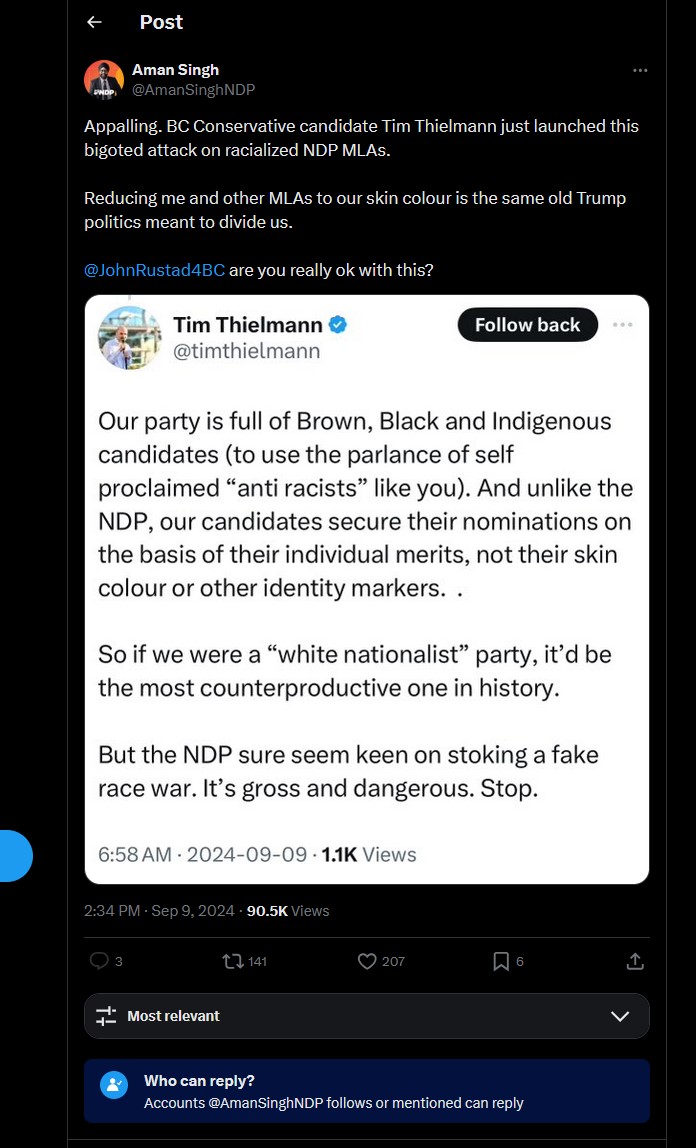
“For example, “racism is wrong” is an obvious, non-controversial statement, and what it means in the eyes of most people is that we should not judge others by the colour of their skin; everyone should be treated the same regardless of their race.
However, because the language has now been hijacked by “social justice” activists, normal, well-meaning individuals who agree with the above sentiment are being led astray, and agreeing to statements that do not mean what they imagine them to mean. For example, the idea of “anti-racism” might seem intuitively worthy of support, but it is in fact a politically charged concept which signals adherence to this illiberal doctrine. Compelling teachers to be “anti-racist”, as if that is the only morally acceptable stance, is akin to imposing religious views on them, and by extension on their students, and it is wrong.
The Ontario College of Teachers defines anti-racism not as the act of “judging people by their character and merit, rather than their skin colour”, but as “an active and consistent process of change to eliminate individual, institutional and systemic racism as well as the oppression and injustice racism causes”. And what do they mean by racism? Well, they are referring to the “attitudes, values and stereotypical beliefs” that are “deeply rooted”, and that people might not even be aware they have. This is grounded in the assumption that differential group outcomes in society only exist because of discrimination, which stems from CRT.
Based on this kind of flawed thinking, until all outcomes are completely equal for all groups of people in all facets of society (i.e., equity), we will need to continue the purification process of all white people, who are presumed to be guilty. Evidently, achieving equal outcomes for all groups will require brutal violations of individual rights, like discrimination based on skin colour, and we are already seeing these unjust practices in selecting only candidates of certain ethnicities for jobs, scholarships, or even for access to tax-payer funded homes. Anyone who does not see that allowing for this “skin colour first”, unjust playing field will only serve to inflame racial tensions, not diminish them, needs a wake up call.
When it comes to standing against the current push toward ideological conformity, each one of us has a role to play no matter our place in society. Teachers, in particular, who are entrusted with educating the next generation, must stand up and advocate for what it is we signed up to do. We are not preachers or moral guidance counsellors, and we are not political campaigners. Enough is enough!”
This is why it is so important to start from a place of definitional clarity so that you can understand what the other is trying to say (or not say). Part of the problem in dealing with activists is that they often jump to to the social pressure levers so that they do not have to explain their reasoning – don’t fall for it.
The election of the Republican candidate Donald Trump has really screwed the American society up. The 45th POTUS whose actions and policies that can only be described as ignorant ineptitude has brought the United States to the brink of a major societal schism between a substantial group of alienated, antediluvian, racist white nationalists and those who believe in a heterogeneous, pluralistic society.
Anyone remotely familiar with the workings of American society knows that race and racism play a major role in shaping how cultural and social decisions are made. What has been, until recently, described as the undercurrent of systemic racism in the US now dominates the front pages of the various US media conglomerates.
Demonstrations and counter-demonstrations, along with the associated violence, are cropping up from coast to coast in the US. The racism that had been just below the surface in US society has arisen to dominate the news cycle and has taken hold in the American societal consciousness. This resurgence of this overtly racist behaviour stems directly from the current republican administration’s seemingly tacit endorsement of white nationalism/white supremacist attitudes and opinions. This support/lack of censure from the White House has emboldened the once submerged racist elements in US society to once again walk in the sunlight and publicly make their point of view known.
That people somehow believe that the colour of their skin makes them special somehow in this day and age is quite beyond me, yet the racism that informs the current white supremacist movement is the very same racism that has been woven into the fabric of our societies. The current turmoil in the US is a testament to the lack of effective measures against the systemic racism in society. Oh, one most certainly acknowledge that there are laws now and many a policy that are meant to address racism and, of course, are moves in the right direction. But, marginal moves in the right direction are not enough. Not addressing the root causes of the racism that infects US (and Canadian) society will only ensure continued conflict over the issue of race in society.
The solutions for tackling racism in society are quite beyond the scope of a short essay, but I do want to offer one insight that might help in tackling the racism problem our societies face. What I’d like to highlight is the divide and conquer strategy that has been used by the elites in society from pretty much time immemorial till the present to keep the poor classes fighting amongst themselves. Poor whites and poor blacks inhabit the same economic class, yet the poor whites in the US have been given structural societal benefits to ever so slightly improve their lot in life, and of course with their ‘improved’ lot they have also been given a scapegoat/bogeyman (the poor black population) to blame for their problems and to be afraid of.
Thus, the poor fight themselves, and not the actual root of the problem – the rich elites who have crafted this inherently unequal society – so the system that feeds and encourages structural racism can continue unabated while the ‘poors’ cut their own throats for the scraps that the wealthy leave behind (and of course the boons of society continue to go to the ‘correct’ classes).
Of course we must continue to confront and fight the current racism that has raised its ugly head in society, but I think we should also be looking for the root causes of these divisions, such as the elite’s divide and conquer strategy, and address those issues as well.
What is ad block? It is an application that, at your discretion blocks out advertising so you can browse the internet for content as opposed to ads. If you do not have it, get it here so you can enjoy my blog without the insidious advertising.





 The election of the Republican candidate Donald Trump has really screwed the American society up. The 45th POTUS whose actions and policies that can only be described as ignorant ineptitude has brought the United States to the brink of a major societal schism between a substantial group of alienated, antediluvian, racist white nationalists and those who believe in a heterogeneous, pluralistic society.











 bleatmop
 Mystro
 The Arbourist


 Dead Wild Roses
Your opinions…