
You are currently browsing the tag archive for the ‘Women & Girls Alberta’ tag.
One of the stranger features of the debate over gender identity is that women are still expected to apologize for noticing when policies affect them.
When male bodies enter female prisons, shelters, changing rooms or athletic categories, sex matters. When children are placed on a medical pathway with lifelong consequences, sex matters. When crime statistics, scholarships or political representation are organized by sex, definitions matter. Refusing to pretend otherwise is not hatred; it is the beginning of an honest discussion.
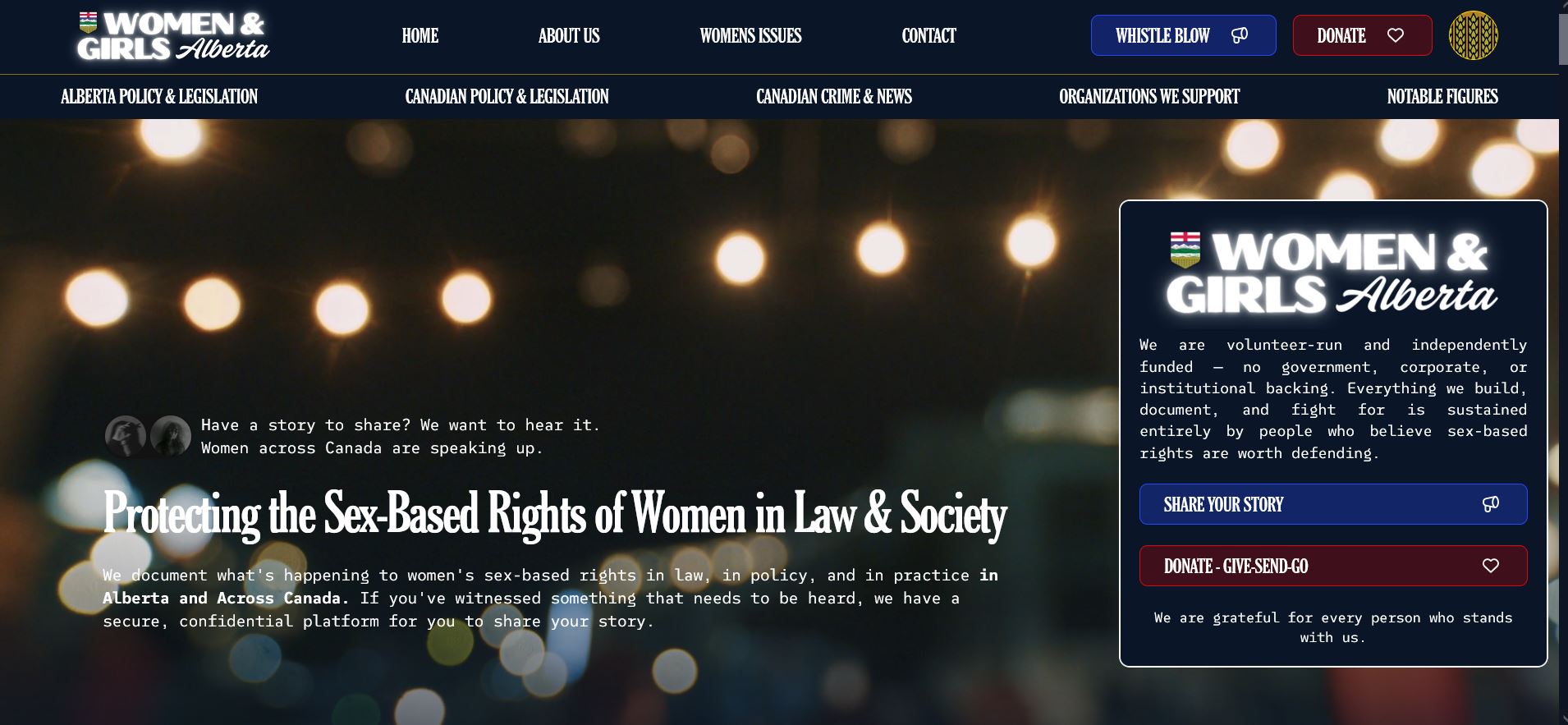
Women & Girls Alberta is an Alberta-based, women-led organization working to restore sex-based rights and protections in law, public policy and everyday life. Its platform reflects something I have argued repeatedly on this site: individual dignity does not require society to abandon material reality.
The organization focuses on the practical conflicts created when self-declared gender identity is allowed to override sex. These include women’s sports, prison safety, rape-crisis services, bodily privacy, lesbian boundaries, women’s scholarships, accurate crime statistics and single-sex spaces. Its issues section brings these concerns together rather than treating each controversy as an isolated incident.
 That matters because institutional change often occurs quietly. A definition changes inside a policy manual. A reporting category becomes unreliable. A woman raises a privacy or safeguarding concern and discovers that the institution has already decided which questions may be asked. By the time the public notices, the new rule is presented as settled practice rather than a political choice that should have been debated.
Women & Girls Alberta is doing more than issuing statements. The organization collects legislation, policy developments, documented cases and Canadian news concerning the erosion of sex-based protections. Its stated mandate includes providing sex-based policy analysis, supporting legislative clarity and creating opportunities for public discussion. Readers can examine its sources and arguments for themselves rather than being asked to accept a slogan.
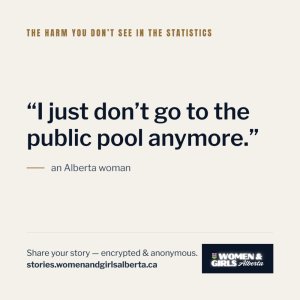
Especially valuable is its confidential reporting platform, through which women can document experiences involving prisons, hospitals, shelters, schools, workplaces, sports and government programs. The organization says submissions can be made without an account or a name through a system built on the open-source GlobaLeaks platform, and it provides additional precautions for people concerned about professional retaliation or identification.
The point is not to declare every allegation true merely because it has been submitted. The point is to gather accounts, documents and recurring patterns that institutions may otherwise ignore. Evidence cannot be examined until people are permitted to report it.
The strongest argument from the other side should be acknowledged: transgender people are entitled to safety, civil treatment and protection from genuine discrimination. Nothing about defending women’s sex-based rights requires cruelty toward anyone. But compassion cannot mean that every competing interest disappears. Nor can one group’s desire for recognition automatically override another group’s privacy, safety, freedom of association or right to fair competition.
A pluralistic society must be capable of protecting individuals without demanding that women surrender the language needed to describe their bodies, their boundaries and their rights.
That is why I support the work of Women & Girls Alberta. It is giving women a place to speak, documenting policies that deserve public scrutiny and insisting that biological sex remains a legitimate and sometimes indispensable legal category.
Visit the Women & Girls Alberta website, read its platform, examine the evidence and share its work. Those who agree with its mission can also subscribe, contribute or help ensure that women who have something important to report know where they can be heard.
Women should not need permission to defend rights that exist because they are women.











 bleatmop
 Mystro
 The Arbourist


 Dead Wild Roses
Your opinions…