
You are currently browsing the monthly archive for June 2025.
In the annals of human ingenuity, steel forged before the nuclear age—untainted by radioactive fallout—holds a revered place. Prized for precision instruments like Geiger counters, this “low-background steel” is scarce, salvaged from shipwrecks to avoid the contamination of modern alloys. So too is human-generated data: raw, diverse, and grounded in lived experience, it once fueled the internet’s vibrant ecosystem. Yet, as artificial intelligence (AI) proliferates, a troubling parallel emerges—the “cold-steel problem.” AI, increasingly trained on its own synthetic outputs, risks a self-referential spiral, eroding the authenticity and diversity of information. Like steel laced with radiation, AI-generated data threatens to corrode the tools of knowledge, leaving us with a homogenized, unreliable digital landscape.
The pre-AI era offered a rich tapestry of human thought—letters, books, forums, and early websites brimmed with unfiltered perspectives. These were the “cold steel” of data: imperfect, often chaotic, but rooted in reality. Today, AI’s insatiable appetite for content—web-scraped, algorithmically churned—has shifted the balance. A 2024 Nature study warns of “model collapse,” where AI trained on synthetic data loses the nuanced “tails” of human experience, converging toward bland, repetitive outputs. Wikipedia, once a bastion of human collaboration, now grapples with AI-generated articles—5% of new English entries in 2024 bore hallmarks of automation, often shallow and poorly sourced. This isn’t mere noise; it’s a distortion, amplifying errors and biases with each recursive loop, like a photocopy of a photocopy fading into illegibility.
The mechanics of this spiral are insidious. AI models, fed on web data increasingly tainted by their own outputs, risk “Model Autophagy Disorder” (MAD)—a vivid term for systems consuming themselves. A 2017 self-driving car crash, caused by mislabeled data failing to distinguish a truck from a bright sky, illustrates the stakes: errors compound, reality distorts. Posts on X lament search engines returning AI-crafted drivel—slick but soulless—while human voices struggle to break through. The counterargument, that synthetic data fills gaps in niche domains like coding, holds limited weight. Even in verifiable fields, the loss of diverse, human-generated inputs risks outputs that are technically correct but creatively barren, a digital equivalent of bollocks masquerading as insight.
The implications are stark: an information ecosystem choked by self-referential sludge threatens not just AI’s utility but society’s capacity for truth-seeking. If unchecked, this spiral could render knowledge a hollow echo chamber, antithetical to the vibrant complexity of human thought. Mitigation demands urgency—prioritizing human-curated datasets, enforcing transparency in data provenance, and developing tools to filter AI’s footprint. Blockchain-based data authentication or crowd-sourced verification could anchor AI in reality, preserving the “cold steel” of human insight. Yet, these solutions require collective will, a resistance to the seductive ease of automation’s churn. Without action, the fallout risks a digital dark age where truth drowns in synthetic noise.
The cold-steel problem is no mere technical glitch; it’s a philosophical reckoning. AI, for all its prowess, cannot replicate the spark of human creativity or the grit of lived experience. As we stand at this precipice, the choice is clear: safeguard the authenticity of human data or surrender to a future where information is a pale shadow of its potential. The shipwrecks of our pre-AI past hold treasures worth salvaging—not just for AI’s sake, but for the soul of our shared knowledge. Act now, or the corrosion of our digital ecosystem will be a legacy of our own making.

Sources
- Shumailov, I., et al. (2024). AI models collapse when trained on recursively generated data. Nature, 631, 755–759. https://www.nature.com/articles/s41586-024-07566-y[](https://www.nature.com/articles/s41586-024-07566-y)
- Alemohammad, S., et al. (2024). Self-Consuming Generative Models Go MAD. International Conference on Learning Representations (ICLR). https://news.rice.edu/news/2024/breaking-mad-generative-ai-could-break-internet[](https://www.sciencedaily.com/releases/2024/07/240730134759.htm)
- Model collapse. (2024, March 6). Wikipedia. https://en.wikipedia.org/wiki/Model_collapse[](https://en.wikipedia.org/wiki/Model_collapse)
- Rice University. (2024, July 30). Breaking MAD: Generative AI could break the internet, researchers find. ScienceDaily. https://www.sciencedaily.com/releases/2024/07/240730134750.htm[](https://www.sciencedaily.com/releases/2024/07/240730134759.htm)
- Kempe, J., et al. (2024). A Tale of Tails: Model Collapse as a Change of Scaling Laws. International Conference on Machine Learning (ICML). https://nyudatascience.medium.com/overcoming-the-ai-data-crisis-a-new-solution-to-model-collapse-2d36099be53c[](https://nyudatascience.medium.com/overcoming-the-ai-data-crisis-a-new-solution-to-model-collapse-ddc5b382e182)
- Shumailov, I., et al. (2023). AI-Generated Data Can Poison Future AI Models. Scientific American. https://www.scientificamerican.com/article/ai-generated-data-can-poison-future-ai-models/[](https://www.scientificamerican.com/article/ai-generated-data-can-poison-future-ai-models/)

It has never been about getting “rights” which they already have or setting up places and spaces for themselves. No no no. They want to and have been encroaching on female spaces, services, and sports.
Gender delusional men have no place in female spaces. Ever.

“Drink to Me Only with Thine Eyes” is a traditional English song, often arranged for TTBB (tenor 1, tenor 2, baritone, bass) male voice choirs, with lyrics attributed to Ben Jonson from his 1616 poem “To Celia.” The song is a romantic ballad expressing love and devotion, with the narrator asking his beloved to pledge her love through a gaze or a kiss, metaphorically described as drinking with her eyes. The melody, likely of older folk origin, is lyrical and flowing, well-suited for harmonious four-part male choral arrangements.
In TTBB settings, the arrangement typically emphasizes rich harmonies, with tenors carrying the melody and lower voices providing depth and emotional resonance. The song’s structure is simple, often in strophic form, allowing choirs to highlight vocal blend and expressiveness. It remains a popular choice for choral groups due to its elegant melody and timeless sentiment.
The case of Catherine Kronas, an elected parent member of the school council at Ancaster High Secondary School within the Hamilton-Wentworth District School Board (HWDSB) in Ontario, Canada, exemplifies a significant conflict between institutional policies promoting cultural sensitivity and the protection of individual rights to free expression. On April 9, 2025, during a school council meeting, Kronas respectfully objected to the practice of land acknowledgements—formal statements recognizing Indigenous peoples as the original stewards of the land—asserting that they constitute compelled speech and are politically controversial. She requested that her objection be recorded in the meeting minutes, causing no disruption. Nevertheless, on May 22, 2025, the HWDSB suspended her from her council role, citing allegations of causing harm and violating the board’s Code of Conduct policy. The Justice Centre for Constitutional Freedoms (JCCF) responded by issuing a legal warning letter, arguing that the suspension infringes on Kronas’s freedom of expression under the Canadian Charter of Rights and Freedoms. This situation underscores the broader tension between fostering inclusivity through practices like land acknowledgements and safeguarding individual rights to dissent, raising critical questions about free speech and compelled speech in educational settings.
Free speech is a cornerstone of democratic societies, ensuring that individuals can express diverse viewpoints without fear of censorship or retaliation. In educational contexts, this principle is paramount, as schools are environments where students, parents, and educators should engage in open dialogue to foster critical thinking and intellectual growth. The suspension of Kronas for voicing a dissenting opinion on land acknowledgements risks stifling such discourse, creating an atmosphere where conformity is prioritized over debate. This not only undermines the educational mission but also sets a concerning precedent for how dissent is managed in democratic institutions. Protecting free speech in schools allows for the exploration of controversial issues, encouraging students and community members to develop informed perspectives through reasoned discussion. The Kronas case illustrates the importance of maintaining an environment where differing viewpoints can be expressed without penalty, ensuring that educational institutions remain spaces for intellectual freedom and democratic engagement.
Compelled speech, where individuals are required to express or endorse statements contrary to their beliefs, poses significant risks to personal autonomy and freedom of expression. In Kronas’s case, the HWDSB’s expectation that council members participate in or refrain from objecting to land acknowledgements effectively compelled her to align with a statement she viewed as political and divisive. Her suspension for merely requesting that her objection be noted demonstrates how institutional mandates can penalize dissent, potentially violating Section 2(b) of the Canadian Charter of Rights and Freedoms, which guarantees freedom of thought, belief, opinion, and expression. Such actions may create a chilling effect, where individuals self-censor to avoid repercussions, eroding the foundation of free expression. The JCCF’s legal challenge highlights the lack of procedural fairness, as Kronas was not given an opportunity to respond to the allegations against her. While land acknowledgements aim to honor Indigenous histories, their mandatory imposition in public settings must be balanced against the rights of individuals to dissent. The Kronas case serves as a critical reminder of the need to protect free speech and resist compelled speech to maintain a free and open society.

Key Citations
- School board reaffirms suspension of parent opposing land acknowledgement
- Parent suspended for objecting to land acknowledgement; legal warning sent
- Canadian school board suspends parent for opposing Indigenous land claims
- Legal warning sent to Ontario school board for suspending elected school council member
- Legal warning sent to Ontario school board for suspending elected school council member
- Compelled Expression
- Compelled Speech on Canadian Campuses
- Free Speech
- Compelled Speech
- Section 2(b) – Freedom of expression
- Indigenous Education
- Indigenous Education Policy
- What’s wrong with land acknowledgments, and how to make them better
- Land Acknowledgement
Important debates that people need to hear.
Central planning too limited.
Karl Marx’s vision of socialism relied on central planners to orchestrate production and distribution, assuming they could gather and process the necessary information to meet societal needs. In Marx’s framework, a centralized authority would replace the decentralized market, directing resources to eliminate inefficiencies and inequities inherent in capitalism. This approach presumed that planners could acquire comprehensive knowledge of economic conditions to allocate resources effectively.
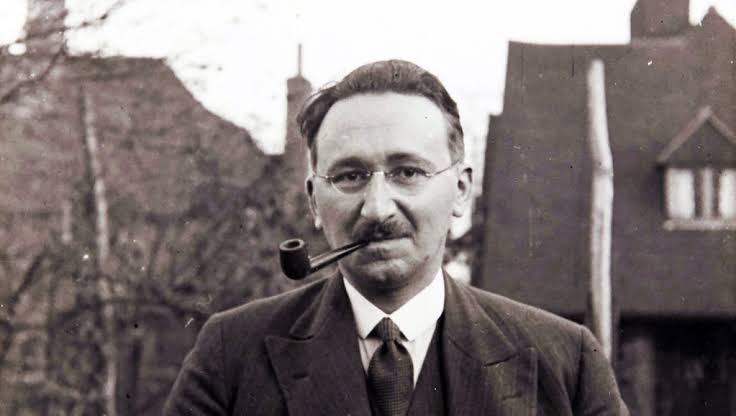
F.A. Hayek, in his seminal works such as The Use of Knowledge in Society (1945), refuted this by arguing that no central planner could possibly possess the dispersed, tacit knowledge held by individuals across society. Hayek emphasized that prices in a market economy are not mere numbers but dynamic signals that aggregate and communicate localized information about needs, preferences, and resource scarcities. For instance, a rising price for lumber signals increased demand or limited supply, prompting producers and consumers to adjust without any single authority needing to understand the full context of every transaction.
Hayek’s insight directly challenges Marx’s centralized model by demonstrating that the spontaneous coordination enabled by market prices surpasses the capabilities of any planner, expert, or algorithm. Prices encapsulate fragmented knowledge—such as a farmer’s awareness of crop yields or a manufacturer’s grasp of production costs—that no central authority could fully replicate. By enabling individuals to act on this dispersed information, markets achieve efficient resource allocation without requiring a comprehensive plan, rendering Marx’s vision of centralized control not only impractical but fundamentally incapable of matching the adaptive complexity of a price-driven economy.











 bleatmop
 Mystro


 Dead Wild Roses
Your opinions…