
There are debates where reasonable people can disagree but China’s human rights record is not one of them.
Over the past decade, a substantial body of reporting—by journalists, satellite analysis, leaked documents, and international organizations—has converged on a set of findings that are no longer seriously contested outside official denials.
Start with Xinjiang.
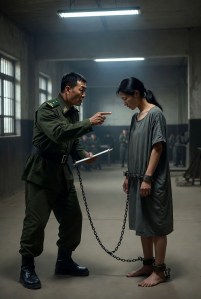
Evidence indicates that over a million Uyghurs and other Muslim minorities have been detained in a network of facilities described by the Chinese government as “vocational training centres.” Satellite imagery, survivor testimony, and leaked directives point to something else: mass internment, political indoctrination, and coercive control over religious and cultural life.
Accounts from former detainees describe:
- forced renunciation of religious beliefs
- constant surveillance
- psychological pressure and, in some cases, physical abuse
Separate investigations have also documented:
- forced labour programs linked to global supply chains
- coercive birth control measures, including sterilization and IUD placement
These are not isolated allegations. They appear across multiple independent sources.
Move to Hong Kong.
Following the 2020 National Security Law, political dissent has been sharply curtailed:
- pro-democracy figures arrested
- independent media outlets shuttered
- public protest effectively eliminated
The framework of “one country, two systems” remains in name, but its substance has been significantly reduced.
Then there is the broader system.
China operates one of the most sophisticated internal surveillance states in the world:
- extensive camera networks
- digital monitoring of speech and association
- censorship regimes that restrict information flow
Criticism of the government can carry professional, legal, and personal consequences that extend beyond the individual.
None of this requires speculation. It requires attention.
What complicates the situation is not uncertainty about the facts, but the global context in which they exist. China is economically central, diplomatically influential, and deeply integrated into international systems. That creates incentives to soften language, delay responses, or treat clear abuses as matters of interpretation.
They are not.
There is room to debate how to respond—sanctions, engagement, decoupling, or something in between. There is less room to debate what is happening.
The record is already there and the question is whether we are willing to look at it directly.
Reference List
Xinjiang / Uyghur Detention & Abuses
- Office of the United Nations High Commissioner for Human Rights. Assessment of human rights concerns in Xinjiang (2022)
https://www.ohchr.org/en/documents/country-reports/ohchr-assessment-human-rights-concerns-xinjiang-uyghur-autonomous - The New York Times. ‘Absolutely No Mercy’: Leaked Files Expose Mass Detentions (2019)
https://www.nytimes.com/interactive/2019/11/16/world/asia/china-xinjiang-documents.html - Associated Press. China cuts Uyghur births with IUDs, sterilization (2020)
https://apnews.com/article/269b3de1af34e17c1941a514f78d764c
Hong Kong Crackdown
- Amnesty International. Hong Kong National Security Law analysis
https://www.amnesty.org/en/latest/news/2020/06/hong-kong-national-security-law/
Surveillance / System-Level Control
- Freedom House. Freedom in the World – China
https://freedomhouse.org/country/china/freedom-world











 bleatmop
 Mystro


 Dead Wild Roses
1 comment
Comments feed for this article
April 23, 2026 at 6:30 am
tildeb
This Canada’s replacement economy, our new strategic partner no less (the RCMP directed to work closely and cooperatively with Beijing’s state ‘police’), intentionally and by political elbows up direction moving away from the terrible US where we do well over 400 billion a year in trade to (literally) a slave owning totalitarian state. China now has ‘preferred status’ (meaning lowest levels of tariffs and oversight) to go with Chinese owned and operated docking facilities in Vancouver and receptive to hosting and housing ever more Chinese Communist Party directed organizations (Canada has more CCP directed organizations per capita than any other country on earth, totalling over 560+). Anything imported that has aluminum is made by slave labour. This is not a secret. Nor is it a secret that China ships an extraordinary amount of chemical precursors and pill presses to the port of Vancouver that just so happen to outfit and supply fentanyl superlabs in BC and waiting labs east with enough pills produced per month to kill every Canadian five times over. We also have no convictions for all the well known illegal activities and drug interdictions. Our TD bank in particular has helped launder many billions of dollars of criminal proceeds from our Chinese ‘friends’, which we know about but are absolutely helpless to do anything about. We tolerate growing Chinese interference in our political ‘leadership’ and tsk tsk the bounties the CCP places on its political Canadian critics of Beijing. The CCP even takes Canadians hostage.
We are helpless interfering in any meaningful way with the close network of transnational criminal organizations – between Hamas and Hezbollah fundraising to cartels to the CCP triad – that raises the ire of the US who cannot legitimately trust Canada’s intelligence agencies to not undermine – as we have a growing record of doing – investigations into these connections and operations.
We are to ignore the level of stealing Chinese operative commit daily in our research facilities, universities, and businesses. They have collapsed through theft Canada’s leading global positioning in all kinds of technologies. We employ known CCP military personnel in our biosafety labs and give them access to the most lethal pathogens that we know are transferred back to China. And the very long list of industrial espionage we continue to allow to rape our best companies of proprietary knowledge (particularly Nortel that produced the base engineering for all Chinese solar panels as just one singular example) only grows.
We are to all effects a Chinese proxy nation with a capitulated political class (we see you Chretien and Power Corp raking in the Judas money) that facilitates China’s strategic interests. The latest is the direct negotiations, the wheeling and dealing, wining and dining, between northern indigenous ‘leadership’ and our Chinese overlords who seek access and mineral rights and transportation of extracted resources not with governments of Canada but the tribal leaders where political power and sovereignty has been transferred. And Canada as a country is just fine and dandy with all of this while most Canadians are absolutely ignorant and uncaring about any of it as long as it isn’t benefiting the Big ol’ Bad US.
This is absolutely batshit fucking crazy level policies and practices and the US will treat Canada as the growing strategic threat it is to them. We will have fully earned the ire and wrath of the Americans due to our traitorous actions against the west generally and the US in particular.
Don’t believe me? Fine. Read The Bureau. Read Sam Cooper. Look into the scope and scale of this hostile Chinese takeover and wonder: how on earth could we as a population ever have been this naive, this stupid, this gullible, to allow this to happen?
LikeLike