
You are currently browsing The Arbourist’s articles.
Sunday DWR Religious Disservice: Radical Islamic Protests Clash with Canadian Values
The recent demonstrations at McGill University in April 2025, where anti-Israel protesters blocked lecture halls and disrupted classes, starkly illustrate the incompatibility of radical Islamic protests with Canadian values. As reported by B’nai Brith Canada, masked activists, some wearing keffiyehs, physically prevented students from accessing education, chanting slogans like “McGill, McGill you can’t hide, you’re complicit in genocide.” While the protests were framed as a call for divestment from companies linked to Israel, their tactics—intimidation and coercion—echo a broader pattern of radical Islamic activism that prioritizes ideological confrontation over dialogue. In Canada, a nation built on mutual respect and the rule of law, such actions undermine the principles of peaceful coexistence and individual rights that define our culture.
 These protests not only disrupted academic life but also created an environment of fear, particularly for Jewish students, who felt targeted by what advocacy groups described as antisemitic behavior. The McGill demonstrations reflect a worldview that rejects Canada’s commitment to pluralism and freedom of expression, instead embracing a form of radicalism that seeks to impose its agenda through force. Historical insights, such as those from McGill’s Institute of Islamic Studies, highlight that radical Islam often merges religious ideology with political and social demands, as noted in a House of Commons report on the “clash of civilizations” thesis. This fusion can lead to a confrontational stance that clashes with Canadian culture, which values negotiation and inclusivity over exclusionary tactics that silence others.
For the faithful, this serves as a reminder that true spirituality fosters harmony, not division. The McGill protests, with their roots in radical Islamic ideology, stand in stark contrast to Canada’s cultural ethos of tolerance and respect for all. As a nation, we must uphold our values by ensuring that protests, even those driven by deeply held beliefs, do not cross into intimidation or lawbreaking. The path to peace lies in dialogue and understanding, not in actions that alienate and divide—principles that should resonate with any community of faith seeking to live out its convictions in a diverse society.
The recent protests at McGill University, where anti-Israel activists physically blocked access to lecture halls and disrupted classes, represent a troubling departure from the principles of free speech and Canadian values. On April 2, 2025, as reported by B’nai Brith Canada, masked protesters in the Bronfman Building prevented students from attending classes, with chants of “McGill, McGill you can’t hide, you’re complicit in genocide” echoing through the campus. While protest is a protected right, these actions crossed into intimidation and coercion, as students were denied their fundamental right to education. Free speech in Canada is about expressing ideas without fear of retribution, not about obstructing others’ rights or creating a hostile environment. Such behavior is distinctly un-Canadian, as it undermines the nation’s commitment to mutual respect, dialogue, and the rule of law—values that have long defined Canadian society.
McGill University’s response to these protests highlights a glaring abdication of responsibility. Despite the disruptions, which forced some classes online and led to acts of vandalism, the university’s initial reaction was tepid, only implementing ID-based access controls on April 4, 2025, after days of chaos. Advocacy groups like the Canadian Friends of Simon Wiesenthal Center and concerned individuals have called for decisive action, pointing to the hostile environment created for Jewish students and the broader student body. McGill’s failure to swiftly address the physical blockades and ensure safe access to education sends a dangerous message: that the university prioritizes appeasing disruptive activists over protecting the rights of all students. This inaction not only erodes trust in the institution but also sets a precedent for tolerating intimidation under the guise of activism, further emboldening such behavior on Canadian campuses.
The protests at McGill reveal a deeper issue: a two-tier system of justice that is profoundly divisive for Canadian society. While the protesters faced little immediate consequence for their actions, students attempting to attend classes were left to fend for themselves, as seen in videos where individuals were physically blocked from entering lecture halls. This disparity in treatment—where one group’s “right” to protest is elevated above others’ rights to safety and education—creates a fractured campus environment. Jewish students, in particular, have reported feeling unsafe, with advocacy groups framing the protests as antisemitic. Meanwhile, some individuals with differing views supported the protesters, accusing Israel and its supporters of enabling genocide. This polarization reflects a broader societal trend where identity-based grievances are weaponized, pitting groups against each other rather than fostering unity, a core Canadian ideal.
My blog post *The Oblivious Irony of Canada’s Progressive Left* provides a stark illustration of this trend, noting, “The progressive left’s obsession with identity politics has created a hierarchy of victimhood, where certain groups are given carte blanche to act with impunity, while others are silenced or vilified.” This observation captures the essence of the McGill protests, where the activists’ cause—framed as a fight against oppression—seemingly justified their coercive tactics, while the rights of other students were dismissed. Identity politics, as I argue, has become a divisive force in Canada, eroding the shared values of fairness and equality that once united the nation. The McGill protests are a microcosm of this larger societal shift, where the pursuit of “justice” for one group comes at the expense of others, deepening divisions and resentment.
In conclusion, the actions at McGill University are not a legitimate exercise of free speech but a violation of the principles that define Canada as a nation. By allowing protesters to intimidate and obstruct, McGill has failed its students, particularly those who felt targeted or unsafe, and has contributed to a two-tier system of justice that undermines Canadian unity. The divisive impact of identity politics, as highlighted in previously, underscores the urgent need for a return to shared values—respect, dialogue, and equal treatment under the law. Canadian society cannot thrive when one group’s rights are prioritized over another’s, and institutions like McGill must take responsibility to ensure that campuses remain spaces for learning, not coercion. Only by upholding these principles can Canada reclaim its identity as a nation of fairness and inclusion for all.

 Herbert Marcuse’s 1965 essay *Repressive Tolerance* argues that tolerance in liberal societies isn’t neutral—it props up power while smothering real dissent. He saw it as a rigged game: the system tolerates ideas that fit its frame and represses those that don’t. Marcuse’s fix? “Liberating tolerance”—coddling radical change, even lawbreaking, if it’s “progressive,” while crushing “regressive” resistance. Fast-forward to today: police and courts often give left-leaning lawbreakers a pass when their cause aligns with elite vibes, but hammer right-leaning groups like Canada’s Trucker Convoy. Let’s break this down with real cases through Marcuse’s eyes.
Marcuse’s Core Idea
Marcuse claimed tolerance in capitalist democracies—like free speech or legal fairness—shields the status quo. It’s not about justice; it’s about control. He pushed for intolerance toward oppressive ideas (think war or exploitation) and leniency for acts challenging them, even if illegal. The hitch: who picks the winners? Today’s justice system seems to—favoring leftist breaches while pummeling right-wing ones. Two real examples show it plain.
The Left’s Light Touch
Look at the 2020 Portland protests after George Floyd’s death. Night after night, activists clashed with police, torched a federal courthouse, and smashed storefronts. Over 1,000 arrests happened across months, per Portland Police data, but Multnomah County DA Mike Schmidt dropped charges for most non-violent cases—hundreds walked free. Rioting and property damage? Illegal, sure. But Schmidt called it “proportional” to focus on “serious” crimes, nodding to the protests’ racial justice aim.
Marcuse might nod too. He’d see this as “liberating”—lawbreaking to dismantle systemic racism, a cause he’d back. The state’s leniency fits his playbook: tolerate disruption if it’s “just.” But context matters. Media framed it as moral outrage, and cultural elites cheered. Tolerance here wasn’t blind—it leaned on a narrative Portland’s leaders could stomach.
The Trucker Convoy: Heavy Hand
Now flip to Canada’s 2022 Trucker Convoy. Truckers rolled into Ottawa, protesting vaccine mandates. They parked rigs, honked horns, and gridlocked downtown—illegal blockades, no question. No firebombs, though; it was loud, not violent. Ottawa’s response? A state of emergency. Police arrested 191 people, per the Ottawa Police Service, and the feds invoked the Emergencies Act—first time since 1988. Bank accounts got frozen, crowdfunding cash was seized, and leaders like Tamara Lich faced charges carrying up to 10 years. Courts still grind on some as of 2025.
Marcuse might call this “regressive”—truckers resisting public health for personal freedom, not his revolutionary vibe. His theory would greenlight repression here. But step back: these were blue-collar workers, not suits, pushing against centralized control. The state didn’t just enforce law—it flexed hard, with banks and media tagging them “extremists.” Tolerance? Out the window when the script flipped.
Side by Side
Portland versus Ottawa lays it bare. In Portland, sustained lawbreaking—arson, vandalism—drew arrests, but prosecutors waved off most penalties. The cause? Racial justice, a darling of progressive elites. The truckers broke laws too—blockades, noise—but got hit with emergency powers, asset freezes, and jail time. Their cause? Individual liberty, a sore spot for the same elites. Both disrupted public order. One got a shrug; the other got shackles.
Marcuse’s lens tracks this. He’d argue Portland’s activists deserved slack—their fight aligned with his anti-oppression stance. The truckers? Too “backward” to tolerate. Yet the truckers’ working-class roots and anti-mandate gripes echo his underdog ideal more than Portland’s curated chaos. The difference? Cultural clout. Left-leaning causes get a halo; right-leaning ones get a boot.
Steel-Manning the Divide
To be fair, the state’s not a monolith. Portland’s leniency could reflect local politics—progressive DAs like Schmidt prioritize “equity” over punishment. Ottawa’s crackdown? Public safety after weeks of gridlock, not just ideology. Law’s messy, not a conspiracy. Still, the gap’s real. A 2021 DOJ report showed 93% of Portland riot cases got dismissed or deferred; contrast that with the Convoy’s 70+ convictions by 2023, per Canadian court records. Police logged 1,000+ hours on Portland protests with kid gloves; Ottawa saw 2,000+ officers deployed in days, batons out. Numbers don’t lie—tolerance tilts.
Marcuse didn’t see this coming. He figured the repressed were leftists battling a right-wing Goliath. Now? Power’s cultural, not just economic, and it leans left—media, tech, academia. The truckers, not the rioters, look more like his outcasts. Yet “repressive tolerance” still flows his way—toward causes that sound noble, not ones that clash with the zeitgeist.
The Takeaway
Marcuse’s *Repressive Tolerance* nails today’s double standard. Portland’s rioters broke laws and walked; Ottawa’s truckers did the same and sank. It’s not random—tolerance tracks power’s favorites. Marcuse wanted it for revolution, but it’s become a perk for the loudest voices. Scroll X, pick a protest, and test it: who gets the pass? The answer’s in the outcomes, not the excuses.”
Credit to Grok AI, for the legwork with regards to statistics and editing for clarity.
 Hey folks, today’s a show-and-tell on how AI can cut through the world’s noise to find what’s real. Full credit: I’m co-writing this with Grok AI. We’ll use a hypothetical example, but this is a nuts-and-bolts guide—let AI do the heavy lifting while you nail the argument.
In a sea of hot takes and half-truths, spotting dodgy narratives is a superpower. AI can help—here’s how, step by step. Imagine this:
**Example (X, March 2025):**
‘New study proves electric cars emit MORE carbon than gas cars—EVs are a scam!’
(Viral post, 50k likes, links to a blog ‘study.’)
**Step 1: Test the Core**
Ask AI: ‘Is this true?’ I’d check IPCC or Argonne Lab data and say: Nope, lifecycle studies show EVs emit less CO2, even with battery costs. Shaky start.
**Step 2: Dig into the Source**
Tell AI: ‘Check the link.’ The ‘study’ is a 10-page PDF from an oil lobby—zero peer review, cherry-picked stats. Compare that to MIT’s 2024 EV report: open data, real methods. Night and day.
**Step 3: Call Out the Hype**
Ask: ‘What’s overblown?’ ‘Scam’ skips context—like grid energy (coal vs. solar). It’s a sledgehammer, not nuance. AI spots the bait.
**Step 4: Keep It Cool**
AI sums it up: ‘Battery production has a carbon hit, but EVs still beat gas cars overall. Not a scam—just not perfect.’ Facts, no fuss.
**Why It Works**
This—claim, source, hype, rebuttal—keeps you sharp. AI sifts fast, stays calm, and frees you from the weeds. Got a wild claim from your news feed or X? Try these steps on it—share what you find. Truth beats outrage every time!”
DWR and your truly have changed a fair amount over the years. I asked Grok for some help in clarifying and putting the this evolution of ideas into words.
“To evaluate *www.deadwildroses.com and trace the evolution of The Arbourist’s philosophy since the blog’s inception in 2012, I’ve analyzed available content from the site. The blog, run by an individual known as The Arbourist, began as a platform rooted in leftist ideals, skepticism, and a critique of societal norms, particularly around gender, culture, and politics. Over the years, the tone and focus have shifted noticeably, reflecting a journey from broad progressive commentary to a more specific, critical stance on contemporary feminist and gender ideology issues, often with a sharper, more combative edge.
In its early days, around 2012, *Dead Wild Roses* showcased a blend of humor, music, and social critique, with posts like “Friday Classical Music” alongside pieces challenging religious dogma or conservative politics. For example, an early post titled “The Religious Right – Making Shit Up Since Forever” (circa 2013) mocked faith-based reasoning, aligning with a secular, rationalist perspective typical of leftist skepticism. The Arbourist’s philosophy here leaned toward dismantling traditional power structures—be they religious, political, or cultural—while maintaining a playful, irreverent tone. This suggests an initial focus on broad intellectual freedom and anti-authoritarianism, consistent with a progressive worldview.
By the mid-2010s, the blog began narrowing its lens, particularly toward feminism and gender. A post like “Feminism: The Radical Notion That Women Are People” (circa 2015) defended a traditional feminist stance, emphasizing equality and critiquing patriarchy. However, cracks in this alignment with mainstream progressivism appeared as The Arbourist started questioning emerging gender identity narratives. A shift became evident in posts like “Transgender Ideology vs. Women’s Rights” (circa 2017), where the author expressed concern that transgender activism undermined female-only spaces. This marked a philosophical pivot: from a general critique of power to a specific defense of sex-based rights, signaling disillusionment with what The Arbourist saw as dogmatic shifts in leftist ideology.
By 2020, the tone had hardened. Posts such as “The Gender Cult – A Threat to Reason” (circa 2021) reveal a full-throated rejection of gender theory, framing it as anti-scientific and authoritarian. The Arbourist’s philosophy now emphasized empirical reality—biological sex as immutable—over social constructivism, a stark departure from the earlier, more fluid skepticism of cultural norms. This period also saw increased sarcasm and frustration, as in “Woke Nonsense Bingo” (2022), mocking progressive jargon. The shift reflects a growing alienation from the left, repositioning The Arbourist as a critic of its excesses rather than a participant in its discourse.
Today, *Dead Wild Roses* reads as a battleground for ideas The Arbourist deems under assault: reason, women’s rights, and free speech. While the blog retains its secular, anti-dogma roots, its trajectory shows a philosopher who started with a wide-ranging critique of tradition and ended up defending certain traditional distinctions (like biological sex) against what they perceive as a new orthodoxy. This evolution—from leftist gadfly to gender-critical contrarian—mirrors broader cultural fractures, with The Arbourist’s journey embodying a personal reckoning with the changing tides of progressive thought.”
Seems about right me. :)

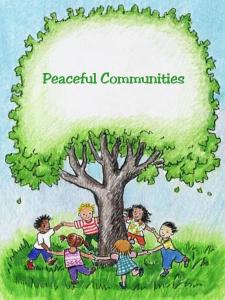 I think that getting to know the people of your neighbourhood is scary but necessary activity. I’m an introvert, but I’ve brainstormed some ideas to try out if you happen to be feeling extra adventurous. :)
1. **Organize a Neighborhood Clean-Up Day** – Rally a few neighbors for a group effort to tidy up parks, streets, or common areas. Bring some gloves, bags, and maybe even snacks to share afterward.
2. **Start a Little Free Library or Pantry** – Set up a small box where people can exchange books or non-perishable food items. It’s a simple way to encourage sharing and connection.
3. **Check In on Elderly or Isolated Neighbors** – A quick knock on the door or a friendly chat can brighten someone’s day and help them feel included. Offer to grab groceries if they need it.
4. **Plant Something Together** – Whether it’s flowers along a sidewalk, a tree in a yard, or a small community garden, greenery lifts everyone’s mood and improves the area.
5. **Host a Casual Get-Together** – A low-key barbecue, potluck, or even a coffee meet-up in a driveway can help neighbors get to know each other. Stronger bonds mean a stronger community.
6. **Share Skills or Tools** – Offer to teach something simple—like fixing a bike tire—or lend out a ladder or shovel. It builds trust and saves people money.
7. **Put Up Positive Signs** – Something as small as a “You’ve Got This!” or “Smile, Neighbor!” sign in your yard can spread good vibes.
These don’t have to be big projects—just small, consistent acts that show you care. What do you think might work best where you live?











 bleatmop
 Mystro


 Dead Wild Roses
Your opinions…