
You are currently browsing The Arbourist’s articles.

Social constructivism, a theory positing that reality is constructed through social processes and interactions rather than being an objective truth, lies at the core of what is commonly referred to as “woke” ideology. This perspective asserts that knowledge, identity, and societal norms—such as gender, race, and morality—are not rooted in any inherent or natural order but are instead products of human agreement and power dynamics. In the woke framework, this translates into a belief that all structures and hierarchies are arbitrary and must be relentlessly questioned or dismantled, particularly those perceived as oppressive. The emphasis on subjective experience and collective narrative over empirical evidence or universal principles defines woke ideology as a direct descendant of social constructivism, where truth becomes malleable and contingent upon the dominant social discourse.
This worldview inherently encourages coercive attitudes because it rejects the possibility of a shared, objective reality that can be appealed to in resolving disputes. If reality is socially constructed, then those who control the narrative wield ultimate power, and dissent becomes not just a disagreement but a threat to the constructed order. Woke adherents often demand conformity to their reimagined norms—such as language policing, mandatory ideological training, or the silencing of opposing views—under the guise of protecting marginalized groups or advancing justice. This coercion stems from the belief that alternative perspectives perpetuate harmful constructs, leaving no room for dialogue or compromise. The result is a moral absolutism that justifies silencing or punishing those who deviate from the prescribed narrative, as their very existence challenges the fragile consensus of the constructed reality.
The totalitarian tendencies of this approach emerge from its insistence on universal adherence to a singular interpretive framework. Social constructivism, as embraced by woke ideology, does not tolerate competing claims to truth; it seeks to monopolize the social construction process itself. Institutions—be they educational, corporate, or governmental—are repurposed as tools to enforce this orthodoxy, often through mechanisms like cancel culture, deplatforming, or the rewriting of history to align with the approved narrative. Dissenters are not merely wrong but dangerous, necessitating their exclusion or reeducation. This mirrors historical totalitarian regimes, where control over perception and belief was paramount, except here it is cloaked in the language of progress and equity rather than overt authoritarianism.
Fundamentally, social constructivism within woke ideology constitutes an anti-real ontology—an explicit rejection of an independent, knowable reality. By denying that there are facts or truths outside human interpretation, it undermines the foundations of science, reason, and even basic human experience. For instance, biological realities like sex differences are reframed as oppressive constructs to be transcended, while historical events are judged not by evidence but by their alignment with contemporary moral sensibilities. This anti-real stance dismisses the possibility of a world that exists beyond our perceptions, reducing everything to a power struggle over who gets to define the “truth.” In doing so, it sacrifices the pursuit of understanding for the imposition of ideology, leaving no anchor for objective inquiry or mutual coexistence.
In conclusion, social constructivism serves as the intellectual bedrock of woke ideology, driving its coercive and totalitarian impulses while cementing its status as an anti-real ontology. It transforms society into a battleground of competing narratives where power, not truth, determines legitimacy. The resulting culture of enforced conformity stifles dissent and erodes the possibility of a shared reality, replacing it with a fragmented, subjective landscape that demands constant vigilance and control. Far from liberating, this framework traps individuals in a cycle of perpetual reconstruction, where no truth is final and no freedom is secure. Ultimately, it reveals a paradox: a philosophy claiming to deconstruct oppression constructs its own rigid, unyielding system in its place.
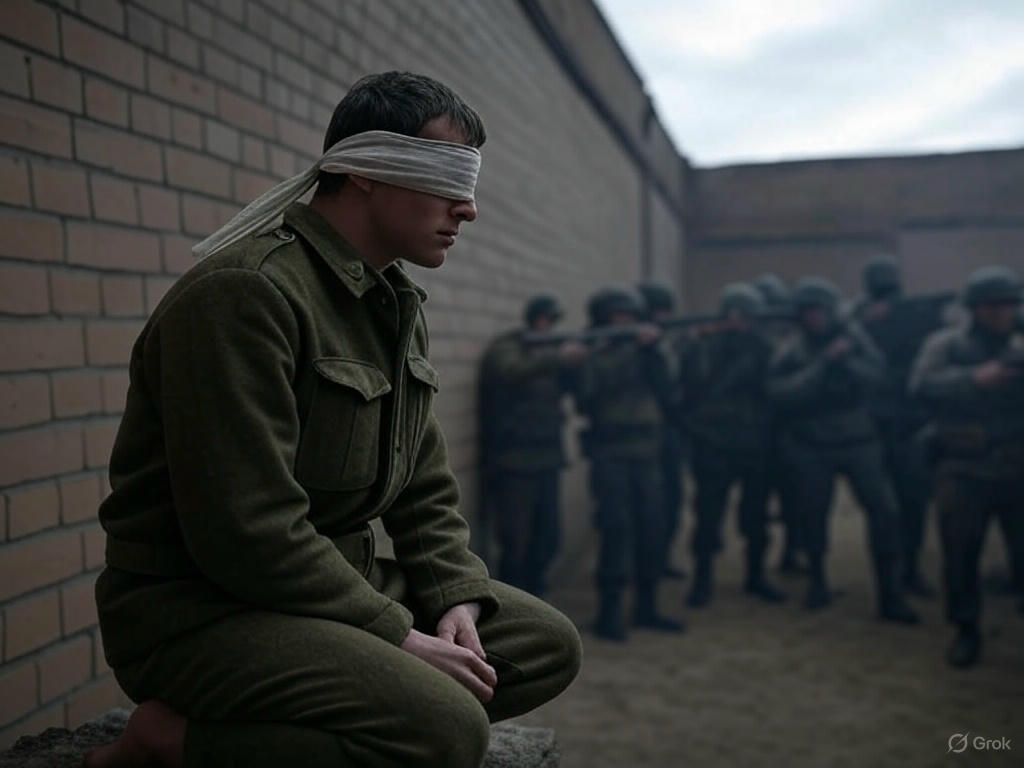
“Sommarpsalm,” also known as “En vänlig grönskas rika dräkt,” is a beloved Swedish hymn written in 1889 by Carl David af Wirsén, with music composed by Waldemar Åhlén. Originally penned as a summer psalm, it celebrates the beauty of nature and divine creation, capturing the essence of Sweden’s lush landscapes and serene summers. Its simple yet evocative lyrics have made it a cultural cornerstone, often sung at school graduations, church services, and national celebrations, symbolizing renewal and gratitude. The hymn’s enduring popularity reflects its deep resonance with Swedish identity, connecting generations through shared appreciation of the natural world.
En vänlig grönskas rika dräkt
Hav klätt de fält och ängar.
Nu smyckar solens gyllne prakt
Den värld, som Gud bebänger.
Det susar lätt i furuskog,
Det porlar svagt i källans vatten;
All jorden är en lovsångsrog
Till honom, som den skapat.
Med blomsterkrans om tufsig knut
Är lunden skönt behängd.
Var stig är lagd med mjuk sammet,
Som Herren har tillängd.
O Herre, du som jorden klätt
Med grönska, ljus och fägring,
Vår själ i tacksam glädje sätt,
Att lova dig med fröjdefägring!
A friendly verdure’s rich attire
Has clothed the meadows far and wide,
And summer’s sun with golden fire
Awakes the world in joyful pride.
The brooks in gentle murmurs sing,
The forests hum with life’s sweet spring,
And all the earth in gladness rings
With praises to the Lord on high.
The fields with blossoms soft are spread,
The trees with verdant leaves are crowned,
And every path where mortals tread
Is touched with beauty all around.
O God, who made the earth so fair,
We lift our hearts in grateful prayer,
Thy love and grace are everywhere,
Thy glory shines in summer’s day.
 A few houses down, there’s this neighbour who’s basically declared his yard a no-maintenance zone, and it’s got the whole block groaning. Every winter, we’re all out shoveling to keep the sidewalks clear, but his place? A snow-drift disaster that forces people to shuffle into the street. Come summer, his lawn’s a chaotic sprawl of overgrown grass and invasive weeds that look ready to invade the rest of the neighborhood. Like, come on—how hard is it to just run a mower over your lawn once a week-ish? It’s not like we’re begging for a botanical masterpiece, just some basic effort.
From where I’m at, I don’t have to deal with his mess directly, but you can’t miss it strolling by—it’s like a black hole sucking the charm out of the street. It’s not just about curb appeal; those weeds don’t respect property lines, creeping into other yards, and the unshoveled snow makes life harder for kids or anyone passing through. Keeping your yard decent shows you’re in it with the rest of us, not thumbing your nose at the neighborhood. A quick mow, a bit of edging, or a few minutes with a shovel isn’t a huge ask—it’s like saying, “Hey, I care about this place too.”
I don’t know what’s up with the guy—maybe he’s got bigger fish to fry—but letting your yard turn into the block’s eyesore feels like a choice. Nobody’s expecting him to sculpt topiaries or build a snow fort; just do the minimum so we’re not all dealing with the fallout. We’re all pitching in to keep the street looking like a community, not a free-for-all. A little sweat with a mower or a weed-puller goes a long way to keeping things neighborly.
An antidote :) –
Critical Social Constructivism (CSC) emerged from the broader tradition of social constructivism, which posits that knowledge and reality are products of social processes and interactions. Social constructivism has its roots in the works of sociologists like Peter Berger and Thomas Luckmann, who, in their seminal book The Social Construction of Reality (1966), argued that reality is socially constructed through shared meanings and practices. This perspective was further developed by the strong programme in the sociology of scientific knowledge, with scholars such as David Bloor (1976) asserting that even scientific facts are socially constructed and inseparable from the social contexts in which they are produced. Critical Social Constructivism builds on these foundations by incorporating elements of critical theory, particularly the emphasis on power dynamics and ideologies. Influenced by the Frankfurt School’s critique of society, CSC highlights how dominant social and political forces shape what is accepted as knowledge or reality, thereby questioning the objectivity of knowledge claims.
As an anti-realist philosophy, Critical Social Constructivism rejects the notion of an objective reality that exists independently of human perception and social agreement. By claiming that all aspects of reality—including scientific facts, moral values, and social norms—are constructed through social processes, CSC challenges the realist position that there is a mind-independent world. However, CSC is more than just an ontological stance; it offers a comprehensive worldview that encompasses epistemology, ethics, and politics. Since knowledge is viewed as a social construct, the process of knowing is inherently embedded within social contexts, power relations, and cultural frameworks. This means that truth is not discovered but negotiated, and what is accepted as knowledge reflects the prevailing social and political dynamics rather than any objective standard. Thus, CSC provides a lens through which all human understanding and interaction can be analyzed.
Given that Critical Social Constructivism denies the existence of an objective reality, there is no external arbiter to settle disputes about what is true or real. Consequently, the acceptance of particular knowledge claims becomes a matter of social negotiation and consensus-building. In this context, adherents of CSC recognize that establishing a shared understanding of reality often involves the use of political and social mechanisms to persuade or coerce individuals and groups into adopting specific constructions of knowledge. This can range from rhetorical strategies and institutional support to more overt forms of social or political force, as dominant groups seek to impose their versions of reality onto others. Because there is no reality without human perception and social agreement, the validation of knowledge claims ultimately relies on the ability to garner social acceptance, which can be influenced by power structures and cultural hegemony.

References
- Berger, P. L., & Luckmann, T. (1966). The Social Construction of Reality: A Treatise in the Sociology of Knowledge. Anchor Books.
- Bloor, D. (1976). Knowledge and Social Imagery. Routledge & Kegan Paul.
To argue that Amy Hamm was subjected to a “public struggle session” by her professional association, we can draw on Robert Jay Lifton’s framework from *Thought Reform and the Psychology of Totalism* and apply it to her situation, based on what is publicly known and inferred about her case. Amy Hamm, a Canadian nurse and columnist, faced disciplinary action from the British Columbia College of Nurses and Midwives (BCCNM) due to her gender-critical views expressed online, particularly her support for J.K. Rowling and her stance against aspects of transgender ideology. Using Lifton’s eight criteria, here’s how the case can be constructed:
1. **Milieu Control**: The BCCNM reportedly initiated an investigation into Hamm’s off-duty social media posts and writings, extending its authority into her private life. By publicizing the complaint process and framing it as a professional misconduct issue, the association controlled the narrative. Hamm’s ability to respond was likely constrained by confidentiality rules or legal pressure, creating an environment where her voice was sidelined while the association’s perspective dominated public perception.
2. **Mystical Manipulation**: The disciplinary action was cloaked in the higher purpose of “protecting the public” or upholding “professional standards,” a common justification in totalistic systems. The BCCNM’s vague allegations of “discrimination” or “harm” (terms often cited in such cases) suggest an orchestrated effort to portray Hamm’s views as inherently dangerous, lending the process an almost ritualistic weight—her punishment serving as a warning to others.
3. **Demand for Purity**: Hamm’s gender-critical stance was treated as a moral failing, incompatible with the nursing profession’s ideological purity. The association’s standards, likely aligned with progressive orthodoxy on gender, positioned her as “impure” for questioning transgender policies or biology-based definitions of sex. This binary framing—conform or be condemned—mirrors the totalistic demand for absolute allegiance.
4. **Cult of Confession**: While no public record shows Hamm being forced to confess verbatim, the disciplinary process inherently pressured her to recant or apologize. The BCCNM’s investigation, dragging on for years (initiated around 2020 and still unresolved by late 2023 per public reports), implies a coercive intent: submit to re-education or face professional ruin. Struggle sessions thrive on this dynamic—publicly breaking the individual through prolonged scrutiny until they yield.
5. **Sacred Science**: The association’s policies on inclusivity and anti-discrimination were treated as infallible truths, beyond critique. Hamm’s dissent—rooted in biological or feminist arguments—was dismissed as unprofessional rather than engaged as a legitimate viewpoint. This reflects Lifton’s notion of an unchallengeable doctrine, where the BCCNM’s interpretation of “safe care” became a sacred, unquestionable standard.
6. **Loading the Language**: Terms like “harmful conduct,” “unprofessional behavior,” or “breach of trust” were likely deployed against Hamm, as seen in similar regulatory cases. These loaded phrases, vague yet damning, stifle debate and cast her as a villain without requiring the association to prove tangible harm. In struggle sessions, such language turns the accused into a symbol of evil, rallying collective condemnation.
7. **Doctrine Over Person**: Hamm’s individual context—her reasoned arguments, her off-duty status, her intent—was subordinated to the BCCNM’s ideological framework. Her personal experience as a nurse and mother advocating for women’s rights was irrelevant; the doctrine of mandatory alignment with transgender affirmation took precedence, erasing her humanity in favor of compliance.
8. **Dispensing of Existence**: By subjecting Hamm to a prolonged, public disciplinary process, the BCCNM effectively marked her as unfit to exist within the profession unless she conformed. The threat of license revocation or public censure (amplified by media coverage and online backlash) mirrors the totalistic expulsion of dissenters. She was symbolically “dispensed with” as a legitimate member of the nursing community.
The “public” element of the struggle session is evident in how the case played out beyond closed doors. The BCCNM’s investigation wasn’t a quiet internal matter; it drew attention from activists, media, and Hamm’s supporters, turning it into a spectacle. Public statements from the college (even if minimal) and the ensuing social media firestorm—where Hamm faced vilification from trans advocates—amplified the humiliation. This aligns with Maoist struggle sessions, where the accused is paraded before a crowd, denounced, and forced to endure collective judgment. The years-long ordeal, coupled with the lack of clear resolution, suggests not just punishment but a deliberate attempt to break her resolve, a hallmark of totalistic control.
In conclusion, the BCCNM’s actions against Amy Hamm can be framed as a modern struggle session: a public, performative exercise in ideological enforcement, leveraging Lifton’s thought-reform tactics to humiliate, isolate, and coerce her into submission. The process wasn’t just about regulating conduct—it was a ideological purge, staged to deter others and uphold a totalistic vision of professional conformity.
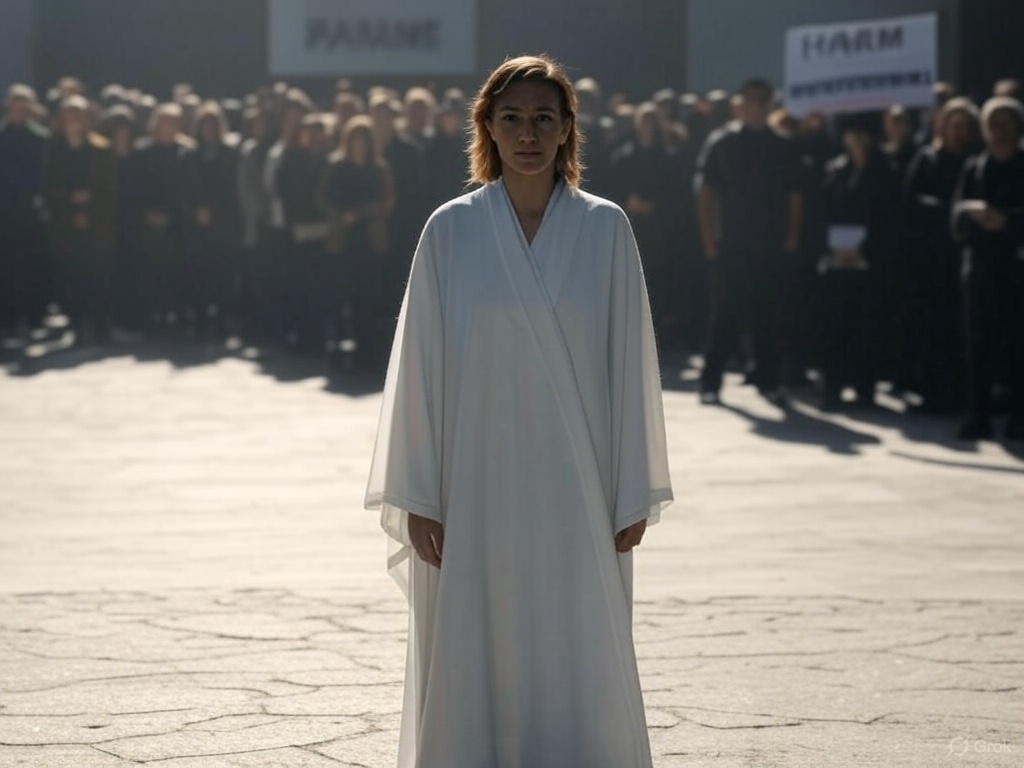
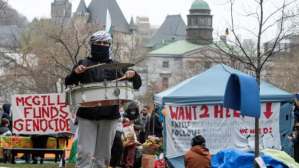 The protests at McGill University in April 2025 and the Trucker Convoy of 2022, while distinct in their scale, context, and authority, offer a compelling lens through which to examine accountability and lawbreaking in Canada. The McGill protests, driven by anti-Israel activists, involved physically blocking lecture halls and disrupting classes, as reported by B’nai Brith Canada, thereby denying students their right to education. In contrast, the Trucker Convoy, a nationwide movement against COVID-19 mandates, paralyzed critical infrastructure like the Ambassador Bridge, causing billions in economic losses and prompting the federal government to invoke the Emergencies Act. The scale of the Trucker Convoy’s impact was far greater, affecting national and international trade, while McGill’s disruptions were localized to a university campus. Additionally, the authority responding differed—McGill’s administration, a private institution, managed the campus protests, whereas the federal government, with its broader legal powers, tackled the Trucker Convoy. These differences in scope and jurisdiction naturally shaped the responses, but they also highlight a shared challenge: ensuring accountability when laws or rules are broken.
Acknowledging the protesters’ perspectives strengthens the case for consistent accountability. At McGill, the activists likely saw their actions as a moral imperative, aiming to pressure the university into divesting from companies linked to Israel’s actions in Gaza, which they framed as complicity in genocide. Similarly, the Trucker Convoy participants believed they were defending personal freedoms against government overreach, with some public support reflecting sympathy for their cause, as noted in historical polling data. Both groups may argue that their lawbreaking was justified by higher ethical goals—whether social justice or individual rights. However, this justification does not negate the harm caused: McGill students were intimidated and denied education, while the Trucker Convoy’s blockades disrupted livelihoods and public safety, with reports of harassment like defecating on lawns, as documented in news coverage from the time. The principle of free expression, a cornerstone of Canadian democracy, does not extend to actions that violate others’ rights or break laws, whether on a university campus or a national border. Recognizing the protesters’ motivations does not absolve them of responsibility; rather, it underscores the need for equitable enforcement to maintain social order and trust in institutions.
 The disparity in official responses to these events reveals a troubling inconsistency in addressing lawbreaking in Canada, fueling perceptions of a two-tier justice system. The Trucker Convoy faced severe consequences—hundreds of arrests, vehicle seizures, and frozen bank accounts under the Emergencies Act, as reported by Globalnews.ca—reflecting the government’s prioritization of economic and public safety. In contrast, McGill’s response was tepid, with the university implementing ID-based access controls only after days of disruption, and no immediate legal consequences like arrests or suspensions for the protesters, despite calls from advocacy groups for decisive action. While the federal government’s authority and the national stakes justified a stronger response to the Trucker Convoy, McGill’s leniency raises questions about institutional accountability on Canadian campuses. This inconsistency—where one group faces significant repercussions while another does not—erodes public confidence in the rule of law, suggesting that the consequences of lawbreaking may depend on the cause, context, or authority involved. Canada must strive for a balanced approach, ensuring that all acts of lawbreaking, regardless of scale or motivation, are met with fair and proportionate accountability to uphold the principles of justice and equality that define the nation.











 bleatmop
 Mystro


 Dead Wild Roses
Your opinions…