
You are currently browsing The Arbourist’s articles.
The violence at The Women Will Speak Rally in Melbourne, Australia, where trans rights activists disrupted a discussion on women’s rights, is a direct consequence of woke ideology, which has morphed from a call for social justice into a dogmatic force eroding female rights, boundaries, and safety. Originally rooted in awareness of marginalization, woke has been hijacked by activists who demand ideological conformity, often at the expense of open dialogue. At the rally, protesters, fueled by this warped woke ethos, resorted to intimidation and physical aggression to silence women raising concerns about gender policies, exposing how the movement’s fixation on equity can breed hostility toward women defending their spaces.
This woke-driven activism undermines female rights by dismissing their boundaries under the banner of inclusivity, threatening women’s safety and autonomy. The Women Will Speak Rally aimed to address critical issues like single-sex spaces and fair sports policies, but protesters, emboldened by woke narratives that brand dissent as bigotry, violently disrupted it. This reflects a wider trend where woke ideology fuels a zero-sum conflict, pitting trans rights against women’s protections. The result is a toxic environment where women face harassment or censorship for asserting their rights, while woke’s veneer of kindness obscures the damage to their safety and agency.
The link is unmistakable: woke ideology, despite its compassionate facade, mobilized the protests that harmed women at the Melbourne rally by suppressing their voices and disregarding their boundaries. Those who view woke as solely about kindness and equity overlook its destructive side—empowering extremism that justifies violence to enforce compliance. The violence at The Women Will Speak Rally was not an outlier but a symptom of woke’s failure to balance empathy with respect for women’s rights. Condemning this requires recognizing how woke activism, when unchecked, sacrifices female safety for ideological purity, betraying its own ideals.

Having beliefs in unfalsifiable ooga-booga is all well and fine, until you have to start dealing with reality.

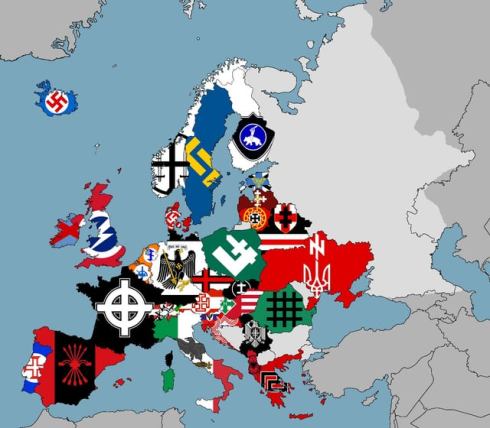
Fascism is a tough term to pin down, but history gives us a clear picture. It’s a far-right ideology that took root in the early 20th century, most famously in Mussolini’s Italy and Hitler’s Germany. At its core, fascism is about extreme control: one leader or party calls the shots, the state trumps individual rights, and nationalism gets dialed up to eleven. Think Mussolini strutting as “Il Duce” or the Nazis’ obsession with racial purity. It’s anti-democratic, often crushing free elections, free press, and anyone who dares disagree. Look at Italy’s march into Ethiopia in 1935 or Germany’s defiance of the Treaty of Versailles with its military buildup—fascism loves a crisis to justify power grabs and feeds on myths of national glory.
Spotting fascism today isn’t about slapping the label on every tough government. It’s about looking for specific signs. First, does a regime gut checks and balances, like attacking courts or silencing journalists? Hungary’s media crackdowns under Orbán raise eyebrows here. Second, is there a toxic “us vs. them” vibe, like far-right parties in Europe demonizing immigrants? Third, are critics jailed or worse, as in Putin’s Russia with its vanishing opposition? Fourth, does a leader act like a king, demanding loyalty above all, like Kim Jong-un in North Korea? Fifth, is the military or police state overblown, like China’s surveillance net? These aren’t just “bad government” traits—they’re a pattern of ideological control that echoes history’s darkest regimes.
Calling everything “fascist” is a trap too many progressives fall into, and it’s a disservice to everyone. Disagree with a tax cut or a border policy? Fine, but throwing around “fascism” like it’s a catch-all insult cheapens the word. It’s not just sloppy thinking—it muddies the water, making it harder to call out real threats. The term should evoke the Gestapo, the Blackshirts, or the death camps, not a policy you’d vote against. This habit shuts down debate, alienates people who might actually listen, and disrespects the millions who suffered under true fascist boots. We need to argue with facts and clarity, not fling around history’s heaviest labels like they’re confetti.
Anton Bruckner’s “Locus Iste” is a sacred motet for unaccompanied SATB choir, composed in 1869 for the dedication of the Votivkapelle in Linz, Austria. The Latin text, drawn from the Gradual for church dedications, translates to “This place was made by God, a priceless mystery; it is without reproof.”
The piece is concise (around 2-3 minutes) and showcases Bruckner’s signature style: rich, warm harmonies, smooth polyphonic textures, and a sense of reverent grandeur. It unfolds in a serene, flowing manner, with dynamic swells and subtle chromatic shifts that create a mystical, uplifting atmosphere. The motet’s structure is simple yet profound, reflecting the text’s theme of a sacred, inviolable space. It’s a staple in choral repertoire for its emotional depth and spiritual resonance, much like Rheinberger’s Abendlied.
Locus iste a Deo factus est, inaestimabile sacramentum, irreprehensibilis est.
This place was made by God, a priceless mystery; it is without reproof.
The DEI (Diversity, Equity, and Inclusion) requirements for the Library Technician position at BC Cancer in Vancouver appear to be more of a political purity test than a set of skills directly relevant to the job. The qualifications demand a deep understanding of systemic racism, Indigenous Peoples’ health contexts, and familiarity with specific legislative documents like the Truth & Reconciliation Commission’s Calls to Action and the Declaration on the Rights of Indigenous Peoples Act. While these are important societal issues, they are not inherently tied to the core duties of a library technician, such as organizing materials, assisting patrons, or managing databases. This focus on ideological alignment risks prioritizing political correctness over practical expertise, potentially alienating candidates who excel in the technical and operational aspects of the role but may not meet these specific ideological benchmarks.
Moreover, these requirements could deter highly qualified candidates who lack the specified DEI knowledge but possess exceptional skills in library management, customer service, or technical proficiency. For instance, a candidate with years of experience in library systems, a knack for efficient cataloging, and strong interpersonal skills might be overlooked if they haven’t engaged deeply with Indigenous-specific anti-racism education or settler-colonial history. By emphasizing these DEI criteria, the hiring process may inadvertently filter out individuals who could otherwise excel in the role, replacing merit-based selection with a test of ideological conformity. This approach undermines the goal of hiring the best candidate for the job, as it prioritizes social justice credentials over the practical abilities needed to perform the role effectively.
Ultimately, while fostering diversity and inclusion is a noble goal, the DEI requirements for this position create an unnecessary barrier to entry that may compromise the quality of the hire. The library technician role demands skills like alphanumeric filing, communication, and equipment operation, as outlined in the job description, yet the DEI expectations overshadow these core competencies. By focusing on political and cultural knowledge that is tangential to the job’s day-to-day responsibilities, BC Cancer risks missing out on candidates who could bring efficiency, innovation, and excellence to the role, thus hindering the organization’s ability to serve its patrons effectively.

https://jobs.phsa.ca/job/vancouver/library-technician-bc-cancer-vancouver/909/79784591232
The comparison of gender ideology to a Gnostic religious belief hinges on framing it as a worldview with metaphysical claims about identity, reality, and liberation. Here are five examples illustrating this perspective:
- Dualism of Body and Soul: Gnosticism often posits a split between the material body (flawed) and the spiritual soul (true self). Gender ideology can be seen as analogous when it suggests a person’s true gender identity resides in their internal sense of self, distinct from or in conflict with their physical body, which may be viewed as an obstacle to authenticity.
- Secret Knowledge of the Self: Gnosticism emphasizes esoteric knowledge (gnosis) as the path to salvation. Gender ideology sometimes frames self-discovery of one’s gender identity as a profound, personal truth that transcends societal norms or biological reality, accessible only through introspection or affirmation by others.
- Rejection of Material Reality: In Gnostic thought, the material world is illusory or corrupt. Critics argue gender ideology parallels this by prioritizing subjective feelings over objective biological markers (e.g., chromosomes, anatomy), treating physical sex as malleable or irrelevant to one’s true identity.
- Liberation Through Transformation: Gnosticism often seeks liberation from the material world through spiritual awakening. Gender ideology can be interpreted as promoting liberation from societal or biological constraints via social transition, medical interventions, or redefinition of language and norms to align with one’s identity.
- Moral Hierarchy of Believers: Gnostic communities sometimes distinguished between those enlightened by gnosis and outsiders. Gender ideology can create a similar dynamic, where those who affirm certain beliefs about gender are seen as morally superior, while dissenters are labeled as ignorant or harmful, fostering an in-group/out-group divide.
Gender ideology’s proponents might argue it’s grounded in psychological, social, or medical realities rather than metaphysical claims. Still, the Gnostic lens highlights perceived similarities in structure and worldview.
Critical Social Constructivism (CSC) underpins the ideology known as “woke,” as explained by James Lindsay on his New Discourses website. Lindsay (2025) describes CSC, or Critical Constructivism, as a framework where knowledge and reality are entirely socially constructed, devoid of any objective foundation beyond human perception and agreement. Within woke ideology, this perspective views social concepts like race, gender, and justice as products of narratives and power dynamics rather than universal truths. Woke activism uses this foundation to prioritize marginalized groups’ narratives, aiming to reshape societal truths to align with ideological goals. By rejecting objective reality, CSC enables woke activists to redefine reality based on who controls the dominant discourse.
Woke activists often avoid debate due to CSC’s logic, which Lindsay (2025) argues fosters a totalitarian power dynamic. Since CSC denies an objective reality accessible through reason or evidence, truth depends on social consensus shaped by power rather than rational dialogue. For woke activists, debating risks validating opposing views, which conflicts with their belief that truth emerges from enforcing the “correct” narrative. Instead of engaging in discussion, they employ social coercion through tactics like shaming, cancellation, or institutional pressure to silence dissent and ensure conformity. Lindsay emphasizes that this approach stems from viewing power as the ultimate determinant of accepted truth.
This reliance on coercion reflects a core CSC tenet: whoever holds power to enforce a narrative defines what is “true.” Lindsay (2025) notes that CSC’s rejection of objective reality implies truth is not discovered but created, and those controlling institutions, media, or cultural norms shape reality. In woke ideology, this translates to a relentless push to dominate discourse, equating narrative enforcement with truth establishment. By prioritizing power over reason, woke activists favor control over debate, using social force to validate their constructed realities and ensure their version of truth prevails.
Reference
- Lindsay, J. (2025). The Book of Woke: Introducing Critical Constructivism. Retrieved from https://newdiscourses.com/2025/04/the-book-of-woke-introducing-critical-constructivism











 bleatmop
 Mystro


 Dead Wild Roses
Your opinions…