
You are currently browsing the category archive for the ‘Feminism’ category.
Did you miss part 1 here?
“To make sense of these ideas [conceptions of gender] and decide what you think of them, it’s helpful to understand a bit of history—the history of feminist and sexual radical ideas. There are three main questions we think it’s worth pursuing in more detail:
- Is it true that radical feminism is/was ‘essentialist’ in its view of gender?
- What is, and what was, the relationship between the politics of gender and sexuality?
- What do radical feminism and queer or ‘genderqueer’ politics have in common, and what are the key differences, and what are their respective political goals?
Is/was radical feminism essentialist?
Let’s get one thing out of the way: there are essentialist varieties of feminism, currents of thought in which, for instance, mystical powers are ascribed to the female body or men are believed to be naturally evil, and some of the women who subscribe to these ideas might use or be given the label ‘radical feminist’. But if we consider radical feminism as a political tradition which has produced, among other things, a body of feminist texts which have come to be regarded as ‘classics’, it’s surprising (given how often the accusation of essentialism has been made) how consistently un-essentialist their view of gender has been.
As a way of illustrating the point, I’ve put together a few quotations from the writing of women who are generally considered as archetypal radical feminists—along with Simone de Beauvoir, often thought of as the founding foremother of modern ‘second wave’ feminism, which her book The Second Sex (first published in French in 1949) pre-dated by 20 years. Beauvoir was no essentialist, and though she did not use a term equivalent to gender (this still isn’t common in French), she makes many comments which depend on distinguishing the biological from the social aspects of being a woman. One of my favourites, because of its dryly sarcastic tone, is this: ‘Every female human being is not necessarily a woman; to be so considered she must share in that mysterious and threatened reality known as femininity’.
One early second wave feminist who has often been castigated for essentialism (because she suggested that the subordination of women must originally have been due to their role in reproduction and nurturance) is Shulamith Firestone, author of The Dialectic of Sex (1970). Yet in fact Firestone did not see a social hierarchy built on sex-difference as natural and inevitable. On the contrary, she states in Dialectic that
“just as the end goal of socialist revolution was not only the elimination of the economic class privilege but of the economic class distinction itself, so the end goal of feminist revolution must be… not just the elimination of male privilege but of the sex distinction itself: genital differences between human beings would no longer matter culturally.”
In the slightly later writing of the French radical materialist feminist Christine Delphy, gender is theorised as nothing but the product of hierarchical power relations; it is not a pre-existing difference on which those relations are then superimposed. Delphy’s is a view which less radical thinkers find extreme, but whatever else anyone thinks of it, it could hardly be less essentialist. As Delphy herself says:
“We do not know what the values, individual personality traits or culture of a non-hierarchical society would be like, and we have great difficulty imagining it. ….perhaps we will only be able to think about gender on the day when we can imagine non-gender.”
All the writers I have just quoted are women who ‘can (and do) imagine non-gender’. This willingness to think seriously about what for most people, including many feminists, is the unthinkable—that a truly feminist world would not just operate without gender inequalities but actually without gender distinctions—is, we would argue, one of the hallmarks of radical feminism, one of the ways it stands out as ‘radical’.
Another thing that makes radical feminism stand out is the way it connects gender to sexuality and both to power. Catharine MacKinnon’s writings make the connection particularly strongly, as in the following passage taken from Feminism Unmodified (1987):
“The feminist theory of power is that sexuality is gendered as gender is sexualised. In other words, feminism is a theory of how the eroticization of dominance and submission creates gender, creates women and man in the social form in which we know them. Thus the sex difference and dominance-submission dynamic define each other. The erotic is what defines sex as inequality, hence as meaningful difference. This is, in my view, the social meaning of sexuality, and the distinctly feminist account of gender inequality.”
This shows that some well-known radical feminists have taken a non-essentialist view of sexuality as well as gender. Indeed, one of the most radically un- or anti-essentialist accounts of sexuality we can think of—as radical as any queer theorist’s work in rejecting the idea of fixed and finite sexual identities—comes from the radical feminist Susanne Kappeler in her book The Pornography of Representation (1986):
“In a political perspective, sexuality, like language, might fall into the category of intersubjective relations: exchange and communication. Sexual relations – the dialogue between two subjects – would determine, articulate, a sexuality of the subjects as speech interaction generates communicative roles in the interlocutors. Sexuality would thus not so much be a question of identity, of a fixed role in the absence of a praxis, but a possibility with the potential of diversity and interchangeability, and a possibility crucially depending on and codetermined by an interlocutor, another subject.”
Later on we will explain why we think these radical feminist ideas about gender, sexuality, identity and power actually pose a far more radical challenge to the status quo than the ideas of queer politics.
Joan Scanlon: As Debbie said earlier, I was completely bewildered when the two young women in Edinburgh asked why The Trouble & Strife Reader (2009) didn’t have more in it about gender. I rang Su Kappeler (see the quotation from her above) and she said: “The thing is Joan: it’s like what Roland Barthes wrote somewhere, that if you have a guide book to Italy you won’t find Italy in the index – you’ll find Milan, Naples or the Vatican…” So I thought about this, and realised that while this was certainly true, there was something else going on: it was as if the map of Italy had disappeared (quite useful as a way of connecting Milan, Naples and the Vatican), and instead, the geographical, political and economic reality of Italy had been replaced by a virtual space in which Italy could be a masked ball, a tricolour flag, an ice-cream parlour – or any combination of free floating signifiers. And so, returning to the concept of gender, I realised that we need reconstruct that map, and that we needed to look at the question historically to make sense of this shift in meaning.
Of course maps change, as political boundaries change – but you won’t get far without one. We need therefore to look at why feminists adopted the term gender to describe a material reality – the systematic enforcement of male power – and as a tool for political change. I am going to start with a few definitions, then talk briefly about the history of sexuality, the relationship between gender and sexuality, and how the relationship between those two constructions has changed since the beginning of the last century. I am also going to look briefly at what feminism has in common with queer politics, and at where the key differences lie.
Definitions: feminism, gender, sexuality
When I was writing something with Liz Kelly in the late 1980s, we decided that with the proliferation of ‘feminisms’ we needed to assert that the term feminism was meaningless if it just meant whatever any individual wanted it to mean. In other words: You can’t have a plural without a singular – so we defined feminism simply as “a recognition that women are oppressed, and a commitment to changing that”. Beyond this, you can have any number of differences of opinion about why women are oppressed and any number of differences about strategies for changing that.
In our 1993 tenth anniversary issue of T&S we then asked several women to define radical feminism and the definitions all have this in common: they take as central that gender is a system of oppression, and that men and women are two socially constructed groups which exist precisely because of the unequal power relationship between them. Also, they all assert that radical feminism is radical because it challenges all relationships of power, including extreme forms such as male violence and the sex industry (which has always been extremely controversial within the women’s movement and an extremely unpopular issue to campaign against). Instead of tinkering around the edges of the question of gender, radical feminism addresses the structural problem which underlies it.
To define gender, therefore, seems a necessary step in understanding the proliferation of meanings which have come about in its now plural usage. Gender, as radical feminists have always understood it, is a term which describes the systematic oppression of women, as a subordinate group, for the advantage of the dominant group, men. This is not an abstract concept – it describes the material circumstances of oppression, including institutionalised male power and power within personal relationships – for example, the unequal division of labour, the criminal justice system, motherhood, the family, sexual violence… and so on. I should say here that very few feminists would argue that gender is not socially constructed; I think radical feminism is only accused of biological essentialism because it has been so central in the campaign against male violence, and for some reason we are therefore accused of thinking that all men are innately violent – which I have never understood. If you are involved in a politics of change, it would be fairly pointless to think that anything you were seeking to change was innate or immutable.
If gender is seen, under patriarchy, as emanating from biological sex – sexuality is essentialised if anything even more – as it is seen to emanate from our very nature, from desires and feelings which are quite outside of our control, even if our sexual behaviour can be regulated by moral and social codes. And so to conclude with definitions, I will borrow Catherine MacKinnon’s definition of sexuality as ‘a social process which creates, organises, directs, and expresses desire’. Apart from pointing out that this clearly indicates that radical feminists understand sexuality to be socially constructed, I won’t unpick this further here, as I hope it will become clear from what I go on to say.”
(Trouble and Strife direct link)
John Stuart Mill wrote an essay in 1861 (published 1869) called the Subjection of Women. From this brief quote we can see the evidence that even in the 19th century there were people who understood how socialization effects people and how they behave. I’m constantly amazed that here and now in the 21st century I run across people who don’t get basic shit like this. It isn’t rocket science and doesn’t take a keen sociological mind to identify the concepts and start to make the relations and come to the conclusions that Mill was making 150 years ago.
“When we put together three things – first, the natural attraction between the opposite sexes; secondly, the wife’s entire dependence on the husband, every
privilege or pleasure she has being either his gift, or depending entirely on his will; and lastly, that the principal object of human pursuit, consideration, and all objects of social ambition, can in general be sought or obtained by her only through him, it would be a miracle if the object of being attractive to men had not become the polar star of feminine education and formation of character. And, this great means of influence over the minds of women having been acquired, an instinct of selfishness made men avail themselves of it to the utmost as a means of holding women in subjection, by representing to them meekness, submissiveness, and resignation of all individual will into the hands of a man, as an essential part of sexual attractiveness.
Can it be doubted that any of the other yokes which mankind have succeeded in breaking, would have subsisted till now if the same means had existed, and had been so sedulously used, to bow their minds to it?”
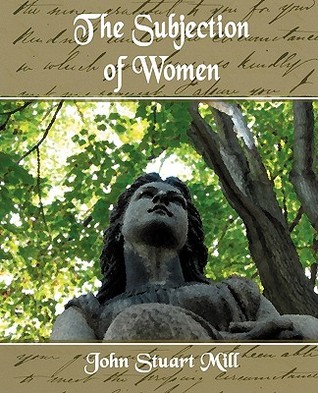
The tl;dr of what is being said – women are raised in a society that glorifies the toxic notion of femininity and the constellation of man pleasing behaviours that femininity entails (patriarchy anyone?). Surprisingly enough(?), this state of affairs is bad for women.
The Female Version:


And then there is male date preparation:

Wearing pants? Don’t smell? Check! Good to go!
Men worry that their date won’t measure up to their aesthetic preferences. Women worry that they’re going wind up dead.
The disparity is RIDICULOUS, and the fact that dudes get offended when women try to protect themselves is hard proof that way too many guys Do Not Understand how dangerous it is to be a woman. (Not to mention it’s fucking insulting. “How dare you not trust your life and safety to a complete stranger whose intentions you have no way of knowing”?)
The point is, “WE HAVE NO WAY OF KNOWING A NICE GUY FROM A SERIAL KILLER.”
It’s not like they fucking wear nametags, okay? Moreover, the most awful people with the worst intentions often put on the nicest face or deliberately make themselves seem harmless and likeable, to lull potential victims into a false sense of security. (Read up on Ted Bundy sometime. It’s horrifying shit. Or read any thread on the “Let’s Not Meet” subreddit.)
In order to protect ourselves, we are forced to assume the worst of every man we meet, because statistically speaking, the biggest danger to women…IS MEN. Saying “not all men are out to get you, you’re just being paranoid” is like saying “not every car you ride in is going to crash, so buckling your seatbealt is stupid.”
When dealing with an unknown situation, in the absence of absolute proof of safety, exercising a little extra caution can be the difference between life and death. Shaming women for being what you may view as overly cautious is every bit as horrid as blaming them if something goes wrong later on.
[Source]
Canadian society, especially the justice system, just isn’t ready to hear women when they speak the truth…
This is an amazing post detailing all the conditioning, socialization, and patriarchal f*ckery that women have to fight through, just to be heard.

There’s a question people keep asking about the Ghomeshi trial, and I was up most of last night trying to think of how to answer it. I finally shut my brain off by picturing, in as much detail as possible, a solid wall of packed dirt in the dark above me. I spent the rest of the night mentally attacking my invisible wall. When I finally went to sleep it was what I dreamed about.
Between pretend punches, the words crept in.
Why
punch
did
punch
they
punch
lie?
If they were telling the truth about the assaults, why did they lie about other things? Why didn’t they just tell the truth?
“Manipulative”
punch
“Deceptive”
punch
Why?
I’d like to try to answer that question for you because I’m in an oddly perfect position to do so.
As the verdict of the Ghomeshi case came out, I…
View original post 1,127 more words
This excerpt from an article in the New Statesman:
“It’s a shame then that my enjoyment of International Women’s Day each 8th March is consistently spoiled by the United Nations’ attempt to put men at the heart of feminism with their #HeForShe campaign.
Let me say this very clearly. Men-centric feminism is garbage. Feminism is not about men. We should not be putting men at the centre of a day for women.
I personally am very happy for men to describe themselves as feminists, but they should be the loyal, kit-wearing supporters in the stands, and women, the first XI. #HeForShe is a pitch invasion, where men nick the ball and start booting it around to show how much they want the match to go ahead as planned.
International Women’s Day is about women. It is about the issues and oppressions that affect women globally. Hearing the statistics and stories should be enough for men to support women without it being specifically branded for them. If a man can hear that 85,000 women are raped in the UK each year and only care when this fact is labelled FOR MEN like a horrifying statistical Yorkie, he probably isn’t that much use to the feminist cause in the first place.
Feminism is constantly expected to make itself pretty and palatable. We’ve created the straw feminist, all smouldering tits and desiccated ovaries, sticking pins into voodoo dolls’ little embroidered balls, just so we can say, “I’m a feminist, but I’m not one of those feminists. I love men!” Loving men and being a feminist are not mutually exclusive but nor is “loving men” in any way a mandatory part of feminism. We should not pander to make men who, whether they support it or not, are part of a system that benefits them.”
-Rosie Fletcher
Ms. Fletcher isn’t going to win many male friends for this article, but rightly so, feminism isn’t about the men. :)
Nothing like being bored with Feminism…
Wow. Meghan Murphy simply and clearly posits what Feminism is about. Check out her blog here.
“There are various ways the divide between “feminisms” is articulated: liberal vs radical, third wave vs second wave, sex-positive vs sex-negative, but none of those have ever seemed wholly accurate to me. (In particular, challenging male-centred or coercive sex does not make one, “sex-negative,” so…) A feminist is someone who supports and/or is active in the fight to end patriarchy. The feminist movement is a political movement that fights towards women’s collective liberation and towards an end to male violence against women. That is to say, if you don’t support those goals, what you are doing is not feminism, no matter how many times you claim otherwise.
We cannot have both objectification and liberation, because being a sexualised object does not allow one to be a full human. We cannot both celebrate sexualised violence and have freedom from sexualised violence because sexualising violence, er… sexualises violence. We cannot normalise male entitlement by saying “men need access to sex and therefore we, as a society, must maintain a class of women who are available to satisfy men’s desires” and also expect to build a society wherein men don’t feel entitled to sexual access to women. We cannot say “women are more than pretty things to look at” but also tell young women that desirability will empower them. We cannot frame “choice” as political while simultaneously depoliticising and decontextualising the choices women make, in a capitalist patriarchy. We cannot confront rape culture while normalising the very ideas that found it: male entitlement, sexualised violence, and gender roles that are rooted in domination and subordination (i.e. masculinity and femininity).
While, the arguments I’m articulating here do, effectively, constitute “radical feminism,” in that it is a kind of feminism that “gets at the root,” I am defining something even more straightforward than that: Feminism – a real and definable thing that holds meaning!
[…]
“Join us or don’t – that really is your choice. But redefining a political movement that aims to protect real women’s lives and humanity in order to make the world more comfortable is not.”

Boom.











 bleatmop
 Mystro
 The Arbourist


 Dead Wild Roses
Your opinions…