
You are currently browsing the category archive for the ‘Feminism’ category.
Just a great article through and through. Go read it all here.
“I sort of kicked the hornets’ nest the other day, by expressing feminist opinions about books. It all came down to Lolita. “Some of my favorite novels are disparaged in a fairly shallow way. To read Lolita and ‘identify’ with one of the characters is to entirely misunderstand Nabokov,” one commenter informed me, which made me wonder if there’s a book called Reading Lolita in Patriarchy. The popular argument that novels are good because they inculcate empathy assumes that we identify with characters, and no one gets told they’re wrong for identifying with Gilgamesh or even Elizabeth Bennett. It’s just when you identify with Lolita you’re clarifying that this is a book about a white man serially raping a child over a period of years. Should you read Lolita and strenuously avoid noticing that this is the plot and these are the characters? Should the narrative have no relationship to your own experience? This man thinks so, which is probably his way of saying that I made him uncomfortable.
All I had actually said was that, just as I had identified with a character who’s dismissively treated in On the Road, so I’d identified with Lolita. I read many Nabokov novels back in the day, but a novel centered around the serial rape of a kidnapped child, back when I was near that child’s age was a little reminder how hostile the world, or rather the men in it, could be. Which is not a pleasure.
The omnipresence of men raping female children as a literary subject, from Tess of the d’Urbervilles to Less Than Zero, along with real-life accounts like that of Jaycee Dugard (kidnapped at 11 in 1991 and used as a sex slave for 18 years by a Bay Area man), can have the cumulative effect of reminding women that we spend a lot of our lives quietly, strategically trying not to get raped, which takes a huge toll on our lives and affects our sense of self. Sometimes art reminds us of life.”
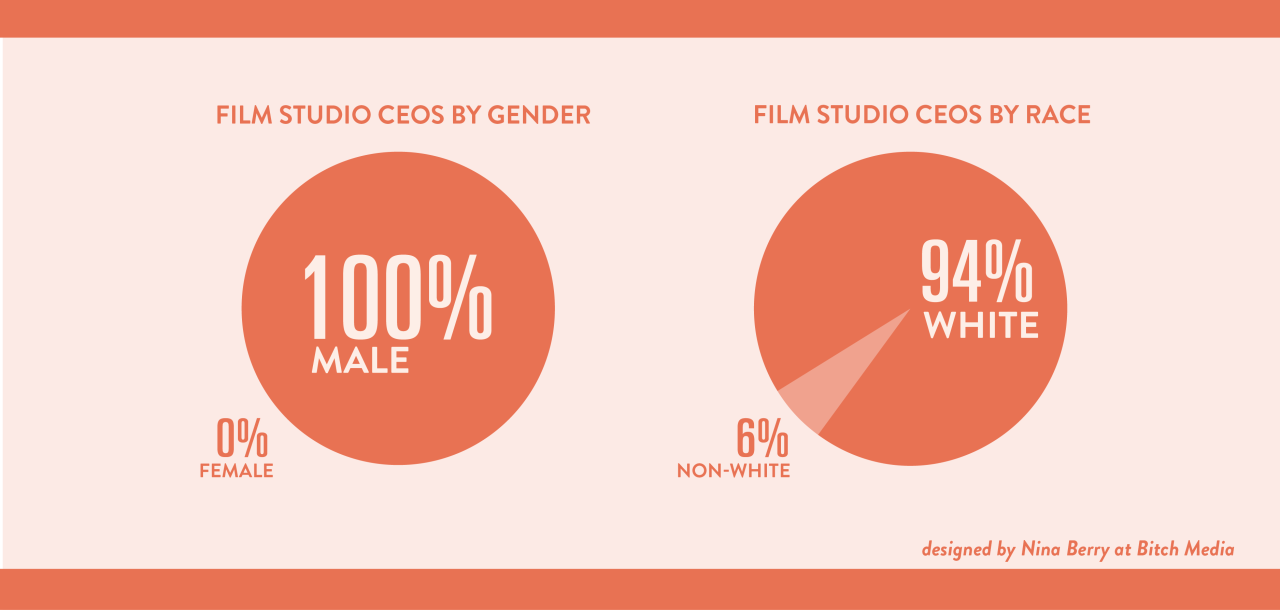


Completely shocking I know…
Oh hey, if you have not zipped over and read the whole article on the New York Times, you should. The attitudes expressed and the hurdles women face are replicated in almost every occupation and fascinatingly enough the dudes in charge seem pretty “OK” with the situation.
“There had long been a strange sort of omertà on talking about the gender disparity. Even though women watched things getting worse, said Helen Hunt, the actress and director, it was hard to speak up: ‘‘Women who say it’s not O.K. are wet blankets or sore losers.’’ When I began reporting this article several months ago and asked some male moguls in the entertainment industry for their perspectives, they shrugged the issue off as ‘‘bogus’’ or ‘‘a tempest in a teapot.’’
‘‘Not that many women have succeeded in the movie business,’’ one top entertainment boss told me, while insisting on anonymity. ‘‘A lot of ’em haven’t tried hard enough. We’re tough about it. It’s a hundred-year-old business, founded by a bunch of old Jewish European men who did not hire anybody of color, no women agents or executives. We’re still slow at anything but white guys.’’
When I phoned another powerful Hollywood player to ask about the issue, he said dismissively, ‘‘Call some chicks.’’
Yep. Go call some chicks… Indeed.

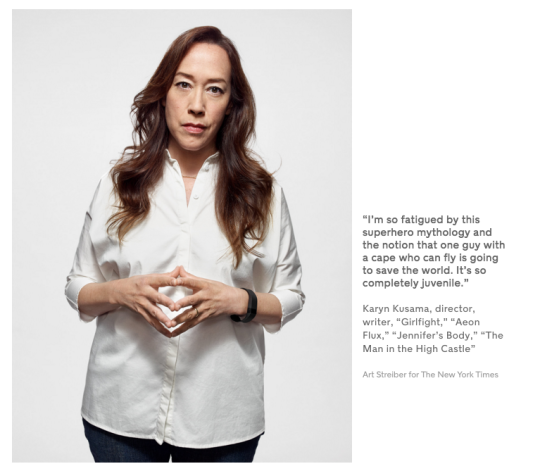
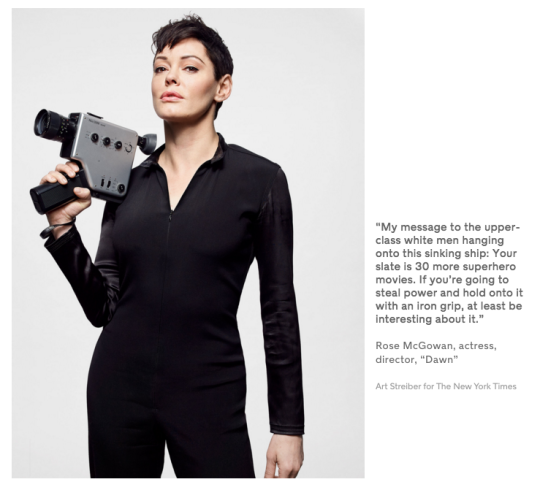
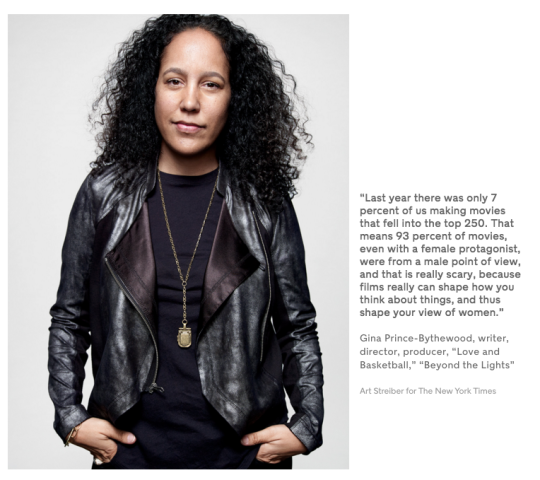
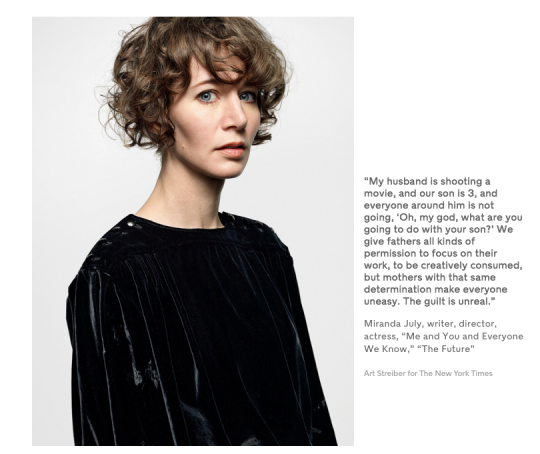

Need more lobe blowing fun(?):shitpeoplesaytowomendirectors
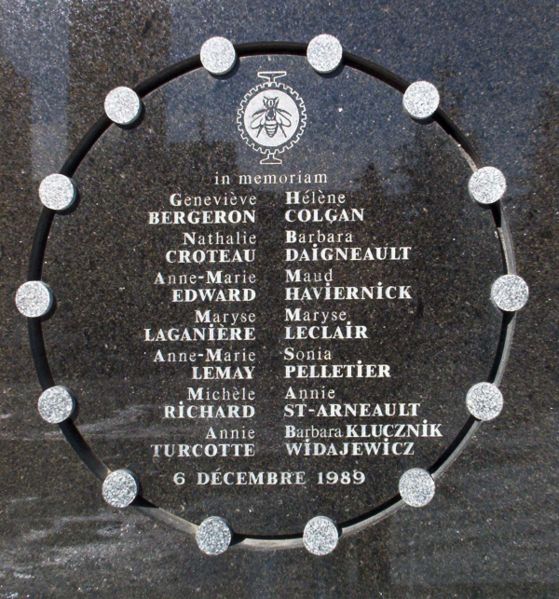 I’m probably already reprinting to much, but frack it. This shit is too important not to repeat. Go to the Ottawa Citizen’s webpage and read the entire article by Shelly Page.
“I was 24, sent by the Toronto Star to write about the slaughter of female engineering students, all around my age; fourteen of them.
Looking back, I fear I sanitized the event of its feminist anger and then infantilized and diminished the victims, turning them from elite engineering students who’d fought for a place among men into teddy-bear loving daughters, sisters and girlfriends.
Twenty-five years later, as I re-evaluate my stories and with the benefit of analysis of the coverage that massacre spawned, I see how journalists— male and female producers, news directors, reporters, anchors — subtly changed the meaning of the tragedy to one that the public would get behind, silencing so-called “angry feminists.” We were “social gatekeeping,” as filmmaker Maureen Bradley later asserted in her 1995 film, Reframing the Montreal Massacre: A media interrogation.”
[…]
“That evening, I thawed my feet in my hotel and watched the late Barbara Frum, one of Canada’s most respected journalists, refuse to admit that the massacre was indeed an act of violence toward women.
“Why do we diminish it by suggesting that it was an act against just one group?” Frum asked on CBC’s The Journal.
Frum was puzzled that so many women insisted the massacre was a result of a society that tolerates violence against women.
“Look at the outrage in our society,” Frum said. “Where is the permission to do this to women?
“If it was 14 men would we be having vigils? Isn’t violence the monstrosity here?”
She refused to even utter the word feminist. But then, her neutralizing of feminist anger must have resonated, and perhaps was reflexive. Bradley, in her documentary, wondered about Frum’s stance: “Was it necessary to deny any shred of feminism in herself in order to get where she was in this bureaucratic, media institution, boys’ club?”
Bradley also pointed out that the national media did not cover an emotional vigil the day after the massacre, where there was an angry confrontation between Montreal feminists and male students from the Université de Montréal. It would have made great content. Intelligent women voicing their outrage. But the story didn’t make it out of campus newspapers and local TV coverage onto a national stage. This story was not allowed to resonate with angry women.
When I review the stories I wrote, I almost never used the word feminist; I never profiled the achievements of one of the slain engineering students or the obstacles she’d toppled. I never interviewed a single woman who was angry, only those who were merely sad. Why? No one told me what not to write, but I just knew, in the way I knew not to seem strident in a workplace where I’d already learned how to laugh at sexist jokes and to wait until a certain boss had gone for the day before ripping down Penthouse centrefolds taped on the wall near his desk.
My stories were restrained, diligent and cautious. For years, I remembered one of my sentences with particular pride. Reading it now, it shows everything that was wrong with how I covered the event:
They stood crying before the coffins of strangers, offering roses and tiger lilies to young women they never knew.
I turned the dead engineering students into sleeping beauties who received flowers from potential suitors.
I should have referred to the buildings they wouldn’t design, the machines they wouldn’t create and the products never imagined.
They weren’t killed for being daughters or girlfriends, but because they were capable women in a male-dominated field.
I should have written that then.”
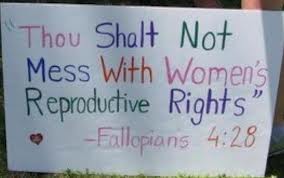 One of the main axis of female oppression is reproduction. Glosswitch expounds on this theme, I recommend viewing the entire post here.
“The trouble with reproductive choice isn’t that most of us are in mourning over embryos gone to waste. It’s that, if you really believe in it, you have to give people with uteruses the final say in who gets to be born, 100% of the time. That’s quite a big deal; men know it’s a big deal. After all, it means admitting that some people with uteruses can do something that no one with a penis ever can. Patriarchy, in seeking to establish paternity as the central social relationship, cannot allow for this. Instead we are meant to think that babies develop not with the help of the flesh and blood of the person who gestates them, but solely from men’s seed or, in our more progressive age, partly of his seed, partly of hers. As Barbara Katz Rothman points out, in such a system “children […] might as well have grown in the backyard.” So why not treat women as mere potting soil?”











 bleatmop
 Mystro


 Dead Wild Roses
Your opinions…