
You are currently browsing the category archive for the ‘Queer Bullshit’ category.
“Trans kids didn’t exist until we created them” is blunt phrasing, but the mechanism underneath it is real: kids don’t merely reveal identities; they adopt the identity-models a culture supplies and rewards. Adolescence is a meaning-factory. Pain looks for an explanation. Alienation looks for a tribe. If adults and institutions elevate one interpretive story for distress and then attach moral prestige, protection-from-questioning, and instant community to that story we should expect more kids to step into it. Not because every child is “lying,” but because this is how social scripts spread: they simplify suffering, convert it into status, and offer belonging on demand.
Proponents will tell a cleaner story. They claim “trans kids have always existed” and we’re simply seeing higher visibility in a less stigmatizing age. They claim affirmation is harm reduction. They claim the clinical pathway is cautious, selective, and evidence-informed. And they claim the “social contagion” frame is just a pretext to dismiss real dysphoria. That’s the best version of their public narrative: visibility + safety + compassion + careful medicine. The problem is that this narrative asks society to treat disputed assumptions as settled truth and then to treat moral confidence as a substitute for evidence – precisely in the domain where evidence must be strongest: irreversible interventions for minors.
That’s where the ideology runs aground. The evidence base for pediatric medical transition—especially puberty suppression—has repeatedly been assessed as weak and low-certainty. The York-led systematic review published in Archives of Disease in Childhood concluded there is a lack of high-quality research on puberty suppression in adolescents with gender dysphoria/incongruence, and that no firm conclusions can be drawn about impacts on dysphoria or mental/psychosocial outcomes. A 2025 systematic review in the same journal similarly characterized the best available evidence on puberty blockers’ effects as mostly very low certainty. This isn’t a minor academic quibble. It’s the difference between “we have strong reasons to believe this helps, on balance” and “we cannot be confident what this does to developing bodies and minds.” When the confidence level is that low, the ethical default is not acceleration; it’s restraint.
And restraint is exactly what some public health systems have moved toward—because the claims didn’t cash out in robust evidence. In the UK, the NHS stopped routine prescribing of puberty blockers for under-18s and restricted them to research context, and the government moved to make restrictions indefinite after expert advice citing insufficient evidence of safety. NHS England’s Cass implementation materials also frame puberty blockers as part of a research program with long-term follow-up, alongside evaluation of psychosocial interventions. That is not what “settled science” looks like. That is what a field looks like when it is finally admitting—late—that it has been making high-stakes moves on thin ice.
Now zoom out from the clinic to the culture, because this is the part people keep refusing to say out loud: the social environment is not neutral. Once schools, media, and professional bodies moralize one framework (“affirmation is care”) and stigmatize alternatives (“questioning is harm”), you get a one-way ratchet. A child declares an identity; the adults are trained that the declaration must be treated as authoritative; “exploration” becomes suspect if it doesn’t begin with affirmation; and any friction is rebranded as abuse. That moral framing isn’t compassion—it’s epistemic closure. And epistemic closure is exactly how you end up routing heterogeneous adolescent distress into a single explanatory funnel.
Because the presenting population isn’t one thing. It’s a mix: anxiety, depression, trauma, obsessive traits, social contagion dynamics, autism-spectrum features, sexual discomfort, body dysmorphia, internalized homophobia, loneliness, and the general misery of puberty in a screen-soaked status economy. Give that mix one glamorous story with institutional backing, and you will pull more children into it. You will also make it harder for them to exit, because the identity becomes socially defended and medically reinforced. Once irreversible steps begin, doubt becomes expensive. Regret becomes unspeakable. The “care model” becomes self-protecting: the deeper you go, the harder it is to admit the initial certainty was misplaced.
This is why I don’t treat “gender-affirming care” as a neutral phrase. It’s marketing language for a clinical posture that—too often—front-loads conclusion and back-loads caution. Real care for minors under uncertainty looks boring: slow assessment, serious differential diagnosis, treatment of comorbidities, family stability, and time. Real care doesn’t require anyone to be cruel. It requires adults to resist the temptation to turn a child’s distress into an adult moral performance. It requires institutions to stop rewarding certainty and punishing skepticism. It requires the basic humility to say: “We might not know what’s going on yet, and that means we don’t get to make irreversible bets with children.”
If we don’t change course, the end state is predictable. More kids will be swept into an identity pipeline that confers instant meaning but demands escalating commitment. More parents will be coerced by policy and stigma rather than persuaded by evidence. More clinicians will practice defensively in a moralized climate. And the backlash won’t stay polite or surgical; it will arrive as a blunt instrument, because careful critics were dismissed as hateful for too long. That’s the social damage: not merely the trend itself, but the institutional refusal to admit uncertainty until the human costs become impossible to ignore.

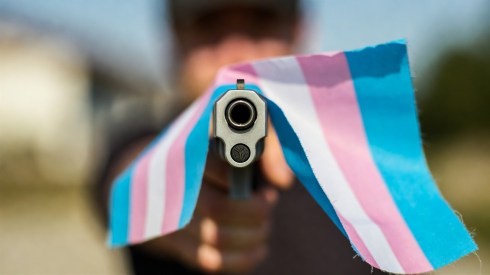
In the remote British Columbia town of Tumbler Ridge, a horrific school shooting unfolded on February 10, 2026, claiming eight lives, including five children aged 12 to 13 and a female educator, while injuring more than two dozen others. One 12-year-old girl remains in critical condition with severe brain trauma from a gunshot wound to the head. The perpetrator, 18-year-old Jesse Van Rootselaar, a biological male who had been transitioning and identifying as female since approximately age 12, first killed their 39-year-old mother and 11-year-old stepbrother at home before opening fire at Tumbler Ridge Secondary School. Van Rootselaar then died by suicide. Authorities noted a history of mental health crises, multiple police interventions at the family home, school dropout several years prior, and access to household firearms despite an expired license.
Canadian legacy media outlets, including CTV, quickly pivoted to familiar territory: gun control. Coverage highlighted past mass shootings as drivers for stricter firearm laws, the suspect’s lapsed license, and questions about why previously seized household weapons were returned. This framing reduced the tragedy to a debate over firearms access rather than examining the full context of the shooter’s background and actions. By prioritizing this narrative, major outlets failed to provide the public with a complete picture, focusing on policy talking points instead of the human and societal elements at play.
The cultural and personal factors warrant far greater scrutiny. Van Rootselaar’s transition began in early adolescence, a developmental stage coinciding with documented mental health challenges and police contacts. Broader societal patterns include rising youth mental health crises potentially linked to identity-based ideologies, social influences on gender dysphoria, family disruptions, and widespread use of psychiatric medications. When media outlets gloss over or sideline these dimensions in favor of gun-centric stories, they shield uncomfortable truths about how modern cultural pressures such as rapid affirmation of gender confusion in minors may contribute to instability in vulnerable young people.
This selective reporting directly endangers the public. By obsessing over gun restrictions while minimizing mental health epidemics, the effects of early gender transitions amid distress, and the role of identity politics, media and policymakers divert attention from actionable prevention. Communities, families, and educators lack candid discussion of warning signs or reforms needed to address root causes. The outcome is repeated tragedies, as resources target symptoms among law-abiding citizens rather than the underlying cultural and psychological drivers producing alienated or radicalized youth.It is time to demand truthful journalism that confronts reality head-on. The Tumbler Ridge victims deserve more than politicized narratives that dishonor their memory by avoiding difficult conversations about mental illness, unchecked gender ideology, and societal conditions fostering despair. Facing these issues honestly through better mental health support, cautious approaches to youth transitions, and cultural course correction offers the best hope of preventing future horrors.
Legacy media’s reluctance to engage fully undermines public safety and erodes trust when clarity is most needed.
References
- CNN: Canada mass shooting at a school and home (February 11-12, 2026) – https://www.cnn.com/world/live-news/tumbler-ridge-canada-shooting-02-11-26
- USA Today: Who is Jesse Van Rootselaar, teen who killed 8 in Canada – https://www.usatoday.com/story/news/nation/2026/02/11/jesse-van-rootselaar-tumbler-ridge-canada-shooter/88631889007/
- CTV News: Mass shootings in Canada have helped prompt changes to firearm laws – https://www.ctvnews.ca/politics/article/mass-shootings-in-canada-have-helped-prompt-changes-to-firearm-laws-over-the-decades/
- BBC News: Police name suspect in Canada school shooting as 18-year-old Jesse Van Rootselaar – https://www.bbc.com/news/live/cr5lnzqdr5pt
- Al Jazeera: Canada police identify shooting suspect as 18-year-old Jesse Van Rootselaar – https://www.aljazeera.com/news/2026/2/12/canada-police-identify-shooting-suspect-as-18-year-old-jesse-van-rootselaar
- Additional reporting from The New York Times, CBC News, and official RCMP statements via multiple outlets.
At the core of much of the tension surrounding transgender issues lies a profound and inescapable cognitive dissonance.
P
Biological reality is clear and immutable.
P
Human sex is binary—male or female—and determined at conception. No medical intervention, no amount of social affirmation, and no subjective feeling can change this fundamental fact. You will always and forever remain the sex you were born.
P
Transgender ideology asserts the opposite. It claims that whatever sex you feel you are, you become in reality. Your internal sense of self overrides chromosomes, reproductive anatomy, and every observable marker of biological sex. This ideology is inherently anti-reality.
P
Those who fully internalize it place themselves in a state of permanent conflict—not just with their own bodies, but with the entire external world. Reality itself becomes the enemy, repeatedly negating their subjective self-perception.
P
Queer Theory provides the escape hatch. Rather than confronting the mismatch between feelings and facts, adherents are guided to externalize the source of their distress. Through an oppressor/oppressed lens, the cause of their pain is never their own faulty perception of self—absolutely not. Instead, it is “normative” society that is actively oppressing them, enforcing rigid gender norms and inflicting all their suffering. This framework transforms personal dissonance into righteous grievance. The distress is no longer internal; it is the fault of everyone else.
P
Medical interventions amplify the problem. So-called “gender-affirming care”—puberty blockers followed by cross-sex hormones—adds fuel to the fire. These treatments carry serious, well-documented deleterious effects on both mental and physical health. Far from resolving underlying issues, they often deepen psychological instability while creating permanent physical changes.
P
The result is a perfect storm: individuals who were already vulnerable, now further destabilized, carrying a massive chip on their shoulders. They view the rest of society—the “normative” majority—as the active source of their pain. To defend their constructed identity and quiet the cognitive dissonance, they feel compelled to strike back against this perceived evil force: you and me.In this worldview, disagreement equals enmity.
P
If you refuse to affirm their ideology, you are not offering a different opinion—you are the oppressor who must be confronted, silenced, or defeated.
P
Dissent is violence.
P
Reality itself is violence.
P
This dynamic helps explain patterns of hostility, aggression, and, in extreme cases, violence that emerge from certain segments of transgender activism. It does not stem primarily from societal rejection, but from a foundational rejection of biological reality and the refusal to address internal distress with honesty.
True compassion does not mean enabling delusion.
P
It means grounding support in reality—the only place where genuine mental health and social peace can be found.
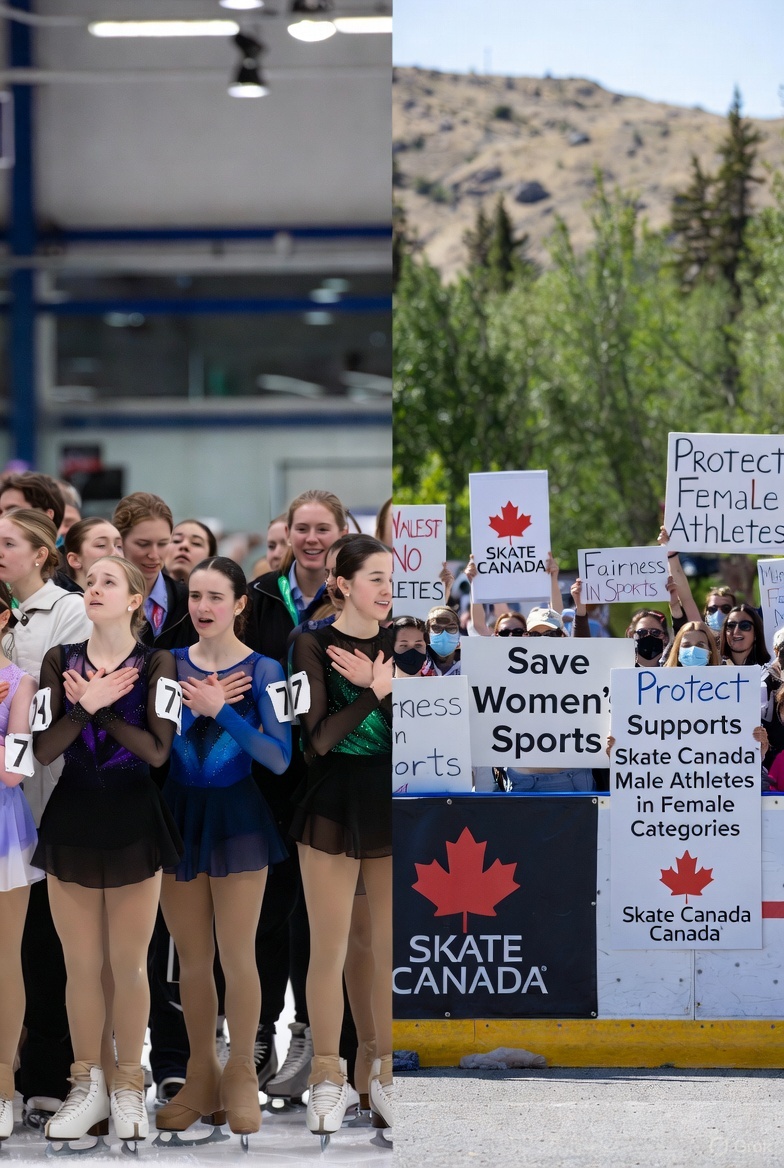
Skate Canada’s decision to boycott national and international events in Alberta is a masterclass in self-sabotage. By refusing to host competitions in the province over the Fairness and Safety in Sport Act—which restricts female categories to biological females—Skate Canada has effectively admitted that its commitment to “inclusion” means prioritizing the feelings of transgender-identifying males over the safety, fairness, and privacy of girls and women in sport. This isn’t progressive; it’s predatory, as it signals that the organization is willing to endanger female athletes rather than enforce categories based on biological reality.
The irony is staggering: Skate Canada claims to uphold “safe and inclusive sport,” yet by punishing an entire province, it excludes thousands of Alberta skaters from convenient high-level opportunities while virtue-signaling about inclusion. Alberta’s law, in effect since September 2025, protects female competitors from inherent physical advantages retained by biological males, a concern backed by basic physiology and echoed in growing international restrictions. Instead of adapting or advocating for open/mixed categories, Skate Canada chooses exclusion in the name of inclusion—revealing a captured institution more concerned with ideological purity than the integrity of women’s figure skating.
This move should serve as a wake-up call. Taxpayer-funded organizations like Skate Canada that actively harm women’s sports by boycotting provinces protecting female athletes deserve immediate defunding and reform. If they can’t support fair competition without discriminating against biological reality, they have no business governing Canadian skating. Alberta girls deserve better than an organization that treats their safety as optional.
On December 3, 2025, Calgary pastor Derek Reimer was arrested for breaching the conditions of his conditional sentence order after refusing to write a court-mandated letter of apology to a public library manager and members of the LGBTQ+ community. The apology stemmed from his earlier conviction for criminal harassment related to protests against Drag Queen Story Hour events at Calgary libraries in 2023, where he had confronted organizers and posted videos online.
Reimer, citing his sincerely held religious beliefs, argued that complying would constitute compelled speech in violation of Canada’s Charter of Rights and Freedoms; however, the court deemed his refusal a breach, leading to his immediate detention.At a bail hearing on December 5-6, 2025, no decision was reached on Reimer’s release, and he remains in custody awaiting a further hearing on Tuesday, December 9. The case highlights the extraordinary nature of the original sentencing requirement: court-ordered apologies are rare in Canadian criminal law and typically reserved for restorative justice or defamation contexts, not as a tool to enforce ideological conformity. By jailing a citizen for refusing to express remorse that contradicts his conscience, the justice system effectively punishes thought and belief rather than solely actions, raising serious concerns about state overreach.
This incident exemplifies growing authoritarian tendencies in Canada’s legal approach to dissent on cultural issues, where protections for freedom of expression and religion appear subordinated to enforcing compliance with progressive orthodoxies. Forcing individuals to voice insincere apologies—or face imprisonment—echoes compelled speech regimes in totalitarian systems, undermining the Charter’s guarantees and signaling that the government views certain religious convictions as incompatible with public order. As of December 6, 2025, Reimer’s continued detention without resolution further illustrates how such measures can be used to silence opposition through prolonged pre-trial incarceration.

Here are some reliable sources for readers seeking more details on Pastor Derek Reimer’s case, including the original protests, the court-ordered apology, his December 3, 2025 arrest for non-compliance, and the ongoing bail proceedings as of December 6, 2025:
- Original X post highlighting the case: https://x.com/RealMattA_/status/1997166177433321898 (Quotes journalist Chris Dacey’s update on the bail hearing delay.)
- Video update from the December 6 bail hearing (posted by
@chrisdacey
): https://x.com/chrisdacey/status/1997152423396204956 (Confirms no bail decision was reached and Reimer remains in custody until December 9.)
- Western Standard – Arrest coverage: https://www.westernstandard.news/news/watch-calgary-pastor-arrested-after-refusing-to-apologize-to-librarian/69520 (Includes details on the breach and compelled speech concerns.)
- Rebel News – Breaking arrest report: https://www.rebelnews.com/derek_reimer_arrested_after_refusing_court_ordered_apology (Features video of the arrest and background on the conditional sentence order.)
- Caldron Pool – Analysis of compelled speech: https://caldronpool.com/compelled-speech-canadian-pastor-arrested-for-refusing-to-issue-court-ordered-apology/ (Discusses Charter violations and Reimer’s religious objections.)
- LifeSiteNews – Recent developments: https://www.lifesitenews.com/news/canadian-pastor-arrested-for-refusing-to-write-apology-to-librarian-who-hosted-drag-queen-story-hour/ (Covers the arrest and broader context of protests against drag events for children.)
This quote from@prof_curiosity on X: Piaget: The construction of learning
“Piaget viewed children as “little scientists” who actively construct knowledge by testing and refining mental schemas, most often through play. Through assimilation (fitting new experiences into existing schemas) and accommodation (adjusting schemas when they do not fit), driven by equilibration (resolving confusion), children progress through four stages: sensorimotor, preoperational, concrete operational, and formal operational.Development is a self-motivated process of making sense of the world. Adults naturally introduce their own schemas to children; most are well-meaning and beneficial. However, it is hard to imagine a more destructive schema for young children than that of ‘gender identity.’ Piaget’s theory explains how and why children adopt this adult shortcut to achieve equilibration.Simply it provides easy answers to difficult questions.What transgender ideology offers these playful child scientists is a highly self-destructive, adult schema (construct) wholly unsuitable for their developing, vulnerable minds. This schema, if pushed by significant adults, can easily be assimilated into a child’s learning patterns, providing ready made answers (equilibration) to questions the child would be years away from naturally asking; along with terrible, self-destructive answers to natural self-doubts. Thus, for a toddler girl: “Why do I prefer to play with boys’ things, etc.?” The inserted adult schema answers, “Because you are really a boy.” Of course the correct answer would be, “Because that is who you are” backed up with, “And you are perfect as you are – so carry on playing”.However transgenderism is not interested in children growing into well balanced adults. It targets vulnerable, especially autistic children, with undeveloped schemas who can be convinced that the way to achieve equilibration is to perform “being transgender”. It needs these (trans) children to provide cover for adult autogynephiles.This brilliant application of Piaget’s theory highlights why imposing adult “gender identity” concepts on children short-circuits their natural cognitive development—and why it’s especially harmful for vulnerable groups like autistic kids.”
Evidence backs this up: A 2023 systematic review and meta-analysis found a clear overlap between autism spectrum disorder (ASD) and gender dysphoria/incongruence, with autistic youth far more likely to experience it, likely due to challenges with flexible schemas and social understanding.”
https://pubmed.ncbi.nlm.nih.gov/35596023/The UK’s independent Cass Review (2024) went further: after rigorous systematic evidence reviews, it concluded the evidence for puberty blockers and hormones in minors is weak, with risks (e.g., bone density loss, fertility impacts) outweighing unproven benefits. It recommends extreme caution and holistic care over rapid affirmation.
Full report: https://cass.independent-review.uk/final-report/We must protect children’s natural exploration through play and affirm their bodies as they are. Imposing ideology that locks in confusion isn’t kindness—it’s harm. Prioritize evidence-based therapy and watchful waiting.

In a ruling that should alarm every woman—and indeed every citizen—who values free speech and the right to defend sex-based protections, Australian women’s rights advocate Kirralie Smith has been ordered to pay $95,000 in damages and issue a forced public statement for the “crime” of accurately describing biological males as men. Smith’s offence? Highlighting the participation of two transgender-identifying males in women’s football competitions and refusing to pretend that men can become women.
Kirralie Smith, director of Binary Australia, an organisation dedicated to affirming that there are only two sexes, was found guilty under New South Wales anti-vilification laws of unlawfully vilifying the individuals by referring to them with male pronouns and terms like “bloke.” She shared publicly available information from football clubs and raised legitimate concerns about fairness, safety, and the integrity of women’s sport. For this, a court has branded her words as inciting “hatred and serious contempt,” imposing a hefty financial penalty that will double if not paid within 28 days, alongside orders to remove posts and pin a court-mandated statement on her social media.This is not justice—it is the state-enforced erasure of women.
When a woman can be punished for stating the undeniable reality that no man can ever be a woman, we have reached a dystopian low. Women fought for decades to establish sex-based rights: single-sex sports, spaces, and services designed to protect female privacy, dignity, and fair competition. These protections exist precisely because biological sex matters—men, on average, retain physical advantages even after hormone treatments, and no amount of self-identification changes chromosomes, reproductive biology, or the lived experience of being female.Yet in modern Australia, courts are increasingly prioritising the feelings of a tiny minority over the rights of half the population.
Smith’s case echoes broader trends, such as the ongoing fallout from rulings like Tickle v Giggle, where biological reality is subordinated to gender identity claims. The message is clear: women must surrender their language, their boundaries, and their advocacy, or face ruinous consequences.What makes this particularly tragic is that Smith’s advocacy was not born of malice but of concern for women and girls. Males entering female sports displace women from teams, podiums, and scholarships. They compromise safety in contact sports. And when women speak up—as Smith did—they are silenced, fined, and forced to “confess” to thought crimes.
Kirralie Smith has vowed to appeal, declaring: “Nothing will steal my joy in knowing that I am a woman and no male ever will be. I am proud to stand for truth and reality.” Her courage is an inspiration. This ruling sets a dangerous precedent not just for activists, but for journalists, politicians, parents, and everyday women who dare to say the obvious: sex is real, immutable, and worth protecting.Women’s rights are not negotiable. They are not “inclusive” costumes for men to don. Until laws stop punishing women for naming reality, the fight must continue.
Support voices like Kirralie’s—because if they can come for her today, they can come for any of us tomorrow.

- Kirralie Smith’s original X post announcing the penalty (primary source):
https://x.com/KirralieS/status/1996731443264037335 - Binary Australia official statement on the vilification judgements (August 2025, detailing the guilty finding):
https://www.binary.org.au/vilification_judgements_in_full - Reduxx report on the penalty (women’s rights-focused outlet):
https://reduxx.info/australian-woman-ordered-to-pay-95000-to-two-trans-identified-males-playing-in-womens-football-for-misgendering/ - Rebel News report on the ruling and appeal vow:
https://www.rebelnews.com/women_s_rights_campaigner_fined_95k_vows_immediate_appeal - The Daily Declaration article on the fine and forced statement:
https://dailydeclaration.org.au/2025/12/05/kirralie-smith-fined/ - OUTinPerth report (LGBTQ+ media outlet confirming the $95,000 damages and constitutional finding):
https://www.outinperth.com/binary-leader-kirralie-smith-ordered-t-pay-95000-and-make-public-apology/ - Star Observer report (LGBTQ+ media outlet on the vilification finding and apology order):
https://www.starobserver.com.au/news/anti-trans-activist-kirralie-smith-ordered-to-pay-almost-100k-issue-public-apology-following-vilification-ruling/239923 - Equality Australia statement welcoming the ruling (trans advocacy perspective):
https://equalityaustralia.org.au/court-ruling-that-anti-trans-campaigner-unlawfully-vilified-two-trans-women-is-welcomed-by-equality-australia/











 bleatmop
 Mystro
 The Arbourist


 Dead Wild Roses
Your opinions…