
You are currently browsing the category archive for the ‘Queer Bullshit’ category.
Watch Julie and Douglas expose the hypocrisy and misogyny that makes up so much the alphabet soup ‘community’.
This excerpt from Leor Sapir’s article – The Deposition of Jack Turban – One of America’s leading gender clinicians proves that he doesn’t understand evidence-based medicine.
“Ramer asked Turban to explain the GRADE method (Grading of Recommendations Assessment, Development and Evaluations), a standardized EBM framework for evaluating quality. “GRADE generally involves looking at the research literature,” Turban explained. “And then there’s some subjectivity to it, but they provide you with general guidelines about how you would—like, great level of confidence in the research itself. Then there’s a—and then each of those get GRADE scores. I think it’s something like low, very low, high, very high. I could be wrong about the exact names of the categories.” Turban is indeed wrong: the categories are high, moderate, low, and very low. It’s surprising that someone involved in the debate over gender-medicine research for several years, and who understands that questions of GRADE and of quality are central, doesn’t know this by heart.
Ramer asked Turban what method, if any, he uses to assess quality in gender-medicine research. Turban explained that he reads the studies individually and does his own assessment of bias. GRADE is “subjective,” and this subjectivity, Turban said, is one reason that the U.K. systematic reviews rated studies that he commonly cites as “very low” quality. Turban’s thinking seems to be that, because GRADE is “subjective,” it is no better than a gender clinician sitting down with individual studies and deciding whether they are reliable.
I asked Guyatt to comment on Turban’s understanding of systematic reviews and GRADE. “Assessment of quality of evidence,” he told me, “is fundamental to a systematic review. In fact, we have more than once published that it is fundamental to EBM, and is clearly crucial to deciding the treatment recommendation, which is going to differ based on quality of evidence.” Guyatt said that “GRADE’s assessment of quality of the evidence is crucial to anybody’s assessment of quality of evidence. It provides a structured framework. To say that the subjective assessment of a clinician using no formal system is equivalent to the assessment of an expert clinical epidemiologist using a standardized system endorsed by over 110 organizations worldwide shows no respect for, or understanding of, science.”
At one point, Ramer pressed Turban to explain his views on psychotherapy as an alternative to drugs and surgeries. Systematic reviews have rated the studies Turban relies on for his support of puberty blockers and cross-sex hormones “very low” quality in part because these studies are confounded by psychotherapy. Because the kids who were given drugs and improved were also given psychotherapy and the studies lack a proper control group, it is not possible to know which of these interventions caused the improvement.
Turban seemed not to grasp the significance of this fact. If hormonal treatments can be said to cause improvement despite confounding psychotherapy, why can’t psychotherapy be said to cause improvement despite confounding drugs?
The exchange about confounding factors came up in the context of Ramer asking Turban about an article he wrote for Psychology Today. The article, aimed at a popular audience, purports to give an overview of the research that confirms the necessity of “gender-affirming care.” Last year, I published a detailed fact-check of the article, showing how Turban ignores confounding factors, among other problems. Four days later, Psychology Today made a series of corrections to Turban’s article. Some of these corrections were acknowledged in a note; others were done without any acknowledgement. In the deposition, Ramer asked Turban about my critique, to which Turban replied that he “left Psychology Today to do whatever edits they needed to do,” and that, when he later read the edits, he found them “generally reasonable.”
In sum, though Turban says that “there are no evidence-based psychotherapy protocols that effectively treat gender dysphoria itself,” the same studies he cites furnish just as much evidence for psychotherapy as they do for puberty blockers or cross-sex hormones—which is to say “very low” quality evidence.”
The quality of evidence that Gender Affirming Care works is “Very Low”. In other words those who argue for Gender Affirming Care are arguing from a base of low quality, probably confounded evidence that doesn’t say what they think it says. It just another example of how the pseudo-science of gender identity is propagated by believers – even medical doctors – over the principles of evidence based medicine. Make sure you go and read the full article, it is a wild ride.
The gender cult and associated gender religious members are pushing bullshit and now, finally, the stink is starting to seep out.
In this video Navajo Historian, Wally Brown discusses the difference between male and female in Navajo Culture.
Citing Fundamental law Wally teaches about how the two are different but at the same time require the other.
Well well well. Looks like some Navajo Elder is just begging to be cancelled for his ‘gender essentialist’ bigotry.
The truth is that sex is real and was very important to Navajo culture. Woke Cultural Anthropologists might disagree as they have a ideology to protect and promote so the “Two-Spirit” facade must continue.
Justdad7 has the lowdown on the real cultural appropriation going on.
1/ Time to call on out the 2S part of the every shifting 2SLGBTQIA+ tag. Woke white people who casually use the term two-spirit are engaging in a form of cultural appropriation far more damaging than hipsters in feather headdresses. 
2/ The term two-spirit was first used in 1990 at a conference in Winnipeg to describe gay and gender non-conforming people. In some indigenous cultures, it has a very specific meaning and others don’t recognize it at all.
thecanadianencyclopedia.ca/en/article/two…
thecanadianencyclopedia.ca/en/article/two…
3/ Some indigenous communities, such as the Dakota, have an understanding of two-spirit that is quite different from contemporary theories of gender identity and does not include a ‘third sex’ or denial of sex differences.

Two-Spirits against a Great Divider The Queer lobby keeps adding letters to their banner to signal their holier-than-thou “inclusivity” and “diversity”. One of the more recent inclusions has been the 2S, which stands for Two-Spirit”, bu… https://www.genderdysphoriaalliance.com/post/two-spirits-against-a-great-divider
4/ Indigenous cultures are diverse and complex. Much traditional knowledge has been lost or distorted in the process of colonization. In some cases the only evidence we have of LGBT indigenous peoples comes from the writing of explorers and missionaries.
[…]
Check out his substack here.
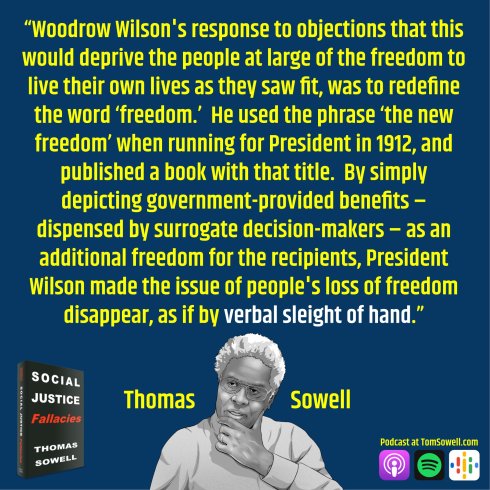
This is why we need to be so careful with our language and people who want to deform it for their own political ends. The activist Left uses the same vernacular as most ordinary people do, but also have a second meaning which also use that reflect their true intentions. In an argument, they flip between what is commonly understood and their special meaning of the word. Until you stake out exactly what they mean, and get them to define their terms they will run you around the mulberry bush bouncing between the different definitions of the same word.
Need an example – Take the word “inclusion”. See what you think it means, then find out what how the activist Left uses the term.
“Soon, I learned about nonbinary identities, and that some people – many people – were literally arguing that sex, not gender, was a social construct. I met people who evangelised a denomination of transgenderism that I had never heard of, one that included people who had never been gender dysphoric and who had no desire to medically transition. I met straight people whose ‘trans / nonbinary’ identities seemed to be defined by their haircuts, outfits and inchoate politics. I met straight women with Grindr accounts, and listened to them complain about the ‘transphobic’ gay men who didn’t want to have sex with women.
All around me, it seemed, straight people were spontaneously identifying into my community and then policing our behaviours and customs. I began to think that this broadening of the ‘trans’ and ‘queer’ umbrella was giving a hell of a lot of people a free pass to express their homophobia.
At Columbia, I took classes on LGBT history, but much of that history was delivered through the lens of queer theory. Queer theorists appropriate French philosopher Michel Foucault’s ideas about the power of language in constructing reality. They argue that homosexuality didn’t exist prior to the late 19th century, when the word ‘homosexual’ first appeared in medical discourse. Queer theorists proselytise a liberation that supposedly results from challenging the concepts of empirical reality and ‘normativity’. But their converts instead often end up adrift in a sea of nihilism. Queer theory, which has become the predominant method of discussing and analysing gender and sexuality in universities, seemed to me to be more ideological than truthful.
In my classes on gender and sexuality in the Muslim world, however, I discovered something else, too. I learned about current medical practices in Iran, where gay sex is illegal and punishable by death, and where medical transition is subsidised by the state to ‘cure’ gays and lesbians who, the theocratic elite insists, are ‘normal’ people ‘trapped in the wrong bodies’. I privately drew parallels between the anti-gay laws and practices of Iran and what I saw developing in the West, but I convinced myself I was just being paranoid.
Then, I learned about what was happening to gender-nonconforming kids – that they were being prescribed off-label drugs to halt their natural development, so that they’d have time to decide if they were really transgender. If so, they would then be more successful at passing as the opposite sex in adulthood. Even worse, I learned that these practices were being touted by LGBT-rights organisations as ‘life-saving medical care’.
It felt like I was living in an episode of The Twilight Zone. How long were these kids supposed to remain on the blockers? And what happens in a few years, if they decide they’re not ‘truly trans’ after all, and all of their peers have surpassed them? Are they seriously supposed to commence puberty at 16 or 17 years of age? These questions rattled my brain for months, until I learned the actual statistics: nearly all children who are prescribed puberty blockers go on to receive cross-sex hormones. Blockers don’t give a kid time to think. They solidify him in a trans identity and sentence him to a lifetime of very expensive, experimental medicalisation.
I wondered how different these so-called trans kids were from the little boy I had been. Obviously, I grew up to be a gay man and not a transwoman. But how could gender clinicians tell the difference between a young boy expressing his homosexuality through gender nonconformity, and someone ‘born in the wrong body’? I decided to dig deeper into the real history of medical transition.”

People need to rethink their positions on those claiming to be on the ‘right side of history’. The “Be Kind” transgender activists have proven repeatedly they are nothing of the sort.











 bleatmop
 Mystro


 Dead Wild Roses
Your opinions…