An Impasse in Discourse

We’ve all encountered it: a conversation where the goal isn’t mutual understanding but moral one-upmanship. You offer a reasoned point—say, that judging people by character over skin color fosters unity—and instead of engagement, you’re met with a lecture on your “ignorance.” This isn’t dialogue; it’s a sermon.

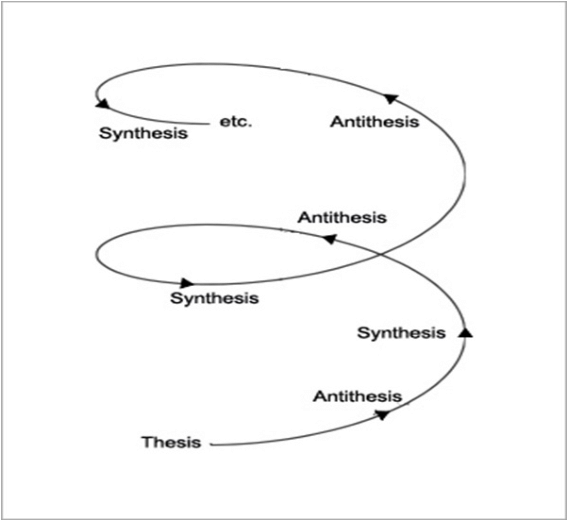
Such exchanges, common among adherents of what’s loosely called “woke” ideology, reveal a deeper issue: an unshakable belief in possessing the final truth. Why does this happen? I propose it stems from a process called consciousness raising, which breeds an ideological certainty akin to ancient gnosticism—a conviction that one’s insight is not just superior but unassailable.


Defining “Woke” and Its Roots

By “woke,” I mean specific ideological strands—critical race theory, certain forms of identity politics, and intersectional activism—that frame society as a rigid hierarchy of oppressors and oppressed, with truth grounded in lived experience over empirical evidence. This isn’t a blanket condemnation of social justice; many concerns, such as disparities in criminal justice, are real and urgent. But the approach often corrodes open debate by replacing inquiry with moral accusation.

Consciousness raising, rooted in second-wave feminism and Marxist praxis, promises a “critical reorientation” of reality (MacKinnon, 1983). Brazilian educator Paulo Freire’s concept of conscientização urged the oppressed to awaken to the forces of their subjugation (Freire, 1970). Today, this manifests in Diversity, Equity, and Inclusion (DEI) trainings, where participants are guided to “see” systemic power structures—often without room for dissent, questions, or reciprocal inquiry.


The Sociognostic Mindset

This form of ideological certainty resembles gnosticism, the ancient belief in salvation through secret knowledge. While woke ideology is hardly esoteric—its claims are publicly championed—it shares a similar epistemic posture: what we might call sociognostic certainty. This is the conviction that one’s moral and political views reflect a deeper awareness of systemic oppression, an awareness that cannot be achieved through conventional reasoning alone.

Think of it as moral X-ray vision: the ability to detect the systemic injustices that the unenlightened cannot see. Those who haven’t undergone this awakening—those who do not “get it”—aren’t just wrong; they’re unconscious. As Ibram X. Kendi puts it, “The only remedy to racist discrimination is antiracist discrimination” (Kendi, 2019). To disagree is not to reason differently—it is to expose your ignorance.

This mindset doesn’t just shape what the Woke believe—it shapes how they interact with others who haven’t reached the same “insight.” The consequence is a failure of dialogue.


Why Debate Fails

Consider a fraught topic like racism. An honest interlocutor might argue for a color-blind approach: judge individuals by their actions, not immutable traits. To the sociognostic mind, this is not merely naïve—it is harmful. They insist that racism permeates every facet of society—systemic, structural, inescapable. Even color-blindness, they argue, is a form of complicity—a refusal to acknowledge the depth of the problem (DiAngelo, 2018).

The issue isn’t the argument’s logic; it’s the knowledge differential. The Woke interlocutor, armed with raised consciousness, believes they occupy a higher moral plane. Dissenters, lacking this insight, are not engaged—they are dismissed. And not with counterarguments, but with labels: racist, bigot, transphobe. These are not rebuttals. They are excommunications, designed to enforce a moral hierarchy where only the awakened may speak with authority.


Engaging the Counterargument

Proponents of this mindset argue that systemic issues—like racial disparities in wealth or incarceration—require a radical lens. They would say critiques like this one ignore how power shapes social reality in ways that the privileged cannot see. It’s a fair point: history isn’t neutral. Data show that Black Americans, for instance, are incarcerated at nearly five times the rate of whites (NAACP, 2023).

But I would argue that the sociognostic approach often fuels division rather than solutions. By prioritizing ideological purity over shared reasoning, it alienates potential allies and entrenches resentment. Research from the National Institute of Justice (2021) suggests that economic opportunity, community trust, and procedural fairness reduce disparities more effectively than moral posturing. While the woke framework highlights real problems, it risks replacing deliberation with dogma.


Navigating the Impasse

Empirical arguments won’t suffice when beliefs rest on moral certitude rather than falsifiable evidence. You may find yourself dismissed—your reasoning reduced to “privilege” or “fragility”—not because you’re wrong, but because you’re presumed unawakened. As Pluckrose & Lindsay (2020) explain, applied postmodernism prioritizes subjective identity over objective reasoning. You’re not in a debate—you’re interrupting a sermon.

The key is to remain grounded. Ask questions. Demand evidence. Refuse to be shamed into silence. Clarity and patience—not moral posturing—are your best tools.


Conclusion: Reclaiming Shared Ground

The frustration of arguing with woke ideology isn’t just cultural—it’s epistemological. Its sociognostic posture assumes a monopoly on moral truth, turning discourse into a hierarchy of insight rather than a collaborative pursuit of understanding. That is corrosive to unity, which depends on open exchange, mutual respect, and rational inquiry.

We must resist this tendency—not with venom, but with commitment: to shared reason, to factual evidence, and to the possibility that even the loudest moral certainty can be wrong. The alternative is a world where sermons replace arguments. And that’s a debacle we can’t afford.

References

  • DiAngelo, R. (2018). White Fragility: Why It’s So Hard for White People to Talk About Racism. Beacon Press. Link
  • Freire, P. (1970). Pedagogy of the Oppressed. Continuum. Archive
  • Kendi, I.X. (2019). How to Be an Antiracist. One World. Link
  • MacKinnon, C.A. (1983). “Feminism, Marxism, Method, and the State: An Agenda for Theory.” Signs, Vol. 7, No. 3. JSTOR
  • NAACP. (2023). “Criminal Justice Fact Sheet.” NAACP.org
  • National Institute of Justice. (2021). “Reducing Racial and Ethnic Disparities in the Justice System.” NIJ.gov
  • Pluckrose, H., & Lindsay, J. (2020). Cynical Theories: How Activist Scholarship Made Everything About Race, Gender, and Identity. Pitchstone Publishing. Link


The British Empire, for all its flaws, wielded its vast influence as a decisive instrument in dismantling the global scourge of slavery—a system that violated human dignity on a global scale. By the late 18th century, Britain’s economic and naval dominance positioned it uniquely to challenge the transatlantic slave trade, which it had once profited from immensely. The 1807 Slave Trade Act, driven by relentless abolitionist campaigns from figures like William Wilberforce and Thomas Clarkson, outlawed the trade across the empire, striking a blow at the economic arteries of slavery.1 This was no mere moral posturing: Britain’s West Africa Squadron, deployed from 1808, patrolled the Atlantic, intercepting slave ships and liberating over 150,000 enslaved Africans by 1860.2 Yet the squadron’s operations were not without contradiction—many of the “liberated” were later conscripted into naval service or settled in British colonies under paternalistic regimes.

Behind these legislative shifts stood a groundswell of popular activism—thousands of petitions, boycotts of slave-grown sugar, and the mobilization of dissenting religious groups, particularly the Quakers. As J.R. Oldfield has shown, Britain’s anti-slavery effort marked one of the earliest examples of coordinated mass politics in a liberal democracy.3 This popular moral awakening fueled legislative change but faced resistance from powerful interests, particularly in the colonies. The 1833 Slavery Abolition Act, which emancipated nearly 800,000 enslaved people across British territories, was a monumental step, but it came with caveats—planters were compensated handsomely, while freed individuals received no reparations and faced exploitative “apprenticeship” systems.4 Abolition, in this context, was less a moral epiphany than a negotiated dismantling of a profitable institution.

Britain’s abolitionist zeal extended outward, forcing other nations—such as France, Spain, and Brazil—to curtail their own slave trades through a combination of treaties, naval pressure, and economic leverage. The 1841 Quintuple Treaty bound several major European powers to suppress the transatlantic trade, demonstrating Britain’s capacity to turn moral authority into diplomatic influence.5 This was less about universal brotherhood than about asserting moral and geopolitical superiority over rivals. At home and abroad, Britain leveraged its economic clout—offering trade incentives or threatening sanctions—to coerce reluctant powers into compliance.

However, abolition did not signal the end of coerced labor; rather, it marked a transition to new forms of economic exploitation. Indentured labor, particularly from India and China, was recruited under harsh conditions and deployed across the empire to fuel plantation economies. Critics have rightly argued that this was “a new system of slavery” in all but name, replicating colonial hierarchies under the guise of freedom.6

The British Empire’s crusade against slavery, while imperfect, reshaped the global moral landscape, proving that imperial might could be harnessed for transformative ends. Its abolitionist policies rippled across the Americas, Africa, and beyond, hastening the decline of legalized slavery worldwide. By the mid-19th century, the empire’s relentless naval patrols and diplomatic arm-twisting had rendered the transatlantic trade increasingly untenable. Yet this legacy is no hagiography: Britain’s earlier profiteering from slavery and its post-abolition labor practices expose a hypocrisy that tempers its triumphs. Nonetheless, the empire’s unparalleled capacity to enforce change—through law, force, and influence—demonstrates a singular truth: no other power of the era could have so decisively tilted the scales against a centuries-old institution. The British Empire, for better or worse, was the fulcrum on which the global fight against slavery pivoted.

Footnotes

  1. Drescher, Seymour. Abolition: A History of Slavery and Antislavery. Cambridge University Press, 2009. https://www.cambridge.org/core/books/abolition/9780521606592
  2. “The West Africa Squadron.” The National Archives, UK. https://www.nationalarchives.gov.uk/education/resources/atlantic-world/west-africa-squadron/
  3. Oldfield, J.R. Popular Politics and British Anti-Slavery: The Mobilisation of Public Opinion against the Slave Trade, 1787–1807. Manchester University Press, 1995. https://manchester.universitypressscholarship.com/view/10.7228/manchester/9780719038570.001.0001/upso-9780719038570
  4. “Slavery Abolition Act 1833.” UK Parliament. https://www.parliament.uk/about/living-heritage/transformingsociety/tradeindustry/slavetrade/
  5. Huzzey, Richard. Freedom Burning: Anti-Slavery and Empire in Victorian Britain. Cornell University Press, 2012. https://www.cornellpress.cornell.edu/book/9780801451089/freedom-burning/
  6. Tinker, Hugh. A New System of Slavery: The Export of Indian Labour Overseas 1830–1920. Oxford University Press, 1974. https://global.oup.com/academic/product/a-new-system-of-slavery-9780195600749

The YouTube video features a performance of “Pietà Signore,” a sacred aria composed by Alessandro Stradella, characterized by its poignant plea for divine mercy and forgiveness. The piece, delivered with a minimalist orchestral accompaniment, showcases heartfelt lyrics and a melodic structure that evokes deep spiritual reverence. The emotive delivery and classical arrangement create a powerful atmosphere of introspection and devotion, highlighting the timeless beauty and emotional depth of Stradella’s composition.

Below are the lyrics for “Pietà, Signore,” a sacred aria attributed to Alessandro Stradella, along with an English translation. The text is a prayer for divine mercy, reflecting themes of repentance and supplication. Note that the exact lyrics may vary slightly depending on the arrangement or performance, but the following is a standard version based on available sources.

**Original Italian Lyrics**
Pietà, Signore, di me dolente!
Signor, pietà, se a te giunge il mio pregar;
Non mi punisca il tuo rigor,
Meno severi, clementi ognora,
Volgi i tuoi sguardi sopra di me.
Non fia mai che nell’inferno sia dannato,
Nel fuoco eterno dal tuo rigor.
Gran Dio, giammai sia dannato
Nel fuoco eterno dal tuo rigor.
Pietà, Signore, Signor, pietà di me dolente,
Se a te giunge il mio pregare,
Meno severi, clementi ognora,
Volgi i tuoi sguardi, deh! volgi sguardi su me, Signor,
Pietà, Signore, di me dolente.

**English Translation**
Have mercy, Lord, on me in my suffering!
Lord, have mercy, if my prayer reaches you;
Do not punish me with your severity,
Less harshly, always merciful,
Turn your gaze upon me.
Never let me be condemned to hell,
In the eternal fire by your severity.
Almighty God, never let me be damned
In the eternal fire by your severity.
Have mercy, Lord, Lord, have mercy on me in my suffering,
If my prayer reaches you,
Less harshly, always merciful,
Turn your gaze, oh, turn your gaze upon me, Lord,
Have mercy, Lord, on me in my suffering.


      The scientific revolution, rooted in empirical rigor, propelled humanity’s progress and democratic values. Yet anti-science ideologies—postmodern skepticism and politicized dogmas—undermine this legacy, threatening truth and unity. We must champion evidence to preserve civilization’s gains.

1. The Scientific Revolution: Engine of Progress

In 1633, Galileo faced the Inquisition for defending heliocentrism, yet his empirical rigor helped ignite the scientific revolution. From the 16th century onward, Western thinkers like Copernicus, Newton, and Bacon formalized the scientific method—hypotheses tested by evidence, not enforced by dogma. This wasn’t mere stargazing; it transformed civilization. Innovations such as the steam engine and penicillin doubled global life expectancy from 31 to 73 years (1800–2020). Today, 95% of the world benefits from medical advancements and technologies rooted in Western science.

The scientific method’s transparency reinforced democratic values: peer review mirrors open debate, uniting societies through shared truth. Nations that embrace science lead in prosperity—Germany, for instance, boasts a 0.95 Human Development Index score (UNDP, 2022). Critics may highlight science’s darker uses (e.g., nuclear weapons), but its self-correcting nature—evident in ethical reforms like the Declaration of Helsinki (1964)—demonstrates resilience and integrity. Science is civilization’s telescope: it reveals, refines, and uplifts.

2. The Shadow Spreads: Anti-Science’s Assault on Truth

The scientific revolution’s empirical clarity once united humanity in the pursuit of truth. Yet anti-science ideologies—ranging from postmodern relativism to politicized technophobia—now cloud this vision, prioritizing narrative over evidence.

Postmodern theorists like Jean-François Lyotard characterized science as merely one “Western narrative,” denying its universality and authority. This cultural relativism undermines scientific consensus and fosters distrust. For instance, Europe’s ban on certain genetically modified crops—such as France’s 2014 maize restriction—contradicts consensus reports from the National Academy of Sciences, ultimately hampering agricultural productivity. Similarly, critical science studies rooted in neo-Marxist frameworks recast science as an oppressive capitalist tool, downplaying its global benefits. In 2023, 40% of Americans reported distrusting scientific institutions, according to Gallup.

To be sure, some critiques of scientific institutions—like those revealing undue pharmaceutical influence—raise valid ethical concerns. But wholesale rejection of empirical methods leads to regression. Anti-nuclear activism, for example, often ignores nuclear energy’s dramatically lower emissions—10g CO₂/kWh compared to coal’s 800g (IPCC, 2022). Evidence must guide reform; rejecting it outright smashes the very lens through which civilization observes and corrects itself.

3. The Stakes and a Call to Action

When ideology eclipses evidence, progress falters. From GMO restrictions to energy disinformation, anti-scientific trends impose tangible costs—reduced agricultural efficiency, stalled environmental innovation, and societal fragmentation. Science, responsible for a 73-year average life expectancy and countless civilizational gains, remains democracy’s silent architect.

To safeguard this legacy, we must renew public trust in science:

  • Support institutions like the National Science Foundation that fund transparent, peer-reviewed research;
  • Advocate for scientific literacy programs, such as California’s SB 1384 (2024), to build public resilience against misinformation;
  • Promote fact-based discourse in schools, media, and policymaking.

While ethical scrutiny of scientific applications is essential, dismissing the scientific method itself endangers civilization’s core. Science is not perfect—but it is our most reliable guide. It democratizes knowledge, transcends borders, and illuminates the path forward. Uphold science—and preserve the light.

References

  1. Galilei, G. Dialogue Concerning the Two Chief World Systems (1632); Bacon, F. Novum Organum (1620).
  2. Our World in Data. Life Expectancy. (2020)
  3. WHO. Global Vaccine Coverage (2022)
  4. UNDP. Human Development Report (2022)
  5. World Medical Association. Declaration of Helsinki (1964)
  6. Lyotard, J.-F. The Postmodern Condition: A Report on Knowledge (1979). University of Minnesota Press.
  7. National Academy of Sciences. Genetically Engineered Crops (2016); France GMO Ban (2014)
  8. Gallup. Trust in Institutions (2023)
  9. Angell, M. The Truth About the Drug Companies (2004). Random House.
  10. IPCC. Climate Change 2022: Mitigation of Climate Change (2022)


     The rule of law, a cornerstone of Western civilization, ensures justice and stability through impartiality, accountability, and restraint on power. Marxism, by contrast, subordinates legality to revolutionary goals and class-based conflict, undermining the very structures that support social cohesion. To preserve civilization, we must uphold the rule of law.


1. The Rule of Law: Civilization’s Bedrock

In 1215, the barons at Runnymede compelled King John to sign the Magna Carta, declaring that even monarchs must be subject to law. This revolutionary idea—the rule of law—would become a cornerstone of Western civilization, evolving through England’s Glorious Revolution (1688) and culminating in modern constitutionalism.

The U.S. Constitution (1789) and France’s Declaration of the Rights of Man and of the Citizen (1789) enshrined this principle globally. By 2020, 90% of democracies had incorporated judicial independence into their constitutional systems.¹ The rule of law, as theorized by thinkers like A.V. Dicey and later F.A. Hayek, restrains power through legal predictability and universality.²

The practical results are clear. Nations scoring above 0.8 on the World Bank’s Rule of Law Index—such as Denmark, Finland, and Canada—also consistently rank high on human development, prosperity, and civic trust.³ The rule of law provides a common legal language for diverse societies, replacing tribal favoritism with equality before the law. Even where the system has historically failed—colonial abuses, slavery, or gender inequality—it has proven self-correcting through reform.⁴

Some critics claim that the rule of law merely entrenches elite power structures. But this critique misrepresents its essence. Far from preserving privilege, impartial law constrains it. It creates a standard by which even the powerful may be held to account. The abolition of slavery, universal suffrage, civil rights protections—all emerged not in spite of legal order, but through it. Civilization thrives when justice prevails.


2. The Shadow Rises: Marxism’s Assault on Legal Order

The rule of law’s strength lies in its impartiality—its power to unify pluralistic societies under shared norms. Yet Marxism offers a fundamentally different vision: one that subordinates legal stability to revolutionary transformation and class struggle.

In The Communist Manifesto (1848), Karl Marx and Friedrich Engels dismissed law as a mere instrument of the bourgeoisie.⁵ Their goal was not reform but abolition—of private property, class, and the legal structures that supported both. This revolutionary posture bore grim fruit: under Stalin’s Great Terror, over 1 million people were executed in the 1930s as law was repurposed into a tool of terror.⁶ Mao Zedong’s Cultural Revolution (1966–76) abandoned legal process entirely, leading to the persecution and death of millions in the name of ideological purification.⁷

Contemporary neo-Marxist frameworks, like Critical Legal Theory, question whether law can ever be neutral. While these critiques raise valid concerns about systemic bias, they often collapse into legal nihilism. “Equity” is increasingly invoked not as a means of fair access to justice but as a demand for redistributive outcomes that override due process.⁸

Seattle’s 2020 “defund the police” policy experiment, influenced by such theories, reduced legal enforcement capacity. According to FBI Uniform Crime Reporting, homicides in the city rose 61% that year.⁹ While correlation does not imply causation, many observers linked the spike to policing reductions and the erosion of legal authority. A Rasmussen survey in 2023 found that 68% of Americans believed defunding policies increased crime.¹⁰

Even more moderate Marxist thinkers, like Antonio Gramsci, viewed legal neutrality as a fiction. His theory of “cultural hegemony” suggested that dominant ideologies—including legal norms—function to maintain ruling class power.¹¹ While Gramsci promoted gradual reform over violent revolution, his intellectual legacy has often been absorbed into radical critiques that pit “justice” against legality.

When the law is treated not as a safeguard of liberty but as an obstacle to progress, impartiality is lost. The result is not liberation but fragmentation. Societies governed by fluctuating ideological mandates rather than stable legal norms revert to “might makes right.” History provides ample warning.


3. The Stakes and a Call to Action

When law bends to ideology, chaos follows. The Soviet gulags and Seattle’s crime spikes are not identical in scale, but they both reflect what happens when legal norms are abandoned in the pursuit of revolutionary or moral goals.

Data again reinforces the case for the rule of law. Nations with Rule of Law Index scores above 0.8 also top global rankings in democracy, trust in institutions, and social resilience.³ Law is not merely procedural; it is a moral and civilizational foundation.

That does not mean we defend unjust systems blindly. We must remain vigilant, pushing for principled reforms: transparent policing (such as California’s 2018 body-camera law, AB 748¹²), judicial independence, and accountability for misconduct. But we must reject efforts to replace law with ideological fiat.

Support for organizations promoting constitutional order—like the Federalist Society—can help anchor legal education in foundational principles. Likewise, defending due process in public discourse reaffirms our shared commitment to equal justice.

Marxism’s critiques of inequality are not without merit. But where they abandon legal impartiality in favor of ideological justice, they endanger the very fabric of civilization. To preserve liberty, we must defend the law—not as an artifact of oppression, but as a guarantor of peace.

References

  1. Constitute Project. World Constitutions Database (2020). https://www.constituteproject.org

  2. Hayek, F. A. (1960). The Constitution of Liberty. Chicago: University of Chicago Press.

  3. World Bank. Rule of Law Index (2022). https://info.worldbank.org/governance/wgi

  4. UK Parliament. Slavery Abolition Act (1833); U.S. Congress. 19th Amendment (1920). https://www.parliament.uk | https://www.archives.gov/founding-docs/amendments-11-27

  5. Marx, K., & Engels, F. (1848). The Communist Manifesto. https://www.marxists.org/archive/marx/works/1848/communist-manifesto/

  6. Conquest, R. (1990). The Great Terror. Oxford: Oxford University Press.

  7. Chang, J., & Halliday, J. (2005). Mao: The Unknown Story. New York: Knopf.

  8. Delgado, R., & Stefancic, J. (2017). Critical Race Theory: An Introduction (3rd ed.). New York: NYU Press.

  9. FBI. Uniform Crime Reporting Program (2021). https://ucr.fbi.gov/crime-in-the-u.s/2021

  10. Rasmussen Reports. Crime Concerns and Defund Police (2023). https://www.rasmussenreports.com

  11. Gramsci, A. (1971). Selections from the Prison Notebooks. New York: International Publishers.

  12. California State Legislature. AB 748: Body-Worn Camera Footage Disclosure (2018). https://leginfo.legislature.ca.gov/faces/billTextClient.xhtml?bill_id=201720180AB748

   Enlightenment-era ideals of objective truth, universal rights, and reason-based governance forged modern democratic civilization. In contrast, postmodernism’s relativism and identity-based narrative critique threaten these foundations. We must reaffirm Enlightenment principles to preserve unity, justice, and discourse.


1. Reason’s Dawn: How the Enlightenment Forged Civilization

In the 17th and 18th centuries, philosophers like John Locke, Montesquieu, and Rousseau articulated frameworks for reason-based governance. Locke’s Two Treatises of Government (1689) posited natural rights to life, liberty, and property. Montesquieu’s Spirit of the Laws (1748) introduced separation of powers; Rousseau’s Social Contract (1762) argued that legitimate authority rests on citizen consent.

These ideas mattered practically—they informed the U.S. Constitution (1789) and France’s Declaration of the Rights of Man (1789), embedding Enlightenment principles in the DNA of modern democracies. As of 2020, scholars estimate that around 80% of democracies worldwide trace their philosophical roots to the Enlightenment.¹

Enlightenment values also translated into measurable successes: by 2020, approximately 167 constitutions enshrined freedom of expression; and countries scoring above 0.9 on the UNDP Human Development Index—predominantly Western democracies—demonstrated the tangible benefits of rational inquiry and institutional rule.² These metrics underscore the Enlightenment’s role as civilization’s intellectual crucible.


2. A Shadow Looms: Postmodernism and the Corrosion of Truth

Despite this legacy, postmodern thought rose to challenge Enlightenment truths. Thinkers like Michel Foucault and Jacques Derrida argued that “truth” is a social construct shaped by power dynamics—rather than anything objective or universal.³,⁴

This relativistic posture manifested starkly in 2017 when Evergreen State College’s Professor Bret Weinstein was targeted for resisting identity-based orthodoxy, demonstrating how narrative power can supplant reasoned discourse.⁵

Survey data reinforces this cultural shift. In September 2020, Pew Research found that 44% of Americans had heard a fair amount about “cancel culture,” and 49% defined it as punitive rather than corrective.⁶ By 2022, awareness had climbed to 61%.⁷ FIRE’s Campus Deplatforming Database logged a steep increase in speaker cancellations, documenting over 1,000 incidents between 2020 and 2024 and a success rate above 50% in recent years.⁸

Public trust in academia has also plummeted. Gallup reports that confidence in higher education fell from 57% in 2015 to 36% in 2023, with modest recovery to around 42% in 2025. Republicans showed especially low confidence at 26%, while Democrats expressed around 61%.⁹

Postmodernism’s rise thus correlates with an erosion of institutional trust, suppression of debate, and fragmentation of public discourse—an intellectual shift that seems to undermine the very Enlightenment principles upon which open society relies.


3. Not All Postmodernism Is the Enemy: Nuance and Constructive Critique

It is crucial to acknowledge that not all postmodern critique invalidates reason wholesale. Some theorists alert us to valid Enlightenment blind spots—colonialism, technocracy, scientism, and persistent inequality. Foucault, for instance, provided nuanced analyses of institutional power without advocating epistemic nihilism.

Acknowledging these critiques enriches the conversation—but when relativism becomes ideological absolutism, it dissolves trust in evidence-based policy and shared truth. History shows that societies fragment when reason yields to narrative absolutism.


4. Unity vs. Fragmentation: The Stakes Today

The divide between Enlightenment rationalism and postmodern relativism is not merely theoretical—it plays out in civic polarization, distrust of institutions, and ideological silos. When everyone has their own truth, civic cohesion unravels.

Conversely, Enlightenment-era constitutional liberalism undergirds pluralistic societies capable of managing conflict without collapse. Wherever constitutionalism, an independent judiciary, and open inquiry flourish, democracies exhibit resilience—whether in Western Europe, North America, or Oceania. These structures remain civilization’s compass—pointing toward shared reality rather than tribal narrative.


5. A Call to Action: Reaffirming Enlightenment Principles

We must recommit to rational discourse and institutional integrity. Universities, media, and civic organizations should uphold robust free speech policies—not ideological conformity disguised as accountability.

Educational institutions should offer curricula grounded in logic, debate, and classical liberal values, resisting pressure for ideological self-censorship. Meanwhile, public institutions should incentivize transparency and evidence-based decision-making.

We can also advocate for public reunification around shared civic values: tolerance, rationality, discourse. Platforms and forums that encourage civil disagreement—not echo chambers—can be part of the solution.

By elevating Enlightenment values—without ignoring valid critiques of past excesses—we can craft an enlightened path forward that embraces reason, inclusion, and unity.


Conclusion

The Enlightenment transformed civilization through reason, universal rights, and institutional design. Postmodernism, in its most radical form, threatens to tear down that structure by denying objective truth and fragmenting discourse. While constructive critique has its place, nihilistic relativism endangers the very foundations of democratic society. To preserve justice, cohesion, and open debate, we must hold fast to Enlightenment principles—reason as civilization’s compass, truth as our shared ground.

References

  1. Freedom House. Freedom in the World Report (2020). https://freedomhouse.org/report/freedom-world FIRE+1Wikipedia+1Gallup.comWikipedia+8Freedom House+8Freedom House+8

  2. UNDP. Human Development Report (2022); Constitute Project. World Constitutions Database (2020). https://www.constituteproject.org edtechbooks.orgOur World in Data

  3. Foucault, M. (1975). Discipline and Punish; Derrida, J. (1967). Of Grammatology.

  4. EdTech Books. “Enlightenment Thinkers and Democratic Government.” https://edtechbooks.org/democracy/enlightenment edtechbooks.org

  5. Weinstein, B. “The Evergreen State College Implosion.” Wall Street Journal, 2017.

  6. Pew Research Center. “Americans and ‘Cancel Culture’,” Sept. 2020 survey. papers.ssrn.com+4FIRE+4Gallup.com+4dokumen.pub+5pewresearch.org+5pewresearch.org+5

  7. Pew Research Center. “A growing share of Americans are familiar with ‘cancel culture’,” June 2022. pewresearch.org

  8. FIRE. Campus Deplatforming Database (2020–2024). https://www.thefire.org/research-learn/campus-deplatforming-database FIRE+1FIRE+1

  9. Gallup. “U.S. Confidence in Higher Education Now Closely Divided,” June 2024 survey. https://news.gallup.com/poll/646880/confidence-higher-education-closely-divided.aspx Gallup.com


This Blog best viewed with Ad-Block and Firefox!

What is ad block? It is an application that, at your discretion blocks out advertising so you can browse the internet for content as opposed to ads. If you do not have it, get it here so you can enjoy my blog without the insidious advertising.

Like Privacy?

Change your Browser to Duck Duck Go.

Enter your email address to follow this blog and receive notifications of new posts by email.

Join 397 other subscribers

Categories

January 2026
M T W T F S S
 1234
567891011
12131415161718
19202122232425
262728293031  

Archives

Blogs I Follow

The DWR Community

  • Unknown's avatar
  • Vala's avatar
  • Unknown's avatar
  • Unknown's avatar
  • windupmyskirt's avatar
  • Unknown's avatar
  • silverapplequeen's avatar
  • Unknown's avatar
  • Unknown's avatar
  • Unknown's avatar
Kaine's Korner

Religion. Politics. Life.

Connect ALL the Dots

Solve ALL the Problems

Myrela

Art, health, civilizations, photography, nature, books, recipes, etc.

Women Are Human

Independent source for the top stories in worldwide gender identity news

Widdershins Worlds

LESBIAN SF & FANTASY WRITER, & ADVENTURER

silverapplequeen

herstory. poetry. recipes. rants.

Paul S. Graham

Communications, politics, peace and justice

Debbie Hayton

Transgender Teacher and Journalist

shakemyheadhollow

Conceptual spaces: politics, philosophy, art, literature, religion, cultural history

Our Better Natures

Loving, Growing, Being

Lyra

A topnotch WordPress.com site

I Won't Take It

Life After an Emotionally Abusive Relationship

Unpolished XX

No product, no face paint. I am enough.

Volunteer petunia

Observations and analysis on survival, love and struggle

femlab

the feminist exhibition space at the university of alberta

Raising Orlando

About gender, identity, parenting and containing multitudes

The Feminist Kitanu

Spreading the dangerous disease of radical feminism

trionascully.com

Not Afraid Of Virginia Woolf

Double Plus Good

The Evolution Will Not BeTelevised

la scapigliata

writer, doctor, wearer of many hats

Teach The Change

Teaching Artist/ Progressive Educator

Female Personhood

Identifying as female since the dawn of time.

Not The News in Briefs

A blog by Helen Saxby

SOLIDARITY WITH HELEN STEEL

A blog in support of Helen Steel

thenationalsentinel.wordpress.com/

Where media credibility has been reborn.

BigBooButch

Memoirs of a Butch Lesbian

RadFemSpiraling

Radical Feminism Discourse

a sledge and crowbar

deconstructing identity and culture

The Radical Pen

Fighting For Female Liberation from Patriarchy

Emma

Politics, things that make you think, and recreational breaks

Easilyriled's Blog

cranky. joyful. radical. funny. feminist.

Nordic Model Now!

Movement for the Abolition of Prostitution

The WordPress C(h)ronicle

These are the best links shared by people working with WordPress

HANDS ACROSS THE AISLE

Gender is the Problem, Not the Solution

fmnst

Peak Trans and other feminist topics

There Are So Many Things Wrong With This

if you don't like the news, make some of your own

Gentle Curiosity

Musing over important things. More questions than answers.

violetwisp

short commentaries, pretty pictures and strong opinions

Revive the Second Wave

gender-critical sex-negative intersectional radical feminism