
You are currently browsing the tag archive for the ‘Freedom of Expression’ tag.
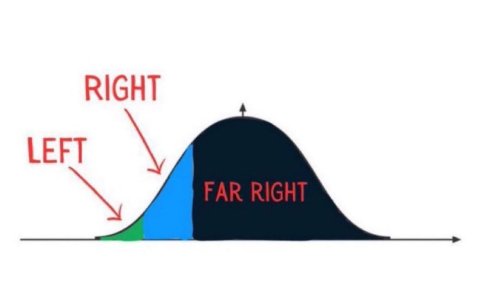
One of the most corrosive habits in current political discourse is the way plain factual claims get assigned a partisan label. Not arguments. Not policies. Facts. Or, more precisely, statements that point back to material reality, institutional limits, or ordinary human constraints. In theory, facts are supposed to discipline ideology. In practice, they are often treated as ideological aggression when they obstruct a preferred moral script.
That is what people are reaching for when they say facts are now treated as right-wing. The phrase is blunt, but it points to something real. In a growing number of disputes, especially around sex, gender, speech, and institutional policy, a person can say something materially true and be treated not as a participant in debate but as a moral suspect. The point is not answered on its merits. It is recoded as a signal of contamination. The speaker is no longer heard as describing reality. He is heard as choosing a tribe.
That shift matters because it changes the structure of argument. Once a factual claim is socially coded as “right-wing,” the burden quietly moves. The question is no longer whether the claim is true. The question becomes why you said it, what kind of person says such things, and who might feel endangered by hearing it. Motive replaces mechanism. Stigma replaces rebuttal. The claim is not refuted so much as quarantined.
You can see this clearly in disputes over sex and pronouns. For many people, saying that sex is real, binary in the ordinary human sense, and not altered by self-declaration is not an act of hostility. It is a claim about reality and a claim about language. “He” and “she” historically track male and female persons. Refusing to detach those words from sex is not, on its face, a partisan performance. It is an attempt to keep public language tethered to the material world rather than to inward identity claims.
“The disagreement is not mainly about politeness. It is about which reality gets public authority.”
That is exactly why the issue generates so much heat. The disagreement is not mainly about politeness. It is about which reality gets public authority. Does language track bodies, or does it track self-declared identity? Does a school treat sex as a stable feature of the world, or does it treat identity assertion as the governing fact? Those are not small etiquette disputes inflated by the internet. They are conflicts about ontology, law, and institutional power.
Canada now offers several live examples. Alberta’s Education Amendment Act requires parental notification when a student requests a gender identity-related preferred name or pronouns, and parental consent for students under 16 before staff may use them. The province says these changes are part of supporting families and setting clear school rules, with the remaining education amendments anticipated to take effect on September 1, 2025. Then, in late 2025, Alberta escalated further. Bill 9 invoked the notwithstanding clause to shield not only this school policy but other contested sex-and-gender measures from being struck down by the courts. That bundling matters. It shows this is no longer being treated as a narrow administrative disagreement, but as a foundational conflict over parental authority, child development, and the public meaning of sex.
Quebec presents the same fracture from the opposite direction, and it is ongoing now. Current reporting says a Montreal teacher is challenging the provincial policy that allows students 14 and older to change the name and pronouns used at school without parental consent. The teacher alleges she was required to use male pronouns at school while using female pronouns with the student’s parents. A preliminary hearing on anonymity and confidentiality was held on March 6, 2026, with the broader merits challenge still to come. Strip away the activist packaging and the conflict becomes plain: can institutional professionals be required to maintain two vocabularies of reality depending on the audience, and if they object, are they making an ethical argument or committing a moral offense?
The Barry Neufeld case in British Columbia shows the institutional end point of this logic. On February 18, 2026, the B.C. Human Rights Tribunal issued its decision and ordered substantial damages after finding that multiple publications were discriminatory, while some crossed the threshold into hate speech. That does not prove that every factual objection to gender ideology is punishable. It does show how readily dissent can be processed through systems that move from moral condemnation to formal classification. Once that line is crossed, everyone watching understands the lesson. The risk is no longer simply that you will be called wrong. The risk is that you will be treated as a public contaminant.
This is why the familiar “both sides are just choosing different facts” formula goes soft in exactly the wrong place. The conflict is not symmetrical. One side is generally making claims about bodies, language, legal authority, and institutional procedure. The other is often demanding that those things yield to identity-based recognition norms. Dignity is real and relevant. But dignity does not erase biological category, dissolve observable sex, or transmute factual disagreement into literal violence.
So when people say facts are treated as right-wing, the point is not that truth literally belongs to one side of the spectrum. The point is that in a culture saturated with moral performance, inconvenient facts are often recoded as partisan because it is easier to stigmatize them than to answer them. A factual claim that disrupts the script is no longer processed as description. It is processed as dissent. And dissent, under current conditions, is increasingly treated as a character defect.
Facts do not have a party. But when facts obstruct an ideological narrative, that narrative will often brand them right-wing and move straight to motive-policing. That is not a sign that the facts have changed. It is a sign that too much of public discourse has become allergic to reality when reality refuses to flatter the creed.
References
Government of Alberta. “Supporting Alberta students and families.”
https://www.alberta.ca/supporting-alberta-students-and-families
Government of Alberta. “Protecting youth, supporting parents, and safeguarding female sport.”
https://www.alberta.ca/protecting-youth-supporting-parents-and-safeguarding-female-sport
Global News. “Montreal teacher challenges policy for trans students to hide identity from parents.” March 6, 2026.
https://globalnews.ca/news/11719392/montreal-teacher-trans-students-challenge/
British Columbia Human Rights Tribunal. Chilliwack Teachers’ Association v. Neufeld (No. 10), 2026 BCHRT 49. February 18, 2026.
https://www.bctf.ca/docs/default-source/for-news-and-stories/49_chilliwack_teachers-_association_v_neufeld_no_10_2026_bchrt_49.pdf?sfvrsn=2d847803_1
Collin May has published a long, ambitious essay in the C2C journal (Hearts of Darkness: How the Left Uses Hate to Fuel its 21st Century Universal Imperium) on cancel culture, “hate” rhetoric, and the modern left’s moral posture. It is broader than I would write, more philosophical than most readers will tolerate, and occasionally overbuilt. But it names a pattern that matters, and one I return to often here: once “hate” becomes a universal accusation, institutions stop persuading and start policing.
May’s most useful contribution is not just the complaint (“cancel culture exists”) but the mechanism: “hate” stops being a moral description and becomes a category that pre-sorts who may be argued with and who may simply be managed.
That is the issue.
Not whether hatred exists. It does. Not whether some speech is vicious. It is. The issue is what happens when “hate” becomes the default label for disagreement, skepticism, refusal, dissent, or plain moral and factual judgments that cut against elite narratives.
At that point, the term stops describing and starts doing administrative work.
You can watch this happen across the institutions that shape public life: media, HR departments, professional bodies, universities, bureaucracies, and the expanding quasi-legal space around speech regulation. The sequence is familiar. Someone raises a concern about policy, ideology, language rules, school programming, medical ethics, public safety, immigration, religion, or sex-based rights. Instead of answering the argument, the institution reframes the speaker. Not wrong—harmful. Not questioning—spreading hate. Not participating in democratic friction—a threat to social order.
That move changes the rules of engagement. A wrong claim can be debated. A “hateful” claim can be quarantined. Once a claim is reclassified as harm rather than argument, the institutional response changes with it: less rebuttal, more restriction.
This language matters because it is not only moral language. It is managerial language. It justifies deplatforming, censorship, professional discipline, reputational destruction, and exclusion from ordinary civic legitimacy. It creates a class of people whose arguments no longer need to be answered on the merits. It also trains bystanders to confuse moral panic with moral seriousness.
May explains this through a large historical and philosophical genealogy. Fair enough. I am less interested in the full genealogy than in the practical result in front of us. In plain terms: the rhetoric of “hate” is often used to centralize authority in institutions that no longer trust the public and no longer feel obliged to reason with them.
That is one reason trust keeps collapsing.
People can live with disagreement. They can even live with policies they dislike. What they do not tolerate for long is being handled—being told their questions are illegitimate before they are heard. Once citizens conclude that institutions are using moral language as a shield against scrutiny, every future statement gets discounted. Even true statements are heard as spin.
And then the damage compounds. If “hate” is defined so broadly that it includes dissent, genuinely hateful speech becomes harder to identify and confront. The category gets inflated, politicized, and cheapened. Meanwhile, ordinary democratic disagreement becomes harder to conduct without professional or social risk.
That is not a confident free society. It is a managerial one.
Canada is not exempt. We have our own versions of this habit: speech debates reframed as safety debates, policy criticism recoded as identity harm, and public disputes (including over schools, sex-based rights, and even routine civic rituals like land acknowledgements) routed through tribunals, regulators, HR offices, and media scripts instead of open argument. The details vary by case. The mechanism does not. This tactic is not unique to one political tribe, but it is now especially entrenched in progressive-managerial institutions, which is precisely why it has so much reach.
The answer is not to deny hatred exists, or to become casual about cruelty. The answer is to recover civic discipline.
Name actual incitement when it occurs. Enforce existing laws where there are real threats, harassment, or violence. But stop using “hate” as a catch-all for disfavoured views. Stop treating condemnation as a substitute for evidence. Stop teaching institutions that the way to win an argument is to disqualify the speaker.
May quotes Pope Francis on cancel culture as something that “leaves no room.” Whether or not one follows his full historical argument, that phrase captures the operational problem.
A liberal society cannot function if citizens are only permitted to disagree inside moral boundaries drawn in advance by bureaucrats, activists, and legacy media.
The test is simple: can a claim be examined without first being moralized into silence?
If the answer is no, that is not moral confidence. It is institutional insecurity backed by power.
That is the pattern worth naming. And that is why essays like May’s, even when they overshoot, remain worth reading.

References
Collin May, “Hearts of Darkness: How the Left Uses Hate to Fuel its 21st Century Universal Imperium,” C2C Journal (February 16, 2026), https://c2cjournal.ca/2026/02/hearts-of-darkness-how-the-left-uses-hate-to-fuel-its-21st-century-universal-imperium/. (C2C Journal)
The most important part of the British Columbia Human Rights Tribunal’s decision in Chilliwack Teachers’ Association v. Neufeld (No. 10) is not the political noise around it. It is a short passage in page 19 paragraph 55. [attributed as paragraph 19, originally].
That passage matters because it appears to recode a contested idea as a condition of basic civic recognition. In plain terms, it moves from “do not discriminate against people” toward “you must affirm a specific theory to count as accepting them.”
This primer focuses on that point only. It does not attempt to relitigate the entire case.
The tribunal’s decision was issued February 18, 2026, indexed as 2026 BCHRT 49.
What this article argues in one paragraph
TL;DR: The BCHRT can punish discrimination without requiring Canadians to affirm a contested theory of sex and gender as the price of being considered non-discriminatory. Paragraph 19 matters because it blurs that line: it treats disagreement with a conceptual framework as “existential denial” of a person. That is a legal and civic problem, even for people who support anti-discrimination protections.
What this critique is not saying
Before the legal and logical analysis, a boundary line.
This critique is not saying:
- LGBTQ teachers cannot suffer real harm from public rhetoric.
- Human rights law cannot address discriminatory publications or poisoned work environments.
- Every criticism of SOGI, gender identity policy, or youth transition debates is lawful.
- Barry Neufeld’s rhetoric was prudent, fair, or wise.
The tribunal found multiple contraventions under the Code, including ss. 7(1)(a), 7(1)(b), and 13, and the decision contains detailed findings about workplace impact and discriminatory effects.
This primer makes a narrower claim:
Page 19 paragraph 55 uses an analogy that collapses the distinction between recognizing a person and affirming a contested ideological premise.
That distinction matters for free expression, legal clarity, and public trust.
The passage that changes the frame
Here is the core language from parge 19, paragraph 55 (including the definitional lead-in):
“Transpeople are, by definition, people ‘whose gender identity does not align with the sex assigned to them at birth’…”
“If a person elects not to ‘believe’ that gender identity is separate from sex assigned at birth, then they do not ‘believe’ in transpeople. This is a form of existential denial…”
“A person does not need to believe in Christianity to accept that another person is Christian. However, to accept that a person is transgender, one must accept that their gender identity is different than their sex assigned at birth.”
This is the paragraph Canadians should read for themselves.
The issue is not whether one can be civil. The issue is whether civil recognition is being redefined as mandatory assent to a disputed concept.
The core problem: equivocation on “accept” and “believe”
The tribunal’s analogy uses accept and believe as if they do the same work in both examples. They do not.
Christianity example
In the Christianity example, “accept that another person is Christian” usually means:
- acknowledging a descriptive fact about that person’s profession of faith,
- recognizing what they claim to believe,
- without requiring your own doctrinal agreement.
You can think Christianity is false and still accurately say, “Yes, that person is Christian.”
That is descriptive recognition.
Transgender example (as framed in para. 55)
In the tribunal’s wording, “accept that a person is transgender” is not left at description. It is tied to a required premise:
- that gender identity is separate from sex assigned at birth, and
- that this premise must be accepted in order to count as accepting the person at all.
That is not merely descriptive recognition. It is affirmation of a contested theory built into the definition.
That is the logical shift.
Why this matters legally and civically
A liberal legal order normally distinguishes between:
- Recognition of persons
- Protection from discrimination
- Compelled assent to contested beliefs
Paragraph 55 blurs those lines.
A person can acknowledge all of the following without contradiction:
- that someone identifies as transgender,
- that the person may experience distress, dysphoria, or social vulnerability,
- that harassment or discrimination against them is wrong,
while still disputing:
- whether sex is best described as “assigned” rather than observed,
- whether gender identity should override sex in all legal contexts,
- whether specific policies (sports, prisons, shelters, schools) should follow from that framework.
If disagreement on those latter questions is relabeled as “existential denial,” the public is no longer being asked to tolerate persons. It is being asked to affirm a framework.
That is the warning.
A concrete example most readers can use
Here is the distinction in everyday terms.
A teacher, coach, employer, or colleague can:
- treat a transgender person courteously,
- avoid harassment,
- maintain ordinary workplace civility,
- refrain from discriminatory conduct,
without conceding that sex categories disappear in every policy context.
For example, a person may choose to use a student’s preferred name in daily interaction and still argue that elite female sports should remain sex-based. A person may reject insults and harassment and still dispute whether “sex assigned at birth” is the best scientific language.
That is not incoherence. That is how pluralist societies work.
Paragraph 19 pressures this distinction by framing conceptual dissent as equivalent to non-recognition of the person.
The definitional trap in paragraph 55
Paragraph 19 does something subtle but powerful.
It defines “transpeople” using a specific conceptual framework (“gender identity” versus “sex assigned at birth”), then treats non-acceptance of that framework as non-acceptance of trans people themselves.
That is a question-begging structure:
- Premise (built into the definition): trans identity necessarily means gender identity distinct from sex assigned at birth.
- Conclusion: if you reject that premise, you deny trans people.
But the premise is precisely what is contested in public debate.
A tribunal can rule against discriminatory conduct. It can interpret the Code. It can assess workplace effects. But once it turns a contested framework into the test of whether one “accepts” a class of persons at all, it risks moving from adjudication into ideological gatekeeping.
Context matters, but it does not fix the analogy
To be fair to the decision, the tribunal is not writing in a vacuum.
The reasons frame Mr. Neufeld’s rhetoric as part of a broader pattern of statements the tribunal found denigrating, inflammatory, and connected to the work environment of LGBTQ teachers. The tribunal also found a direct connection between his public rhetoric and a school climate that felt unsafe to many LGBTQ teachers.
That context may explain the tribunal’s forceful language.
It does not solve the logic problem in paragraph 19.
Even in hard cases, legal reasoning should preserve key distinctions:
- personhood vs. theory,
- conduct vs. belief,
- discrimination vs. disagreement.
When those lines blur, institutions may satisfy partisans while losing credibility with ordinary readers who can still detect the category error.
Remedies matter too (and should be stated plainly)
This was not a symbolic ruling.
The tribunal ordered multiple remedies, including a cease-and-refrain order, $442.00 to Teacher C for lost wages/expenses, and a $750,000 global award for injury to dignity, feelings, and self-respect to be paid to the CTA for equal distribution to class members. It also ordered interest on monetary amounts as specified.
The tribunal also states that the dignity award is compensatory and “not punitive.”
Readers can disagree about the amount. They should still understand that paragraph 19 sits inside a decision with real legal and financial consequences.
Why Canadians should pay attention
Most Canadians will never read a tribunal decision. They will hear summaries.
That is why paragraph page 19 paragraph 55 deserves attention.
If public institutions begin treating disagreement with a contested theory as “existential denial,” the zone of legitimate disagreement shrinks by definition. The public is no longer told only, “Do not discriminate.” It is told, in effect, “Affirm this framework, or your dissent may be treated as denial of persons.”
That is not a stable basis for pluralism.
A rights-respecting society needs a better rule:
- protect people from discrimination,
- punish actual harassment and unlawful conduct,
- preserve space for lawful disagreement on contested concepts.
Paragraph 55, as written, weakens that line.

Glossary for readers
Page 19, Paragraph 55
A specific paragraph in the tribunal’s reasons that contains the Christianity analogy and the “existential denial” language. This primer focuses on that paragraph.
“Existential denial”
The tribunal’s phrase in para. 19 for refusing to “believe” that gender identity is separate from sex assigned at birth, which it links to not “believing in transpeople.”
Section 7(1)(a) (BC Human Rights Code)
A Code provision dealing with discriminatory publications (as applied by the tribunal in this case).
Section 7(1)(b) (BC Human Rights Code)
A Code provision dealing with publications likely to expose a person or group to hatred or contempt (the tribunal found some publications met this threshold).
Section 13 (BC Human Rights Code)
A Code provision dealing with discrimination in employment, including discriminatory work environments (the tribunal found a poisoned work environment for the class of LGBTQ teachers).
“Poisoned work environment”
A human rights / employment law concept referring to a workplace atmosphere made discriminatory through conduct, speech, or conditions connected to protected grounds.
SOGI 1 2 3
Resources discussed in the decision in connection with BC public education and inclusion policies; the tribunal notes they are resources and addresses their role in the factual background. (See source map below.)
Source map so readers can verify for themselves
Use this map to read the decision directly and check each claim the PDF is available here.
Case identification and issuance
- Paras. 1–3 (intro/citation/date/caption)
- Verified from the front matter: issued February 18, 2026, indexed as 2026 BCHRT 49.
Overview of findings and what was decided
- Paras. 4–6 (high-level findings; which Code sections were violated)
- Tribunal later reiterates finding the complaint justified in part and violations of ss. 7(1)(a), 7(1)(b), and 13.
Freedom of expression framework / limits
- Paras. 8–10 (overview-level framing)
- Also see Part VII heading “Freedom of expression and its limits” in the table of contents.
SOGI factual background
- Paras. 13–15 (background on SOGI 1 2 3 in public education)
- See TOC references to “SOGI 1 2 3 in public education” and Neufeld’s response.
The key analogy and “existential denial”
- Para. 19 (full lead-in + Christianity analogy + “existential denial” language)
This is the central paragraph for the primer.
Tribunal’s “veneer of reasonableness” concern
- Para. 55 (same paragraph; immediate context of the analogy)
Workplace impact evidence / climate findings
- Paras. 38 onward (teacher evidence and climate effects)
- Example evidence and findings on climate and workplace effects are reflected in the teacher testimony excerpts and the tribunal’s acceptance of a direct connection to unsafe school climate.
s. 13 conclusion (employment discrimination)
- Para. 82 (and surrounding paras.) / section conclusion in Part V-C
- Tribunal concludes violation of s. 13 for the class.
Remedies overview (s. 37(2))
- Paras. 99 onward (remedies discussion starts in the remedies part)
- Includes declaration, cease/refrain order, expenses, dignity award, and interest.
Cease and refrain order
- Remedies section, Part A (paras. around 100–101)
- “We order him to cease the contravention and refrain from committing the same or a similar contravention…”
Training remedy requested but declined
- Part B (ameliorative steps) (paras. around 102)
- Tribunal says it was not persuaded mandatory training would have a beneficial effect in this case.
Teacher C expenses ($442)
- Part C (expenses incurred) (paras. around 103)
- Tribunal orders $442.00 to Teacher C.
Dignity award ($750,000 global)
- Part D (compensation for injury to dignity…) (paras. around 104–111)
- Tribunal says the purpose is compensatory, not punitive; later orders $750,000 to the CTA for equal distribution to class members.
Interest orders
- Part E (Interest) (paras. around 112)
- Tribunal orders interest as set out in the Court Order Interest Act.
Bill C-9, officially titled the Combatting Hate Act and introduced in September 2025, amends the Criminal Code to address rising hate crimes by creating new offences, codifying a definition of “hatred,” and streamlining prosecutions. Key provisions include a new hate-motivated crime offence applicable to any Criminal Code violation (potentially carrying enhanced penalties, including life imprisonment in severe cases), criminalizing the willful promotion of hatred through public display of certain hate or terrorism symbols, and removing the requirement for Attorney General consent in hate propaganda cases. The bill also introduces offences for intimidating or obstructing access to places of worship, schools, or community centres used by identifiable groups. While presented as a response to increased antisemitism, Islamophobia, and other hatreds, critics argue it expands state power over expression in ways that threaten fundamental freedoms.
A particularly alarming development is the proposed amendment—supported by the Liberals in a deal with the Bloc Québécois—to repeal section 319(3)(b) of the Criminal Code. This longstanding defence protects individuals from conviction for wilfully promoting hatred if, in good faith, they express an opinion on a religious subject or based on a religious text. Removing it would expose pastors, priests, imams, and everyday believers to prosecution for faithfully teaching or quoting sacred scriptures on contentious issues like marriage, sexuality, or morality. The Canadian Conference of Catholic Bishops has warned that this risks criminalizing core religious doctrine, disproportionately targeting Christianity’s traditional teachings while undermining freedom of religion under the Charter.
Beyond religious discrimination, Bill C-9 erodes cognitive liberty—the right to hold and express unpopular thoughts without fear of state punishment—and free speech more broadly. By codifying a definition of “hatred” as detestation or vilification (explicitly stating it does not include mere dislike, disdain, or offence), the bill arguably lowers the high bar set by Supreme Court precedents like R. v. Keegstra and Whatcott, potentially chilling debate on public issues. Removing Attorney General oversight for prosecutions invites politically motivated charges, while broad new offences around symbols and obstruction could capture peaceful protest or artistic expression, despite carve-outs for legitimate purposes like education or journalism.
This bill exemplifies a broader authoritarian drift in Canada, where the state increasingly polices thought and belief under the guise of combating hate. Existing laws already prohibit incitement to violence and genuine hate propaganda; expanding them risks turning disagreement into crime and faith into liability. Cognitive liberty demands that Canadians can think, speak, and worship freely, even when offensive to others—yet Bill C-9 subordinates these rights to subjective interpretations of “hatred.”
As Parliament debates this legislation amid reports of a Liberal-Bloc agreement to strip religious protections, citizens must demand its rejection or substantial amendment. True tolerance protects unpopular speech, including religious conviction; suppressing it paves the way for tyranny. Canada’s Charter promises freedom of conscience, religion, thought, and expression—Bill C-9 puts them all at grave risk.

References
- Official text of Bill C-9: https://www.parl.ca/DocumentViewer/en/45-1/bill/C-9/first-reading
- Department of Justice summary: https://www.justice.gc.ca/eng/csj-sjc/pl/c9/index.html
- Charter Statement on Bill C-9: https://www.justice.gc.ca/eng/csj-sjc/pl/charter-charte/c9_2.html
- Canadian Conference of Catholic Bishops on religious exemption removal (December 2025): https://www.cccb.ca/media-release/proposed-restrictions-on-religious-freedom-bill-c-9/
- CBC News on Bloc-Liberal deal to remove religious defence (December 2025): https://www.cbc.ca/news/politics/c9-hate-speech-religion-9.7001891
- National Post on implications for faith (December 2025): https://nationalpost.com/opinion/changes-to-bill-c-9-arent-combating-hate-theyre-criminalizing-faith
- LEGISinfo page for Bill C-9: https://www.parl.ca/legisinfo/en/bill/45-1/c-9
- Canadian Civil Liberties Association concerns: https://ccla.org/press-release/ccla-bill-c-9-risks-criminalizing-peaceful-protest/
Emanuel Brünisholz, a Swiss repairman, has made headlines for refusing to pay a fine imposed for a social-media comment stating what he says are biological truths: that there are only two sexes as determined by skeletal evidence. Because he wouldn’t pay the fine, he opted instead to serve 10 days in jail. He was convicted under Switzerland’s anti-discrimination laws (Art. 261bis), which have been expanded to include “sexual identities” beyond race, religion, etc. His statement was judged to belittle the LGBTQI community and violate human dignity, though Brünisholz insists he was speaking objective biological fact. (Reduxx)
This case is deeply troubling, because it illustrates a slippery slope: when a judge or prosecutor can criminalize speech that claims a biological fact, simply because some group interprets it as hateful. That is not far off from what proposed Canadian legislation threatens. The Combatting Hate Act, introduced in September 2025, would make it a criminal offence to “wilfully promote hatred” against identifiable groups (including on grounds of gender identity) by any public display or speech. It also aims to streamline prosecutions for “hate propaganda,” remove some procedural checks, and broaden the definition of hate. Critics warn that this will give activist minority claims outsized power over what counts as acceptable speech. (Government of Canada)
If Brünisholz’s case was an outlier, then Canada’s proposals make clear this is a trajectory, not a one-off. Under the proposed laws, someone could theoretically be prosecuted (and even imprisoned) for speaking truths about biological sex if a court determines that such statements violate the new definitions of hatred or hate speech. That means what is scientifically or biologically reality could become illegal speech, depending on who is offended and how strong the activist pressure is. In a Western democracy that claims to defend freedom of expression, this is simply unacceptable.
We must not accept that the mere possibility of offending a protected group is enough for criminal sanction. We must resist laws that hand over the power to judges or prosecutors (or activist complainants) to decide what biological truths are “hate.” Because once speech can be criminalized based on activist interpretation, the foundations of open, free inquiry, reason, and reality are at risk.
Key Comparisons: Swiss Case vs. Proposed Canadian Laws
| Feature | Swiss Case (Brünisholz) | Proposed Canadian Laws (Combatting Hate Act / related bills) |
|---|---|---|
| Nature of statement | Emphasis on binary sex; “only man and woman” skeleton argument | Biological sex, gender identity claims could be targeted under new definitions of hate |
| Punishment | Fine convertible to 10 days jail if unpaid | Proposed penalties include imprisonment, removal of procedural protections |
| Law basis | Anti-discrimination / hate speech law expanded to “sexual identities” in Switzerland | Criminal Code, Criminal Code’s hate propaganda provisions, amendments to CHRA, etc. |
| Risk of censorship | High — statement considered “belittling” a protected class despite appeal to biological evidence | Also high — definitions are broad; courts could side with activist interpretations over scientific or factual speech |
| Freedom of speech concern | Biologically rooted fact may be criminalized if deemed insulting or hateful | Same concern: scientific / truth claims could be suppressed if they conflict with activist definitions of what counts as acceptable speech |
Why This Matters
- Biological Truths Are Not “Opinions” Alone: Things like male vs. female biological sex are backed by sciences like genetics, anatomy, forensic anthropology. If those become “hate speech” when expressed, then reality is subject to legal veto by ideological enforcement.
- The Power to Define “Hate” is the Power to Silence: Under Canadian law, if definitions of hatred or hatred-motivated speech expand (especially by removing required consent, or giving prosecutors more discretion), then more speech becomes liable—not because it causes harm, but because someone claims it does.
- Free Speech is Not Optional: Western democracy is built in part on being able to speak even unpopular or uncomfortable truths. If truth becomes legally risky, we’re no longer free—even if the penalties aren’t always applied.
- Precedent Matters: Once speech is criminalized for some, even “harmless” speech tomorrow could become the target. Laws tend to expand in scope over time. The Brünisholz case shows how “harmless to some, hateful to others” becomes a legal equation.
What to Watch & What to Do
- Monitor what the final definitions are in Canadian bills: how they define hatred, “wilfully promoting hatred,” “identifiable groups,” and what defenses are permitted (e.g., truth, scientific basis).
- Watch penalties: whether fines only, or possibility of imprisonment; whether Criminal Code or human rights tribunal; how strong the burden of proof is.
- Pay attention to how administrative procedures work: whether prosecutors need prior approvals, whether individuals or groups can privately instigate charges/complaints, whether there’s ability to appeal.
- Support and defend free speech, especially for dissenting or scientific views. Speak out when persons are penalized for expressing what others call “politically incorrect truths.”

References
- “Swiss Man Opts For Jail Time Instead Of Fine After Being Charged Over ‘Transphobic’ Social Media Post”, Reduxx, Sept 26, 2025 — Brünisholz case. (Reduxx)
- “Combatting Hate Act: Proposed Legislation to Protect Communities Against Hate”, Government of Canada, Sept 19, 2025 — summary of proposed amendments, hate definitions, penalties. (Government of Canada)
- “Canada Introduces Legislation to Combat Hate Crimes, Intimidation, and Obstruction”, Department of Justice Canada news release, Sept 19, 2025 — details on new offences including intimidation, obstruction, containing identity grounds. (Government of Canada)
Having recently gotten into a discussion about the misnamed “Gender Affirming Care” with some of my acquaintances we broached many contentious topics but one point that stuck out was when we got into pronoun territory.
My interlocutor was brought up the idea that the shortening of names – like Stan for Stanley – was a preference and that people were just being polite by referring to the individual as they would like to be referred to.
I stumbled a bit on proposing a counter argument for this point – in hindsight it is fairly straightforward to construct a response.
If a person insists on calling a self proclaimed “Stan”, “Stanley” it might indeed be considered a bit offensive. So how is this different that using she/her pronouns for a male who is under the false notion that he is female?
Well, Stan and Stanly are both terms that are technically correct for the person in question. Is it inconsiderate to ignore their wishes, yes certainly, but here in this free society we don’t have to associate with people who we judge are inconsiderate toward us.
The male expecting people to use “she/her” when to referring to him is a completely different case. Pronouns and preferred names are not in the same category of linguistic use. In English pronouns are sexed, thus males are attributed he/him and females are attributed she/her.
If you hold a set of beliefs that do not comport with reality – that is a male believing that he is somehow a woman (adult human female) – that is perfectly fine. Your personal belief about your reality are of no concern to anyone else in society.
The expectation though of people outside your gender delusion to play along with and be party to your departure from the material reality we all share is not acceptable, especially if you are a person that sees the harm Gender Ideology does to women and society.
Thus, the argument of using a preferred name vs. a pronoun is distinctly a false equivalence as in the first case two real descriptors that accurately represent reality are being offered. In the second case using the “wrong” pronouns is a decision to comport with reality or the decision to ignore the evidence your senses are reporting and submit to someone else’s interpretation of reality – no one is obliged to do so.
Both cases associated with someone is who you perceive to be offensive is not usually not a mandatory experience. Occasionally being offended in society is a part of life and one must learn to deal with it.
Compelling the speech of others is a distinctly authoritarian notion and should not be encouraged in a society that values freedom of thought and expression.
1/ The current controversy in Saskatchewan shows how the gender debate has become the perfect storm for loss of confidence in the Charter. The Charter has never commanded universal respect among Canadians but in recent years these doubts have increased.
2/ The Charter was introduced by Pierre Trudeau over opposition from the provinces. The notwithstanding clause was one of a series of compromises which won the grudging support of 9 provinces. Quebec did not agree and has used the notwithstanding clause regularly.
3/ Public support for the Charter has grown because it was believed to secure broadly shared values of equality between individuals and limitations on state authority. It was seen as reinforcing democratic government by protecting the fundamental conditions for democracy.
4/ More recently academic and now judicial thinking has adopted a new concept of human rights based on ameliorating the condition of oppressed groups, even at the expense of traditional values of liberty and equality.
5/ This new concept of rights has pushed the courts further into the realm of policy making for which the judicial process is not designed. Bad decisions will happen and as they become more frequent the need for a political safety valve has increased.
6/ A basic problem is that court procedures are intended to resolve a clear conflict between two parties. There are often many different perspectives to a Charter issue and all of these perspectives are seldom adequately represented in court.
7/ The rules of evidence make it difficult to present a full picture of the complexity of an issue like pediatric gender transition. The scientific background has to be presented through expert witnesses who submit written reports. This is a costly process.
8/ The high costs of bringing a Charter case mean that many cases are brought by groups receiving government funding. The government is using the Charter litigation to advance the interests of favoured groups in a way that bypasses the legislative and public debate.
9/ Judges of course follow the media and in most cases they can rely on their own general knowledge to aid in understanding the evidence presented in court. However, on the issue of gender medicine Canadian media coverage has been hopelessly biased.
10/ A judge who reads the Globe and Mail and listens to the CBC will have heard nothing about the international controversy over gender medicine. There has been no coverage of the closure of the Tavistock gender clinic of the policy changes in Sweden, Finland and Norway.
11/ Strict rules of evidence exist because court cases are intended to provide a final resolution to a dispute. There are provisions to re-open a criminal conviction where new evidence is discovered after trial in other types of cases the decision is final after the final appeal.
12/ Public policy, on the other hand, should be constantly revised as new and better evidence emerges. New evidence on pediatric gender transition is emerging rapidly but it is being ignored by Canadian media and policy makers.
13/ There is a risk that when Canada finally realizes how harmful the current approach to pediatric transition has become, the ability to change course will be hindered by Charter judgments made on the basis of faulty and limited evidence.
14/ In these circumstances, use of the notwithstanding clause may be a necessity but it is worth considering that we would not be in this mess if our major institutions did not show such disregard for the Charter’s protection of freedom of expression.











 bleatmop
 Mystro


 Dead Wild Roses
Your opinions…