
You are currently browsing The Arbourist’s articles.
Dallas Brodie, once the MLA for Vancouver-Quilchena, has emerged as a lightning rod in British Columbia’s political landscape due to her insistence on questioning the narrative surrounding the Kamloops Indian Residential School. Expelled from the BC Conservative Party on March 7, 2025, Brodie’s assertion that “zero” child burials have been confirmed at the site—technically accurate, as no remains have been excavated—ignited a firestorm. Her refusal to retract her February 2025 social media post, despite pressure from party leader John Rustad, and her subsequent mockery of subjective “truths” in a March 6 online discussion, underscored her quest to challenge what she sees as unverified claims. Brodie’s stance, while divisive, reflects a broader frustration among some Canadians with the lack of empirical evidence behind widely accepted residential school narratives, positioning her as a figure demanding factual accountability in a debate often steeped in emotion.
The Canadian media, however, has largely framed Brodie’s actions as denialism, amplifying a narrative that paints her as a villain rather than a skeptic. Outlets like CBC and The Globe and Mail emphasized her expulsion and her inflammatory tone—such as mimicking survivors’ testimonies—while downplaying the absence of physical evidence at Kamloops, a point she repeatedly highlighted. This selective reporting constructs a fabricated storyline that prioritizes moral outrage over nuanced discussion, failing Canadian society by stifling inquiry into a complex issue. By focusing on Brodie’s personal conduct rather than engaging with her central argument, the media has diverted the conversation from truth-seeking to character assassination, leaving the public with a polarized, oversimplified version of events that obscures the need for factual clarity.
Compounding this failure is the response from some Indigenous leaders and communities, whose rejection of Brodie’s evidence-based critique has hardened the discourse. Groups like the Métis Nation British Columbia condemned her as a denialist, dismissing her call for verification of the Kamloops claims as an attack on reconciliation itself. This reflex to brand dissent as heresy—rather than address the lack of excavated remains—entrenches a narrative that equates questioning with disrespect, sidelining legitimate debate. Such denial of the truth, or at least its ambiguities, transforms a potentially unifying pursuit of facts into a battleground of identity and guilt, alienating Canadians who seek clarity rather than dogma.
The fallout from Brodie’s case reveals how these dynamics erode public trust and degrade civic dialogue. Her expulsion from the BC Conservatives, followed by the defection of two MLAs on March 7, 2025, signals internal party fractures but also mirrors a broader societal rift. Media-driven narratives that vilify skepticism, paired with Indigenous insistence on unchallengeable “truths,” have created a climate where questioning official accounts invites ostracism rather than answers. This poisonous blend has left Canadians less equipped to grapple with the residential school legacy, as discussion deteriorates into accusations of racism or betrayal instead of a shared pursuit of what actually happened—a failure that undermines reconciliation more than Brodie’s provocations ever could.
Ultimately, Dallas Brodie’s quest, however flawed in delivery, exposes a critical flaw in Canadian society: the inability to confront uncomfortable questions without fabricated narratives or entrenched denialism. The media’s rush to condemn rather than investigate, and the refusal of some Indigenous voices to entertain factual uncertainty, have roughened a debate that demands precision and honesty. As Brodie sits as an independent MLA, unrepentant in her stance, her case serves as a warning—Canadian society risks losing its capacity for truth when inquiry is sacrificed for comfort. Until the media prioritizes evidence over outrage and all parties embrace open scrutiny, the dialogue around residential schools will remain a casualty of its own abrasiveness, failing the very history it seeks to honor.

It is scaremongering pure and simple.
The claim that the Canadian Conservative Party will make abortion illegal in Canada lacks substantial evidence and ignores the party’s historical and current stance on the issue. While some individuals within the party may hold personal anti-abortion views, the Conservative Party as a whole has not included banning abortion in its official platform. For instance, during recent leadership races and party conventions, the Conservatives have consistently avoided committing to reopening the abortion debate. Leaders like Andrew Scheer and Erin O’Toole explicitly stated that their governments would not legislate on abortion, emphasizing that the issue remains settled since the 1988 Supreme Court decision in R v. Morgentaler, which struck down Canada’s abortion law as unconstitutional. The party’s 2021 election platform made no mention of restricting abortion access, focusing instead on economic recovery, healthcare funding, and other priorities.
Additionally, the legal and political landscape in Canada makes it highly unlikely for any party to successfully ban abortion. The Morgentaler decision established that restricting abortion violated women’s Charter rights to security of the person, and subsequent attempts to introduce restrictive legislation have failed. Even if a Conservative government wanted to revisit the issue, it would face significant hurdles: introducing new abortion laws would require a parliamentary majority willing to vote for such a measure, surviving inevitable Charter challenges in the courts, and overcoming fierce public and political opposition. Abortion access enjoys broad public support in Canada—polls consistently show a majority of Canadians favor maintaining or expanding access. The Conservative Party, aware of these dynamics, has little incentive to pursue a policy that would alienate voters and risk electoral backlash, especially in a country where coalition-building and centrism often define electoral success.
Finally, the narrative that the Conservatives will ban abortion often stems from fear-mongering or misrepresentation of individual MPs’ views as party policy. While some backbench MPs have introduced private member’s bills on issues tangentially related to abortion—like Bill C-225 in 2016, which aimed to recognize fetuses as victims of crime—these bills rarely gain traction and are not reflective of party priorities. The Conservative Party operates on a “big tent” philosophy, accommodating a spectrum of views but not endorsing fringe positions as official policy. Current leader Pierre Poilievre has also dodged committing to anti-abortion policies, focusing instead on populist economic messaging. Without a clear mandate or unified party push, claims of an impending abortion ban remain speculative at best, ignoring both the party’s strategic pragmatism and the broader Canadian context that protects reproductive rights.
 Edmonton’s public transit system has become a crucible of violence, and the stats don’t lie—crime is spiking at a rate that demands urgent action. In 2022, the Edmonton Police Service reported a staggering 53% increase in violent crime calls on transit compared to 2021, with incidents like assaults and robberies plaguing LRT stations and buses. That’s not just a number; it’s a reality where four percent of the city’s violent crime now happens on transit, a space meant for safe commuting. Without more security—whether that’s additional peace officers or better surveillance—this trend risks turning every ride into a roll of the dice for passengers.
The human cost behind these numbers is what’s truly alarming. In early 2023 alone, Edmonton saw 35 violent occurrences on transit property, including nine weapon-related incidents, reflecting a broader national crisis but hitting hard locally. These aren’t just stats on a page—they’re stabbings, threats, and beatings that leave people scared to take the bus or LRT. Riders aren’t imagining this; their fear is backed by a 12% higher crime severity index in transit areas compared to the city average in 2022. More security isn’t just a nice-to-have; it’s a necessity to protect vulnerable folks who rely on public transit daily, especially when 70% of these attacks are random, striking without warning.
Throwing our hands up and saying “it’s a social problem” doesn’t cut it—action does. Sure, the city added 22 more transit peace officers in 2023, but when calls for service are still climbing (up 12% in 2024 despite a slight dip in crime severity), it’s clear that’s not enough. Stations like Eaux Claires saw a 133% spike in dispatched calls in 2022, showing hot spots are still burning unchecked. More boots on the ground, better real-time monitoring, and tougher enforcement aren’t luxuries—they’re the bare minimum to stop this freefall and give Edmontonians a transit system that doesn’t feel like a battlefield. Anything less is just ignoring the obvious.
 It’s absolutely infuriating to see what’s happening in Canada with our prison policies—allowing male rapists into female prisons just because they claim to identify as women. This isn’t about being progressive; it’s about throwing common sense and safety out the window. Women in prison are already some of the most vulnerable people in society, and now they’re being forced to share space with men who have a documented history of sexual violence. It’s a betrayal of basic decency, and the fact that this is even up for debate shows how far down the rabbit hole of ideology we’ve gone.
The government’s justification—rooted in laws like Bill C-16 and Correctional Service Canada directives—pretends this is about human rights, but it’s a sham. These policies don’t protect anyone; they enable predators to exploit the system. There are countless stories of women in these facilities feeling terrorized, knowing they’re locked in with men who’ve committed heinous acts against other women. And when they speak up, they’re dismissed as bigots or punished with parole denials. It’s a sick twist of irony that the same system claiming to champion rights is stripping these women of their safety and dignity.
What’s worse is the spineless refusal to admit this is a problem. Instead of protecting female inmates, Canada’s leaders double down, hiding behind vague notions of inclusivity while ignoring the real-world consequences. How many assaults, how much trauma, will it take before they wake up? This isn’t about denying anyone’s identity—it’s about acknowledging biology and the risks it poses in a confined setting. Letting male rapists into women’s prisons isn’t justice; it’s reckless, infuriating, and a slap in the face to every woman who deserves better.
Need a response to the biology and sex denialists? Use at your leisure.
Human sex is determined by a complex interplay of genetic, hormonal, and anatomical factors, and extensive scientific research supports the view that it is both immutable and binary—male or female—at the biological level. A foundational study by Jost (1947) established that the presence or absence of the SRY gene on the Y chromosome directs the development of gonadal tissue into testes or ovaries, initiating a cascade of hormonal signals that shape sexual differentiation. This process results in distinct reproductive anatomy and gamete production: testes produce small gametes (sperm) in males, while ovaries produce large gametes (eggs) in females. Research published in Nature Reviews Genetics (2001) by Goodfellow and Lovell-Badge reinforces that this genetic switch is fixed at fertilization, with rare exceptions like intersex conditions (e.g., 0.05–1.7% of births per Sinclair et al., 1990) still aligning with male or female developmental pathways rather than constituting a third sex. Once established, these biological markers—chromosomes, gonads, and gametes—remain constant throughout life, unaffected by social identity or medical intervention.
Further evidence for the immutability and binary nature of sex comes from endocrinology and developmental biology. A 2016 study in The Journal of Clinical Endocrinology & Metabolism by Bao and Swaab details how prenatal androgen exposure locks in sexually dimorphic brain structures and physiological traits, such as genitalia, which cannot be fully reversed postnatally. While hormone therapies and surgeries can alter secondary sexual characteristics (e.g., breast development or voice pitch), they do not change the underlying chromosomal or gonadal sex. For instance, a 2020 review in Biology of Sex Differences by Arnold highlights that even in transgender individuals undergoing transition, the production of gametes (or lack thereof post-intervention) remains tied to the original sex, underscoring that biological sex is not malleable at its core. This binary framework is evolutionarily conserved across mammals, as noted in Wilson and Reeder’s Mammal Species of the World (2005), with males and females defined by their roles in sexual reproduction.
Opponents might point to gender identity or intersex conditions as challenges to this binary, but research distinguishes between gender as a social construct and sex as a biological reality. A 2018 paper in Frontiers in Neuroendocrinology by Joel et al. explores brain mosaicism—mixtures of “male” and “female” traits—but concludes it operates within a binary reproductive system, not beyond it. Intersex individuals, often cited as evidence of fluidity, typically have disorders of sex development (DSDs) like Congenital Adrenal Hyperplasia or Klinefelter Syndrome, yet these are variations within male or female categories, not a spectrum of sexes (Houk & Lee, 2008, Pediatrics). Overwhelmingly, the scientific consensus—spanning genetics (e.g., Science, 2017, McCarthy et al.), anatomy, and reproductive biology—affirms that human sex is an immutable, binary trait rooted in the objective reality of gamete type and chromosomal inheritance, distinguishing it from the fluidity of gender expression.
Males should not be in female changing rooms because these spaces are designed to provide women and girls with privacy, safety, and comfort—needs rooted in biological and social realities. Allowing males, regardless of identity, undermines this by introducing potential risks, from voyeurism to assault, as evidenced by cases like the 2021 Wi Spa incident in Los Angeles, where a registered sex offender exploited lax policies. Women’s boundaries deserve respect, not erosion under the guise of inclusivity, especially when separate facilities can accommodate everyone without compromising female security. Data backs this up: a 2018 UK study found 90% of sexual offenses in changing rooms occurred in mixed-sex spaces. Single-sex areas aren’t about exclusion—they’re about protection.
From Reduxx.info :
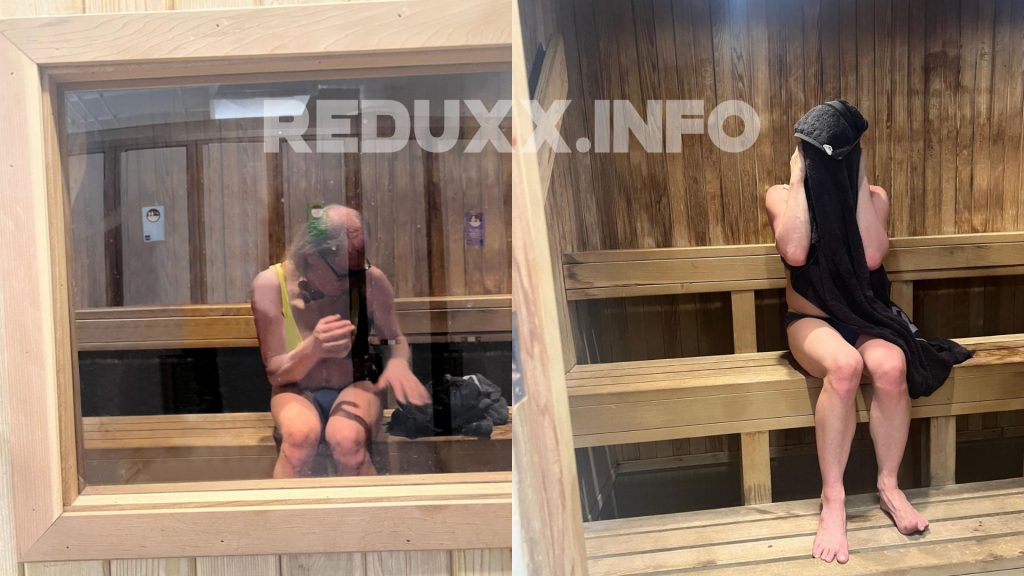
“A Canadian mother has come forward to reveal that she was chastised by staff at her local recreation center after reporting that a balding man wearing “fetish gear” was in the women’s changing room. Despite feeling so frightened that she called the police, the mother was told that the man had a right to self-identify into whatever changing room he felt like.
The incident occurred on February 18, when Keri* and her 14-year-old daughter visited the Bonnie Doon Leisure Centre in Edmonton, Alberta. Their plans to have a fun-filled afternoon at the local pool quickly took a turn for the worse after the two entered the changing area to see an adult man “naked except for fetish gear” standing in the center of the room.
Keri tells Reduxx that the man, who appeared to be in his mid-forties, was wearing a “black penis sling” and an exposed rubber breast form. So shocked by the sight, Keri immediately began to usher her daughter out of the changing area.
“My daughter was behind me… I backed up quickly so she would not keep walking forward and yelled ‘help, there is a man in the change room.’” Keri says she went back to the front desk, where she had just paid for the admission to the pool. After explaining what she had seen in the women’s changing area, a male staff member dismissed her concerns.
“He said something like: ‘yes, this is an inclusive facility, what are you afraid will happen?’ and so I told him I was calling the police. He asked me why I felt the need to call the police, but did not try to stop me.”
While waiting for an officer from Edmonton Police Service to arrive, a female staff member approached Keri to ask her about the situation. Keri recorded the conversation with the staff member, and provided the audio to Reduxx for review.
In the recording, Keri is heard giving a statement to the staff member and explaining precisely what she had experienced.
“I am telling you right now – he is a balding man, in his forties, wearing a penis sling and rubber breasts around his neck… fetish rubber breasts slung around his neck,” Keri is heard telling the staff member. “He is in the women’s washroom. I walked in with my 14-year-old daughter… I am 54, I should not have to put up with it. But she should definitely not be exposed to a man enjoying his fetish in the women’s washroom.”
In response, the staff member explains that “it is the city of Edmonton’s policy that you can use whatever changing room you are most comfortable using.” She goes on to defend the man’s attire, saying “they can wear whatever they are comfortable wearing.”
Let’s not forget the CBC and it’s startling(?) lack of coverage of this.
Bless the Canadian Broadcasting Corporation—our noble guardians of progressive virtue—turning a blind eye to fetish-driven males sashaying into female changing rooms with all the grace of a tax-funded diversity seminar. Why bother reporting on something as trivial as women’s safety when you can churn out another glowing piece on inclusivity, eh? It’s not like the CBC would dare risk its pristine reputation as Canada’s woke megaphone by admitting that some dudes in fishnets might not belong where girls are undressing—nah, that’d clash with the narrative. Besides, who needs pesky facts or viewer trust when you’ve got government cheques and a mandate to keep the maple syrup flowing smoothly over any hint of controversy?











 bleatmop
 Mystro


 Dead Wild Roses
Your opinions…