Most social lies do not begin as lies. They begin as little acts of politeness.
You laugh at a joke that was not funny. You say “no problem” when there was, in fact, a problem. You sit through a meeting where everyone knows the plan makes no sense, but nobody wants to be the person who slows the room down. Ordinary life requires tact. Not every uncomfortable truth needs to be hurled across the table the moment it appears.
But there is a difference between tact and required unreality.
Tact says we should not be needlessly cruel. Required unreality says we must say the false thing, affirm the false thing, organize institutions around the false thing, and treat anyone who refuses as morally suspect.
That difference matters because societies rarely drift away from truth in one dramatic leap. They drift through small accommodations. A phrase changes here. A courtesy becomes expected there. A workplace norm hardens into policy. A school form gets rewritten. A professional guideline quietly changes the question everyone is allowed to ask.
Then, one day, ordinary people look around and realize they are being asked to deny things they can see with their own eyes.
The debate over sex and gender is one of the clearest examples.
The first move was linguistic. “Sex observed at birth” became “sex assigned at birth.” Many people shrugged. It sounded harmless, maybe even compassionate. Why fight over wording? But the change was not neutral. “Observed” describes the recognition of a biological fact. “Assigned” suggests an administrative decision, something imposed, possibly mistaken, perhaps unjust.
No parent waits for a committee to assign sex. They see the baby. They know. The doctor observes. The parents understand. The paperwork follows reality; it does not create it.
But once “assigned” becomes normal, the ground has shifted. The old reality has not disappeared, but the language around it has been loosened. A fact starts to sound like an opinion. An observation starts to sound like an imposition. What was once obvious becomes something polite people are encouraged not to say too firmly.
Pronouns came next for many ordinary people. “What is the harm?” they were told. “It is just politeness.”
And in private life, adults can choose whatever courtesies they want. People use nicknames. People avoid sore spots. People soften language to keep peace with neighbours, coworkers, students, friends, and family. That is normal human life.
The difficulty begins when courtesy becomes compulsory and everyone is expected to speak as though sex has disappeared from the room.
A teacher pauses before saying “she.” A coworker catches himself mid-sentence. A parent sits through a school meeting and says nothing because every adult in the room knows what is being asked, and nobody wants to be first to break the spell. So people go along. They use words they do not quite believe. They tell themselves it is only a small thing.
“Those arguments matter. But before any of them can be had honestly, people must be allowed to say what they know is true.”
Small things train larger habits. Once people become accustomed to saying what they do not believe, the person who says, “wait, this is not accurate,” becomes the problem. Not the falsehood. Not the policy built on it. The person who interrupts the shared performance.
That is how a real slippery slope works. It is not that one concession magically causes the next. It is that each concession changes the moral conditions under which the next demand is judged.
If sex is “assigned,” and pronouns are only kindness, and refusing preferred language is cruelty, then female-only spaces start to look morally suspicious. The sign on the changing room may stay the same, but the rule underneath it changes. The word “women” remains on the door. What it means has been quietly edited.
That edit does not stay abstract. It reaches the sports team someone’s daughter trains with. It reaches shelters, prisons, changing rooms, rape-crisis services, and lesbian boundaries. All can be reframed as sites of exclusion. The question quietly changes from “Do women and girls have sex-based rights?” to “Why are you being unkind to this vulnerable person?”
None of this denies that some people experience genuine distress about their bodies. They do. The question is whether compassion requires everyone else to rewrite reality around that distress.
By then, the argument has already moved. Women are no longer asking to preserve boundaries rooted in sex. They are being asked to justify why those boundaries should exist at all.
That is not an abstract problem. It changes institutions. It changes policies. It changes what children are taught. It changes what professionals are allowed to say. It changes whether parents, teachers, doctors, athletes, and ordinary citizens are permitted to name reality without being accused of hatred.
The kind lie does not remain kind once people are punished for refusing it.
We can debate the details of medicine, sports, schools, safeguarding, and law. Those arguments matter. But before any of them can be had honestly, people must be allowed to say what they know is true.
Reality has a way of waiting. Bodies still exist. Sex still matters in medicine, sport, privacy, reproduction, vulnerability, and patterns of violence. Institutions can change their language, but language does not abolish the facts underneath it. Step away from truth for long enough and eventually reality supplies the correction.
Reality always bats last.
The point is not that every hard truth should be spoken harshly. Decency matters. So does compassion. But compassion detached from truth becomes something else. It becomes a demand that some people absorb real costs so everyone else can feel morally clean.
That is the part ordinary people need to notice. Every time they play along with a claim they know is not true, they are not merely being polite. They may be helping build the next rule, the next policy, the next institutional punishment for the person who finally says no.
Truth is the lifeblood of any serious civilization. Not comfort, not ideological harmony, and not the temporary social peace that comes from teaching people to suppress what they can plainly see.
A society can survive mistakes. It can survive corruption. It can survive periods of confusion and even mass foolishness, provided enough people remain willing to describe reality honestly when the pressure arrives to do otherwise. What societies struggle to survive is organized dishonesty.
Reality is the brick wall waiting at the end of every false belief. You can postpone the collision for a while. You can build bureaucracies around the falsehood, invent softer language to cushion it, and punish people for pointing at the wall. The impact still comes.
That is why a recent quote from J. K. Rowling landed with such force:
“The West is currently divided between people who know he is a man and are prepared to say so and those who know this is a man but lie out of obedience to an ideology. There is no third option. Literally nobody on earth thinks ‘Roxanne Tickle’ is actually a woman.”
The quote unsettled people because it named something many Western institutions have spent years trying to blur: the widening gap between public language and private belief.
Large numbers of people now routinely say things in public that they would once have regarded as obviously false, not because the underlying biology changed, but because the social cost of dissent rose dramatically. That distinction matters, because this is not primarily a debate about kindness.
A decent society should discourage cruelty. It should not encourage humiliation, harassment, or needless malice toward people struggling with alienation, identity, or psychological distress. Most ordinary people understand this instinctively. But courtesy is not the same thing as compelled belief.
Calling someone by a preferred name is one thing. Demanding that citizens affirm propositions they do not believe to be true is something else entirely. The first is social grace. The second is ideological obedience.
Nor is this an argument for replacing one rigid orthodoxy with another. Conservative traditions have their own temptations toward enforced piety, inherited blindness, and social punishment for inconvenient truths. Any worldview, religious or secular, progressive or reactionary, becomes dangerous when it starts protecting sacred assumptions from scrutiny. The standard cannot be nostalgia or novelty. The standard has to be reality itself: when a belief hits the brick wall, the belief must yield.
Modern Western institutions increasingly refuse to yield.
People learn quickly which observations are permitted and which ones carry risk. Teachers self-censor in classrooms. Employees rehearse approved language in HR seminars. Professionals choose silence over scrutiny. Friends whisper obvious opinions privately, then publicly perform uncertainty they do not actually feel. Entire bureaucracies now operate through euphemism, ritual language, and carefully managed ambiguity designed less to clarify reality than to avoid conflict with activist moral frameworks.
The social choreography becomes exhausting to watch because everyone notices the contradiction, while almost nobody wants to be the first person to say so aloud.
That atmosphere corrodes more than speech. It corrodes trust itself.
Once institutions begin demanding verbal loyalty to claims that large numbers of people privately reject, public language starts losing contact with reality. Words stop functioning primarily as descriptive tools and become signals of social compliance. The goal is no longer clarity. The goal is demonstrating moral alignment with the approved consensus.
History offers repeated warnings about where this habit leads. Not always to catastrophe on cinematic scales. Sometimes the damage is quieter and more banal than that. Institutions become incapable of self-correction because honest feedback becomes socially dangerous. Bad ideas survive longer than they should. Obvious failures remain unacknowledged. Citizens retreat into cynicism. Public trust declines because people can feel the gap between official language and observable reality widening in real time.
The lie does not even need to convince everyone to become destructive. It only needs to become socially mandatory.
That is the deeper danger here. A liberal society depends on the ability of ordinary people to speak plainly about reality without fear that disagreement itself will be treated as moral contamination. Once that principle collapses, coercion inevitably expands to fill the space left behind, not always through laws, but often through softer mechanisms: reputational pressure, professional risk, social isolation, algorithmic mobbing, institutional gatekeeping. The effect is similar either way. Silence becomes safer than honesty, and so more people stay silent.
The defenders of this system often insist they are merely asking for compassion. In many cases, I suspect some genuinely believe that. But compassion detached from truth eventually mutates into something harsher. If reality itself becomes negotiable, then social power determines what may be spoken. At that point the argument is no longer about tolerance. It becomes a struggle over who has authority to define reality for everyone else.
That is not progress. It is regression wrapped in therapeutic language.
None of this requires cruelty toward individuals or hatred. It requires only the willingness to say that observable reality still matters, even when saying so becomes socially uncomfortable. Reality does not disappear when institutions stop acknowledging it.
The brick wall remains where it always was, and civilizations that train themselves to look away rarely avoid the collision forever.
Dallas Brodie, once the MLA for Vancouver-Quilchena, has emerged as a lightning rod in British Columbia’s political landscape due to her insistence on questioning the narrative surrounding the Kamloops Indian Residential School. Expelled from the BC Conservative Party on March 7, 2025, Brodie’s assertion that “zero” child burials have been confirmed at the site—technically accurate, as no remains have been excavated—ignited a firestorm. Her refusal to retract her February 2025 social media post, despite pressure from party leader John Rustad, and her subsequent mockery of subjective “truths” in a March 6 online discussion, underscored her quest to challenge what she sees as unverified claims. Brodie’s stance, while divisive, reflects a broader frustration among some Canadians with the lack of empirical evidence behind widely accepted residential school narratives, positioning her as a figure demanding factual accountability in a debate often steeped in emotion.
The Canadian media, however, has largely framed Brodie’s actions as denialism, amplifying a narrative that paints her as a villain rather than a skeptic. Outlets like CBC and The Globe and Mail emphasized her expulsion and her inflammatory tone—such as mimicking survivors’ testimonies—while downplaying the absence of physical evidence at Kamloops, a point she repeatedly highlighted. This selective reporting constructs a fabricated storyline that prioritizes moral outrage over nuanced discussion, failing Canadian society by stifling inquiry into a complex issue. By focusing on Brodie’s personal conduct rather than engaging with her central argument, the media has diverted the conversation from truth-seeking to character assassination, leaving the public with a polarized, oversimplified version of events that obscures the need for factual clarity.
Compounding this failure is the response from some Indigenous leaders and communities, whose rejection of Brodie’s evidence-based critique has hardened the discourse. Groups like the Métis Nation British Columbia condemned her as a denialist, dismissing her call for verification of the Kamloops claims as an attack on reconciliation itself. This reflex to brand dissent as heresy—rather than address the lack of excavated remains—entrenches a narrative that equates questioning with disrespect, sidelining legitimate debate. Such denial of the truth, or at least its ambiguities, transforms a potentially unifying pursuit of facts into a battleground of identity and guilt, alienating Canadians who seek clarity rather than dogma.
The fallout from Brodie’s case reveals how these dynamics erode public trust and degrade civic dialogue. Her expulsion from the BC Conservatives, followed by the defection of two MLAs on March 7, 2025, signals internal party fractures but also mirrors a broader societal rift. Media-driven narratives that vilify skepticism, paired with Indigenous insistence on unchallengeable “truths,” have created a climate where questioning official accounts invites ostracism rather than answers. This poisonous blend has left Canadians less equipped to grapple with the residential school legacy, as discussion deteriorates into accusations of racism or betrayal instead of a shared pursuit of what actually happened—a failure that undermines reconciliation more than Brodie’s provocations ever could.
Ultimately, Dallas Brodie’s quest, however flawed in delivery, exposes a critical flaw in Canadian society: the inability to confront uncomfortable questions without fabricated narratives or entrenched denialism. The media’s rush to condemn rather than investigate, and the refusal of some Indigenous voices to entertain factual uncertainty, have roughened a debate that demands precision and honesty. As Brodie sits as an independent MLA, unrepentant in her stance, her case serves as a warning—Canadian society risks losing its capacity for truth when inquiry is sacrificed for comfort. Until the media prioritizes evidence over outrage and all parties embrace open scrutiny, the dialogue around residential schools will remain a casualty of its own abrasiveness, failing the very history it seeks to honor.
“James Lindsay presented a compelling critique of critical social justice and its ideological foundation in critical theory. He argued that this worldview fundamentally rejects objective truth, reason, and evidence-based methods, which are essential for genuine progress. According to Lindsay, critical theorists prioritize “strategic” theories over true or false ones, seeking to advance political agendas rather than to understand reality.
Drawing on examples from feminist and social justice literature, Lindsay illustrated how critical theory undermines fields like engineering, climate science, and education by prioritizing social power over truth. He contended that while these disciplines traditionally rely on rigorous methods to solve problems, critical theory disregards such rigor, treating knowledge as a mere tool for enforcing power dynamics. For Lindsay, this ideological shift threatens progress, as it ignores that “reality is the thing you run into when your beliefs are false.”
Ultimately, Lindsay called for a return to evidence-based inquiry and the liberal systems that have historically driven human advancement. By defending reason, scientific method, and open discourse, he argued, society can continue to make meaningful progress rather than regress into a cynicism that treats truth as a mere strategy for political ends.
Viewers will find this talk interesting not just for its contents but also for the glimpse back in time by five years, which allows them to see how the views expressed have matured and developed over the intervening time.”
“Increasingly, Western societies – especially the English-speaking countries – are becoming two different peoples speaking two very different languages and believing in two modes of living. One camp believes in some form of objective truth and labels humans as either male or female. They acknowledge there are endless variations in the ways humans express themselves, but they are certain there are only two sexes. The concept of two sexes is so ancient and fundamental to our makeup as a species, we’re still wrapping our heads around having to verbalize what was always common sense. Defending the obvious is exhausting.
Clash of two camps: If universal truths are no longer recognized and everything is a “construct,” writes the author, society becomes increasingly divided even at the level of basic understanding and language. Shown are: (top) the 2023 Drag Up Fight Back protest, San Francisco, CA; (bottom) the meeting against minor children transgender policies, Vancouver, B.C. (Sources of photos: (top) Sheila Fitzgerald/Shutterstock; (bottom) EJ Nickerson/Shutterstock)
The other camp believes in a post-modernist version of constructed truth in which there are dozens of “fluid” genders that negate sex and biology. They also believe that anyone who does not subscribe to this belief is a heretic and as evil as a Nazi. They have the news and entertainment media, most of academia, much of the corporate world, and more and more of the state apparatus (from educational bureaucracies to human rights commissions) on their side.
How do these two camps speak to one another? The two belief systems require very different laws and social norms. If there are only two sexes, the man in my mother’s story is not allowed in the women’s changeroom. If sex is a social construct and can change through self-declaration or self-perception, that man can be a woman and is therefore allowed in the women’s changeroom. Right now, it seems the latter camp is winning and that we no longer share a common understanding of basic truths or even of language. Words like “man” or “woman” that were once universal are no longer.
A society that does not have a shared language cannot share thoughts. A society that is divided on whether or not there is objective truth, outside of personal feelings and emotions, cannot set laws or policies that work for the broadest range of people. A society where women and girls are cowed into silence when a crime is perpetrated against them for fear of being labelled the enemy is a shaky society indeed.”
“We evolutionary biologists (@SwipeWright , @Evolutionistrue , @FondOfBeetles and others) are fascinated by the immense diversity in body and behavior of male and female organisms. We also understand that mammals come in two sexes, male and female, and that these are reproductive categories that are defined by the body plan for the production of either large or small gametes.
@Anthrofuentes knows what we think about all this, so I am confused about why he says in @sciam that scientists like us “maintain that whether our bodies make ova or sperm are all we need to know about sex.” Relatedly, he says that “producing ova or sperm does not tell us everything…about an individual’s childcare capacity, homemaking tendencies, sexual attractions, interest in literature…” Um…who is saying that gametes dictate any of this? That sex is binary is obviously compatible with traits like interest in literature varying widely between the two sexes. It is also compatible with the existence of significant differences between the sexes.
Unfortunately, Fuentes has tarred all the members of a diverse group with the same brush, denigrating the motives of those who assert that sex is real, biological, binary and meaningful for social policy. “They are arguing for a specific political, and discriminatory, definition of what is ‘natural’ and ‘right’ for humans based on a false representation of biology…[and] dishonest ascriptions of what biology is are being deployed to restrict women’s bodily autonomy…and to attack the rights of transexual and transgender people.”
Sex matters because even though bodies and behavior vary, being male or female does predict a lot. Women in particular understand this, because we are more physically vulnerable than men. We care about gender-diverse people and their basic human rights, and we are *also* concerned about safety and fairness in places like prison cells and women’s sports. These issues can be debated sensibly without relying on “a false representation of biology.”
What is ad block? It is an application that, at your discretion blocks out advertising so you can browse the internet for content as opposed to ads. If you do not have it, get it here so you can enjoy my blog without the insidious advertising.

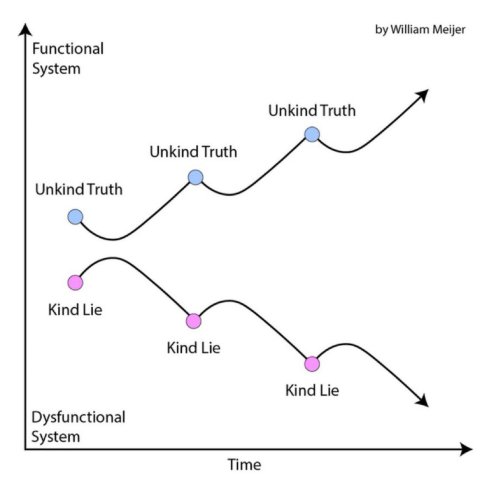
 Nor is this an argument for replacing one rigid orthodoxy with another. Conservative traditions have their own temptations toward enforced piety, inherited blindness, and social punishment for inconvenient truths. Any worldview, religious or secular, progressive or reactionary, becomes dangerous when it starts protecting sacred assumptions from scrutiny. The standard cannot be nostalgia or novelty. The standard has to be reality itself: when a belief hits the brick wall, the belief must yield.











 bleatmop
 Mystro


 Dead Wild Roses
Your opinions…