
You are currently browsing the category archive for the ‘Politics’ category.
The corrosion of Canadian society is becoming increasingly apparent as disparities in the application of law erode the principles of justice and equality that underpin national cohesion. A telling example is the cancellation of concerts by Sean Feucht—a Christian musician associated with conservative American politics—in cities like Vaughan and Montreal, contrasted with law enforcement’s seemingly permissive stance toward disruptive street protests held by certain Islamist groups. This uneven enforcement of the law not only undermines the rule of law but also stokes populist resentment, creating fertile ground for political polarization.
At the root of this problem lies the influence of critical social constructivism — often expressed through “woke” ideology — which prioritizes identity-based oppression narratives over impartial justice. This essay explores how the disparate treatment of public expression—illustrated by the Feucht case—threatens to fracture Canadian society and how ideological bias within institutions exacerbates the risk.
The Sean Feucht Concert Cancellations
Sean Feucht, known for his conservative Christian beliefs and affiliation with the MAGA movement, faced significant resistance when attempting to host concerts in Canada. In Vaughan, the city revoked his permit for a scheduled event at Dufferin District Park, citing concerns about “health and safety as well as community standards and well-being” (National Post). In Montreal, a church hosting Feucht was fined $2,500 over permit issues, and during the event, a smoke bomb was thrown into the venue—allegedly by Antifa-aligned protestors—yet no arrests followed (CBC News).
Other cancellations occurred in Quebec City and at a Parks Canada site in Nova Scotia, often citing vague concerns about “community standards” or “public safety,” despite no comparable crackdown on ideologically favored events (CBC News; Globe and Mail).
Unequal Application of Law
In contrast to the concert cancellations described earlier, public demonstrations involving Islamic street prayers have been met with a markedly different approach. For example, in March 2025, protesters blocked Toronto’s Yonge and Bloor intersection to perform anti-Israel Islamic prayers. Despite obstructing traffic and complaints from residents, Toronto Police took no enforcement action, citing a need to balance Charter rights and public safety (True North).
Similarly, in Montreal, Quebec Premier François Legault publicly criticized city police for allowing protesters to block streets during Islamic prayers, noting that no fines or charges had been issued across numerous demonstrations. Legault even considered invoking the notwithstanding clause to prohibit such practices outright (The CJN).
Adding to the perception of enforcement bias, journalists covering these protests reported being obstructed or threatened by police. In one instance, Montreal police allegedly told a journalist to “let them pray” while preventing him from filming, yet protesters causing the disruption faced no consequences (Rebel News).
This stark contrast — Christian concerts shut down, yet Islamic street blockages tolerated — reinforces public perception that Canadian authorities selectively apply the law based on ideological alignment.
Legal Framework: Religious Freedom and the Charter
Section 2(a) of the Canadian Charter of Rights and Freedoms guarantees that everyone has “freedom of conscience and religion.” This protection applies equally to Christians, Muslims, Jews, atheists, and others. Section 15 of the Charter further guarantees “equality before and under the law” and the “right to equal protection and equal benefit of the law without discrimination.”
However, Section 1 of the Charter allows for “reasonable limits prescribed by law as can be demonstrably justified in a free and democratic society.” This is the legal mechanism by which governments or municipalities may argue that certain forms of expression or assembly—such as large concerts or disruptive protests—can be restricted in specific circumstances.
The problem arises when these limits appear to be enforced inconsistently, not based on objective criteria like safety or legality, but on the perceived ideological or religious affiliation of the participants. When secular authorities use Section 1 to suppress Christian gatherings while allowing disruptive Islamic demonstrations under Section 2(a), it creates the impression that some faiths are politically privileged while others are disfavored. This perception undermines public trust in the legal system and calls into question the neutrality of state institutions.
Societal Fracture
Unequal treatment before the law is a potent catalyst for societal division. When one segment of society perceives that its freedoms are systematically constrained while others are indulged, resentment grows—and with it, the risk of reactionary backlash.
Feucht himself characterized the cancellations as “Christian persecution,” accusing Canadian authorities of suppressing religious expression (CBC News). Whether one agrees or not, such rhetoric resonates with those who feel alienated by mainstream institutions. This kind of alienation feeds populist sentiment, erodes civic trust, and empowers more extreme political actors who promise to right perceived injustices.
Without a return to legal consistency, Canada risks a vicious cycle of grievance and counter-grievance, fueled not by reasoned discourse but by tribal loyalty and ideological recrimination.
The Ideological Engine: Critical Social Constructivism
The ideological root of this unequal application of law lies in critical social constructivism, particularly its contemporary “woke” form. Emerging from postmodern thought, this worldview holds that social reality is constructed through language and power relations, and that justice requires actively correcting historical imbalances.
In practice, this framework often leads to the privileging of marginalized identity groups while casting traditionally dominant groups—especially white, male, Christian, or conservative individuals—as inherently suspect. In the Feucht case, decision-makers may have acted out of a desire to affirm progressive social norms and suppress what they perceive as regressive or harmful speech.
This ideologically motivated asymmetry undermines the foundational liberal principle of equal treatment under the law. By replacing legal neutrality with identity-based adjudication, institutions risk becoming instruments of factionalism rather than guardians of justice.
Conclusion
If Canadian institutions continue to apply the law unevenly, motivated by ideological commitments rather than legal consistency, the resulting erosion of public trust will not remain confined to the political margins. It will spread. For a pluralistic society to function, citizens must believe that laws are applied fairly, regardless of ideology, religion, or identity.
The corrosion of this principle—whether in the name of safety, social progress, or cultural sensitivity—threatens the very cohesion it claims to protect. It is only through a recommitment to impartial justice that Canada can reverse its drift toward ideological tribalism and restore the unity that undergirds a truly free society.

Sources Cited
- National Post. “All six Canadian venues cancel Christian musician Sean Feucht’s shows.” https://nationalpost.com/news/canada/vaughan-cancels-sean-feucht-concert
- CBC News. “Quebec City cancels concert of MAGA musician, following lead of other Canadian cities.” https://www.cbc.ca/news/canada/montreal/sean-feucht-concert-montreal-1.7012345
- The Globe and Mail. “MAGA-affiliated American musician faces wave of cancellations on eastern Canadian tour.” https://www.theglobeandmail.com/canada/article-maga-affiliated-american-musician-faces-wave-of-cancellations-on/
- CBC News. “Permit revoked for MAGA musician’s concert at Parks Canada site, but show will go on.” https://www.cbc.ca/news/canada/nova-scotia/sean-feucht-concert-cancelled-parks-canada-1.7012345
- True North Wire. “Toronto residents upset after Hamas supporters blockade busy intersection.” https://truenorthwire.com/2025/03/toronto-residents-upset-after-hamas-supporters-blockade-busy-intersection/
- The CJN. “Quebec’s premier wants to ban public prayer after protests block traffic and challenge secularism.” https://thecjn.ca/news/quebecs-premier-wants-to-ban-public-prayer-after-protests-block-traffic-and-challenge-secularism/
- Rebel News. “Shocking: Threatened with arrest for covering Islamic public prayers.” https://www.rebelnews.com/shocking_threatened_with_arrest_for_covering_islamic_public_prayers?
- Government of Canada. “Canadian Charter of Rights and Freedoms.” https://laws-lois.justice.gc.ca/eng/Const/page-15.html
https://x.com/wokal_distance/status/1943452227634630725
On July 10, Wokal Distance shared a powerful thread on X about the moral and intellectual fallout of gender ideology. Here’s the full text, reformatted for clarity:
I don’t think the left realizes the degree to which giving puberty blockers and sex-change procedures to kids who wanted to change genders was a test of moral and intellectual integrity. That test utterly destroyed the moral and intellectual credibility of everyone who failed it.
Those who went along with gender ideology didn’t just end up on the wrong side of public opinion. They demonstrated for the whole world that they had no intellectual integrity, moral fortitude, or ability to stand up for the truth or think for themselves.
They showed they have no intellectual or moral anchors of any kind. They’ll pretend to believe anything and go along with any ideology to preserve their social standing and the esteem of their colleagues.
The result? The institutions, industries, and individuals who embraced gender ideology proved they were intellectually and morally hollow. In the process, they destroyed their credibility and legitimacy as experts in the eyes of the public.
This isn’t just a PR crisis. It’s not about the focus of institutions or how people present themselves. The real issue is whether our elite class has the professional capability and moral fiber to competently do their jobs.
Gender ideology was a test of moral compass, intellectual integrity, and professional competence. If you have even one of those three qualities, you reject gender ideology. The only way to go along with it is to lack all three completely.
Those who supported gender ideology showed no moral compass, no intellectual integrity, no ability to think for themselves, and no professional competence in understanding critical issues. They’ve proven themselves utterly illegitimate as elites or experts.
They’ve shown they’re constitutionally incapable of doing the jobs they were assigned. For that reason, they’ve lost all social legitimacy and trustworthiness.
Progressives think this is a messaging problem or a PR crisis—it’s not. This is about the fundamental legitimacy of the entire institutional apparatus from which the left draws its professionals, staffers, employees, ideas, policies, and overall direction.
The left can’t fix this by shifting focus or direction. They must admit they failed the gender ideology test, explain why and how they failed, and put people in charge who would pass that test. Until they do, they’ll continue to be seen as illegitimate.
And they have no idea why, because they refuse to take the ‘L’ and figure out how their entire movement and all their institutions got hijacked by the most extreme wing of the most niche leftist movement in American politics.

Arendt exposed ideological conformity, Gramsci revealed cultural capture, and Orwell diagnosed linguistic decay. Now, John Stuart Mill’s On Liberty (1859) offers a moral and philosophical counter to critical social constructivism’s (CSC) hostility toward open inquiry and individual conscience. Mill’s insistence that liberty of thought, speech, and character fuels social and moral progress stands as a principled rebuke to CSC’s attempts to bind individuality to collective dogma. Together, these thinkers—Arendt, Gramsci, Orwell, and Mill—equip us to resist CSC’s illiberal advance.
Mill argues that silencing expression harms not only the speaker but society as a whole, which is deprived of truth’s refinement through open contest (Mill, 1859, Ch. II). Even false opinions, he writes, may contain a kernel of truth; and true ones grow weak without opposition. CSC, meanwhile, appeals by promising equity through collective identity. Yet it treats dissent as a moral failure. Disagreement with DEI orthodoxy or critical race theory is labeled “harmful” or dismissed as “white fragility,” producing what Mill called “the tyranny of the prevailing opinion.” In 2024, University of Washington faculty guidelines equated merely questioning anti-racism initiatives with creating a “hostile environment,” thereby chilling discussion.
CSC’s moral coercion inverts Mill’s epistemic humility—his belief that all ideas deserve scrutiny, no matter how widely accepted. Mandatory DEI trainings, such as a 2024 policy at a major tech firm requiring employees to affirm “lived experience” as a primary form of knowledge, preclude rational dissent. In K–12 education, 2024 California curriculum guidance redefined “authenticity” as alignment with racial or gender identity groups, effectively suppressing individual thought. These tactics substitute ritual affirmation for genuine intellectual contest—exactly what Mill warned against.
Mill’s defense of individuality as a moral ideal—his celebration of “originality” and “nonconformity” (Ch. III)—clashes with CSC’s group-based scripts. By prioritizing identity categories over self-authorship, CSC undermines human flourishing. Mill does not reject social justice, but insists that no ideal justifies silencing dissent. His Enlightenment liberalism calls us to restore a culture of contestation and protect the individual as a source of moral insight.
Where Orwell showed how language is manipulated to close debate, Mill reveals why debate must remain open—because liberty depends on it. This series—Arendt’s pluralism, Gramsci’s cultural strategy, Orwell’s linguistic clarity, and Mill’s defense of liberty—forms a unified resistance to CSC’s totalizing ambitions.
Read Mill. Restore the contest of ideas. Reclaim individuality in classrooms, workplaces, and public life as the cornerstone of a free society.
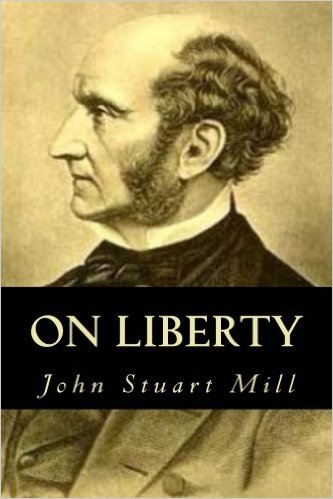
Three Salient Points for Arguments Against Critical Social Constructivism
- Silencing Dissent Erodes Truth: CSC’s labeling of CRT critiques as “hostile,” as in 2024 campus policies, violates Mill’s warning that suppressing dissent impoverishes collective understanding.
- Moral Coercion Replaces Rational Persuasion: CSC’s mandates—like 2024 DEI affirmations in workplaces—replace Mill’s marketplace of ideas with conformity. Challenging these in policy debates restores reasoned inquiry.
- Individuality Is Suppressed by Group Identity: CSC’s identity scripts, seen in 2024 K–12 curricula, undermine Mill’s ideal of self-authorship. Promoting merit-based and pluralistic policies can counter this trend.
Reference
Mill, J. S. (1859). On Liberty. London: John W. Parker and Son.
Arendt exposed ideological conformity, Gramsci revealed cultural capture, and now George Orwell’s Politics and the English Language (1946) unveils critical social constructivism’s (CSC) subtlest weapon: the corruption of language. Orwell warned that vague, euphemistic language obscures reality, trapping thought in a labyrinth of abstraction. CSC wields this tactic to redefine terms, enforce orthodoxy, and render dissent unthinkable. As we turn next to Mill’s defense of liberty, Orwell’s insights equip us to resist CSC’s assault on meaning.
Orwell argued that sloppy language fosters sloppy thought, and vice versa, creating a cycle in which “language becomes ugly and inaccurate because our thoughts are foolish” (Orwell, 1946). CSC exploits this feedback loop by emptying words like harm, justice, and truth of any stable, shared meaning. Disagreement becomes “harm,” objectivity becomes “whiteness,” merit becomes “systemic bias.” The appeal lies in the promise of inclusivity, yet clarity is sacrificed for ideological control. In 2024, university style guides—such as Stanford’s—discouraged terms like “mother” and “father” in favor of “birthing parent” and “non-birthing parent,” narrowing language to conform with CSC imperatives. That same year, journalism guidelines at outlets like NPR labeled objective reporting as a manifestation of “whiteness,” stifling evidence-based discourse.
Like Orwell’s Newspeak, CSC’s linguistic shifts shrink vocabulary and moral nuance, making dissent socially radioactive. To question CSC isn’t to be wrong—it’s to enact “violence.” This mirrors Orwell’s warning that vague language can “make lies sound truthful” (1946), a tactic used to protect ideological dogma. Unlike Gramsci’s cultural trenches, Orwell targets the battlefield of meaning, where CSC renders opposition not just incorrect but unintelligible within its moral grammar.
Orwell’s antidote—short words, active verbs, and concrete images—is a blueprint for resistance. Language must be a window, not a smokescreen. When language no longer corresponds to shared experience, political manipulation becomes inevitable. Restoring clarity means demanding precise, evidence-based definitions in institutions captured by CSC. This series—Arendt on totalitarianism, Gramsci on hegemony, Orwell on language, and Mill on liberty—reveals CSC as a coordinated project to redefine reality.
Read Orwell. Restore language through precise debate. Reclaim meaning in schools, workplaces, and public forums as the first act of resistance.

Three Salient Points for Arguments Against Critical Social Constructivism
- Language Obscures, Then Controls: CSC’s redefinition of “violence” to include speech, as in 2024 campus policies, severs language from reality and undermines open discourse—just as Orwell warned.
- Vagueness Is a Weapon, Not a Flaw: CSC’s reliance on unverifiable concepts like “lived experience,” seen in 2024 DEI reports, avoids falsifiability and shields ideological claims from challenge.
- Clarity Is Resistance: Demanding evidence-based definitions in DEI training and policy debates—guided by Orwell’s principles—undermines CSC’s ideological capture and restores intellectual integrity.
References
Orwell, G. (1946). Politics and the English Language. London: Horizon.
(Additional references: Orwell, G. (1949). 1984; Orwell, G. (1946). The Prevention of Literature.)
Our series began with Hannah Arendt’s The Origins of Totalitarianism, exposing how ideological systems crush complexity and silence dissent. Now, Antonio Gramsci’s Selections from the Prison Notebooks (1971) reveals how such systems entrench themselves not through violence, but through culture. His concept of cultural hegemony—the ruling class’s ability to weave its worldview into society’s “common sense”—underpins the activist-theoretical complex of critical social constructivism (CSC). Gramsci’s insights—soon to be joined by Orwell’s warnings on language and Mill’s defense of liberty—illuminate the strategic depth of CSC and arm us to resist its totalizing spread.
A Marxist imprisoned by Mussolini’s regime, Gramsci argued that dominance endures not just through state coercion, but by shaping the cultural narratives expressed in schools, media, and civil institutions (Gramsci, 1971). CSC wields this strategy skillfully, capturing universities, HR departments, and K–12 curricula to redefine concepts like justice, harm, and truth. Its appeal lies in promising equity through structural change, yet it betrays this promise by erecting a new orthodoxy in which dissent becomes unintelligible. In 2024, university DEI training at institutions like UCLA required faculty to affirm “anti-racism” principles, silencing questions about ideological framing—a Gramscian maneuver designed to remake “common sense” itself.
CSC’s genius—and its danger—lies in rewiring the cultural fabric, thread by thread, until dissent appears as an unthinkable pattern. In contrast to Gramsci’s vision of empowering the marginalized from below, CSC’s elites impose orthodoxy from above. DEI mandates, such as 2024 corporate policies that require employees to affirm contested ideologies, mirror what Gramsci called the “trenches” of cultural warfare. Speech codes that label disagreement as “harmful” render opposition not merely wrong but morally deviant, echoing the totalitarian logic Arendt identified. These tactics reshape the public square, narrowing moral and linguistic boundaries until alternative worldviews are excluded by default.
Gramsci reveals why CSC resists debate: it redefines the very terms of discourse. Understanding this strategy is essential to resisting it. By recognizing how CSC transforms institutions into ideological instruments, we can begin to reclaim pluralism and open inquiry. This series, bridging Gramsci to Orwell and Mill, equips us to understand CSC not just as a collection of radical ideas, but as a cultural project aimed at monopolizing moral and linguistic legitimacy. CSC’s spread—like a tapestry quietly rewoven to exclude dissent—demands a unified stand for liberal principles: free inquiry, reasoned debate, and intellectual freedom. Read Gramsci critically. Decode the cultural strategy.
Reclaim our institutions through open forums, Socratic seminars, and a revival of pluralistic values.

Three Salient Points for Arguments Against Critical Social Constructivism
Cultural Hegemony Is Real—and Reversible
Gramsci showed how norms are shaped through education and language. Reversing CSC’s dominance starts with advocating parental choice in curricula and open academic forums like Socratic seminars.
Institutional Capture, Not State Revolution, Is the Threat
CSC’s infiltration of institutions—such as 2024 UCLA DEI mandates enforcing ideological affirmations—mirrors Gramsci’s cultural revolution, reshaping society without needing to seize state power.
Ideas Become Unquestioned as ‘Common Sense’
By normalizing its ideology, CSC renders dissent immoral, as seen in 2024 speech codes. Supporting pluralism and open debate in schools and workplaces restores the possibility of reasoned disagreement.
Reference
Gramsci, A. (1971). Selections from the Prison Notebooks. New York: International Publishers.
Introduction
The dialectic—Hegel’s clash of ideas, Marx’s material struggles—cuts through the fog of social change, exposing contradictions that forge new realities. In this second installment of our series, we wield this lens to dissect third-wave feminism and queer theory-based gender ideology, two movements that have corroded entrenched norms around gender and identity. By defining their origins, principles, and tangible impacts, we reveal their roles as dialectical antitheses: challenging rigid structures, igniting conflict, and birthing new social orders. Yet, their trajectories—shaped by the neoliberal churn of the 1990s—are fraught with contention, from feminist schisms to charges of anti-science dogma. We must probe their material roots and critiques to grasp their dialectical force, setting the stage for our final inquiry into whether these movements, absorbed by institutions or still radically potent, persist in history’s unyielding spiral.
Third-Wave Feminism: A Dialectical Force for Inclusivity
Third-wave feminism, emerging in the early 1990s, arose as a fierce critique of second-wave feminism’s homogeneity. The second wave (1960s–1980s) secured legal victories—reproductive rights, workplace protections—but often centered white, middle-class women, marginalizing others. Third-wave feminists, galvanized by Kimberlé Crenshaw’s 1989 concept of intersectionality (Crenshaw, 1989), which posits that oppressions like race, class, and gender interlock, sought to rectify this. Judith Butler’s Gender Trouble (1990) deconstructed gender as performative, while Patricia Hill Collins’ Black Feminist Thought (1990) amplified Black women’s voices. This wave embraced diversity and individual agency, challenging the second wave’s universalist bent.
Dialectically, third-wave feminism is an antithesis to the second wave’s thesis. The thesis—legal equality—harbored a contradiction: its narrow scope ignored compounded oppressions. The antithesis, third-wave’s intersectional critique, exposed this flaw, pushing for a synthesis: a fragmented yet inclusive feminism. This corrodes the second wave’s monolithic framework, but critics—radical feminists like Sheila Jeffreys—argue it dilutes focus on sex-based oppression, prioritizing fluid identities over material realities (Jeffreys, 2014). Liberal feminists, meanwhile, clash with its poststructuralist leanings, favoring pragmatic reforms over theoretical deconstructions.
The material conditions of the 1990s—global capitalism, neoliberal individualism, and media saturation—fueled this shift. Second-wave gains, like increased economic power for women, created space for diverse voices, while neoliberalism’s emphasis on personal choice shaped third-wave’s focus on identity politics (Evans, 2015). Yet, this context also introduced contradictions: the commodification of feminism risked co-opting its radical edge, a tension that persists.
Concrete Examples
The Riot Grrrl movement, a feminist punk subculture born in Olympia, Washington, in the early 1990s, exemplifies third-wave feminism’s dialectical force. Punk’s male-dominated culture (thesis) was challenged by Riot Grrrl’s fierce activism (antithesis)—bands like Bikini Kill and zines like Girl Germs championed DIY ethics and female empowerment. The synthesis: a punk scene more inclusive of women, influencing broader cultural gender representations (Gottlieb & Wald, 1994). Digital activism, via 1990s blogs and e-zines, further challenged traditional feminist discourse (thesis) with decentralized voices (antithesis), yielding a globalized feminist movement amplifying marginalized perspectives (Evans, 2015). Yet, this digital sprawl fractured unity, a critique levied by radical feminists who see it as diluting feminist goals.
Queer Theory-Based Gender Ideology: Disrupting Binary Norms
Queer theory-based gender ideology, rooted in 1990s scholarship, rejects fixed gender and sexuality categories as socially constructed. Judith Butler’s Gender Trouble (1990) argued gender is performative, while David Halperin defined “queer” as “by definition whatever is at odds with the normal, the legitimate, the dominant. There is nothing in particular to which it necessarily refers. It is an identity without an essence” (Halperin, 1995, p. 62). This oppositional stance—antithetical to normative structures—drives its dialectical role, advocating for fluid identities and reshaping social, legal, and cultural landscapes. Its rise, however, ignites fierce debate, with critics decrying its rejection of biological realities.
Dialectically, gender ideology is an antithesis to traditional gender norms (thesis), which enforce a binary system rooted in biological sex. By deconstructing these norms as constructed, it pushes for a synthesis: inclusive policies and cultural shifts accommodating diverse identities. This synthesis, however, is contested. Helen Pluckrose and James Lindsay (2020) argue in Cynical Theories that queer theory’s dismissal of biology as “bollocks” misrepresents scientific facts to prioritize political disruption, undermining empirical rigor. Feminist critics like Rosemary Hennessy (1995) contend it sidelines materialist concerns—capitalism, patriarchy—focusing on discursive representations over systemic oppressions. Radical feminists, like Andrea Dworkin, reject queer theory outright, arguing its fluidity erases sex-based categories essential for addressing women’s oppression (Dworkin, 1994).
The 1990s neoliberal context—marked by consumer culture and identity commodification—amplified queer theory’s rise. Global capitalism’s emphasis on individual expression aligned with its focus on fluid identities, but institutional absorption (e.g., corporate pride campaigns) risks diluting its radical critique, a tension mirroring third-wave feminism’s challenges (Fraser, 2009).
Concrete Examples
The push for gender-neutral bathrooms challenges binary facilities (thesis) with inclusive spaces (antithesis), yielding a synthesis: institutions adopting such facilities, though resistance persists (Engenderings, 2017). Legal recognition of non-binary gender markers on passports in countries like Canada and Germany negates binary legal frameworks (thesis) with fluid identities (antithesis), fostering inclusive systems (synthesis), despite pushback from biological essentialists (Butler, 2019). Media visibility of transgender figures like Laverne Cox challenges traditional representations (thesis) with diverse portrayals (antithesis), shaping inclusive media landscapes (synthesis), though backlash underscores ongoing contradictions.
Conclusion
Third-wave feminism and queer theory-based gender ideology embody the dialectic’s relentless drive: contradictions expose flaws, ignite conflict, and forge new realities. Third-wave feminism, through intersectionality and movements like Riot Grrrl, negated second-wave limitations, birthing an inclusive yet fragmented feminism. Gender ideology, rooted in queer theory’s oppositional stance, drives changes like gender-neutral bathrooms—yet its anti-science critiques and feminist tensions invite skepticism. Rather than facing obsolescence, these movements navigate a tension between institutional absorption and radical potential, integrated into mainstream discourse yet still pushing boundaries. In our final installment, we’ll probe whether this tension sustains their transformative power or risks their co-optation in history’s dialectical churn.

Table: Dialectical Analysis of Third-Wave Feminism and Gender Ideology
| Aspect | Third-Wave Feminism | Queer Theory-Based Gender Ideology |
|---|---|---|
| Thesis | Second-wave feminism’s universalist focus | Traditional binary gender norms |
| Antithesis | Intersectionality and diversity critiques | Fluid, non-binary gender identities |
| Synthesis | Inclusive, fragmented feminist movement | Inclusive policies and cultural shifts |
| Examples | Riot Grrrl, digital activism | Gender-neutral bathrooms, non-binary passports |
| Contention | Dilutes sex-based focus (radical feminists) | Anti-science, sidelines materialist concerns |
| Material Context | Neoliberalism, global capitalism | Consumer culture, identity commodification |
Sources
- Butler, J. (1990). Gender Trouble: Feminism and the Subversion of Identity. Routledge. [https://www.routledge.com/Gender-Trouble-Feminism-and-the-Subversion-of-Identity/Butler/p/book/9780415389556]
- Butler, J. (2019). Gender Trouble: Tenth Anniversary Edition. Routledge.
- Collins, P. H. (1990). Black Feminist Thought: Knowledge, Consciousness, and the Politics of Empowerment. Unwin Hyman.
- Crenshaw, K. (1989). Demarginalizing the Intersection of Race and Sex: A Black Feminist Critique of Antidiscrimination Doctrine, Feminist Theory and Antiracist Politics. University of Chicago Legal Forum, 1989(1), 139–167. [https://chicagounbound.uchicago.edu/uclf/vol1989/iss1/8]
- Dworkin, A. (1994). Letters from a War Zone. Lawrence Hill Books.
- Engenderings. (2017). Gender Ideology: Tracking Its Origins and Meanings in Current Gender Politics.
- Evans, E. (2015). The Politics of Third Wave Feminisms: Neoliberalism, Intersectionality, and Hegemony. Palgrave Macmillan. [https://link.springer.com/book/10.1057/9781137295279]
- Fraser, N. (2009). Feminism, Capitalism, and the Cunning of History. New Left Review, 56, 97–117. [https://newleftreview.org/issues/ii56/articles/nancy-fraser-feminism-capitalism-and-the-cunning-of-history]
- Gottlieb, J., & Wald, G. (1994). Smells Like Teen Spirit: Riot Grrrls, Revolution, and Women in Independent Rock. Microphone Fiends: Youth Music and Youth Culture, 25–44.
- Halperin, D. M. (1995). Saint Foucault: Towards a Gay Hagiography. Oxford University Press. [https://global.oup.com/academic/product/saint-foucault-9780195093711]
- Hennessy, R. (1995). Queer Visibility in Commodity Culture. Cultural Critique, 29, 31–76. [https://www.jstor.org/stable/1354519]
- Jeffreys, S. (2014). Gender Hurts: A Feminist Analysis of the Politics of Transgenderism. Routledge. [https://www.routledge.com/Gender-Hurts-A-Feminist-Analysis-of-the-Politics-of-Transgenderism/Jeffreys/p/book/9780415539401]
- Pluckrose, H., & Lindsay, J. (2020). Cynical Theories: How Activist Scholarship Made Everything about Race, Gender, and Identity—and Why This Harms Everybody. Swift Press. [https://www.swiftpress.com/book/cynical-theories]











 bleatmop
 Mystro


 Dead Wild Roses
Your opinions…