
You are currently browsing the tag archive for the ‘Evidence’ tag.
We’ve done the setup.
First, the feeling: something shifts, guidance changes, and people aren’t sure what they’re looking at. Then the distinction: science has social layers around it, but the core activity—testing models against reality—is constrained by something that isn’t.
Now we get to the part that matters:
What does it look like when that constraint holds—and when it doesn’t?
Because this isn’t theoretical.
It happens in the wild.
The Simple Test People Already Use
Most people don’t talk about models or epistemology.
They do something simpler.
They watch outcomes—whether predictions land, whether explanations hold up, whether the goalposts move after the fact.
When those answers line up, trust builds, even if the conclusion is inconvenient.
When they don’t, something else starts to creep in. Not always a conspiracy. Not always bad faith. But something other than clean model-testing.
What Healthy Science Looks Like
You don’t need a textbook definition. You can recognize it by behavior.
Healthy scientific practice tends to show a few patterns. Claims are tied to specific predictions. Uncertainty is stated, not buried. Errors get corrected without theatrical reversals. Competing models are allowed to fail on their own terms.
It can still be messy. It can still be wrong.
But the direction is clear: toward tighter alignment with reality.
When It Starts to Drift
When social pressures start bending the process, the signals change.
You begin to see claims framed as conclusions first, reasoning second. Heavy reliance on consensus language instead of model performance. Criticism treated as disloyalty rather than error-checking. Revisions framed as narrative continuity instead of correction.
None of these prove corruption on their own.
But together, they form a pattern—and people pick up on that pattern, even if they can’t articulate it.
The Substitution Problem
At the core, something gets swapped.
Instead of:
Does the model work?
You get:
Does the claim align with the current consensus?
That substitution is subtle. It doesn’t announce itself. It shows up in language, in incentives, in what gets amplified and what gets ignored.
And once it happens, the whole system starts to feel different.
Why It Feels Off
People aren’t just tracking claims. They’re tracking consistency—between what was said, what actually happened, and how the update was explained.
When those line up, even large changes feel legitimate.
When they don’t, even small adjustments feel like manipulation.
That’s the gap.
Where Constructivism Gets Its Grip
When people see that gap—shifting language, inconsistent framing, institutional defensiveness—they start looking for explanations.
One of those explanations is:
Maybe truth itself is being negotiated.
That’s where strong social constructivism starts to feel persuasive.
Not because it’s correct.
Because it seems to explain what people are seeing.
The Problem With That Conclusion
It overcorrects.
It takes real failures—communication breakdowns, incentive distortions, institutional bias—and treats them as proof that scientific truth itself is socially constructed.
But those same failures tend to degrade science’s ability to do the one thing that matters:
Track reality.
Bad models don’t suddenly start working because they’re socially supported.
They fail more obviously.
The Constraint Doesn’t Go Away
Even in distorted environments, the underlying constraint is still there.
Predictions still miss. Explanations still break. Reality still refuses to cooperate.
That’s why bad theories eventually collapse, better ones replace them, and the process—however uneven—keeps moving.
Not because institutions are perfect.
Because the world doesn’t bend.
What Actually Makes This Work
If you had to compress what keeps science from collapsing into pure consensus, it isn’t a slogan or an institution.
It’s a set of recurring demands placed on any model that wants to survive.
A model has to say what happens next—and then be judged against it. It has to explain more than its competitors without multiplying assumptions. It has to hold together internally when pushed, not unravel into contradiction. And when reality doesn’t cooperate, it has to adjust rather than dig in.
None of that depends on who proposes the model. None of it depends on which institution backs it.
Those pressures come from the outside.
And they’re what make it very difficult—though not impossible—for social forces to fully take over.
What This Means for the Rest of Us
You don’t need to become a scientist to navigate this.
But you do need a clearer lens.
When you’re looking at a scientific claim, the question isn’t:
Who agrees with this?
It’s:
What would count as this being wrong—and did that test happen?
That’s the difference between evaluating a model and deferring to a position.
The Line That Still Holds
Science is done by human beings. It sits inside institutions. It’s shaped by incentives.
None of that is in dispute.
But the reason it works—the reason it produces anything usable at all—is that it runs up against something that doesn’t care about any of that.
Reality pushes back.
It doesn’t negotiate. It doesn’t care about consensus. It doesn’t adjust to save face.
And that’s the only reason the entire enterprise holds together.
Final Position
Scientific objectivity doesn’t mean:
- scientists are unbiased
- institutions are clean
- conclusions never change
It means something narrower—and more important.
It means that, at its best, the process is constrained by whether its models survive contact with the world.
Everything else sits on top of that.
Sometimes cleanly.
Sometimes not.
But if you lose that constraint, you don’t just get flawed science.
You get something else entirely.
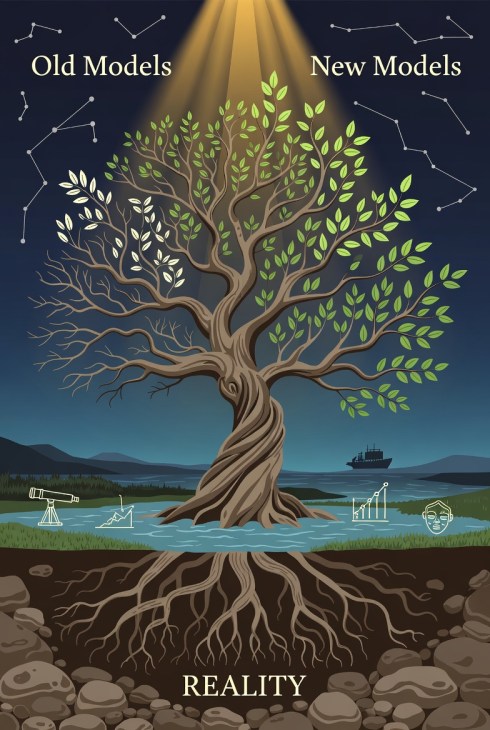
Further Reading
Core Philosophy of Science (Accessible but Serious)
- Theory and Reality
https://press.uchicago.edu/ucp/books/book/chicago/T/bo3773461.html
Best single overview of how science actually works—models, evidence, and realism vs anti-realism. - The Structure of Scientific Revolutions
https://press.uchicago.edu/ucp/books/book/chicago/S/bo13179781.html
Often cited by constructivists—worth reading directly to see what it does (and doesn’t) claim.
Critiques of Strong Social Constructivism
- Fashionable Nonsense
https://www.penguinrandomhouse.com/books/117184/fashionable-nonsense-by-alan-sokal-and-jean-bricmont/
A direct critique of postmodern misuse of scientific language and relativism. - Stanford Encyclopedia of Philosophy — Social Construction
https://plato.stanford.edu/entries/social-construction/
Clear, neutral breakdown of what “social construction” actually means across domains.
How Science Fails (and Self-Corrects)
- Tuskegee Syphilis Study — Overview
https://www.archives.gov/research/african-americans/individuals/tuskegee-study
A case of ethical and methodological failure—useful for understanding how bias corrupts both morality and knowledge. - The Demon-Haunted World
https://www.penguinrandomhouse.com/books/158581/the-demon-haunted-world-by-carl-sagan/
A practical defense of scientific thinking as a way of testing claims against reality.
Modern Trust & Institutional Context
- Why Trust Science?
https://press.princeton.edu/books/hardcover/9780691179001/why-trust-science
Argues for trust grounded in scientific processes and communities—useful as a counterpoint.
In the last post, we left a question hanging:
When scientific claims change, are we getting closer to reality—or just watching consensus shift?
That question only holds together if we blur two different things into one.
The Quiet Category Error
When people say “science is a social construct,” they usually point to things that are obviously true.
Research is funded by institutions. Papers move through journals. Experts decide what gets published. Language shapes how ideas are framed.
All of that is real.
None of it defines the core activity.
The mistake is simple: treating the systems around science as if they determine what makes a scientific claim true.
What Actually Gets Tested
Strip everything else away and science becomes something much more basic.
People build models of the world. Then they test them.
Not by agreement. Not by status.
By what happens when those models meet reality.
The ones that survive tend to do a few things well. They predict outcomes with some reliability. They explain more than their competitors. They hold together internally. And when new data arrives, they adjust without collapsing.
You don’t need to formalize those criteria to see them in action. You see them every time an idea quietly disappears because it stops working.
That disappearance isn’t negotiated.
It’s forced.
Influence Isn’t Determination
At this point the pushback comes quickly.
“Of course science is shaped by social forces.”
It is.
Those forces shape which questions get asked, which projects get funded, how results are presented, and how quickly findings spread. They can slow progress. They can distort it. Sometimes they can derail it for a while.
But they don’t determine whether a model tracks reality.
That’s the line.
You can delay discovery. You can confuse it. You can wrap it in bad language.
You can’t make a false model reliably predict outcomes just by agreeing that it does.
The Strong Claim—and the Weaker One
There’s a distinction that tends to get skipped.
A weaker claim says: science is socially embedded. That’s true and not especially controversial.
A stronger claim says: scientific truth itself is negotiated—shaped by power, language, and consensus.
That’s the one doing the real work.
And it doesn’t hold up under pressure.
If truth were negotiated, models wouldn’t behave the way they do across different contexts. They wouldn’t converge. They wouldn’t travel.
Pluto Didn’t Change
Take the familiar example of Pluto.
At one point, there were nine planets. Now there are eight.
On the surface, that looks like a shifting fact.
But nothing about Pluto changed. What changed was the classification system, refined in response to better observations and clearer criteria.
Run that process again—with the same data, in different countries, under different institutions—and you land in the same place.
That’s not consensus creating truth.
That’s constraint forcing alignment.
Authority Doesn’t Carry the Argument
Another social constructivist argument leans on expertise.
Science is what recognized experts agree on. Experts are socially validated. Therefore science is socially constructed.
Except that’s not how progress behaves.
Clyde Tombaugh discovered Pluto without formal credentials.
Michael Faraday made foundational contributions to electromagnetism with little formal training.
Their work wasn’t accepted because of status.
It was accepted because it held up.
Credentials can signal competence. They don’t determine whether a model survives contact with the world.
When Bias Enters, Science Starts to Fail
The strongest objection points to real failures.
“What about biased or harmful science?”
Those cases matter.
But look closely at what they show.
Take the Tuskegee syphilis study. It wasn’t just unethical. It was methodologically broken—biased sampling, invalid comparisons, contaminated conditions.
The result wasn’t just immoral.
It was useless as knowledge.
The same pattern appears elsewhere. Once ideology starts steering the model, predictive accuracy drops. Explanations weaken. The work stops holding together.
That isn’t science revealing its true nature.
That’s science breaking down.
A Brief Note on Paradigm Shifts
You’ll sometimes hear this framed in terms of paradigm shifts.
“If scientific frameworks change, doesn’t that mean knowledge is constructed?”
Frameworks do shape how data gets interpreted.
They don’t rescue models that fail.
When predictions stop landing and explanations start stretching, the model gives way.
Not because consensus changed.
Because it stopped working.
The Outer Layers Still Matter
None of this denies the obvious.
Funding is political. Publication standards are negotiated. Ethics are socially enforced.
These shape the environment science operates in. They can slow it down. They can distort it. They can even temporarily misdirect it.
But they don’t decide what’s true.
Because truth, in this context, isn’t assigned.
It’s encountered out there in the wild.
Back to the Tension
So when scientific claims change, what are we seeing?
Sometimes it’s better data refining a model. Sometimes it’s uncertainty narrowing over time.
Sometimes it’s institutional incentives shaping how results are framed.
The two get mixed together.
That’s why it feels unstable.
But only one of those layers determines whether the model actually works.
The Constraint That Holds
You can treat science as just another narrative shaped by power.
If you do, its authority collapses into politics.
Or you can recognize the constraint:
Reality pushes back.
It pushes back the same way regardless of who’s asking the question, what language they use, or which institution is involved.
That doesn’t make science perfect.
It makes it bounded.
And that boundary is the reason it works at all.
Where That Leaves Us
Science changes.
Scientists are biased.
Institutions are political.
None of that makes the core activity a social construct.
Because the core isn’t built out of agreement.
It’s built out of whether the model survives contact with the world and makes no distinction of who you are.
Glossary
Social Construct
An idea or category whose defining features depend on social agreement and can vary across cultures (e.g., money, legal systems).
Scientific Model
A structured representation used to explain and predict phenomena.
Empirical Constraint
The requirement that a model must align with observable reality.
Predictive Accuracy
How reliably a model forecasts outcomes.
Explanatory Power
How well a model accounts for observed phenomena relative to alternatives.
Coherence
Internal consistency within a model.
Model Robustness
The ability to adapt to new data without collapsing.
References
- The Structure of Scientific Revolutions
https://press.uchicago.edu/ucp/books/book/chicago/S/bo13179781.html - Theory and Reality
https://press.uchicago.edu/ucp/books/book/chicago/T/bo3773461.html - Fashionable Nonsense
https://www.penguinrandomhouse.com/books/117184/fashionable-nonsense-by-alan-sokal-and-jean-bricmont/ - Stanford Encyclopedia of Philosophy — Social Construction
https://plato.stanford.edu/entries/social-construction/ - National Archives — Tuskegee Study Overview
https://www.archives.gov/research/african-americans/individuals/tuskegee-study
AAP announces they’ll do an evidence review
“The American Academy of Pediatricians (which also covers Canadian pediatricians) is starting to cave to pressure to evaluate their recommendations for gender-affirmation care. They announced this week that they would undertake a systematic review of evidence and update their guidance.
We see this as a ploy to buy some time as the AAP (hopefully) works out how they’re going to backpedal from the current policy they continue to promote. Three systematic evidence reviews have already been done in Europe and the Florida Medical Board has done a “review of reviews”. The findings from the AAP will not change.
Canadian research expert, Dr Gordon Guyatt of McMaster University was quoted in the New York Times yesterday saying the A.A.P.’s report will most likely find low-quality evidence for pediatric gender care. “The policies of the Europeans are much more aligned with the evidence than are the Americans’,” he said.”
All I can say is : ‘About Damn Time!’. Who would of thought that evidence based medicine should be based on evidence and proof of efficacy?











 bleatmop
 Mystro


 Dead Wild Roses
Your opinions…