
You are currently browsing the daily archive for July 1, 2026.
Free speech is often defended badly.
Sometimes it is treated as a license to say anything without consequence. Sometimes it is reduced to personal self-expression. Sometimes it is framed as a courtesy extended to polite, harmless, approved opinions.
That misses the deeper point.
In a classically liberal society, free speech serves a practical purpose: it lets citizens search for truth, correct error, restrain power, and govern themselves.
It is not decorative. It is part of the machinery of a free society.
1. Free speech helps society find truth
Human beings are fallible.
Individuals can be wrong. Experts can be wrong. Majorities can be wrong. Governments can be wrong. Institutions can be wrong. Moral crusades can be wrong.
Free speech matters because no authority is wise enough to decide, permanently and in advance, which ideas may be questioned.
Some claims are false, foolish, dishonest, or ugly. But the answer to bad claims is usually better argument, better evidence, open criticism, and public testing.
A society that cannot question its own certainties may still call its beliefs truth, but it has stopped checking.
2. Free speech protects dissent
Free speech is easy to support when everyone agrees.
Its real test comes when speech is irritating, unpopular, offensive, inconvenient, or aimed at powerful people.
Many ideas now considered obvious were once treated as dangerous, immoral, foolish, or socially disruptive. That does not make every dissenter right. Much dissent is mistaken, partial, crankish, or premature. But we often cannot know which is which until dissent is allowed to be heard and tested.
A society that protects only approved speech protects consensus, not free speech.
Dissent needs room before it becomes respectable.
3. Free speech restrains power
Free speech allows citizens to question institutions.
What are you doing? Why are you doing it? What evidence supports it? Who benefits? Who pays? What are the tradeoffs? What are you hiding?
Those questions matter because institutions tend to protect themselves. Governments, corporations, universities, professional bodies, media organizations, activist movements, and bureaucracies all prefer deference when they have power.
Free speech keeps authority answerable to public challenge. Without it, institutions can govern through status, expertise, fear, or moral pressure instead of justification.
4. Free speech makes self-government possible
Democracy requires more than voting.
Citizens need to argue about laws, leaders, policies, institutions, values, evidence, and public priorities. If people can vote but cannot freely discuss what they are voting about, democracy becomes managed consent.
Free speech allows citizens to hear competing arguments, compare claims, criticize leaders, expose failures, and persuade one another.
It is not only an individual right. It is a condition of honest public judgment.
5. Free speech includes the right to be wrong
A meaningful free-speech principle must protect some false or mistaken speech.
If only “true” speech is protected, someone must decide what counts as true before debate even begins. That power rarely stays neutral.
This does not protect fraud, defamation, threats, perjury, direct incitement, or criminal harassment. Free speech has limits.
But contested public questions cannot be settled by official truth-arbiters. Free societies answer error through argument wherever possible, because the cure for bad speech can easily become worse than the disease.
6. Free speech protects listeners too
Free speech is not only the right to speak.
It is also the right to hear, read, compare, consider, reject, and decide.
Censorship does not only silence the speaker. It also treats the listener as too fragile, foolish, or dangerous to encounter the wrong idea.
A free citizen is not merely someone allowed to express approved thoughts. A free citizen is someone trusted to hear arguments and judge them.
7. Free speech is uncomfortable by design
Free speech requires citizens to tolerate disagreement, offence, criticism of cherished beliefs, and ideas they consider wrong or dangerous.
That discomfort is not a flaw. It is the price of living among free adults rather than under enforced consensus.
A free society does not remain peaceful because no one disagrees. It remains peaceful because disagreement can be spoken, challenged, mocked, answered, revised, and defeated without being driven underground or handed over to the state.

Free speech allows disagreement to remain public, peaceful, and answerable to reason.
In summary
Free speech is the right to speak, hear, question, criticize, argue, publish, dissent, and persuade without unlawful censorship or coercion.
Its purpose is not merely self-expression. It is the error-correction system of a free society. It helps test truth, expose mistakes, restrain power, protect dissent, and make self-government possible.
Free speech does not mean every claim is wise. It does not mean speech has no limits. It does not mean freedom from criticism, disagreement, ridicule, or consequence.
It means no authority gets final ownership of public truth.
Free speech is not a luxury for when society agrees.
It is the mechanism that allows disagreement to remain peaceful, public, and answerable to reason.
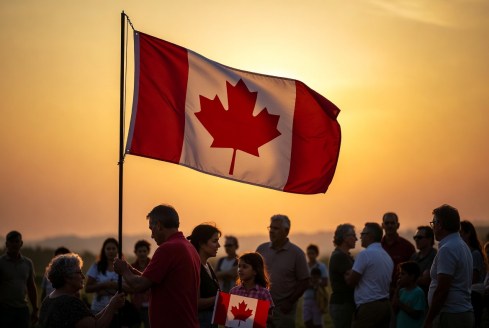
Canada Day should be more than a long weekend with fireworks.
It should be a day when we remember that a country is not held together by accident. It is held together by habits, loyalties, rituals, and obligations that must be taught, repeated, and defended.
Some of those rituals may seem small. Singing the national anthem at schools and public events. Flying the Canadian flag without embarrassment. Learning our history as something more than a list of crimes. Speaking of Canada as a home worth loving, not merely a political arrangement to be managed.
Small rituals matter because shared belonging does not maintain itself.
Canada is a country of two official languages, many regions, many peoples, many faiths, and many histories. That diversity can be a strength, but diversity alone is not a nation. A nation also needs common allegiance. It needs citizens who understand that difference is not the opposite of unity.
Patriotism does not require historical amnesia. Canada has made mistakes. Some were grave. A serious country should be able to tell the truth about its failures without turning national memory into self-loathing.
We should be able to say both things plainly: Canada has done wrong, and Canada is still worth loving.
We built a country across a hard geography, through long winters, regional tensions, war, immigration, compromise, endurance, and work. That is no small achievement. It deserves gratitude, not sneering embarrassment.
The Canadian character, at its best, is not flashy. It is polite, restrained, practical, neighbourly, and stubborn when it needs to be. It values peace, order, and good government. It values fairness, responsibility, and helping each other through the cold.
That last part matters.
Commitment to country begins with commitment to community. It begins with shovelling the walk, checking on the elderly neighbour, coaching the team, volunteering at the food bank, serving on the committee, helping during the flood, and making room for people who are trying to belong.
Patriotism is not only what we say about Canada. It is what we are willing to do for Canadians.
That is why the fashion for national embarrassment is so corrosive. A people taught to distrust their own country will not defend it. A people taught that patriotism is suspect will not pass it on. A people taught to define themselves mainly by guilt, grievance, or negation will eventually forget what they are supposed to love.
Canada cannot thrive merely by being “not American.” That is not enough. A nation needs a positive vision of itself.
We should aspire to be Canadian in the fuller sense: free, responsible, fair-minded, resilient, compassionate, self-governing, and loyal to a common civic home.
This Canada Day, sing the anthem. Fly the flag. Learn the history. Tell the truth. Help your neighbour. Honour what is good. Repair what needs repair.
Canada is not perfect.
No country is.
But Canada is ours, and it is worth loving out loud.











 bleatmop
 Mystro
 The Arbourist


 Dead Wild Roses
Your opinions…