
Zahra is fictional.
The system that would erase her is not.
I wrote The Girl Behind the Wall as a fictional composite because facts, while necessary, can become strangely weightless when they arrive only as numbers, reports, and policy summaries. “Girls banned from school” is true. “Women restricted from public life” is true. “Child marriage enabled by law and custom” is true. But those phrases rarely let us feel what they mean inside a house: the school shoes hidden behind a water jar, the notebook slipped under quilts, or the mother waiting for a boy’s permission before she can seek medicine.
That is what the three vignettes try to make visible.
This is not the diary of one real Afghan girl, and it should not be read as testimony. Zahra is a composite figure, built from documented restrictions and from the ordinary logic of life under Taliban rule: school taken away, movement made conditional, female voices lowered, male authority made necessary, and a girl’s consent treated as less important than the arrangements made around her.
The facts behind the fiction are not obscure. UNESCO reported in 2025 that Afghanistan is the only country in the world where secondary and higher education are strictly forbidden to girls and women, with nearly 2.2 million girls and women barred from schooling beyond the primary level. Human Rights Watch’s 2026 Afghanistan reporting describes Taliban authorities maintaining bans on secondary and higher education, restricting women’s freedom of expression, imposing severe restrictions on movement and public spaces, and enforcing strict rules on dress and behaviour. Amnesty International reported in 2026 that Taliban Decree No. 18 enables child marriage, restricts women’s and girls’ ability to challenge or leave such unions, and reinforces male guardianship over women’s personal lives.
That is the factual spine. The story is an attempt to put flesh back on it.
There is also a larger moral question here, and it cannot be avoided. Whatever else the West has failed at, its best inheritance insists that girls are persons, not property; citizens, not dependents; moral agents with rights, not family assets. That claim — that every human being possesses inherent dignity and equal standing before the law — is not decorative. It is the difference between a girl as a citizen and a girl as a possession.
Human dignity matters. Equality before the law matters. Freedom of conscience matters. Education matters. The right to speak, move, refuse, learn, worship, dissent, and be treated as a legal person matters.
Those values are not abstractions when a girl is standing in a room while men decide what to call her future.
There is a bitter irony in parts of the modern West, where enormous political energy is still spent debating whether biological sex is a philosophical riddle, even as girls in Afghanistan are being erased precisely because they are female. No school. No public voice. No ordinary freedom of movement. No equal standing before men. No meaningful right to refuse the future chosen for them. If the West cannot speak plainly about what a woman is, it will struggle to defend women when sex-based oppression appears in its most brutal and unmistakable form.
That does not mean every Muslim is the Taliban. It does not mean ordinary Muslim citizens living ordinary lives are the target of this critique. They are not.
The target is theocratic Islamism: a religious-political order that subordinates civil law, individual liberty, equality before the law, and freedom of conscience to religious authority. It is the ideology that treats girls as subordinate by design, men as guardians by right, and sacred law as an authority above ordinary human consent.
That order is not compatible with Western liberal values.
A society cannot defend girls like Zahra while apologizing for the system that makes them disappear. It cannot protect religious freedom by pretending religious domination is just another cultural difference. It cannot preserve equality before the law while excusing legal orders that place women and girls beneath men.
The point of The Girl Behind the Wall is not to sensationalize suffering. It is to make visible what polite language often conceals.
Theocracy does not only arrive as slogans, courts, decrees, or men with guns. It arrives as a gate a girl no longer approaches, a road she cannot walk without permission, a question she is not allowed to answer, and a name written on paper by someone else.
Zahra is fictional.
But the wall is real.
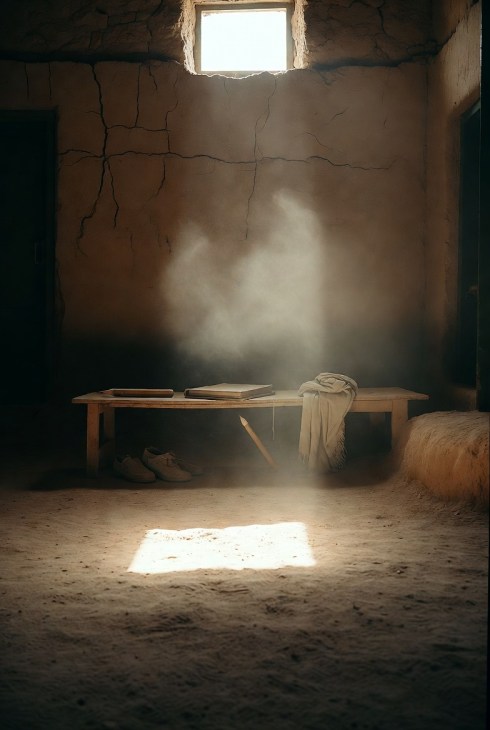
What remains when a girl’s future is taken from her is not silence alone, but the room that taught her to disappear.
References
UNESCO — education ban
UNESCO reported in August 2025 that Afghanistan is the only country in the world where secondary and higher education is strictly forbidden to girls and women, with nearly 2.2 million barred from schooling beyond the primary level.
Human Rights Watch — broader restrictions
Human Rights Watch’s World Report 2026: Afghanistan documents severe Taliban restrictions on women and girls’ movement, access to public spaces, dress, behaviour, education, and public life.
Amnesty International — child marriage decree
Amnesty International reported in June 2026 that Taliban Decree No. 18 enables child marriage and further restricts women’s and girls’ ability to challenge or leave such unions.











 bleatmop
 Mystro
 The Arbourist


 Dead Wild Roses
3 comments
Comments feed for this article
July 9, 2026 at 7:54 am
tildeb
Islam by design is totalitarian. It really is, “a religious-political order that subordinates civil law, individual liberty, equality before the law, and freedom of conscience to religious authority. It is the ideology that treats girls as subordinate by design, men as guardians by right, and sacred law as an authority above ordinary human consent.
That order is not compatible with Western liberal values.”
Yet we in the West mistake Islam as if just another religion when, in fact, it is the dominant colonizer of the world today, turning more than 50 countries and a billion people to cogs in this regime.
What truly blows my mind is how many Westerners presume we need to coddle Muslims and pretend they are always victimized by western imperial forces when, in fact, only the West offers relief from it’s totalitarian, anti-human, certainly anti-female, illiberal, ignorance-endorsing and very violent grasp.
The Red-Green alliance throughout the West is predominantly led and widely supported by women. These are not the champions of your character in these stories but the men’s enablers. And the same plays out in the overwhelming silence most feminist organizations present to Islam’s anti-female practices under Sharia not just in these 50+ countries but now spreading throughout the West’s major and minor urban centres with grossly misguided immigration policies and kowtowing political class first to these enablers and then helping to create two tiered laws excusing and often exempting Muslims from necessary social restrictions (30 years of Muslim rape gangs allowed to operate with impunity in Britain). This live-and-let-dominate approach to Islam in the West all but guarantees eventual submission to it or great social violence to contain it.
LikeLiked by 1 person
July 9, 2026 at 9:48 am
tildeb
Now that Islam has been properly described, let’s check out how much of what’s true is reflected in ChatGPT version whatever. Go ahead. Ask it some questions critical of Islam for just these typical behaviours and Lo and Behold! There’s the Red-Green Alliance in full display passing on lies and excuses and tolerance for the intolerable to the next generation as if true. That’s the danger of AI slop when it comes to describing why Islam is this civilizational danger. I’ve encountered it repeatedly. Here’s the article (Source)
LikeLike
July 10, 2026 at 8:15 am
The Arbourist
The tendency to smooth over inconvenient facts about Islam was apparent when I asked a few of the models about it. It was instructive. Thank you for the heads up.
LikeLike