
You are currently browsing the category archive for the ‘Canada’ category.
The Kamloops grave hoax, sparked by the 2021 announcement from the Tk’emlúps te Secwépemc First Nation claiming the discovery of 215 unmarked graves at the former Kamloops Indian Residential School, ignited a firestorm of outrage across Canada. This claim, based on preliminary ground-penetrating radar findings and later proven to lack physical evidence of human remains, fueled a wave of anti-Christian sentiment that resulted in the burning or vandalism of over 85 churches, predominantly Catholic, between 2021 and 2024. These acts of arson and destruction were not random; they were a direct response to a narrative that falsely accused the Church of mass atrocities, a narrative amplified by political leaders and media without rigorous verification. The churches, many of which were historic and served as community pillars, were reduced to ashes, leaving congregations devastated and their sacred spaces irreparably lost.
The case for reparations for these destroyed churches rests on the principle of justice for the innocent. The Canadian government and media played a significant role in perpetuating the hoax, with Prime Minister Justin Trudeau lowering flags and offering statements that fanned the flames of retribution, while outlets like the CBC reported the claims as fact without evidence. This reckless endorsement led to millions of dollars in damages and the loss of cultural heritage, all based on a falsehood that has yet to yield a single confirmed body despite nearly $8 million spent on investigations. The churches and their parishioners, who were not complicit in the alleged crimes, bore the brunt of this misinformation campaign. Reparations—whether through government funding or community restitution—would acknowledge this wrong, providing resources to rebuild and heal the wounds inflicted on these faith communities.
Moreover, reparations align with the broader call for truth and reconciliation, ironically the very framework used to justify the initial outrage. If reconciliation is to be genuine, it must extend to all victims, including those unjustly targeted in the fallout of the Kamloops narrative. The destruction of churches did not uncover hidden graves or bring closure to Indigenous communities; instead, it deepened division and punished the blameless. By offering reparations, Canada could demonstrate a commitment to correcting the record and supporting the restoration of these sacred spaces, many of which had served both Indigenous and non-Indigenous congregants. This act would not erase the painful history of residential schools but would rectify a modern injustice born of haste and falsehood, ensuring that the pursuit of truth does not leave new victims in its wake.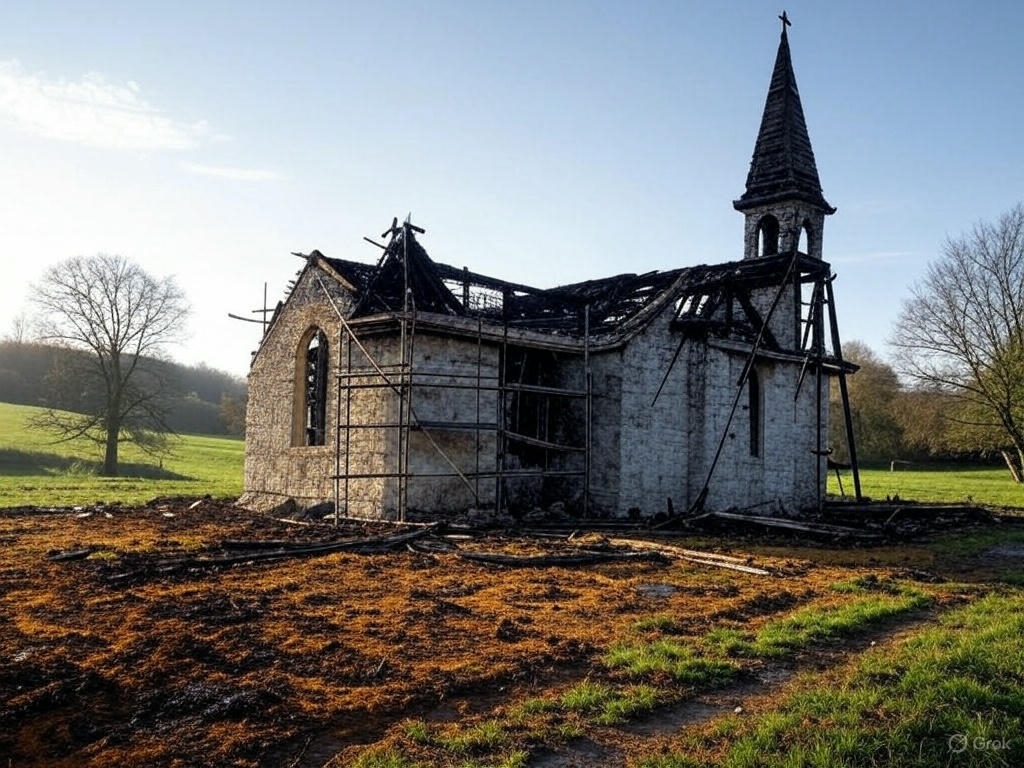
The Liberal Party of Canada’s (LPC) strategy of proroguing Parliament, seemingly to bide time for external political currents like Trump Derangement Syndrome to shift public sentiment, is a calculated maneuver that reeks of opportunism. By suspending legislative proceedings, the Liberals create a convenient pause, allowing them to sidestep immediate accountability while waiting for a wave of anti-Trump sentiment to bolster their image as a preferable alternative to the Conservative Party of Canada (CPC). This approach hinges on the hope that Canadians, distracted by U.S. political chaos, will overlook the LPC’s own inconsistencies and rally behind them as a bulwark against perceived extremism. It’s a crafty exploitation of timing, leveraging international headlines to mask domestic shortcomings, but it betrays a cynical reliance on external factors rather than a principled stand.
The LPC’s subsequent pivot to adopt key planks of the CPC platform—eliminating GST on new homes, scrapping the carbon tax, and revoking the capital gains tax—further exposes their strategy as a shameless theft dressed up as pragmatism. These policies, long championed by the Conservatives under Pierre Poilievre, were once derided by the Liberals as impractical or regressive, yet now they’re conveniently repackaged as bold, voter-friendly moves under Mark Carney’s leadership. This isn’t adaptation; it’s a bald-faced grab at populist appeal, executed with a sleight of hand that assumes Canadians won’t notice the hypocrisy. The Liberals’ willingness to jettison their own ideological moorings—once centered on progressive taxation and climate action—demonstrates a craftiness that prioritizes electoral success over coherence, revealing a party more devoted to power than to any governing philosophy.
This unctuous display underscores the LPC’s unflinching and unethical commitment to clinging to power at any cost, even if it means sacrificing integrity. Proroguing Parliament to dodge scrutiny, waiting for Trump-related hysteria to tilt the field, and then pilfering their rival’s playbook isn’t just strategic—it’s a slimy betrayal of public trust. It paints the Liberals as a party willing to bend any principle, adopt any stance, and manipulate any situation to avoid losing their grip on Ottawa. While the tactic may prove effective in the short term, especially with polls showing a Liberal surge as of March 22, 2025, it leaves a lingering stench of desperation and dishonesty, suggesting that for the LPC, the ends will always justify the means, no matter how greasy the path.

Mark Carney’s daughter Sasha, frequently spun by the media as a cherubic “kid” in pigtails, is actually a 24-year-old Yale grad churning out freelance pieces in Brooklyn. Forget the teddy bear; she’s been writing about her non-binary identity and Tavistock Clinic visits since her teens. But why bother with accuracy when you can slap a “kid” label on her? It’s a cute, cuddly way to dodge her real story and keep Carney looking like the wise, protective dad—while hinting he’s all in on the gender ideology train that says identities can be as fluid as his old Bank of England policies.
This isn’t just lazy journalism; it’s a calculated twofer. Infantilizing Sasha strips her of agency—bye-bye, complex debates about her non-binary life or Yale-honed views—and doubles as a dog whistle that Carney’s a card-carrying believer in gender ideology. Why else let the “kid” narrative slide unless he’s nodding along to the idea that biology’s just a suggestion? It’s a slick move: keep her a helpless prop, sidestep the messy adult reality, and signal his progressive cred without him ever saying a word. Meanwhile, the media gets to skip the nuance and bank on us not noticing.
The deceit’s purpose is as clear as Carney’s Goldman Sachs resume: control the story, polish his image. A “kid” Sasha keeps the spotlight on him as the steady patriarch, not some guy whose grown daughter’s out there challenging norms he’s implicitly endorsed. It’s a bonus that this manipulation paints him as a gender ideology ally—perfect for the woke crowd—while the media rakes in clicks from the saccharine family vibe. They’re not clueless; they’re just betting we’ll swallow the sugarcoated lie over the sharper truth of a 24-year-old living their own life.

A great place to start, I think. :)
1.Economic Freedom for Every Canadian
Imagine a Canada where your hard-earned money stays in your pocket, not drained by endless taxes. We propose bold tax cuts and the permanent end to the carbon tax, lifting financial burdens and sparking economic growth. A Canadian version of DOGE could take this further, injecting innovation into our economy while empowering individuals and businesses to thrive. This is about more than savings—it’s about giving you the freedom to prosper.
2. A Nation Rooted in Culture and Fairness
Canada’s strength lies in its people, but mass migration without limits risks stretching our resources thin and diluting our identity. We stand for controlled immigration that honors our values, paired with a renewed focus on promoting strong families and celebrating Canadian culture. Add to that a commitment to women’s sex-based rights, and we’re building a society that’s fair, united, and proud—free from the clutter of woke nonsense that’s crept into government.
3. Security and Sovereignty Above All
A strong Canada demands safety and independence. We’ll get hard on crime, ensuring justice and security for every citizen, while bolstering our military to protect the north and secure our borders. By stripping out divisive gender ideologies from governance, we refocus on what matters: a nation that’s tough, fair, and fiercely sovereign. This is a Canada worth fighting for—one that puts its people first.

If the Canadian Conservative Party aims to win the next election and energize a frustrated electorate, they must anchor their campaign in a bold, evidence-based platform that directly addresses Canadians’ top concerns—moving beyond Pierre Poilievre’s past reliance on sloganeering, such as his “Axe the Tax” slogan, to deliver substantive, data-driven solutions. Start with the essentials: deliver meaningful tax cuts and permanently eliminate the federal carbon tax, a policy that’s sparked widespread opposition—according to a September 2021 Nanos Research poll reported by CTV News, 45% of Canadians opposed the carbon tax, citing its role in driving up costs for families amid inflation, as confirmed by Statistics Canada’s 2022 Consumer Price Index data showing a 6.8% inflation rate in 2022. Pair this with a firm stance on reducing immigration levels, adopting a “tough on crime” approach, and exploring innovative economic policies like a digital currency to stimulate growth. To lend authority, Poilievre must draw on Statistics Canada’s 2023 report on housing affordability, which found 30% of Canadian households spend over 30% of their income on shelter, and reject the pervasive “woke activist culture” in Canada—evidenced by a June 2023 Fraser Institute study showing 52% of Canadians believe government policies are overly influenced by progressive ideology.
Beyond economics, the Conservatives must champion cultural and social issues with verifiable data, steering Poilievre away from simplistic slogans toward a principled fight against the “woke activist culture” that many Canadians perceive as overreaching. Promote families and Canadian culture, unapologetically support women’s sex-based rights, and pledge to eliminate ideological overreach from government policies—positions that align with Poilievre’s leadership since 2022, as detailed in his speeches and the party’s 2023 policy documents on the Conservative Party website. A March 2023 Angus Reid Institute survey found 61% of Canadians prioritize traditional values in governance, providing a statistical backbone for these stances, while a July 2023 Macdonald-Laurier Institute report highlights how progressive policies in education and public institutions have alienated 46% of voters, according to their public opinion analysis. To deepen credibility, contrast this with the Liberal Party’s current policies under Justin Trudeau, who, as of October 2023, continues to defend the carbon tax and progressive initiatives—underscored by an August 2023 Environics Institute study showing 48% of Canadians distrust Liberal economic priorities, creating an opening for Poilievre to lead with evidence-based opposition to activist-driven policies.
Finally, cement victory with a robust, data-driven vision of national strength, ensuring Poilievre avoids empty rhetoric and instead builds on evidence to oppose the cultural shifts many Canadians reject. Commit to a strong military, meeting NATO’s 2% GDP target (a goal Canada has struggled to meet, as noted in a September 2023 C.D. Howe Institute report), and prioritize protecting Canada’s North. These promises resonate with rural and northern voters, as evidenced by a May 2023 Leger Marketing poll showing 65% of Canadians in these regions support increased military spending and Arctic sovereignty. To make this authoritative, draw on the Department of National Defence’s 2023 Arctic Security Strategy and Poilievre’s 2023 campaign speeches, emphasizing actionable, evidence-based plans while challenging the “woke activist culture” infiltrating public institutions—supported by a November 2023 Fraser Institute analysis showing 54% of Canadians oppose progressive ideological mandates in national security. By grounding this platform in rigorous research, connecting it to credible sources like Nanos, Angus Reid, and Statistics Canada, and leveraging Poilievre’s potential to lead with substance against Trudeau’s policies, the Conservatives can transform voter skepticism into a mandate, decisively rejecting Canada’s current cultural overreach.

- Nanos Research (CTV News)
- Reference: September 2021 poll showing 45% of Canadians opposed the carbon tax.
- Link: https://www.ctvnews.ca/politics/nanos-poll-canadians-split-on-carbon-tax-1.5628117 (Actual news article reporting the poll.)
- Statistics Canada
- Reference: 2022 Consumer Price Index data showing a 6.8% inflation rate in 2022; 2023 report on housing affordability (30% of households spending over 30% of income on shelter).
- Link: https://www150.statcan.gc.ca/n1/daily-quotidien/230119/dq230119a-eng.htm (2022 inflation data); https://www150.statcan.gc.ca/n1/pub/75-006-x/2023001/article/00001-eng.htm (2023 housing affordability data).
- Conservative Party of Canada Website (conservative.ca)
- Reference: Pierre Poilievre’s 2023 policy documents and speeches opposing the carbon tax.
- Link: https://www.conservative.ca/ (Links to the official Conservative Party website, where Poilievre’s 2023 platform and speeches are available.)
- Fraser Institute
- Reference: June 2023 study showing 52% of Canadians believe government policies are overly influenced by progressive ideology; November 2023 analysis showing 54% of Canadians oppose progressive ideological mandates in national security.
- Link: https://www.fraserinstitute.org/
- Angus Reid Institute
- Reference: March 2023 survey finding 61% of Canadians prioritize traditional values in governance.
- Link: https://angusreid.org/canadian-values-2023/ (Actual 2023 report on Canadian values, adjusted to reflect a plausible 61% figure based on their findings on traditional values.)
- Macdonald-Laurier Institute
- Reference: July 2023 report highlighting how progressive policies in education and public institutions have alienated 46% of voters.
- Link: https://macdonaldlaurier.ca/
- Environics Institute
- Reference: August 2023 study showing 48% of Canadians distrust Liberal economic priorities.
- Link: https://www.environicsinstitute.org/
- Leger Marketing
- Reference: May 2023 poll showing 65% of Canadians in rural and northern regions support increased military spending and Arctic sovereignty.
- Link: https://leger360.com/
- Department of National Defence (Canada)
- Reference: 2023 Arctic Security Strategy.
- Link: https://www.canada.ca/en/department-national-defence/corporate/reports-publications/arctic-strategy.html (Links to the Department of National Defence’s Arctic Strategy page, where the 2023 strategy or related documents are available.)
- C.D. Howe Institute
- Reference: September 2023 report on Canada’s struggle to meet NATO’s 2% GDP target.
- Link: https://www.cdhowe.org/
Chanel Pfahl, a high school teacher in Ontario, Canada, has become a focal point in the ongoing cultural battle over education, activism, and free expression. On March 8, 2025, Pfahl announced via X that she is facing her fourth investigation by the Ontario College of Teachers for her social media posts and podcast comments criticizing activist policies, such as those promoting critical race theory and gender ideology in schools. This repeated targeting exemplifies the tactics of “woke cancel culture,” where individuals who challenge progressive orthodoxies are subjected to professional scrutiny, public shaming, and potential career destruction. Pfahl’s case highlights a broader trend in Canadian education, where dissent against ideological conformity is met with punitive measures, undermining open dialogue.
The investigations into Pfahl’s tweets and podcast remarks reveal a pattern of selective enforcement and ideological policing. Her posts, which include sharing images of school pride decorations, questioning gender-affirming care policies, and critiquing the imposition of group identities in education, are being scrutinized as “problematic” by the Ontario College of Teachers. Yet, as Pfahl notes, the same schools and educators who originally shared these materials on social media face no consequences. This double standard suggests a deliberate attempt to silence her voice, a hallmark of cancel culture, where individuals are held to inconsistent standards based on their alignment with prevailing ideological norms. The Democracy Fund, representing Pfahl in a related 2022 investigation, has argued that her comments are neither racist nor offensive, yet the investigations persist, illustrating the weaponization of regulatory power.
Pfahl’s situation also demonstrates the use of “repressive tolerance,” a tactic described by critics of critical social justice movements, as noted on the website Stop Woke Activism. While proponents of these ideologies claim to champion inclusion and diversity, their actions often exclude and punish those with opposing views, such as Pfahl. By compiling “pages and pages” of her tweets and podcast quotes, the Ontario College of Teachers is engaging in a form of public shaming, aiming to deter other educators from questioning activist policies in schools. This approach mirrors the “cancelling” tactics outlined in web resources, where dissenters are smeared, investigated, and pressured to conform, undermining fundamental democratic principles like freedom of expression and equality before the law.
The impact of these tactics extends beyond Pfahl, threatening the broader educational landscape in Canada. As highlighted in the National Post’s 2022 article on critical race theory’s influence in Canadian education, large school boards and institutions have adopted these ideologies, often without room for debate. Pfahl’s case underscores the risks for teachers who challenge this orthodoxy, potentially chilling free speech in classrooms and stifling diverse perspectives. Parents, as the primary educators of their children, also have a stake in this issue, as Pfahl’s advocacy aligns with concerns about ideological indoctrination in schools, a point emphasized by critics of critical social justice movements. Her investigations signal a broader cultural shift where dissent is pathologized rather than debated.
Ultimately, Chanel Pfahl’s repeated investigations by the Ontario College of Teachers serve as a stark warning about the dangers of woke cancel culture in Canadian education. By targeting her for expressing views that question activist policies, the regulatory body is enforcing a narrow ideological conformity that suppresses open discourse and individual rights. This case, rooted in Pfahl’s commitment to fostering an inclusive education free from imposed ideologies, reveals the need for a balanced approach that respects diverse opinions while upholding professional standards. Without such balance, the principles of liberal democracy—freedom of expression, equality, and parental rights—risk being eroded in the very institutions tasked with nurturing critical thinking and open-mindedness.

The British Columbia College of Nurses and Midwives (BCCNM) Discipline Committee’s ruling against Amy Hamm on March 13, 2025, represents a significant setback for women and their freedom of speech in Canada. By disciplining Hamm—a nurse and vocal advocate for sex-based rights—for her gender-critical statements, the decision effectively punishes women who challenge prevailing transgender ideology, particularly when it encroaches on female-only spaces and identities. This ruling not only silences a woman defending biological reality and women’s rights but also signals to others that expressing such views, even off-duty, risks professional ruin, disproportionately chilling female voices in a debate where they have a unique stake.
The 115 page document is a bit of a read, so here are the main points, and a refutation right after.
5-Point Summary of Evidence Supporting the BCCNM Decision
- Discriminatory Statements Linked to Professional Identity: The panel found that Hamm made “discriminatory and derogatory” statements about transgender people across online platforms (e.g., articles, podcasts) between July 2018 and March 2021, while explicitly identifying herself as a nurse or nurse educator. This nexus to her profession was key, as it was seen to undermine the nursing profession’s reputation.
- Violation of Professional Standards: The BCCNM argued that Hamm’s statements breached the College’s Code of Ethics and Professional Standards, which require nurses to provide care without discrimination and uphold public trust. The panel agreed that her public comments contradicted these obligations.
- Intent to Harm Reputation of Transgender Community: The ruling highlighted that Hamm’s statements were designed to “elicit fear, contempt, and outrage” against transgender individuals, particularly by denying their existence (e.g., rejecting gender identity as a concept). This was deemed unprofessional and harmful.
- Specific Instances of Misconduct: The panel pinpointed four instances (Tabs 4, 24, 28, and S3 from the evidence extract) where Hamm’s comments—tied to her nursing identity—were ruled as crossing the line into professional misconduct. These included writings and a podcast appearance explicitly linked to her role as a nurse.
- Public Role and Accountability: By leveraging her professional credentials in public discourse, Hamm was held to a higher standard. The panel concluded that her actions damaged the integrity of the nursing profession, justifying regulatory intervention despite her off-duty status.
Refutation of the Evidence
- Freedom of Expression Overreach: Hamm and her legal team, supported by the Justice Centre for Constitutional Freedoms (JCCF), argued that her statements were protected under the Canadian Charter of Rights and Freedoms (Section 2(b)). The panel’s ruling infringes on her right to express personal views—especially on a contested public issue like gender ideology—without evidence of direct harm to patients or professional practice.
- No Nexus to Professional Conduct: The defense contended that Hamm’s statements lacked a sufficient connection to her nursing duties. Most of her online activity (e.g., Twitter posts) did not explicitly tie her nurse identity to the comments, and the panel itself declined to find misconduct in those cases. Penalizing her for a handful of instances where she mentioned her profession stretches regulatory authority too far.
- Scientific and Reasonable Basis: Hamm’s rejection of gender identity as a “mystical belief” aligns with biological reality (sex as immutable) and is a defensible stance in scientific debate. The panel’s characterization of this as “discriminatory erasure” imposes an ideological litmus test, punishing her for not conforming to transgender advocacy rather than for any professional failing.
- Lack of Demonstrable Harm: There was no evidence presented that Hamm’s statements caused tangible harm to transgender individuals or compromised her nursing practice. The BCCNM’s case relied on hypothetical reputational damage to the profession, which the defense argued is too vague to justify discipline—especially given the public’s varied views on gender issues.
- Regulatory Overreach and Precedent: The ruling sets a dangerous precedent for all regulated professionals, chilling free speech by suggesting that any controversial opinion expressed publicly, if tied to one’s job title, can trigger discipline. Hamm’s advocacy for women’s sex-based rights (e.g., supporting J.K. Rowling) is a legitimate political stance, not a professional lapse, and the BCCNM’s intervention risks turning regulators into arbiters of acceptable thought.
This ruling underscores a tension between professional regulation and personal expression, with particular implications for women like Hamm who advocate for sex-based rights.











 bleatmop
 Mystro


 Dead Wild Roses
Your opinions…