
You are currently browsing the category archive for the ‘Culture’ category.
The latest claim of “unmarked graves” at St. Joseph’s Mission Residential School in British Columbia exposes a familiar pattern: sweeping headlines, scant evidence. On August 14, 2025, the Williams Lake First Nation announced ground-penetrating radar (GPR) detected 16 “anomalies.” Global News and others framed them as “potential burial sites.” Yet no remains have been confirmed, substituting implication for proof.
Canadians know this script. In 2021, Kamloops’ claim of 215 “graves” became Canada’s “news story of the year,” sparking global outrage and $12 million in federal funding. Four years on, no bodies surfaced—GPR anomalies aligned with tree roots or septic tiles. Still, the unverified narrative lingers as proof of mass graves.
Geophysicists note GPR cannot distinguish human remains from soil disruptions—a fact buried in coverage. Yet sensational claims yield dividends: $8 million in reconciliation grants since 2021, media clout, and moral authority, all absent hard evidence. The Williams Lake announcement follows suit, with no excavation planned, only “consultation.”
None of this negates the residential school era’s tragedies—deaths from disease or neglect were documented. But inflating anomalies into “graves” distorts history, manipulates grief, and diverts resources from urgent Indigenous needs. Worse, a proposed federal bill to criminalize “denialism” would shield such claims from scrutiny, turning skepticism into heresy.
Truth demands excavation, not headlines. Until anomalies are verified, Canadians are asked to mistake speculation for fact. That is not reconciliation—it is a grave error, fracturing trust in a nation desperate for unity.

Sources Referenced
- Global News, “Williams Lake First Nation Finds 16 Potential Burial Sites,” August 14, 2025
- Fraser Institute, “No Evidence of ‘Mass Graves’ in Residential Schools,” February 12, 2024
- National Post, “Kamloops Graves Remain Unproven,” April 6, 2025
- Struggles-Activist.com, “Three Years Later, Canadian ‘Mass Graves’ Claims Remain Unproven,” January 7, 2025
- Aggregated X posts, August 2025
I. Certitude as a Cross-Ideological Poison
In the modern culture war, the most dangerous weapon isn’t censorship or cancellation—it is certainty. Certainty that your worldview is the only legitimate one. Certainty that dissent equals harm. Certainty that debate is violence. This mindset—what I’ve previously called sociognostic certainty—is most visible in the ideological left, but it is increasingly mirrored on the right.
The woke movement often silences critics not through reasoned rebuttal, but through moral accusation: you’re not just wrong—you’re a racist, bigot, or transphobe. But as anti-woke voices grow louder, many fall into the same trap: purity tests, denunciations, and rhetorical gatekeeping in reverse. The danger isn’t just that woke ideology dominates—it’s that we become it while resisting.
We’ve seen this before. The New Atheist movement began as a defense of rationality and open inquiry. But its leading voices soon traded in dialogue for dogma, responding to disagreement with sneers and smug certitude. It became a mirror image of the religious authoritarianism it once critiqued.
So how do we fight the woke juggernaut without turning into zealots ourselves? The answer lies in rediscovering the epistemic foundations of liberal democracy: open-ended inquiry, equal participation, and structured disagreement. These norms are what thinkers like Jonathan Rauch, Karl Popper, John Stuart Mill, Jonathan Haidt, and James Lindsay have defended—often against powerful ideological tides.
II. Liberal Science and the Culture of Disagreement
In Kindly Inquisitors, Jonathan Rauch identifies two rules at the heart of a liberal society’s truth-seeking tradition:
- No one gets the final say.
“Every idea is open to challenge, no matter how sacred or widely accepted.”
- No one gets to say who may speak.
“Everyone has the right to participate in the conversation. There are no gatekeepers of legitimacy.”
Rauch calls this “liberal science”—a decentralized process that evolves through open critique and trial-and-error. “The liberal regime is the only one ever devised that systematically seeks out and corrects its own errors,” he writes. It is a system designed for humility.
This insight builds on Karl Popper’s concept of falsification: that scientific progress happens not by proving ideas right, but by exposing them to the possibility of being wrong. Popper warned that ideologies insulated from criticism drift toward totalitarianism. Liberal societies flourish not by avoiding mistakes, but by remaining willing to correct them.
III. Why These Norms Are Being Abandoned
Woke ideology, rooted in the practice of consciousness-raising, assumes that those who have not been “awakened” are epistemically and morally inferior. This produces what James Lindsay has described as “a knowledge regime based on belief, not inquiry.” It assumes that disagreement is not just misguided, but oppressive.
As Lindsay and Helen Pluckrose write in Cynical Theories, “Woke ideology doesn’t merely assert ideas—it positions itself as the one true way of seeing the world. It replaces knowledge with belief and inquiry with obedience.”
This ideology treats opposition as evidence of guilt. White Fragility teaches that resisting anti-racist training proves one’s racism. Ibram X. Kendi insists neutrality is impossible: “You’re either a racist or an antiracist.” These are not empirical frameworks. They are gnostic in character—immune to criticism and uninterested in falsifiability.
But the anti-woke response is often no better. The populist right, with its own culture-war crusades and purity tests, increasingly mirrors the very forces it claims to fight. Declarations of moral emergency are replacing liberal norms of debate.
In Canada, we’ve seen this from both ends. When the University of British Columbia postponed a speech by philosopher Mark Mercer on academic freedom, critics called it “institutional cowardice,” yet some of those same critics support political interference in other academic expressions. Meanwhile, psychologist Jordan Peterson’s ongoing regulatory battles with the College of Psychologists of Ontario highlight a broader cultural breakdown in tolerating dissent—no matter the direction it flows.
As Jonathan Haidt puts it in The Coddling of the American Mind: “When we teach students that their feelings are always right, and that disagreement equals danger, we do not prepare them for citizenship in a pluralistic society—we prepare them for life in a war zone.”
IV. The Classical Liberal Antidote
To escape the cycle of tribal certainty, we must return to the liberal framework that allows for conflict without coercion.
In On Liberty, John Stuart Mill made a timeless argument: suppressing even false opinions robs humanity of the “collision of ideas” that refines our understanding. “He who knows only his own side of the case,” Mill warned, “knows little of that.”
Rauch extends this into our age of information: “Liberal science does not protect feelings. It protects the process by which we challenge claims and revise beliefs.”
This is not about defending speech merely for its own sake. It is about preserving a culture of mutual correction. That means:
- Tolerating speech we disagree with, not because we approve of it, but because suppressing it corrodes our capacity for self-correction.
- Engaging rather than excommunicating, even when our interlocutors are wrong or offensive.
- Resisting the tribal call to certainty, even when we feel most justified in wielding it.
To do this, we need courage—not the moral grandstanding of cancel culture, but the intellectual humility of listening, debating, and sometimes losing the argument.
V. Conclusion: How to Win Without Destroying What We’re Defending
If we truly want to defeat woke ideology—or any ideology that claims moral and epistemic supremacy—we must do more than oppose it. We must model a better way.
That means rejecting the tools of coercion, purification, and outrage. It means embracing fallibility, tolerating disagreement, and recommitting to open inquiry as a civic virtue.
We won’t always win the argument. But we can keep the argument alive. That is the foundation of liberal society—not that it always gets things right, but that it remains willing to be wrong.
Lose that, and we don’t just lose to the woke. We lose the very civilization we’re trying to save.

References
- Rauch, J. (1993). Kindly Inquisitors: The New Attacks on Free Thought. University of Chicago Press.
- Popper, K. (1963). Conjectures and Refutations: The Growth of Scientific Knowledge. Routledge.
- Mill, J.S. (1859). On Liberty. [Various editions].
- Lindsay, J. & Pluckrose, H. (2020). Cynical Theories: How Activist Scholarship Made Everything about Race, Gender, and Identity—and Why This Harms Everybody. Pitchstone Publishing.
- Haidt, J., & Lukianoff, G. (2018). The Coddling of the American Mind. Penguin Books.
- DiAngelo, R. (2018). White Fragility. Beacon Press.
- Kendi, I.X. (2019). How to Be an Antiracist. One World.
Maintaining a liberal democratic society is a challenging but essential endeavor. Yet, many Western institutions of higher learning seem to have lost sight of what makes liberal democracy one of the most effective ways to organize a society. Academic discourse often emphasizes relentless criticism of Western culture, frequently drawing on Marxist or Marcusean frameworks that prioritize deconstructing its flaws.
Criticism is a vital component of any open society, but it cannot be the sole lens through which we view our cultural system. Moreover, this critique often targets only the West, while other cultures and societal systems are overlooked or excused, often due to perceived historical grievances like colonialism. Over time, academia and other cultural institutions—such as universities, media, and public policy circles—have developed an almost boundless capacity for self-criticism. What’s often missing is a balanced perspective: an acknowledgment of the West’s strengths, such as its unparalleled commitment to individual autonomy and freedom of thought.To address this imbalance, we need tools to evaluate whether societal critiques strengthen or undermine liberal democracy. Two principles from Jonathan Rauch’s Kindly Inquisitors offer a powerful framework for this evaluation:
- No one has the last say on anything (the principle of open-ended inquiry, where no authority can definitively settle a matter, and all claims are subject to challenge and revision).
- No one gets to say who gets to speak (the principle of equal access to the marketplace of ideas, where everyone has the right to express their views without being silenced by authority).
When assessing an argument or movement, ask: Does it uphold these principles? For example, does a critique seek to shut down debate by declaring certain ideas off-limits, or does it invite open challenge? Does it exclude voices based on ideology, or does it allow all perspectives to compete in the marketplace of ideas? If the answer is no to either question, the argument may be more about unraveling the fabric of liberal society than improving it.
By applying Rauch’s principles, we can discern whether a critique is constructive or destructive. This approach not only protects the open inquiry that defines liberal democracy but also ensures that we celebrate its strengths while addressing its flaws.
—–
The book Kindly Inquisitors: The New Attacks on Free Thought by Jonathan Rauch is available in various formats. You can find it through the following sources:
- Publisher’s Website: The University of Chicago Press, which publishes the expanded edition (2013), provides details and purchasing options: University of Chicago Press – Kindly Inquisitors.
- Amazon: Available in paperback, Kindle, and audiobook formats: Amazon – Kindly Inquisitors.
Travis Dhanraj’s July 7, 2025 resignation from CBC News exposes a deepening crisis at Canada’s public broadcaster: a culture of ideological conformity that punishes dissent and undermines its public mandate. In a scathing resignation letter, Dhanraj claims he was “forced to resign” due to a “workplace culture defined by retaliation, exclusion, and psychological harm,” where questioning “tokenism masquerading as diversity, problematic political coverage protocols, and the erosion of editorial independence” became a “career-ending move.” His allegations paint a damning picture of an institution that prioritizes a monolithic worldview over journalistic integrity. A 20-year veteran and former host of Canada Tonight, Dhanraj says he was “systematically sidelined” and “denied the editorial access and institutional support necessary to fulfill my public service role” after advocating for more balanced coverage. These claims raise urgent questions about CBC’s commitment to serving all Canadians.
According to Dhanraj and his legal counsel, CBC’s approach to diversity, equity, and inclusion (DEI) functions as a veneer for performative tokenism rather than genuine pluralism. His resignation letter denounces what he calls “a system designed to elevate certain voices and diminish others,” alleging that his efforts to confront this imbalance were met with retaliation. His lawyer, Kathryn Marshall, contends that CBC leadership assumed Dhanraj would adopt a “liberal worldview” based on his Indo-Caribbean background—an expectation that turned into marginalization when he platformed politically diverse voices, including Conservatives.
When he sought to broaden the range of political perspectives on air, Dhanraj claims that “internal booking and editorial protocols were weaponized to create structural barriers for some while empowering others, particularly a small circle of senior Ottawa-based journalists.” These allegations suggest that the CBC’s DEI policies prioritize surface-level representation while enforcing ideological uniformity. Such practices risk alienating Canadians who value intellectual diversity and erode the CBC’s credibility as a publicly funded institution tasked with reflecting the full spectrum of public opinion.
Dhanraj’s experience further illustrates the erosion of editorial independence and objectivity within CBC News. “I was told I would be ‘a bold voice in journalism.’ I took that role seriously,” he writes. “But what happens behind the scenes at CBC too often contradicts what’s shown to the public.” His push to “expand political balance” reportedly led to accusations that he was on a “crusade,” and he was “repeatedly denied access to key newsmakers.” The February 2025 cancellation of Canada Tonight—replaced by Hanomansing Tonight—and CBC’s internal investigation into an April 2024 post on X, in which Dhanraj noted then-president Catherine Tait’s refusal to be interviewed, indicate an institutional climate that discourages independent inquiry and punishes dissent.
CBC’s public response has done little to allay these concerns. In a statement, spokesperson Kerry Kelly said the broadcaster “categorically rejects” Dhanraj’s allegations but cited “privacy and confidentiality considerations,” offering no substantive rebuttal. This evasive posture reinforces perceptions of an organization more interested in protecting its image than addressing internal dysfunction. Meanwhile, CBC head of public affairs Chuck Thompson insisted that Dhanraj remains “on leave”—despite his public resignation—raising questions about transparency. Adding to the controversy, CBC allegedly demanded that Dhanraj sign a non-disclosure agreement (NDA), which he refused. Marshall described the NDA as “Stalinist,” claiming it was designed not to protect privacy but to “sign away [Dhanraj’s] voice.” If accurate, this suggests an institution seeking to suppress criticism rather than confront it.
The CBC’s apparent descent into ideological conformity demands more than cosmetic reform. Dhanraj’s resignation is a clarion call: “CBC doesn’t need more workshops. It needs accountability. It needs reform. It needs courage.” If left unaddressed, the broadcaster risks permanent reputational damage and growing public disengagement.
Reform must begin at the top—replacing leadership that enforces orthodoxy, revisiting DEI frameworks that suppress intellectual pluralism, and reestablishing editorial protocols that prioritize accuracy, fairness, and independence. Journalists must be empowered to ask hard questions without fear of reprisal. Only through such transformation can the CBC rebuild trust and fulfill its mandate to serve all Canadians, not just those who share a prevailing ideological stance.
The nation is watching. Silence is no longer an option.

Sources Cited
-
Dhanraj, Travis. “Email to all‑staff at CBC News,” July 7, 2025. Published excerpts via St. Albert Gazette (Canadian Press):
Nicole Thompson, St. Albert Gazette, “CBC News anchor Travis Dhanraj says he was ‘forced’ to resign…” July 7, 2025.
URL: https://www.stalbertgazette.com/lifestyle-news/cbc-news-anchor-travis-dhanraj-says-he-was-forced-to-resign-from-broadcaster-10912196 Reddit+7St. Albert Gazette+7Yahoo News UK+7 -
Lawyer Kathryn Marshall (statement):
As quoted in St. Albert Gazette:CBC assumed Dhanraj would hold a certain “liberal world view” based on “the colour of his skin.” MediaPolicy.ca+4St. Albert Gazette+4The Hub+4
-
Quote from resignation letter (“tokenism masquerading as diversity…”):
Reported in St. Albert Gazette and Yahoo News UK:
Yahoo News UK, “CBC host Travis Dhanraj says he was ‘silenced’ and ‘forced to resign’…” MediaPolicy.ca+3The Hub+3The Times of India+3St. Albert Gazette+2Yahoo News UK+2Reddit+2 -
CBC response (“categorically rejects the accusations…” / privacy concerns):
St. Albert Gazette via CP confirms CBC’s statement quoting Kerry Kelly Yahoo News UK+6St. Albert Gazette+6Reddit+6 -
Replacement of Canada Tonight with Hanomansing Tonight (Feb 2025):
Wikipedia, Ian Hanomansing page:…CBC announced that Hanomansing will become host of a new nightly news program, Hanomansing Tonight, on CBC News Network beginning February 18, 2025. Instagram+3Wikipedia+3Reddit+3
-
Lawyer describing NDA as “Stalinist” and the broader legal push (including planned human rights complaint):
Referenced in r/canadian thread summarizing quotes from Dhanraj and Marshall: MediaPolicy.caYouTube+7Reddit+7The Hub+7 -
Coverage and push for accountability (“Conservatives want hearings…”):
MediaPolicy.ca, “Conservatives want hearings on Travis Dhanraj quitting the CBC,” July 12, 2025. YouTube+9MediaPolicy.ca+9MediaPolicy.ca+9 -
Further legal details and broader staff culture claims:
MediaPolicy.ca, July 17, 2025, describes Marshall’s invitation to whistleblowers and her “Stalinist” remark. MediaPolicy.ca -
General reporting on toxic workplace culture and DEI criticism:
Times of India, “CBC news anchor Travis Dhanraj resigns, citing ‘toxic and bullying’ workplace culture,” July 8, 2025. The Times of India
Arendt exposed ideological conformity, Gramsci revealed cultural capture, and Orwell diagnosed linguistic decay. Now, John Stuart Mill’s On Liberty (1859) offers a moral and philosophical counter to critical social constructivism’s (CSC) hostility toward open inquiry and individual conscience. Mill’s insistence that liberty of thought, speech, and character fuels social and moral progress stands as a principled rebuke to CSC’s attempts to bind individuality to collective dogma. Together, these thinkers—Arendt, Gramsci, Orwell, and Mill—equip us to resist CSC’s illiberal advance.
Mill argues that silencing expression harms not only the speaker but society as a whole, which is deprived of truth’s refinement through open contest (Mill, 1859, Ch. II). Even false opinions, he writes, may contain a kernel of truth; and true ones grow weak without opposition. CSC, meanwhile, appeals by promising equity through collective identity. Yet it treats dissent as a moral failure. Disagreement with DEI orthodoxy or critical race theory is labeled “harmful” or dismissed as “white fragility,” producing what Mill called “the tyranny of the prevailing opinion.” In 2024, University of Washington faculty guidelines equated merely questioning anti-racism initiatives with creating a “hostile environment,” thereby chilling discussion.
CSC’s moral coercion inverts Mill’s epistemic humility—his belief that all ideas deserve scrutiny, no matter how widely accepted. Mandatory DEI trainings, such as a 2024 policy at a major tech firm requiring employees to affirm “lived experience” as a primary form of knowledge, preclude rational dissent. In K–12 education, 2024 California curriculum guidance redefined “authenticity” as alignment with racial or gender identity groups, effectively suppressing individual thought. These tactics substitute ritual affirmation for genuine intellectual contest—exactly what Mill warned against.
Mill’s defense of individuality as a moral ideal—his celebration of “originality” and “nonconformity” (Ch. III)—clashes with CSC’s group-based scripts. By prioritizing identity categories over self-authorship, CSC undermines human flourishing. Mill does not reject social justice, but insists that no ideal justifies silencing dissent. His Enlightenment liberalism calls us to restore a culture of contestation and protect the individual as a source of moral insight.
Where Orwell showed how language is manipulated to close debate, Mill reveals why debate must remain open—because liberty depends on it. This series—Arendt’s pluralism, Gramsci’s cultural strategy, Orwell’s linguistic clarity, and Mill’s defense of liberty—forms a unified resistance to CSC’s totalizing ambitions.
Read Mill. Restore the contest of ideas. Reclaim individuality in classrooms, workplaces, and public life as the cornerstone of a free society.
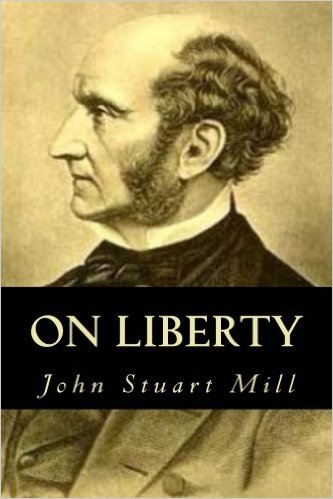
Three Salient Points for Arguments Against Critical Social Constructivism
- Silencing Dissent Erodes Truth: CSC’s labeling of CRT critiques as “hostile,” as in 2024 campus policies, violates Mill’s warning that suppressing dissent impoverishes collective understanding.
- Moral Coercion Replaces Rational Persuasion: CSC’s mandates—like 2024 DEI affirmations in workplaces—replace Mill’s marketplace of ideas with conformity. Challenging these in policy debates restores reasoned inquiry.
- Individuality Is Suppressed by Group Identity: CSC’s identity scripts, seen in 2024 K–12 curricula, undermine Mill’s ideal of self-authorship. Promoting merit-based and pluralistic policies can counter this trend.
Reference
Mill, J. S. (1859). On Liberty. London: John W. Parker and Son.
Arendt exposed ideological conformity, Gramsci revealed cultural capture, and now George Orwell’s Politics and the English Language (1946) unveils critical social constructivism’s (CSC) subtlest weapon: the corruption of language. Orwell warned that vague, euphemistic language obscures reality, trapping thought in a labyrinth of abstraction. CSC wields this tactic to redefine terms, enforce orthodoxy, and render dissent unthinkable. As we turn next to Mill’s defense of liberty, Orwell’s insights equip us to resist CSC’s assault on meaning.
Orwell argued that sloppy language fosters sloppy thought, and vice versa, creating a cycle in which “language becomes ugly and inaccurate because our thoughts are foolish” (Orwell, 1946). CSC exploits this feedback loop by emptying words like harm, justice, and truth of any stable, shared meaning. Disagreement becomes “harm,” objectivity becomes “whiteness,” merit becomes “systemic bias.” The appeal lies in the promise of inclusivity, yet clarity is sacrificed for ideological control. In 2024, university style guides—such as Stanford’s—discouraged terms like “mother” and “father” in favor of “birthing parent” and “non-birthing parent,” narrowing language to conform with CSC imperatives. That same year, journalism guidelines at outlets like NPR labeled objective reporting as a manifestation of “whiteness,” stifling evidence-based discourse.
Like Orwell’s Newspeak, CSC’s linguistic shifts shrink vocabulary and moral nuance, making dissent socially radioactive. To question CSC isn’t to be wrong—it’s to enact “violence.” This mirrors Orwell’s warning that vague language can “make lies sound truthful” (1946), a tactic used to protect ideological dogma. Unlike Gramsci’s cultural trenches, Orwell targets the battlefield of meaning, where CSC renders opposition not just incorrect but unintelligible within its moral grammar.
Orwell’s antidote—short words, active verbs, and concrete images—is a blueprint for resistance. Language must be a window, not a smokescreen. When language no longer corresponds to shared experience, political manipulation becomes inevitable. Restoring clarity means demanding precise, evidence-based definitions in institutions captured by CSC. This series—Arendt on totalitarianism, Gramsci on hegemony, Orwell on language, and Mill on liberty—reveals CSC as a coordinated project to redefine reality.
Read Orwell. Restore language through precise debate. Reclaim meaning in schools, workplaces, and public forums as the first act of resistance.
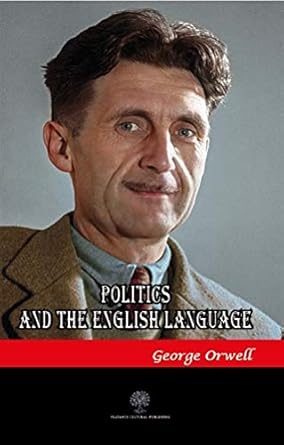
Three Salient Points for Arguments Against Critical Social Constructivism
- Language Obscures, Then Controls: CSC’s redefinition of “violence” to include speech, as in 2024 campus policies, severs language from reality and undermines open discourse—just as Orwell warned.
- Vagueness Is a Weapon, Not a Flaw: CSC’s reliance on unverifiable concepts like “lived experience,” seen in 2024 DEI reports, avoids falsifiability and shields ideological claims from challenge.
- Clarity Is Resistance: Demanding evidence-based definitions in DEI training and policy debates—guided by Orwell’s principles—undermines CSC’s ideological capture and restores intellectual integrity.
References
Orwell, G. (1946). Politics and the English Language. London: Horizon.
(Additional references: Orwell, G. (1949). 1984; Orwell, G. (1946). The Prevention of Literature.)
Our series began with Hannah Arendt’s The Origins of Totalitarianism, exposing how ideological systems crush complexity and silence dissent. Now, Antonio Gramsci’s Selections from the Prison Notebooks (1971) reveals how such systems entrench themselves not through violence, but through culture. His concept of cultural hegemony—the ruling class’s ability to weave its worldview into society’s “common sense”—underpins the activist-theoretical complex of critical social constructivism (CSC). Gramsci’s insights—soon to be joined by Orwell’s warnings on language and Mill’s defense of liberty—illuminate the strategic depth of CSC and arm us to resist its totalizing spread.
A Marxist imprisoned by Mussolini’s regime, Gramsci argued that dominance endures not just through state coercion, but by shaping the cultural narratives expressed in schools, media, and civil institutions (Gramsci, 1971). CSC wields this strategy skillfully, capturing universities, HR departments, and K–12 curricula to redefine concepts like justice, harm, and truth. Its appeal lies in promising equity through structural change, yet it betrays this promise by erecting a new orthodoxy in which dissent becomes unintelligible. In 2024, university DEI training at institutions like UCLA required faculty to affirm “anti-racism” principles, silencing questions about ideological framing—a Gramscian maneuver designed to remake “common sense” itself.
CSC’s genius—and its danger—lies in rewiring the cultural fabric, thread by thread, until dissent appears as an unthinkable pattern. In contrast to Gramsci’s vision of empowering the marginalized from below, CSC’s elites impose orthodoxy from above. DEI mandates, such as 2024 corporate policies that require employees to affirm contested ideologies, mirror what Gramsci called the “trenches” of cultural warfare. Speech codes that label disagreement as “harmful” render opposition not merely wrong but morally deviant, echoing the totalitarian logic Arendt identified. These tactics reshape the public square, narrowing moral and linguistic boundaries until alternative worldviews are excluded by default.
Gramsci reveals why CSC resists debate: it redefines the very terms of discourse. Understanding this strategy is essential to resisting it. By recognizing how CSC transforms institutions into ideological instruments, we can begin to reclaim pluralism and open inquiry. This series, bridging Gramsci to Orwell and Mill, equips us to understand CSC not just as a collection of radical ideas, but as a cultural project aimed at monopolizing moral and linguistic legitimacy. CSC’s spread—like a tapestry quietly rewoven to exclude dissent—demands a unified stand for liberal principles: free inquiry, reasoned debate, and intellectual freedom. Read Gramsci critically. Decode the cultural strategy.
Reclaim our institutions through open forums, Socratic seminars, and a revival of pluralistic values.

Three Salient Points for Arguments Against Critical Social Constructivism
Cultural Hegemony Is Real—and Reversible
Gramsci showed how norms are shaped through education and language. Reversing CSC’s dominance starts with advocating parental choice in curricula and open academic forums like Socratic seminars.
Institutional Capture, Not State Revolution, Is the Threat
CSC’s infiltration of institutions—such as 2024 UCLA DEI mandates enforcing ideological affirmations—mirrors Gramsci’s cultural revolution, reshaping society without needing to seize state power.
Ideas Become Unquestioned as ‘Common Sense’
By normalizing its ideology, CSC renders dissent immoral, as seen in 2024 speech codes. Supporting pluralism and open debate in schools and workplaces restores the possibility of reasoned disagreement.
Reference
Gramsci, A. (1971). Selections from the Prison Notebooks. New York: International Publishers.











 bleatmop
 Mystro
 The Arbourist


 Dead Wild Roses
Your opinions…